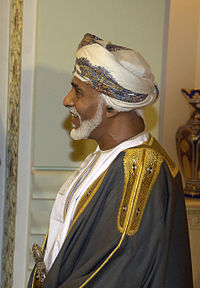
Imad

Gender: Masculine
Origin: Arabic  عماد
Meaning: “pillar; support.”
(EE-MAHD)

The name is from the Arabic meaning, “pillar; support.”

As of 2010, Imad was the 95th most popular male name in Bosnia & Herzegovina, while in France, he was the 470th most popular male name, (2009).

A variant transliteration is Emad.


Samad

Gender: Masculine
Origin: Arabic  صمد
Meaning: “eternal.”

The name is derived from the Arabic Aṣ-Ṣamad (the eternal), one of the names of God.

Its Bosnian form of Samed is the 93rd most popular male name in Bosnia & Herzegovina, (2010).

The name was borne by Azeri-Russian General, Samad bey Mehmandarov (1855-1931) and Azeri poet, Samad Vurgun (1906-1956)

Other forms of the name include:

  • Samed (Albanian/Bosnian)
  • Səməd (Azeri)
  • Semed (Kurdish/Turkish)

Samad is used throughout the Islamic world.

Hasan

Gender: Masculine
Origin: Arabic  حسن 
Meaning: “the handsome; the good.”

The name is derived from the Arabic noun plus definite article الحسن (al-Ḥasan) literally meaning, “the good, the handsome, the beautiful.”

The name was borne by one of the beloved grandsons of the Prophet Mohammed and the son of Ali.

According to Shia and Sunni sources the Archangel Gabriel commanded the Propheth Mohammed to name his grandson, Hasan, a pre-Islamic name. Hasan eventually went on to succeed his father as the Caliph and eventually retired to Madinah where he was poisoned by one of his wives, (the identity of whom is somewhat debated). He is considered a martyr by both Sunni and Shi’a Muslims.

It was the 24th most popular male name in Turkey, (2010) and the 94th most popular in Bosnia & Herzegovina, (2010).

The name is sometimes transliterated as Hassan, especially in the former French colonies, however, this transliteration is actually incorrect as when an extra S is added, the meaning of the name changes, being from the Arabic  حسّان Hassan meaning, “doer of good.”

Other forms of the name include:

  • Hasan Хасан (Albanian/Arabic/Baskkir/Bosnian/Chechen/Dagestani/Kazakh/Kyrgyz/Ossetian/Persian/Tajik/Tatar/Turkmen/Turkish/Ughur/Urdu/Uzbek)
  • Hassan حسن مجتبی (Algerian/Javanese/Malaysian/Moroccan/Persian/Tunisian)
  • Həsən (Azeri)
  • Gasan (Dagastani)
  • Hesan (Kurdish)
  • Alassane (Sub-Saharan African)
  • Lassana (Sub-Saharan African)
  • Hesen (Zazaki)

Malik

Gender: Masculine
Origin: Arabic ملك
Meaning: “king.”
(MAH-LEEK)

The name is derived from the Arabic word ملك (malik) meaning, “king, chieftain.”

The same word appears in several Semitic languages, including Hebrew, in the form of Melek מֶלֶך. In the Old Testament, Melech is the name of a son of Micah.

In the Arabic-speaking world, this is the general term used to refer to a king or chieftain. It also a common male name among both Muslims and Middle Eastern Christians, usually used in reference to the term Al-Malik which means, “the king” an epithet for God among both Muslims and Christians.

The word also appears in the Armenian language in the form of Melik Մելիկ, which is also used a masculine given name, often shortened to Melo.

As of 2010, Malik was the 99th most popular male name in Bosnia & Herzegovina, (2010). His rankings in other countries are as follows:

  • # 283 (United States, 2010)
  • # 296 (France, 2009)

A feminine form is Malika.

Samra

The name is of a few different etymologies. It could be from the Arabic adjective  امغر (asemr) which means, “tan” or “darkish-skin.” It could also be a variant transliteration of the Arabic female name, Samira.

The name is also a popular Ethiopian female name, its origin may be traced either to the Arabic or it could be an Amharic form of the Biblical city name, Samara.

The name is borne by an Ethiopian Orthodox saint, known as Christos Samra; a yearly festival is held in her honour. Many legends have been attributed to her, one of the most curious being that she went to Hell and asked Satan if he would be willing to reconcile with God. Satan refused to reconcile and held Samra hostage in Hell. Samra was eventually rescued by the Angel Gabriel and in the process, rescued several doomed souls. It is believed that no prayer to her will go unanswered.

Another Ethiopian form is Samrawit, literally meaning, “belonging to Samra.”

As of 2010, Samra 76th most popular female name in Bosnia & Herzegovina.

Nadia

Gender: Feminine
Origin: Slavonic/Arabic نديّة
Meaning: see below
(NAHD-yah); (NAH-dee-uh)

Nadia has a touch of class, a mysterious vibe and an exotic appeal. Nadia is also very cross-cultural, she has two different origins and meanings and can easily be used in virtually every country in the world.

First, we have Slavic Nadia, a derivative of the Russian Nadezhda, meaning, “hope.” If that meaning isn’t sweet enough for you, then you might like Nadia’s meaning in Arabic, “delicate; tender; moist.” Though its Arabic version is sometimes transliterated as Nadiyya نديّة, its pronounced exactly the same way as its Slavic homonym.

During the Soviet era of Russia, Nadia was used as a neologism, that is one of the hundreds of Russian given names created during the Russian Revolution to celebrate communistic ideas. In this case, Nadia was suppose to be a formation of nad (above) and ia/ija (era).

Nadia has enjoyed popularity outside of the East. It suddenly became vogue in France in the 19th century, possibly due to the Ballet Russe, where it was later francanized to Nadine. In Germany, it is often rendered as Nadja (NAHD-yah). The name is very popular throughout Eastern Europe.

The name is borne by Nadia Comaneci a famous Romanian Olympic gold gymnast.

Currently, Nadja is the 86th most popular female name in Bosnia & Herzegovina. Her Nadia counterpart’s rankings in other countries are as follows:

  • # 22 (Poland, 2010)
  • # 69 (Catalonia, 2010)
  • # 96 (Spain, 2010)
  • # 240 (Netherlands, 2010)
  • # 247 (United States, 2010)
  • # 444 (France, 2009)

Other forms include:

  • Nadia Надя Ναδια Nადია (Albanian/Bulgarian/Dutch/English/Georgian/German/Greek/Lithuanian/Macedonian/Polish/Romanian/Scandinavian/Spanish)
  • Nadiyya (Arabic: variant transcripted form)
  • NadyaՆադյա (Arabic/Armenian/Persian)
  • Nadiye (Azeri/Kurdish/Turkish)
  • Nadja Надя (Bosnian/Chechen/Circassian/Croatian/Estonian/German/Kazakh/Kyrgyz/Latvian/Serbian/Slovene/Russian/Tatar/Turkmen/Ukrainian)
  • Naďa (Czech/Slovak)
  • Nadine (French/English)
  • Nádja (Hungarian)
  • Nadinka (Hungarian)
  • Nadea (Italian: obscure)
  • Nadiana (Italian: obscure)
  • Nadina (Italian)
  • Nádia (Portuguese)
  • Nodja Нодя (Tajik/Uzbek)

Unusual Italian masculine forms are: Naddo/Naddo, Nadio and Nadino.

Designated name-days are: January 17 (Italy), August 1 (Hungary/Spain), August 18 (Poland), September 30/December 18 (German),

Noor

Gender: Feminine
Origin: Dutch
(NOOR)

The usage of this name is actually somewhat debated. It could be a Dutch short form of Eleanor, or it could be a variant transcription of the Arabic unisex name نور which is derived from the Arabic word for “light.”

Its usage as a male or female name shifts throughout the Islamic world, in the Arabic-speaking world, it tends to be used as a female name, while in the Turkic world, it tends to be used as a masculine name. Its original usage was in reference to the 24th sura of the Qu’ran.

The name is borne by the former Queen Noor of Jordan who was born as Lisa Najeeb Halaby (b.1951). Upon her marriage to King Hussein she took the Islamic name of Noor Al-Hussein (Light of Hussein).

Other notable and interesting bearers include: Noor Inayat Khan (1914-1944) a British British Special Operations Executive agent and heroin of WWII.

It was also borne by a Mughal Empress, Nur Jahan (1577-1645)

Nur is often used more as a name element in many Kazakh, Tatar and Uzbek given names, both male and female depending on the second element of the name.

Feminine offshoots of its Arabic version include:

  • Nour (Algerian/Moroccan/Tunisian)
  • Nuriya (Amharic)
  • Nura نورة (Arabic/Azeri)
  • Nur Нур (Chechen/Tatar)
  • Nuret Нурет (Circassian)
  • Nuraj Нурай (Kazakh. NOO-rye)
  • Nurija Нурія (Kazakh. NOO-ree-yah)
  • Nursha Нурша (Kazakh: NOOR-shah)
  • Nura Нурa (Tatar)
  • Nuru (Swahili)

Male forms

  • Nur (Afghan/Amharic/Kyrgyz/Ughur/Urdu/Turkish)
  • Nuri (Amharic)
  • Nuru (Amharic/Azeri)
  • Nuro (Kurdish)
Noor is also the name of a river in Belgium.
As of 2008, Noor was the 15th most popular female name in Belgium and the 31st most popular in the Netherlands, (2010).

Sumayya

Gender: Feminine
Origin: Arabic  سميّة Сумаыя
Meaning: “high above.”
(soo-MAY-yah)

The name was borne by Sumayya bint Khayyat (died 615 C.E.) an early convert to Islam and also considered the first Muslim Martyr.

As of 2009, Sumayya was the most popular female name in Tajikistan.

Other forms of the name include:

  • Sumejja (Albanian/Bosnian)
  • Soumaia (Algerian/Moroccan)
  • Sumayyah (Indonesian/Malaysian)
  • Sümeyye (Turkish)

Anahita

Gender: Feminine
Origin: Persian
Meaning: “immaculate.”

The name is composed of the Avestan elements, a (not) and ahit (unclean).

It was borne in Persian and Armenian mythology by a fertility goddess associated with water, wisdom and healing.

The name’s usage has survived both Christianity and Islam, being a popular name throughout the Near East and Central Asia.

As of 2009, its Tajik variant of Anohito was the 5th most popular female name in Tajikistan, (2009).

Other forms of the name include:

  • Anahid/Anahit Անահիդ (Armenian/Azeri)
  • Anahita (Assyrian/Lebanese/Persian/Syrian)
  • Anais (Azeri)
  • Anaitis (Greek)
  • Anahîta (Kurdish)
  • Nahid  ناهید (Persian)
  • Anohito Анохито (Tajik/Uzbek)
  • Noxid Ноҳид (Tajik)
  • Onoxito Оноҳито (Tajik)

Islam

Gender: Masculine
Origin: Arabic
Meaning: “voluntary submission to God.”
(IS-lahm)

The name comes from the Arabic verbal noun meaning, “obedience, subjugation of someone or something, or the voluntary submissal to the Almighty.”

The name is technically unisex, but is more often used for males throughout the Islamic world.

As of 2010, Islam was the 14th most popular male name in Kazakhstan, (2010).

It is borne by the current president of Uzbekistan, Islam Karimov (b.1938).