Mirza

Gender: Masculine
Origin: Persian میرزا
Meaning: “prince.”
(MEER-zah)

The name is derived from a Persian royal title, Amīrzāde which literally means “child of the Amir” or “child of the ruler.”

The word has survived in modern Kazakh language as myrza where it means, “gentleman.”

As of 2010, Mirza was the 34th most popular male name in Bosnia & Herzegovina. Other forms of the name include:

  • Mirza Мирза (Albanian/Azeri/Baskkir/Baloch/Bosnian/Chechen/Kazakh/Kyrgyz/Kurdish/Persian/Turkish/Turkmen)
  • Murza Мурза (Circassian/Dagestani/Ossetian)
  • Mirzaj Мирзай (Tatar)
  • Mirzija Мирзия (Tatar)
  • Mirzi Мирзи (Tatar)
  • Morza Морза (Uzbek)

Ansar

Gender: Masculine
Origin: Arabic
Meaning: “helpers.”
(AHN-SAHR)

The name is derived from the Arabic plural and Islamic term, al-Ansar (the helpers), which refers to a group of Medinian citizens who helped the Prophet Mohammed settle into the city of Medina.

Its Balkan and Turkish form of Ensar is currently the 33rd most popular male name in Bosnia & Herzegovina, (2010).

The name is used throughout the Islamic world.

Other forms include:

  • Anshar (Achinese, Javanese)
  • Ensar (Albanian, Bosnian, Turkish)
  • Ənsar (Azeri)
  • Ansor Ансор (Tajik, Uzbek)
  • Ansaar (Urdu)
  • Anzar (Uyghur)

Bilal

Gender: Masculine
Origin: Arabic بلال
Meaning: “moistening.”
(bee-LAHL)

The name is derived from the Arabic meaning, “moistening.”

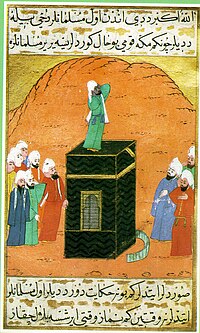
It was borne by the first Muezzin (Caller to Prayer) and a disciple of the Prophet Mohammed. He was an Ethiopian slave who had been emancipated by Mohammed.

As of 2010, Bilal was the 37th most popular male name in Bosnia & Herzegovina. His rankings in other countries are as follows:

  • # 90 (Catalonia, 2010)
  • # 147 (France, 2009)
  • # 217 (Netherlands, 2010)

The name is used throughout the Islamic world.

Another notable bearer was Bilal Xhaferri (1935–1986), an Albanian poet, novelist and political dissident against the Albanian communist regime.

Naila

Gender: Feminine
Origin: Arabic نائلة
Meaning: “attainer.”

The name is derived from the Arabic male name, Nail, which comes directly from the Arabic word for “attainer.”

The name was borne by the wife of Caliph Uthman I, an Iraqi Christian convert, who tried to defend her husband while a mob was killing him and in the process, ended up getting her fingers cut off.

It is also the name of a town in Bavaria.

As of 2010, its Bosnian form of Najla was the 70th most popular female name in Bosnia & Herzegovina. Another Bosnian form is Naijla.

A Bosnian diminutive form is Naja (NYE-yah)


Hasan

Gender: Masculine
Origin: Arabic  حسن 
Meaning: “the handsome; the good.”

The name is derived from the Arabic noun plus definite article الحسن (al-Ḥasan) literally meaning, “the good, the handsome, the beautiful.”

The name was borne by one of the beloved grandsons of the Prophet Mohammed and the son of Ali.

According to Shia and Sunni sources the Archangel Gabriel commanded the Propheth Mohammed to name his grandson, Hasan, a pre-Islamic name. Hasan eventually went on to succeed his father as the Caliph and eventually retired to Madinah where he was poisoned by one of his wives, (the identity of whom is somewhat debated). He is considered a martyr by both Sunni and Shi’a Muslims.

It was the 24th most popular male name in Turkey, (2010) and the 94th most popular in Bosnia & Herzegovina, (2010).

The name is sometimes transliterated as Hassan, especially in the former French colonies, however, this transliteration is actually incorrect as when an extra S is added, the meaning of the name changes, being from the Arabic  حسّان Hassan meaning, “doer of good.”

Other forms of the name include:

  • Hasan Хасан (Albanian/Arabic/Baskkir/Bosnian/Chechen/Dagestani/Kazakh/Kyrgyz/Ossetian/Persian/Tajik/Tatar/Turkmen/Turkish/Ughur/Urdu/Uzbek)
  • Hassan حسن مجتبی (Algerian/Javanese/Malaysian/Moroccan/Persian/Tunisian)
  • Həsən (Azeri)
  • Gasan (Dagastani)
  • Hesan (Kurdish)
  • Alassane (Sub-Saharan African)
  • Lassana (Sub-Saharan African)
  • Hesen (Zazaki)

Nadia

Gender: Feminine
Origin: Slavonic/Arabic نديّة
Meaning: see below
(NAHD-yah); (NAH-dee-uh)

Nadia has a touch of class, a mysterious vibe and an exotic appeal. Nadia is also very cross-cultural, she has two different origins and meanings and can easily be used in virtually every country in the world.

First, we have Slavic Nadia, a derivative of the Russian Nadezhda, meaning, “hope.” If that meaning isn’t sweet enough for you, then you might like Nadia’s meaning in Arabic, “delicate; tender; moist.” Though its Arabic version is sometimes transliterated as Nadiyya نديّة, its pronounced exactly the same way as its Slavic homonym.

During the Soviet era of Russia, Nadia was used as a neologism, that is one of the hundreds of Russian given names created during the Russian Revolution to celebrate communistic ideas. In this case, Nadia was suppose to be a formation of nad (above) and ia/ija (era).

Nadia has enjoyed popularity outside of the East. It suddenly became vogue in France in the 19th century, possibly due to the Ballet Russe, where it was later francanized to Nadine. In Germany, it is often rendered as Nadja (NAHD-yah). The name is very popular throughout Eastern Europe.

The name is borne by Nadia Comaneci a famous Romanian Olympic gold gymnast.

Currently, Nadja is the 86th most popular female name in Bosnia & Herzegovina. Her Nadia counterpart’s rankings in other countries are as follows:

  • # 22 (Poland, 2010)
  • # 69 (Catalonia, 2010)
  • # 96 (Spain, 2010)
  • # 240 (Netherlands, 2010)
  • # 247 (United States, 2010)
  • # 444 (France, 2009)

Other forms include:

  • Nadia Надя Ναδια Nადია (Albanian/Bulgarian/Dutch/English/Georgian/German/Greek/Lithuanian/Macedonian/Polish/Romanian/Scandinavian/Spanish)
  • Nadiyya (Arabic: variant transcripted form)
  • NadyaՆադյա (Arabic/Armenian/Persian)
  • Nadiye (Azeri/Kurdish/Turkish)
  • Nadja Надя (Bosnian/Chechen/Circassian/Croatian/Estonian/German/Kazakh/Kyrgyz/Latvian/Serbian/Slovene/Russian/Tatar/Turkmen/Ukrainian)
  • Naďa (Czech/Slovak)
  • Nadine (French/English)
  • Nádja (Hungarian)
  • Nadinka (Hungarian)
  • Nadea (Italian: obscure)
  • Nadiana (Italian: obscure)
  • Nadina (Italian)
  • Nádia (Portuguese)
  • Nodja Нодя (Tajik/Uzbek)

Unusual Italian masculine forms are: Naddo/Naddo, Nadio and Nadino.

Designated name-days are: January 17 (Italy), August 1 (Hungary/Spain), August 18 (Poland), September 30/December 18 (German),

Islam

Gender: Masculine
Origin: Arabic
Meaning: “voluntary submission to God.”
(IS-lahm)

The name comes from the Arabic verbal noun meaning, “obedience, subjugation of someone or something, or the voluntary submissal to the Almighty.”

The name is technically unisex, but is more often used for males throughout the Islamic world.

As of 2010, Islam was the 14th most popular male name in Kazakhstan, (2010).

It is borne by the current president of Uzbekistan, Islam Karimov (b.1938).

Amir

Gender: Masculine
Origin: Arabic أمير Амир
Meaning: “prince; commander”
(uh-MEER)
The name is derived from the Arabic word for a prince, ruler, commander or admiral. In the Islamic world, it is used as an honorific title of nobility, office or someone of high eminence. The word itself is derived from the Arabic root amr meaning, “to command.”
The early Islamic caliphs used the title Amir al-Muninin meaning, “Commander of the Faithful”, a reference of their leadership over the adherants of the Islamic faith.
The title was assumed by other Islamic rulers, including sheiks and sultans throughout Central Asia all the way into Saudi Arabic.
The leader of a group of pilgrims to Mecca is often referred to as an amir.
It is used as a given name throughout the Islamic world.
As of 2010, Amir was the 20th most popular male name in Kazakhstan, (2010). His rankings in other other countries are as follows:
  • # 13 (Emir, Bosnia & Herzegovina, 2010)
  • # 28 (Emir, Turkey, 2010)
  • # 66 (Bosnia & Herzegovina, 2010)
  • # 155 (the Netherlands, 2010)
  • # 221 (France, 2009)
  • # 278 (United States, 2010)
Other forms of the name include:
  • Emir (Albanian/Bosnian/Turkish)
  • Əmir (Azeri)
  • Amirs (Latvian)
Feminine forms include, Emira (Albanian/Bosnian/Turkish) and Amira.
Amir can also be a Hebrew male אָמִיר name meaning, “tree top.”

Murad

Gender: Masculine
Origin: Arabic  مراد
Meaning: “wish; desire.”
(MOO-rahd)

The name is derived from the Arabic meaning, “wish; desire.”

It is currently the 5th most popular male name among babies born in Azerbaijan, (2011).

Other forms of the name include:

  • Murad Мура́д (Albanian/Azeri/Bosnian/Chechen/Egyptian/Iranian/Kazakh/Kurdish/Kyrgyz/Lebanese/Pashtun/Syrian/Tatar/Urdu/Uzbek)
  • Mourad (Algerian/Moroccan/Tunisian)
  • Mұrat Мұрат (Kazakh)
  • Murat (Turkish)
  • Myrat (Turkmen)

It was borne by at least 5 Turkish Sultans.

Arman

Gender: Masculine
Origin: Persian Арман Արման
(AHR-mahn)

The name is most likely derived from an Old Persian male name meaning “ideal, wish; aspiration” or “destination.”

It has entered several Central Asian languages and in Kazakh it refers to “dream; hope” and is used as a male given name.

In Armenia, it is the 5th most popular male name and it is often argued to be derived from the ancient Armenian root ar (sun) or (Armenian man), however, it is most likely a borrowing from the Persian.

It is currently the 29th most popular male name in Bosnia & Herzegovina.