Chariton, Charitina, Charitinë

  • Origin: Greek Χαρίτων
  • Meaning: “grace; kindness.”

Chariton is an ancient Greek masculine name derived from χάρις (charis), meaning “grace, kindness, favor.”

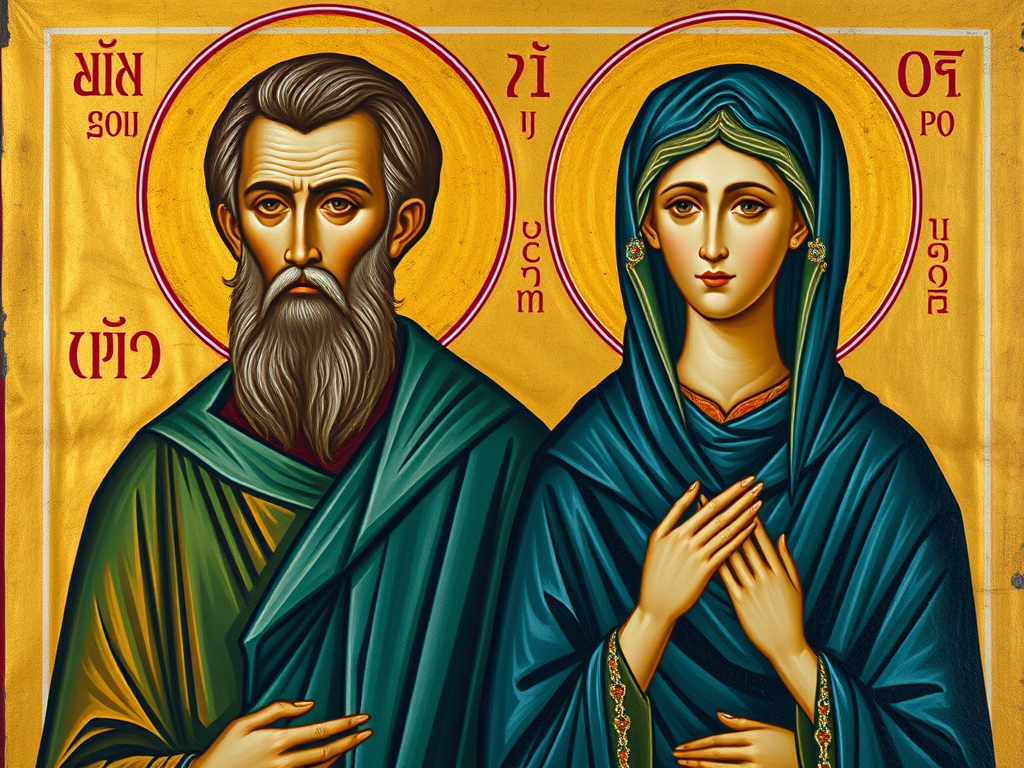
The name was borne by Saint Chariton the Confessor (4th century), a revered Christian monk and founder of several monasteries in the Judaean Desert. His feast day is observed in the Eastern Orthodox Church on September 28.


Chariton also appears in classical Greek literature as a personal name. It was the name of a 1st-century Greek writer.

International Variations

  • Khariton خاريتون, Խարիտոն, ⲭⲁⲣⲓⲧⲟⲛ, Харитон (Arabic, Armenian, Bulgarian, Coptic, Russian)
  • Hariton ܚܪܝܛܘܢ, Харитина (Assyrian, Bulgarian, Estonian, Macedonian, Romanian, Serbian)
  • Charitón (Czech)
  • Chariton (English, German, French, Polish)
  • Caritón (Galician, Spanish)
  • Kharit’on ხარიტონ (Georgian)
  • Karíton (Icelandic)
  • Caritone (Italian)
  • Charitonas (Lithuanian)
  • Caritão (Portuguese)
  • Kharyton Xaryton (Ukrainian).

Charitine, Charitina

The feminine form of Charitine (Χαριτίνη) is the feminine counterpart, and it was latinized as Charitina. An English pronuncitation would be KARE-e-TEE-nee (Grk), and KARE-e-TEE-nah or KARE-e-TIE-nuh).

Saint Charitine of Rome (also known as Charitina, 4th century) is a virgin martyr honored in the Eastern Orthodox Church and Catholic Churches. The feast day and designated name-day is October 8th.

Charitina was later borne by a Medieval Russian Orthodox saint of Lithuania. Very little is known of her hagiography other than her being an indigenous Lithuanian woman who was born pagan but later converted to Christianity.

Female International Variations

  • Haritina خاريتينا / حاريتينا (Arabic, mainly used among Arab-speaking Christians)
  • Kharitine არიტონ, ხარიტინე (Armenian, Georgian)
  • Haritini, Haritina ܚܪܝܛܝܢ (Assyrian)
  • Harycina Харыціна (Belarusian)
  • Haritina Харитина (Bulgarian, Macedonian, Serbian, Romanian)
  • Charitinë (English, Greek – Classical)
  • Charitine (French, SHAH-HHREE-TEEN)
  • Charitini, Haritini (Greek – Modern)
  • Charitina Харитина (Latin, Lithuanian, Russian)
  • Charytyna (Polish)
  • Kharytyna Харитина (Ukrainian)

Sources

Rostam

  • Origin: Persian رستم
  • Meaning: unknown
  • Gender: Male

Rostam is an ancient Persian name that likely descends from Old Persian or Sogdian roots. Its meaning is debated, but the most popular theory is that it derives from *rautas-taxma “strong like a river.”

The name is immortalized in Ferdowsi’s 10th-century Persian epic, the Shahnameh, where Rostam is the towering national hero described as:

  • a mighty warrior of the kingdom of Zabul.
  • tamer of the legendary horse Rakhsh.
  • defender of Iran against its enemies
  • and the tragic father of Sohrab in one of the most famous father-son duels in world literature.

Because of this epic, Rostam is to Persian culture what Hercules is to the Greek tradition.

Rostam has been a popular masculine name across Iran, Afghanistan, Tajikistan, and Central Asia for over a thousand years. It also appears as Rustam in many languages of the region—Azerbaijani, Uzbek, Pashto, and even in parts of the Caucasus and South Asia.

International Variations

  • Rüstəm (Azeri)
  • Rustam Рустам, رستم (Chechen, Kazakh, Kyrgyz, Indonesian, Pashto, Tajik, Urdu, Uyghur, Uzbek)
  • Rostom როსტომ (Georgian)
  • Rustem Рустем (Russian)
  • Rustan, Rusten (Scandinavian)
  • Röstäm Рөстәм (Tatar)
  • Rüstem (Turkish)

Sources

Elo

Photo by Almada Studio on Pexels.com
  • Origin: Estonian, Finnish
  • Meaning: “life.”
  • Gender: Female (Estonian); Male (Finnish)
  • EH-lo

The name was originally a short form of any name that began with El, most commonly Eliisabet. However, during the 19th-century, in the wake of Estonian national revival, it came to be associated with the Estonian word, elu (life).

In Finland, it has the same meaning and is primarily used on males but has also been sporadically used on females.

Its designated name-day in Estonia is September 27th.

Its also used in Georgia as a short form of Elene (Helen) and Elisabed.

Sources

Leontius, Léonce

  • Origin: Greek
  • Meaning: “lion-like.”
  • Gender: Male
  • Eng Pron (lee-ON-shus)

The name is derived from the Greek genitive λέοντος (leontos), meaning, “belonging to a lion; lion-like.”

It was borne by an 8th-century Byzantine emperor and several saints.

The designated name-day is January 13th.

An early English form is perhaps, Leontes, which appears in Shakespeare’s play, The Winter’s Tale (1610).

Léonce is its unisex French form. It appeared in the French Top 1000 Male Names between 1900-1969, and peaked at #95 in 1909. It simultaneously appeared in the French Top 1000 Female Names between 1900-1940 and peaked at #187 in 1915.

Léonce also appeared in the U.S. Top 1000 Male Names between 1887-1895, peaking at #819 in 1887.

Other masculine forms

  • Liyonṭiyos ܠܝܘܢܛܝܘܣ (Assyrian)
  • Leoncio (Asturian, Spanish)
  • Leontzio (Basque)
  • Leonti, Leontiy, Leonty Леонтий (Bulgarian, Russian, Ukrainian)
  • Lleonci (Catalan)
  • Leontios Ⲗⲉⲟⲛⲧⲓⲟⲥ, Λεοντιος (Coptic, Greek)
  • Leontius (Dutch, English, German, Latin)
  • Leontes (English)
  • Léonce (French)
  • Leonte ლეონტე (Georgian)
  • Leonzio (Italian)
  • Leoncjusz (Polish)
  • Leôncio (Portuguese)
  • Leontie (Romanian)
  • Leontije (Serbo-Croatian)
  • Leonziu (Sicilian)

Feminine forms include

  • Léonce (French)
  • Léoncette (French)
  • Léoncie (French)
  • Léoncine (French)
  • Léonte (French)
  • Leontia (Greek, Latin, Romanian)
  • Leonzia (Italian)
  • Leoncja (Polish)
  • Leôncia (Portuguese)

Another possible female off-shoot is Léontine – popular in France from the late 19th to early 20th centuries, it is pronounced [le.ɔ̃.tin]. It is debated whether it is a direct feminine form of Leontius or related to a Latin source meaning, “from Lentini.” A future entry will be written completely dedicated to Léontine.

Sources

Apollinaris, Apollinaire

  • Origin: Greek Ἀπολλινάρις
  • Meaning: “of Apollo.”
  • Gender: Masculine

The name is from the classical Greek, related to Apollo. It was borne by several early Christian saints. The most notable being St. Apollinaris of Ravenna, a Syrian Christian missionary to Ravenna who was martyred there and thereafter became the city’s patron saint.

The French form Apollinaire is linked to the Franco-Polish poet, Guillaume Apollinaire. He lived from 1880 to 1918. He was born Wilhelm Albert Włodzimierz Apolinary Kostrowicki.

Apolinary was common in Poland during the late 19th-century and early 20th-centuries, it is now obsolete. Diminutives include: Apolinek, Apollinek, Apolin, Apollin, Polin, Polinary, Polinarek, Polinaruś, Poli, and Polik.

In Italy, Apollinare was mainly used in the Romagna region due to it being the name of their patrion saint, but it has since fallen out of use.

Apollinaire sporadically appeared in the French Top 1000 between 1900 and 1926 and peaked at #403 in 1923. In 2024, 5 babies were given this name.

Neither its masculine form nor its feminine form had much usage in the English-speaking world. It was mostly used in families of Greek or Eastern European background during the late 19th-century.

Designated name-days include July 20th, July 23rd, and September 12th

Other forms include

  • Abolinarius أبونيناريوس (Arab Christian)
  • Apolighnar Ապողլինար (Armenian)
  • Apolinar Ապոլինար (Armenian, Spanish)
  • Apolinaris ܐܦܘܠܝܢܪܝܣ (Assyrian)
  • Apoliñari (Basque)
  • Apalinariy Апалінарый (Belarusian)
  • Appolinariy Апполінарій (Bulgarian, Ukrainian, Rusyn, Russian)
  • Apol·linar, Apol·linari (Catalan)
  • Apollinaris Ⲁⲡⲟⲗⲗⲓⲛⲁⲣⲓⲥ (Coptic, Dutch, English, German, Greek, Scandinavian)
  • Apollinari (Corsican, Sardinian)
  • Apolinár (Czech, Slovak)
  • Apollinaire (French)
  • Apolinario (Galician, Spanish)
  • Apo’linar აპოლინარ (Georgian)
  • Apollinarios Ἀπολλινάριος (Greek)
  • Apollinár (Hungarian)
  • Apollinare (Italian)
  • Apolenaris (Late Latin)
  • Apolinārs (Latvian)
  • Apolinaras (Lithuanian)
  • Apollinarju (Maltese)
  • Apolinary (Polish)
  • Apolinário (Portuguese)
  • Apolinàri (Provençal)
  • Pulinéra (Romagnol)
  • Apollinari (Romansh)
  • Apolinariu (Romanian)
  • Apolinarije (Serbo-Croatian, Slovenian)
  • Apołinare (Venetian)

Its feminine form is Apollinaria, which is also borne by an early Christian saint.

Other feminine forms include:

  • Abolinarya أبوليناريا (Arab Christian)
  • Apoghlinaria Ապողլինարիա (Armenian)
  • Apolinaria Ապոլինարիա, აპოლინარია (Armenian, Galician, Georgian, Polish, Romanian, Spanish)
  • Apolinaryja, Apolinariya,ܐܦܘܠܝܢܪܝܐ, Аполлинария (Assyrian, Bulgarian, Russian, Rusyn, Ukrainian)
  • Apalinariya, Apalinaryja, Апалінарія (Belarusian)
  • Apollinaria Ⲁⲡⲟⲗⲗⲓⲛⲁⲣⲓⲁ, Ἀπολλιναρία (Coptic, Corsican, German, Greek, Lithuanian, Romansh, Sardinian)
  • Apolinária (Czech, Portuguese, Sardinian, Slovak)
  • Apollinarie (French)
  • Apollinária (Hungarian)
  • Apolinārija (Latvian)
  • Apollinarja (Maltese)
  • Apolinària (Provençal)
  • Apolinarija (Serbo-Croatian, Slovenian)

A traditional feminine diminutive form in Russian is Polina. Polish diminutives include: Apollinka, Apollina, Apolinka, Apolla, Apola, Pola, Polka, Polcia, Polina, and Polinka. Modern Greek diminutives include: Nαρία (Naría), Πόλλα (Pólla), or Λίνα (Lina). Potential English short forms would include: Apple, Pollie, Polly, and Narey, or Narie.

Sources

Poemen

  • Origin: Greek Ποιμήν
  • Meaning: “shepherd.”
  • Gender: Male

The name comes from the Greek Ποιμήν (poimen) meaning, “shepherd.”

In Greek Mythology, the earlier form of Poemenius is known as the name of a satyr. He led the god Dionysos’ satyr troops in a war against India.

It was borne by a 4th-century desert father and Christian saint, known in the Coptic Church as Abba Poemen.

Other forms include:

  • Bayman بیمن (Arabic Egyptian, used by Copts)
  • Pimen Пимен Пимен (Bulgarian, Polish, Russian, Serbian)
  • Poimen ⲡⲓⲙⲏⲛ Ποιμήν (Coptic, German, Greek)
  • Poemen Поемен (English, French, Latin, Ukrainian)
  • P’imen პიმენ (Georgian)
  • Poimén (Hungarian)
  • Pimeno (Italian, Spanish)
  • Pimenus, Poemenius (Latin)
  • Pojmen (Polish)

In Poland, the designated name-day is September 9th

Sources

Zenobia

Zenobia is composed of the Greek elements, Zeus (Zeus) and bios (life). It was notably borne by a 1st-century Armenian queen of Georgian descent and later a 3rd-Century Queen of Palmyra who tried to expand into Roman territory but was defeated by Emperor Aurelian.

Zenobia of Palmyra’s name might have been a Hellenized form of her birth name, Bat-Zabbai, which is from the Aramaic meaning “daughter of Zabbai.” Zabbai itself is an Aramaic male name. It seems to be a theophoric name, meaning “gift of–.” The latter part refers to an unknown deity. It may have actually been an Aramaic form of the Hebrew female name, Bathsheba.

Speculation has also linked it with the Arabic female name Zaynab, which can either mean “father’s beauty” or be from the name of a type of flowering tree.

It was borne by the 3rd-century martyrs, Ss. Zenobia and Zenobius, two early Christians who were siblings and beheaded under Emperor Diocletian. Their feast and name-day is October 30.

In the English-speaking world, it is first recorded in Cornwall and Devon, England in the 16th-century. Early English forms of Synibie, Sinobie, Senobie, Cenobie, and Cenoby (Sen-e-bee; SIN-e-bee), would make interesting revivals in the spirit of Sydney and Willoughby. A common English diminutive was Nobby.

Zenobia appeared in the U.S. Top 1000 Most Popular Female names between 1881-1925, peaking at #669 in 1909.

Zenobia is no stranger to English literature, it is the name of a character in Nathaniel Hawthorn’s The Blithedale Romance (1852); Edith Wharton’s Ethan Frome (1911); and is even used by Anne Rice in her the eighth book of her vampire series, Blood and Gold (2001).

Zenobia “Nobby” Hawthorne appears as a character in the P.G. Wodehouse series, Jeeves.

Tina Fey used this as the middle name of daughter, Alice Zenobia.

Other forms include

  • Zenobia Զենոբիա ზენობია ܙܢܘܒܝܐ Armenian, Assyrian, Coptic, Czech, Danish, Galician, Georgian, German, Greek, Italian, Polish, Portuguese, Provencal, Romanian, Swedish, Spanish)
  • Zanubya ܙܢܘܒܝܐ (Assyrian)
  • Zinovia Зіновія Зиновия Ζηνοβία Зіновія (Belarusian, Modern Greek, Romanian, Russian, Ukrainian)
  • Zinovija Зиновия (Bulgarian, Serbian)
  • Cenobia (Catalan, English, Spanish, Swedish)
  • Anobia Ⲁⲛⲟⲃⲓⲁ (Coptic); Zanubiyah زنوبيا (Modern Arabic/Coptic)
  • Zenobie (English, archaic)
  • Senobia, Senobie, Sinobia (English)
  • Synibie, Sinobie, Cenobie, Cenoby (English)
  • Senopia (Finnish)
  • Zénobie, Zénobine (French)
  • Zenovia Ζηνοβία(Greek, modern, Romanian)
  • Zenóbia (Hungarian)
  • Zanobia (Italian, archaic)

Diminutives

  • Zinooba, Nubya (Assyrian)
  • Nobby, Zeena, Zina (English)
  • Pia, Piiu, Piu, Seno, Senu (Finnish)
  • Zena, Zenna (Hungarian)
  • Zenka, Zenobijka, Zenia, Zeba, Zebia, Zebka, Zeniulka, Zenusia, Zeniusia, Zeneczka (Polish)
  • Zina Зина (Russian)

Masculine forms include

  • Zenob Զենոբ (Armenian)
  • Zinovi Զինովի (Armenian)
  • Zenobio ܙܢܘܒܝܐ (Assyrian, Italian, Spanish)
  • Kenoba (Basque)
  • Zinovij Зиновий (Bulgarian, Serbian)
  • Cenobio, Zenobi (Catalan)
  • Zenóbe (French)
  • Zenobios Ζηνόβιος (Greek, classical)
  • Zinovios Ζηνόβιος (Greek, modern)
  • Zenóbiosz (Hungarian)
  • Zanobi (Italian, archaic)
  • Zenobiusz, Zenobi (Polish)
  • Zenovie (Romanian)
  • Zinoviy Зиновий Зіновій (Russian, Ukrainian)

Sources

Zillah

  • Origin: Biblical Hebrew צִלָּה
  • Meaning: “shade, shadow; bell.”
  • Gender: Female
  • Eng (ZIL-luh)

The name is Hebrew, either derived from צל (tsel) (shadow) or צלל (tsalal) (to ring like a bell). In Genesis 4:19, it is the name of one of the two wives of Lamech.

Though it never became a widespread Jewish name until recently, it had usage in the Protestant Anglo world since the 16th-century and experienced mild popularity in the mid to late 19th-century. It appeared in the U.S. Top 100 between 1881 and 1886, peaking at #679. It was borne by Zillah Oakes (circ. 1870s), the namesake of the city of Zillah, Washington. It was also borne by New Zealand Politician, Zillah Smith Gill (1859-1937).

In English literature, Lord Byron used it as the name of the wife of Abel in his 1821 play, Cain. It is the name of a servant in Emily Brontë’s Wuthering Heights (1847), and the name of the titular heroin in the 1865 operetta by Australian composer, William Wilkins Russell. In recent years, it is the name of a character in Madeleine L’Engle’s, A Swiftly Tilting Planet (1978).

It may have occasionally been used as a form or short form of Cecilia.

Other forms include:

  • Sella Σέλλα Селла (Armenian, French, Greek, Italian, Polish, Russian, Slovak, Spanish)
  • Zilla (Czech, Dutch, English, French, German, Italian, Polish, Scandinavian, Spanish)
  • Sille, Zille, Selle, Zelle (French)
  • Sela სელა (Georgian, Lithuanian, Portuguese)
  • Tzila, Tsila Цілла (Hebrew, Ukrainian)
  • Cilla (Hungarian, Polish)
  • Cillá (Hungarian)
  • Silla (Latvian)
  • Zila (Portuguese)

Sources

Ephraim

  • Origin: Biblical Hebrew אֶפְרַיִם
  • Meaning: “fruitful; double fruited; increasing.”
  • Gender: masculine
“Ephraim” Francisco Hayez

The name is borne in the Bible by the son of Joseph and Asenath, who is considered a patriarch, as he is a founder of one of the 12 trubes of Israel. According Genesis 41:52, he is named thus by Joseph because “God has made me fruitful in the land of my suffering.”

The name was also borne by a few early Christian saints, including St. Ephraim of Syria (4th-century, CE).

Ephraim appeared in the U.S. Top 1000 between 1880-1914, it disappeared for 99 years and reappeared in the charts in 2013. For its first centennial cycle, it peaked at #403 in 1880. As of 2023, it was the 992nd most popular male name.

Its Spanish counterparts of Efraín and Efrén have also appeared in the U.S. Top 1000, Efraín appeared between 1950 and 2014, peaking at #469 in 1981 whilst Efrén appeared between 1966-2007, peaking at #768 in 1990.

Forms/Usages

  • Efrayim ኤፍራይም (Amharic, Modern Hebrew)
  • Yeprem, Jeprem, Eprem Եփրեմ (Armenian)
  • Afrem ܐܦܪܝܡ (Assyrian)
  • Afri ܐܦܪܝ (Assyrian)
  • Afron ܥܦܪܘܢ (Assyrian)
  • Aprem, Aprim ܐܦܪܝܡ (Assyrian)
  • Efrim ܐܦܪܝܡ (Assyrian)
  • Ephraim ეფრაიმ (Georgian); Εφραιμ (Greek); ⲉⲫⲣⲁⲓⲙ (Coptic); ܐܦܪܝܡ(Syriac) (Assyrian, Dutch, English, Estonian, German, Greek, Portuguese)
  • Akhrym, Ahrym Акхрым (Belarusian)
  • Yafrym Яфрым (Belarusian)
  • Efraïm (Catalan, Dutch)
  • Efrajim (Czech)
  • Efraim (Finnish, Hungarian, Italian, Nordic, Polish, Romanian)
  • Eprami (Finnish)
  • Éphraïm (French)
  • Îvfa (Greenlandic)
  • Eframi (Icelandic)
  • Efraím (Icelandic)
  • Efraimo (Italian)
  • Efrem (Italian, Polish)
  • Effrem (Italian)
  • Efro (Italian)
  • Ephraem (Late Latin)
  • Ephraimus (Late Latin)
  • Ofrem (Russian, Archaic)
  • Yefraim, Jefraim Эфраим (Russian)
  • Yefrem Ефрем (Russian)
  • Jevrem Јеврем (Serbian)
  • Efraín (Spanish)
  • Efrén (Spanish)
  • Ohrim, Okhrim Охрім (Ukrainian)
  • Evron ֶבְֿרוֹן (Yiddish)

Sources

Theodosia, Theodosius

Photo by Juliano Astc on Pexels.com
  • Origin: Greek
  • Meaning: “giving to God.”

Both come from the Greek, θεός (theos) meaning “god” and δόσις (dosis) meaning “giving.” Both the male and female form were borne by several Christian saints and Medieval rulers. In the English-speaking world, a notable bearer was Theodosia Alston Burr (1783-1813), the daughter of Aaron Burr and an American socialite who mysteriously disappeared in a ship-wreck. Her fate has been a source of speculation for two centuries, but she most likely died in the wreck. She is also the subject of the Broadway opera song from Hamilton, My Theodosia.

It’s female version has experienced usage in the English-speaking world since the 15th-century. It has spun off several diminutive off-shoots, which later became independent names, such as Docie/Dosey, Doshie, Dosha, Docia and Theda.

Theodosia appeared in the U.S. Top 1000 Most Popular Female Names between 1880-1895, it peaked at number #547 in 1880. It’s offshoot of Doshie appeared in the U.S. Top 1000 between 1880-1905 and peaked at #640 in 1884 whereas Doshia peaked at #582 in 1881 and Docia at #317 in 1880.

Theda (THEE-dah) was the name of silent film actress, Theda Bara (born Theodosia Burr Goodman, 1885-1955). Theda appeared in the U.S. Top 1000 between 1880-1948 and peaked at #350 in 1916. Theda Bara may have helped sustain the usage of the name in the United States, but it seems to have been common enough long before she graced the silver screen.

In the 1988 movie For Keeps, starring Molly Ringwald, a teen couple are faced with an unexpected pregnancy, in which they name their daughter Theodosia, short form Thea, it is a last minute decision decided by the father who gets the name from his deceased grandmother of the same name.

It is the name of the main character of the R. L. LaFevers 2007 children’s novel, Theodosia and the Serpents of Chaos, which spun off a tv series.

Its pronunciation in the English-speaking world fluctuates depending on the region and personal preference, from THEE-oh-DOH-see-uh, to THEE-oh-DOH-shuh and THEE-oh-DOH-zhuh, the sky’s the limits.

Its masculine form has always been prevalent in eastern Christian countries but did not pick up the same momentum in the English-speaking world as its feminine counterpart did.

Female forms

  • Tayodosiya ታዮዶሲዮስ (Amharic)
  • Thudusya ثيودوسيا (Arabic, used by Arab Christians)
  • T’eodosia Թեոդոսիա (Armenian)
  • Teodosija ТеодосиЯ (Bulgarian, Latvian, Lithuanian)
  • Teodosia თეოდოსია (Catalan, Corsican, Georgian, Italian, Portuguese, Romanian, Sardinian, Sicilian, Spanish)
  • Theodosia Θεοδοσια ⲑⲉⲟⲇⲟⲥⲓⲁ.(Coptic, English, German, Greek, Latin, Nordic, Romansch)
  • Teodozija Теодосија (Croatian, Macedonian, Serbian, Slovene)
  • Docia, Dosha, Doshia (English)
  • Docie, Docey (English)
  • Dosia (English, Polish)
  • Theda (English)
  • Théodosie (French)
  • Teodózia (Hungarian)
  • Teodosja (Maltese)
  • Teodozja (Polish)
  • Teodósia (Portuguese)
  • Feodosija Феодосия (Russian, Ukrainian)
  • Teudosia (Sicilian)

Male Forms

  • Teodosi (Albanian, Catalan)
  • Tayodosiyos ታዮዶሲዮስ (Amharic)
  • Thudusyus ثيودوسيوس (Arabic, used by Arab Christians)
  • T’eodosios Թեոդոսիոս (Armenian)
  • Teodosij Теодосий (Bulgarian)
  • Theodosios Θεοδόσιος ⲑⲉⲟⲇⲟⲥⲓⲟⲥ (Coptic, Greek)
  • Teodosiu (Corsican, Romanian, Sardinian)
  • Teodozije Теодосије (Croatian, Macedonian, Serbian, Slovene)
  • Theodosius (English, German, Latin, Nordic)
  • Théodose (French)
  • Theodósziosz (Hungarian)
  • Teodosio (Italian, Spanish)
  • Teodosijs (Latvian)
  • Teodosijus (Lithuanian)
  • Teodosju (Maltese)
  • Teodozy, Teodozjusz (Polish)
  • Teodósio (Portuguese)
  • Theodosi (Romansch)
  • Teodosie (Romanian)
  • Feodosij Феодосий (Russian, Ukrainian)
  • Teudosiu (Sicilian)
  • Teodóz (Slovak)

Sources