Monica

Gender: Feminine
Origin: unknown
Meaning: unknown
Eng (MAHN-ih-kuh)

The name is of uncertain origin or derivation, but some have connected it with the Latin monere meaning “to advise” or the Greek monos meaning, “one.”

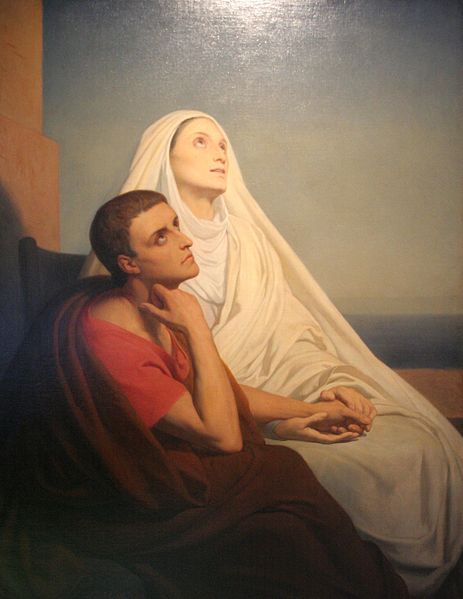
The name was popularized by St. Monica of Hippo (the mother of St. Augustine) who was believed to have been of Berber extraction but was also a citizen of Carthage. For these reasons, many have suggested that the name is actually a name of North African or Phoenician origins and its meaning has been lost to history.

Monica has been a very popular saint amongst Catholics since the early Middle Ages, so the name has always been in usage in Catholic countries. In the English-speaking world, the name did not really catch on until the 18th-century. In 1977, she peaked in the U.S. popularity charts, coming in as the 39th most popular female name. Currently, she is the 34oth most popular female name (2009). Her rankings in other countries are as follows:

  • # 72 (Slovenia, 2005)
  • # 10 (Slovakia, 2004)
  • # 94 (Spain, 2008)

Other forms of the name include:

  • Mònica (Catalan)
  • Monika (Amazigh/Croatian/Czech/Estonian/German/Kabyle/Latvian/Lithuanian/Maltese/Norwegian/Polish/Slovak/Slovene/Swedish)
  • Monica (Danish/Dutch/English/Italian/Romanian/Romansch/Swedish)
  • Moonika (Estonian)
  • Mooni (Estonian)
  • Monique (French)
  • Mónika (Hungarian)
  • Mônica (Portuguese)
  • Mónica (Spanish)

German short forms are Mona and Moni and a Polish diminutive is Monia.

The designated name-days are: May 4 (Hungary/Lithuania/Poland/Sweden), May 7 (Slovakia), May 21 (Czech Republic), June 13 (Estonia), August 27 (Germany), October 6 (Latvia).

Sources

  1. http://www.askoxford.com/firstnames/monica?view=uk
  2. http://www.behindthename.com/name/monica

Prudence

Gender: Feminine
Origin: English/French
Meaning: “prudence.”

The name is ultimately derived from the Latin Prudentia a feminine form of the Late Latin, Prudentius, which is derived from the Latin prudens meaning, “prudent, good judgment.”

The name was borne by a few early Christian martyrs and was in usage in Europe during the Middle Ages. It was revived in the 17th-century by the Puritans.

Other forms of the name include:

  • Prudència (Catalan)
  • Prudence (English/French)
  • Prudenzia (Italian)
  • Prudenziana (Italian)
  • Prudentia (Late Latin)
  • Prudentiana (Late Latin)
  • Prudencia (Spanish)

A common English short form is Prue.

Male forms include: Prudenzio (Italian) Prundentius (Late Latin), Prudencio (Spanish).

In the 1960s, the Beatles penned the famous pop song, Dear Prudence.

The designated name-day is May 6 (France).

Sources

  1. http://www.behindthename.com/namedays/search.php?terms=prudence
  2. http://www.askoxford.com/firstnames/prudence?view=uk

Tamar, Tamara

Gender: Feminine
Origin: Hebrew
Meaning: “date palm, palm tree.”
Тамара
თამარ

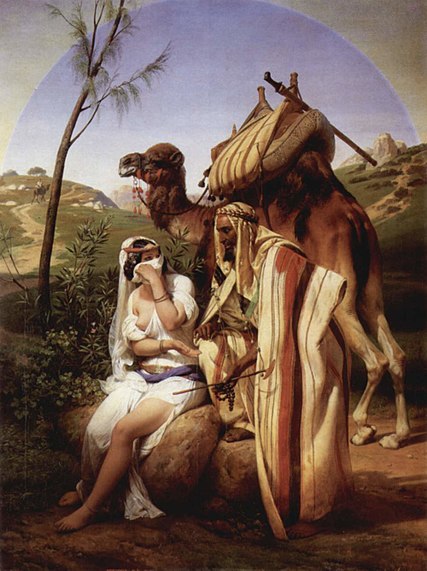
The name was borne in the Old Testament by a daughter-in-law of Judah (Genesis 38) and also by the daughter of King David (2 Samuel 13) .

The name is derived from the Hebrew meaning, “date palm” or “palm tree.”

Since both characters are involved in some seamy controversy, the name was never historically a common name among Jews or Christians. Its popularity may have been awakened when it was introduced into the Western World via the Ballet Russe where a few Russian ballerinas of Georgian descent bore the name. Its popularity may have been further realized via Polish cubist painter Tamara de Lempicka (born Maria Gorska) 1898-1980.

The name had always been common in Russia, Armenia and Georgia, but in this case, the name seems to have been borne by a sky goddess in Georgian mythology and was also the name of a famous Georgian queen and saint and therefore has no relation to the Biblical name.

During the 1940s-50s, the spin-off diminutive form of Tammy became popular as a given name in its own right, most likely due to the popularity of the Tammy movies. In 1966, it was the 8th most popular female name, as of recent years, she does not appear in the U.S. top 1000.

Tamara’s popularity has spread outside of Russia and Georgia. Her rankings in other countries are as follows:

  • # 52 (Chile, 2006)
  • # 147 (Germany, 2009)
  • # 57 (Hungary, 2008)
  • # 59 (Slovenia, 2005)

The designated name-days are: January 26 (Slovakia), March 22 (Latvia), April 28 (Russia), May 1 (France), May 2 (Russia), June 3 (Czech Republic/Poland), December 29 (Hungary).

Tamara also happens to coincide with a Sanskrit word for spice and in Malayalam and Tamil, Tamara means “lotus flower.”

Other forms of the name include:

  • T’amar (Georgian)
  • Tamari (Georgian)
  • Tamro (Georgian)
  • Tamuna თამუნა (Georgian)
  • Tamwili (Georgian)
  • Tako (Georgian)
  • Támár (Hungarian)

An Armenian diminutive is Tamarig and a  Russian short form is Toma.

Sources

  1. http://www.askoxford.com/firstnames/tamara?view=uk
  2. http://www.behindthename.com/php/find.php?name=tamara
  3. http://en.wikipedia.org/wiki/Tamar_of_Georgia

Peter

Gender: Masculine
Origin: Greek
Meaning: “rock.”
Eng (PEE-ter)

The name is derived from the Greek Πετρος (Petros) meaning, “rock.”

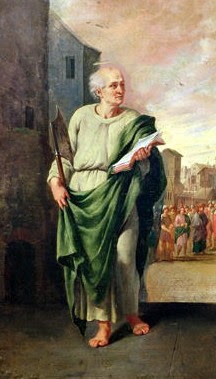
The name is found in the New Testament as a vernacular translation for the Aramaic Cephas (rock) a nickname designated to the Apostle Simon Bar-Jonah by Jesus. He is known as St. Peter, and Catholics traditionally attribute him as being the first Pope.  Among other denominations, he is considered to be one of Christ’s most prominent apostles.

Due to the associations with the apostle, Peter became an extremely prevalent male name throughout the Christian world.

The name seems to have been in usage in England since early times, but became especially popular after the Norman invasion. During this period, the form of Piers was preferred, being gradually replaced in popularity by Peter over the centuries.

Currently, Peter is 191st most popular male name in the United States, (2009). He has been steadily declining in the United States for the past 10 years, in 2000 he ranked in at # 125. His rankings in other countries, however, has not faltered. His rankings including his vernacular forms are as follows:

  • # 7 Pedro (Brazil, 2009)
  • # 9 Petar (Bulgaria, 2008)
  • # 15 Petr (Czech Republic, 2009)
  • #38 Pierre (France, 2006)
  • # 3 (Greenland, 2003-2004)
  • # 8 (Hungary, 2008)
  • # 33 Petur (Iceland, 2008)
  • # 70 (Ireland, 2008)
  • # 25 Pietro (Italy, 2007)
  • # 8 Pēteris (Latvia, 2005)
  • # 9 Petar (Macedonia, 2006)
  • # 10 Piotr (Poland, 2008)
  • # 3 (Slovakia, 2004)
  • # 59 (Slovenia, 2005)
  • # 50 Pedro (Spain, 2008)

Other forms of the name include:

  • Petrus (Afrikaans/Dutch/German/Indonesian/Latin/Limburgish/Plattdeutsch/Swedish)
  • Pieter (Afrikaans)
  • Pjetër/Pjetri (Albanian)
  • Ṗeṭros ጴጥሮስ (Amharic/Ethiopian)
  • Pero (Aragonese)
  • Bedros/Pedros Պետրոս (Armenian)
  • Botros/Boutros/Butros بطرس (Arabic/Coptic)
  • Pedru (Asturian/Konkoni)
  • Pyotr (Azeri)
  • Betiri (Basque)
  • Kepa (Basque)
  • Peio (Basque)
  • Peru (Basque)
  • Petri (Basque)
  • Piatro Пятро (Belarusian)
  • Piotr Пётр (Belarusian/Polish)
  • Pêr (Breton)
  • Pierrick (Breton)
  • Penko Пенко (Bulgarian)
  • Petar Петар (Bulgarian/Croatian/Macedonian/Serbian)
  • Pere (Catalan)
  • Peder (Cornish/Danish/Lombard/Norwegian)
  • Petru (Corsican/Romanian/Sicilian)
  • Pyè (Creole)
  • Pero (Croatian/Serbian)
  • Petar Петар (Croatian/Macedonian/Serbian/Slovene)
  • Petr (Czech)
  • Pelle (Danish/Norwegian/Swedish: originally a diminutive, now occasionally used as an independent given name. PEL-le)
  • Peer (Danish/Dutch/German)
  • Per (Danish/Faroese/Norwegian/Swedish)
  • Peter (Danish/Dutch/English/German/Luxembourgish/Norwegian/Slovak/Swedish)
  • Peeter (Estonian)
  • Peiru (Extramadura)
  • Pætur/Petur (Faroese)
  • Patras پطرس (Farsi)
  • Pekka (Finnish)
  • Petteri (Finnish)
  • Petri (Finnish)
  • Pietari (Finnish)
  • Pierre (French)
  • Piter/Pier/Pit (Frisian)
  • P’et’re პეტრე (Georgian)
  • Petros Πέτρος (Greek)
  • Pathros (Hindi)
  • Péter (Hungarian)
  • Petres (Hungarian)
  • Peto (Hungarian)
  • Pétur (Icelandic)
  • Peadar (Irish-Gaelic)
  • Pietro (Italian/Albanian)
  • Petronius (Latin)
  • Pēteris (Latvian)
  • Petras (Lithuanian)
  • Pir (Luxembourgish)
  • Petre Петре (Macedonian/Romanian)
  • Pathrose (Malayalam)
  • Pietru (Maltese)
  • Peddyr (Manx)
  • Petera (Maori)
  • Petter (Norwegian/Swedish)
  • Pèir/Pèire/Pèr (Occitanian)
  • Pedro (Portuguese/Spanish)
  • Pêro (Portuguese: archaic)
  • Pidru (Quecha)
  • Peadar/Peader/Peder/Peidar/Peider (Romansch)
  • Pyotr Пётр (Russian)
  • Pedru/Perdu/Pretu (Sardinian)
  • Peadar/Peadair (Scottish-Gaelic)
  • Pyjter/Piter (Silesian)
  • Pětr (Sorbian)
  • Petero (Swahili)
  • Pär (Swedish)
  • Pethuru (Tamil)
  • Raayappar (Tamil)
  • Petro Петро (Ukrainian)
  • Piter (Uzbek)
  • Piero (Venetian)
  • Piitre (Vöro: an Eastern Estonian dialect)
  • Pedr (Welsh)

In French, Pierre is used in a number of compound names. Some of the most common include:

Some common Italian compound names include: Piergiuseppe, Pietropaolo, Pierpaolo, Pietrantonio, Pierantonio, Pierluigi , Piergiorgio , Pietrangelo, Pierangelo, Pierce, Pierfrancesco, Piermaria and Piersilvio

Its feminine form of Petra was once a very popular name in German-speaking countries, but is now considered rather dated. Throughout Central Europe, however, she is experiencing a strong trend. Her current rankings are as follows:

  • # 46 (Czech Republic, 2009)
  • # 9 (Hungary, 2008)
  • # 46(Slovenia, 2005)

Feminine forms include:

  • Peta (Afrikaans/English)
  • Penka Пенка (Bulgarian)
  • Petra(Bulgarian/Croatian/Czech/Dutch/Finnish/German/Greek/Hungarian/Scandinavian/Serbian/Slovak/Slovene/Spanish)
  • Petrina (Croatian/German)
  • Pernille (Danish/Norwegian)
  • Petrea (Danish)
  • Petrine (Danish/German/Norwegian)
  • Petronella (Danish/Norwegian/Swedish)
  • Pietronella (Dutch)
  • Parnel/Pernel (English: archaic)
  • Peronel (English: archaic)
  • Petronel (English: archaic)
  • Petriina (Finnish)
  • Pernelle (French)
  • Pernette (French)
  • Péroline (French)
  • Péronelle (French)
  • Perrenotte (French)
  • Perrette (French)
  • Perrine (French)
  • Pétronelle (French)
  • Peyronne (French)
  • Pierrine/Pierrette (French)
  • Pétronille (French)
  • Peekje (Frisian)
  • Peterke (Frisian)
  • Petje (Frisian)
  • Petke (Frisian)
  • Pierke/Pierkje (Frisian)
  • Pieterke (Frisian)
  • Pietje/Piertje (Frisian)
  • Petrónia (Hungarian)
  • Petronia (Italian/Latin/Polish)
  • Petronilla (Italian/Latin)
  • Piera/Pierina (Italian)
  • Pieretta (Italian)
  • Pieruccia (Italian)
  • Pietra/Pietrina (Italian)
  • Pietruccia (Italian)
  • Petronela (Polish/Romanian)
  • Petrona (Spanish)
  • Pernilla (Swedish)

Italian female compound forms include: Pierangela and Pieranna.

Common German pet forms are: Pedi, Petzi and Pezi

The designated name-days are: April 29 (Hungary) and June 29 (Hungary, Germany, Slovakia, Sweden).

Sources

Philip

Gender: Masculine
Origin: Greek
Meaning: “lover of horses.”
ENG (FIL-ip)

The name is derived from the Greek Philippos (Φίλιππος), which is composed of the Greek elements φιλος (philos) meaning “friend; lover” and ‘ιππος (hippos) meaning “horse.”

The name was borne by several illustrious characters throughout history, including Philip of Macedon (the father of Alexander the Great), an apostle of Jesus, several early saints and several French monarchs.

The name has been popular in England since the Middle Ages and never really went out of fashion, even after the Reformation. Though in the United States, he ranks rather low, coming in as the # 378th most popular male name, his rankings in other countries are as follows:

  • # 3 Filip (Croatia, 2009)
  • # 5 Filip (Czech Republic, 2009)
  • # 44 Philip (Denmark, 2009)
  • # 4 Filip (Faroe Islands, 2009)
  • # 18 Philip/Philipp (Germany, 2009)
  • # 95 Filip (Ireland, 2008)
  • # 18 Filippo (Italy, 2007)
  • # 42 Filip (Norway, 2009)
  • # 80 Philip (Norway, 2009)
  • # 7 Filip (Poland, 2008)
  • # 10 Filip (Serbia, 2009)
  • # 26 Filip (Slovenia, 2005)
  • # 24 Filippo (Switzerland, among Italian-speakers, 2008)
  • # 11 Filip (Sweden, 2009)

Other forms of the name include:

  • Philippus (Afrikaans/Latin)
  • Philip Філіп (Belarusian/English/Scandinavian)
  • Fulub/Fulup (Breton)
  • Filip ФилипBulgarian/Croatian/Czech/Dutch/Finnish/Hungarian/Macedonian/Polish/Russian/Romanian/Romansch/Scandinavian/Slovak/Slovene
  • Felip (Catalan)
  • Filippus (Dutch)
  • Philipp (Estonian/German)
  • Vilpas (Finnish)
  • Vilppi/Vilppo/Vilppu (Finnish)
  • Philippe (French)
  • Filipe (Galician/Portuguese)
  • P’ilip’e ფილიპე (Georgian)
  • Filippos Φιλιππος (Greek: Modern)
  • Philippos Φίλιππος (Greek: Ancient)
  • Fülöp (Hungarian)
  • Pilib (Irish-Gaelic)
  • Filippino (Italian: obscure)
  • Filippo (Italian)
  • Filips (Latvian)
  • Pilypas (Lithuanian)
  • Piripi (Maori)
  • Felip (Occitanian)
  • Filippu Фїліппъ (Old Church Slavonic)
  • Felipe (Portuguese/Spanish)
  • Flep (Romansch)
  • Filipp Филипп (Romansch/Russian)
  • Filib (Scottish-Gaelic)
  • Pylyp Пилип (Ukrainian)
  • Fiłipo (Venetian)
  • Ffilip (Welsh)

Dutch diminutives are Flip and Flupke
English short forms are Pip and Phil
French diminutives include: Flit, Flitou, Phil, Philou and Pip
German short forms are Phil and Lips
Italian short forms are: Filo, Firpo, Lippo and Pippo
Polish diminutive is Filipek

Feminine versions include:

  • Filipa Филипа (Breton/Croatian/Polish/Portuguese/Serbian/Slovene)
  • Filippa Филиппа Φιλιππα (Danish/Finnish/Greek/Hungarian/Icelandic/Italian/Russian/Norwegian/Swedish)
  • Philippa (English/German)
  • Pippa (English: originally a diminutive form now occasionally used as an independent given name)
  • Philippina (German: obscure)
  • Hilppa (Finnish)
  • Philippine (French)
  • Filippina (Italian)
  • Filipina (Polish)
  • Felipa (Spanish)

Filippa is the 51st most popular female name in Sweden, (2009)

The name is currently borne by British Monarch, Prince Philip, Duke of Edinburgh (b.1921).

The designated name-day is May 3rd.

Sources

  1. http://www.askoxford.com/firstnames/philip?view=uk
  2. http://www.behindthename.com/php/find.php?name=philipp

Matthias, Mathias

Gender: Masculine
Origin: Hebrew
Meaning: “gift of yahweh.”
Eng (muh-THIGH-us); Germ/Scand (mah-TEE-ahs)

Matthias is a form of Matthew, but has been treated as a different name for centuries. He has been a staple in Central and Northern Europe, especially in Germany, the Netherlands and Scandinavia.

In the New Testament, the name was borne by the replacement of Judas Iscariot. Matthias was considered an apostle and according to legend, he went on to convert the Georgians where he died a martyr by crucifixion.

He is currently one of the most popular male names in all of Europe, his rankings are as follows:

  • # 8 Mathis (Belgium, 2008)
  • # 13 Matyáš (Czech Republic, 2009)
  • # 10 Mathias (Denmark, 2009)
  • # 8 Mattias/Mathias (Estonia, 2008)
  • # 60 Mathias (France, 2006)
  • # 71 Matthis/Mathis/Mattis/Matis (Germany, 2009)
  • # 131 Matthias (Germany, 2009)
  • # 54 Mátyás (Hungary, 2008)
  • # 31 Matthías (Iceland, 2008)
  • # 7 Mattia (Italy, 2007)
  • # 5 Mathias (Liechtenstein, 2008)
  • # 1 Matas (Lithuania, 2009)
  • # 1 Matthias (Malta, 2008)
  • # 6 Thijs (the Netherlands, 2009)
  • # 52 Ties (the Netherlands, 2009)
  • # 92 Matthijs (the Netherlands, 2009)
  • # 5 Mathias/Matias (Norway, 2009)
  • # 11 Maciej (Poland, 2008)
  • # 35 Matija (Slovenia, 2005)
  • # 90 Matjaz (Slovenia, 20o5)
  • # 97 Mattias (Sweden)
  • # 33 Mathis (Switzerland, among French-speakers, 2008)
  • # 4 Mattia (Switzerland, among Italian-speakers, 2008)
  • # 4 Mattia (Switzerland, among Romansch-speakers, 2008)

Other forms of the name include:

  • Matthias Ματθιας Матті́й (Afrikaans/English/French/German/Greek/Maltese/Scandinavian/Ukrainian)
  • Matthes (Afrikaans)
  • Mattheis (Afrikaans)
  • Matthies (Afrikaans)
  • Matta متى (Arabic)
  • Matai (Aramaic)
  • Matta/Mətta (Azeri)
  • Matia (Basque)
  • Maciej Maceй (Belarusian/Polish: MAHT-chay)
  • Matties (Catalan)
  • Matija Матија (Croatian/Serbian/Slovene)
  • Matyáš (Czech)
  • Matthijs (Dutch)
  • Thijs (Dutch: originally a diminutive form, now a very popular independent given name. TIES)
  • Ties (Dutch: originally a diminutive form, now a very popular independent given name. TEES)
  • Madis (Estonian)
  • Matias (Finnish/Portuguese)
  • Mat’at”a მატათა (Georgian)
  • Mathias (French/German/Scandinavian)
  • Mathis (French/German)
  • Matis (German)
  • Mattias (German/Swedish)
  • This (German)
  • Mathaios Ματθαιος (Greek: Biblical)
  • Makaio (Hawaiian)
  • Mattithyahu מַתִּתְיָהוּ (Hebrew)
  • Mátyás (Hungarian)
  • Maitiú (Irish-Gaelic)
  • Mattia (Italian)
  • Mathia (Kiswahili)
  • Matiass (Latvian)
  • Matas (Lithuanian)
  • Motiejus (Lithuanian)
  • Mathai (Malayalam)
  • Matius (Malay)
  • Matthia Матѳіа (Old Church Slavonic)
  • Täis (Plattdeutsch)
  • Matia (Romanian)
  • Mateias/Matteias (Romansch)
  • Teias (Romansch)
  • Tia (Romansch)
  • Tias (Romansch)
  • Maitias (Scottish-Gaelic)
  • Matia (Sardinian)
  • Maćij (Sorbian)
  • Matías (Spanish)

An obscure Feminine form is the Polish: Macieja

In France, the designated name-day is May 14.

The name has been borne by several Hungarian kings.

Sources

  1. http://www.behindthename.com/php/find.php?name=matthias
  2. http://www.askoxford.com/firstnames/matthias?view=uk
  3. http://www.newadvent.org/cathen/10066a.htm

Susan, Susannah

Gender: Feminine
Origin: Hebrew
Meaning: “lily; rose.”

Susannah is the anglicized form of the Biblical Greek Sousanna (Σουσαννα) which in turn, is a translation of the Biblical Hebrew שׁוֹשַׁנָּה (Shoshannah). Shoshannah is derived from the Hebrew word ששון (shoshan) which means “lily” in ancient Hebrew, but in modern Hebrew has evolved to mean “rose.”

The Hebrew word of shoshan has been traced to the ancient Egyptian element, sšn meaning “lotus” and is also believed to be linked with the Hebrew word ששון (sasson) meaning, “joy”.

It is also interesting to note that in modern Farsi, the word for lily is sausan compare to shoshan.

The ancient place name of Susa is also believed to be related to the Semitic botanical word, due to the so-called abundance of lilies that used to thrive in the area.

In the Old Testament (or Apocrypha) the name is borne by a woman falsely accused of adultery. She is rescued by the prophet Daniel who tricks her accusers and reverses the accusations against them.

It is also borne in the New Testament by a companion of Mary and a disciple of Christ. She is revered as a saint in the Catholic and Eastern Orthodox Churches.

Susan is a Middle English knock off, most likely influenced by the French Suzanne, which might have been introduced by the Norman conquerors in the 11th-century.

Currently, Susannah does not appear in the U.S. top 1000, (2008), but she has become especially trendy in many Central and Eastern European countries (in her various vernacular forms of course).

Her rankings in other countries are as follows:

  • # 22 Zuzana (Czech Republic, 2009)
  • # 96 Zsuzsanna (Hungary, 2009)
  • # 8 Suzana (Macedonia, 2006)
  • # 3 Zuzanna (Poland, 2008)
  • # 3 Zuzana (Slovakia, 2004)

In the English-speaking world, Susan was especially popular after World War II. In the United States, it is often considered dated and is usually associated with someone in their early 60s to late 50s. In fact, she remained a staple among the Baby-Boom Generation all the way to the early beginnings of the Generation Xers. She remained strong in the top 10 for over 20 years. The highest she peaked was between 1957 and 1960, coming in as the second most popular female name. Currently, she stands at a meagre #711.

Other forms of the name include:

  • Sawsan (Arabic)
  • Shushan (Armenian)
  • Sjusanna (Bulgarian)
  • Zulisja (Bulgarian)
  • Susanna (Catalan/Estonian/Finnish/German/Italian/Romansch/Swedish/Ukrainian)
  • Suzana (Croatian/Macedonian/Romanian/Serbian/Slovene)
  • Zuzana (Czech/Slovak/Lithuanian)
  • Sanna/Sanne (Danish/Dutch/Finnish/Norwegian/Swedish)
  • Susanne (Dutch/German/Norwegian/Swedish)
  • Susan (English)
  • Soosan سوسـن (Farsi)
  • Suzanne (French)
  • Suzette (French: originally a diminutive, but long regarded as an independent given name)
  • Šušanik შუშანიკ (Georgian)
  • Sousanna Σουσαννα (Greek)
  • Susann (German/Scandinavian)
  • Shoshana שושנה (Hebrew: Modern)
  • Zsuzsanna (Hungarian: ZHOO-zhawn-naw)
  • Zane (Latvian)
  • Zuzanna (Latvian/Polish: zoo-ZAHN-nah; zoo-ZAHN-ne-nah)
  • Sosamma (Malayalam)
  • Huhana (Maori)
  • Żużanna (Polish: archaic, possibly based off the Hungarian form. zhoo-ZHAHN-ne-nah)
  • Susana (Portuguese/Spanish)
  • Sana (Romansch)
  • Susauna (Romansch)
  • Sjusanna Сюзанна (Russian)
  • Suzan (Turkish)

Bulgarian diminutives include: Susa, Suzanka and Susak
Czech/Slovak short for is Zuza
English short forms are: Sue, Suzie and occasionally, Sukie/Sookie.
French affectionate forms include: Suzelle/Suzel, Suzette, Suzie and Suzon
Hungarian short forms are: Zsazsa, Zsuzsa and Zsuzsi.
Lithuanian diminutives are: Zune and Zuze
Polish diminutives include: Zanna, Żanna, Zanka, Zańka, Zuchna, Zula, Zuzia and Zużka
Spanish diminutives are: Susanita & Susi

The designated name-day is August 11 in (Estonia, Finland and Sweden).

Sources

Dominic

Gender: Masculine
Origin: Latin
Meaning: “of the Lord; Sunday”
Eng (DOM-ih-nic)

The name is derived from the Late Latin, Dominicus, meaning “of the Lord.” In Medieval Europe, it was often given to children born on sunday. The Spanish form of this name, Domingo is also the Spanish word for sunday, while in modern Italian, the feminine version, Domenica, is the Italian word for sunday.

The name was borne by a 12th-century Catholic saint who is attributed as being the founder of the Dominican Friars (1170-1221). The name has been borne by several other saints since then.

The name was occasionally used in Medieval England, but completely fell out of usage after the Reformation.

In the United States, Dominic is the 93rd most popular male name, (2008). His rankings in other countries are as follows:

  • # 91 (Australia, 2008)
  • # 75 (Canada, B.C., 2008)
  • # 6 Dominik (Croatia, 2009)
  • # 12 Dominik (Czech Republic, 2009)
  • # 45 Dominik/Dominic (Germany, 2009)
  • # 74 Domonkos (Hungary, 2008)
  • # 7 Dominykas (Lithuania, 2008)
  • # 18 Dominik (Poland, 2008)
  • # 24 Domen (Slovenia, 2005)
  • # 5 Men (Switzerland, among Romansch-speakers, 2008)

Other forms of the name include:

  • Dominik Домінік (Albanian/Croatian/Czech/German/Hungarian/Polish/Slovak/Slovene/Ukrainian)
  • Domingu (Asturian)
  • Txomin (Basque)
  • Daminik Дамінік (Belorusian)
  • Domènec (Catalan)
  • Dominicus (Dutch/Latin Latin)
  • Dominic (English/German/Romanian)
  • Dominique (French)
  • Dominikus (German)
  • Doménikos Δομήνικος (Greek: Modern)
  • Dóminik (Icelandic)
  • Domhlaic (Irish-Gaelic)
  • Doiminic (Irish-Gaelic)
  • Domenico (Italian)
  • Domenichino (Italian: obscure)
  • Domenicuccio (Italian: obscure)
  • Mimmo (Italian: originally a diminutive form, now used as an independent given name)
  • Domán (Hungarian)
  • Domonkos (Hungarian)
  • Domos (Hungarian)
  • Dominiks (Latvian)
  • Domeneg(h)/Dumeneg(h) (Lombard)
  • Dominykas (Lithuanian)
  • Duminku (Maltese)
  • Dumini (Piedmontese)
  • Domingos (Portuguese)
  • Domeni/Dumeni (Romansch)
  • Dumeng (Romansch)
  • Dumenic (Romansch)
  • Men (Romansch: originally a diminutive form, now used as an independent given name)
  • Dominigu (Sardinian)
  • Domenicu/Dumènicu/Duminicu/Dumìnicu (Sicilian)
  • Mimmu (Sicilian)
  • Domen (Slovene)
  • Domingo (Spanish)

Croatian diminutive is Dinko
An English diminutive is Dom and occasionally Nick
French pet forms are: Do, Dodo, Dom, Domi, Doum, Doumé and Mingo.
Italian diminutives include: Menico, Micuccio, Mico, Micu, Micuzzu, Mimmo, Mingo, Minguccio, Mimì and Minicu.
Polish short form is Domek
Romansch diminutives are: Maini, Mang, Mec, Menisch and Mic.

Feminine forms include:

  • Dominika (Croatian/Czech/German/Hungarian/Polish/Slovene)
  • Domenika (German)
  • Dominica (German/Late Latin)
  • Domenica (Italian)
  • Domia (Italian)
  • Dominica (Italian)
  • Dominichella (Italian: obscure)
  • Mimma (Italian)
  • Domnika Домника (Macedonian)
  • Duminka (Maltese)
  • Domingas (Portuguese)
  • Dumengia (Romansch)
  • Dumenia (Romansch)
  • Dumina (Romansch)
  • Memma (Romansch)
  • Menga (Romansch: originally a diminutive, now used as an independent given name)
  • Mengia (Romansch: originally a diminutive, now used as an independent given name)
  • Fidula (Sardinian)
  • Dominga (Spanish)

Italian diminutives are: Menica, Micuccia, Mimma and Mimì
Romansch diminutives are: Meca, Mena and Mica

Sources

  1. http://www.behindthename.com/name/dominic
  2. http://www.askoxford.com/firstnames/dominic?view=uk

Brian

Gender: Masculine
Origin: Celtic
Meaning: debated
Eng (BRI-en)

Brian of is of debated meaning, but is most definitely Celtic in origin. It is borne by a few characters in Irish folklore, the most notable being the legendary 10th-century king, Brian Boru. It is also borne by one of the sons of Tuireann in Irish mythology.

The name seems to have had some in usage in certain parts of Britain during the Middle Ages. In North-west England for example, the name was introduced by Breton settlers.

In recent history, the name has experienced widespread popularity throughout the English speaking world. Currently, Brian is the 87th most popular male name in the United States, (2008). He has peaked as high as # 8 between 1970 and 1977. In other countries, his rankings are as follows:

  • # 51 (Ireland, 2008)
  • # 197 (the Netherlands, 2009)

The name has been linked to the Celtic root bre meaning “hill” which was often used in Celtic names as a euphemism for nobility or eminence.

The name is occasionally used in German-speaking, French-speaking and Spanish-speaking countries.

Briana is often linked as a feminine form of Brian, but was actually an invention by Edmund Spencer for his Faerie Queen.

The name was borne by Beach Boy member, Brian Wilson (b. 1942)

Sources

  1. http://www.askoxford.com/firstnames/brian?view=uk
  2. http://www.behindthename.com/name/brian
  3. http://www.cso.ie/releasespublications/documents/births_d_m/current/babynames.pdf

Eric, Erica

Gender: Masculine
Origin: Old Norse
Meaning: “ever ruler; always ruler.”
Eng (AIR-ic)

The name is derived from the Old Norse elements, ei meaning, “ever, always, one, only” and rikr meaning “ruler.”

The last element of rikr shares a root that can be traced back to Indo-European. Compare the Celtic rix (king), the Latin rex (King) and the Sanskrit raja (King).

The oldest record of the name can be traced to a rune stone in Sweden, dated from around the 1st century C.E. It reads: “Erik and suir and Tonna erected this stone for their father, Gudmund.”

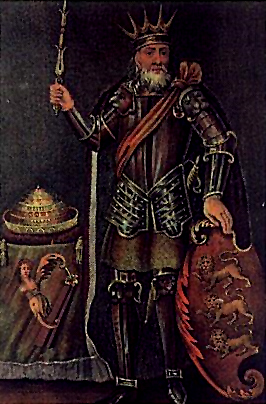
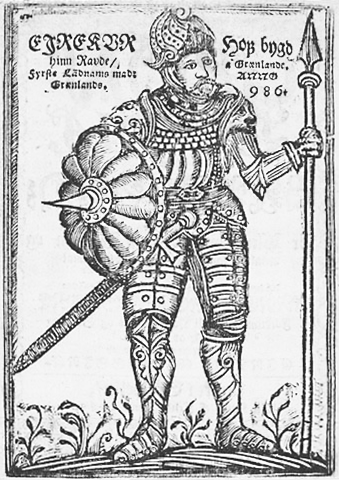
In Scandinavia, Erik has been used among nobility and royalty since Viking times. It was borne by several Danish, Norwegian and Swedish kings and rulers.  It was also the appellation of Eric the Red, (Eiríkr inn Rauda), a 10th-century Norse explorer who is credited for his discovery of Greenland.

The name was introduced into the English speaking world by Danish settlers during pre-Norman times, however, the name was never common in Medieval England. It was revived in 19th-century Britain, thanks in part to the novel Eric, Little by Little (1858) by Frederic William Farrar.

In the United States, its early popularity is more likely due to the sudden influx of Scandinavian immigrants during the late 19th-century. Ever a classic in Scandinavia and among the Scandinavian diaspora, Eric was continually given to the descendants of the first bearers who settled the North American shores.

In 1880, Eric appears as the 600th most popular male name, by 1896, when Swedish immigration was at its peak, he had jumped several hundred spaces, coming in as the 388th most popular male name in the United States.

The highest Eric has ever peaked in U.S. naming history was between 1973 and 1976 coming in as the 13th most popular male.

Currently, he stands as the 86th most popular male name, (2008).

In other countries, his rankings are as follows:

  • # 80 (Canada, B.C., 2008)
  • # 48 Erik (Hungary, 2008)
  • # 32 Erik (Norway, 2009)
  • # 50 Erik (Sl0venia, 2005)
  • # 9 (Sweden, 2009)

Other forms of the name include:

  • Aric (Anglo-Saxon: original English spelling)
  • Eryk Эрык (Belarusian/Polish)
  • Erig (Breton)
  • Erik ЭрикDanish/Dutch/Czech/Estonian/Finnish/German/Hungarian/Norwegian/Russian/Spanish/Swedish/Ukrainian
  • Eric (Danish/English/Norwegian/Slovene/Swedish)
  • Erick (Danish/English/German)
  • Jerik/Jerrik (Danish)
  • Jerk (Danish/Swedish: dialectical form)
  • Eerik (Estonian/Finnish)
  • Eirikur (Faroese)
  • Eerikki (Finnish: dialectical form found in Karelia)
  • Ertto (Finnish: dialectical form from East Finland)
  • Erkka/Erkki/Erkko/Erkku (Finnish)
  • Jerkka (Finnish)
  • Éric (French)
  • Erich (German)
  • Eiríkur (Icelandic)
  • Jórekr/Jórekur (Icelandic)
  • Erico (Italian/Spanish)
  • Ericus (Late Latin)
  • Eiríkr (Old Norse)
  • Eirik (Norwegian: Nynorsk)
  • Érico (Portuguese)
  • Erke (Sami)
  • Erk (Swedish: obscure dialectical form)
  • Erker (Swedish: obscure dialectical form)
  • Jerker (Swedish: dialectical form)

Finnish diminutives are: Eera, Eeri, Eiro, Eppo, Eppu, Era and Ero.

Its feminine form of Erica has also left an impression on the English-speaking world. The fact that it also coincides with the the Latin name for heather, may have also boosted the name’s popularity.

Currently, Erica ranked in as the 293rd most popular female name in the United States, (2008). The highest she ranked was between 1986-1988, coming in as the 31st most popular female name.

Other variations include:

  • Aricca (Anglo-Saxon: obscure Medieval form)
  • Erika Эрика (Czech/Danish/Dutch/German/Hungarian/Icelandic/Norwegian/Russian/Slovak/Slovene/Swedish)
  • Erica (Danish/Dutch/English/Italian/German/Norwegian/Romansch/Spanish/Swedish)
  • Erikka (Danish/Finnish)
  • Erikke (Danish)
  • Jerika (Danish)
  • Ericka (German)
  • Eirika (Faroese)
  • Eerika/Eerikka/Eriikka (Finnish)
  • Eryka (Polish)
  • Érica (Portuguese)

A feminine Finnish pet form is Eekku.

The designated name-day is May 18.

Sources

  1. http://www.nordicnames.de/wiki/Erik
  2. http://www.behindthename.com/name/eric
  3. http://www.askoxford.com/firstnames/eric?view=uk