Bernard, Bernadette

Gender: Masculine
Origin: Old German
Meaning: “brave as a bear; hardy as a bear.”
(Am. Eng) (ber-NARD); (Brit. Eng) (BER-nerd)

The name is composed of the Old High Germanic elements, bern (bear) and hard (brave; hardy).

The name was introduced into England by the conquering Normans in the 10th-century, replacing the more Anglo-Saxon version of Beornheard.

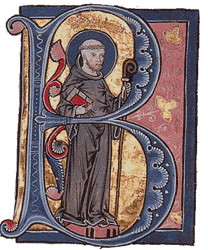
It became quite prevalent throughout Western Europe during the middle ages due to the associations with St. Bernard of Menthon, a Swiss monastic credited to building hospices in the Alps, (it is from him that the breed of dog, the St. Bernard, takes its name) and St. Bernard of Clairvaux, an influential 12th-century French theologian who is revered as both a saint and Doctor of the Church by the Catholic Church.

As of 2009, the name fell out of the U.S. top 1000 most popular male names. The highest he ever ranked in U.S. naming history was at # 45 in 1919 and again in 1921.

Its more popular feminine version of Bernadette became prevalent, especially among Catholics throughout the Western World, after the Canonization of St. Bernadette Soubirous (née Marie-Bernarde Soubirous). St. Bernadette was a 19th-century French peasant girl credited to seeing visions of the Virgin Mary in Lourdes, France.

Before her recognition throughout the world, Bernadette was primarily a diminutive, used as an affectionate form of the French feminine name, Bernarde.
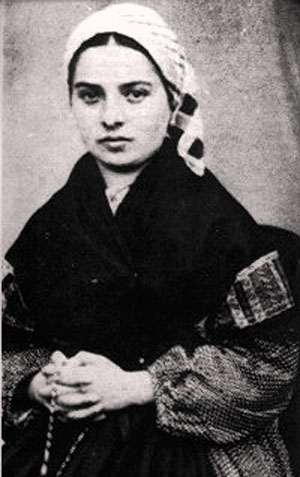
The last time Bernadette ranked in the U.S. top 1000 was in 1993, coming in at # 891. The highest she ever ranked in U.S. naming history was in 1946, coming in as the 188th most popular female name. Its Hungarian cognate of Bernadett currently ranks in as the 76th most popular female name in Hungary (2009).

Variations

Bernard

Bernardi (Albanian)
Bernal (Aragonese/Galician)
Beñat (Basque)
Bernarta (Basque)
Bernez (Breton)
Bernat (Catalan)
Bernardu (Corsican/Sardinian)
Bernard (Croatian/Czech/English/French/German/Polish/Romanian/Romansch/Slovenian/Swedish)
Bernhardt/Bernhart (Danish/Finnish/German/Norwegian/Swedish)
Berend (Dutch)
Bernaard (Dutch)
Bernhard (Dutch/Estonian/German)
Päärn/Pärn/Pärno (Estonian)
Pääro (Estonian)
Pearn/Pearu (Estonian)
Bernardin (French/Romansch)
Bent (Frisian)
Bernaldo (Galician)
Bernaldino (Galician)
Berendt (German)
Berinhard (German: archaic)
Bernd/Berndt (German/Swedish)
Bernárd (Hungarian)
Bernát (Hungarian)
Bennardo/Bennardino (Italian)
Berardo (Italian)
Bernadetto (Italian)
Bernardino (Italian)
Bernardo (Italian/Portuguese/Spanish)
Bernoardo (Italian)
Bearnárd (Irish-Gaelic)
Bernardus (Late Latin)
Bernards (Latvian)
Bierants (Latvian)
Biernis (Latvian)
Bernardas (Lithuanian)
Beurnard (Poitevin)

Bernadette

Bernardete (Albanian/Portuguese)
Bernada (Catalan/Occitanian)
Bernadeta (Catalan/Occitanian/Polish)
Bernarda (Croatian/German/Italian/Slovene/Spanish/Polish/Portuguese)
Bernadette (English/French)
Bernarde (French)
Bernardine (French)
Bernadett (Hungarian)
Bernadetta/Bernardetta (Italian)
Bernardina (Italian)
Bernadetė (Lithuanian)
Bernardka (Slovenian)
Bernardita (Spanish)

Common English diminutives for both names are Bernie & Benny.

In French it is Bébère, Nanard and Bernie for males.

A Polish female diminutive is Bernardetka.

The designated name-day is August 20.

Source
  1. http://www.behindthename.com/name/bernard

Radegonde

Gender: Feminine
Origin: Germanic
Meaning: “war counsel.”

The name is composed of the Germanic elements, rad meaning “counsel” and gund meaning “war.”

The name was borne by a 6th-century French saint who is particularly venerated in the city of Poitiers in France.

St. Radegonde was a Thuringian Princess, the fourth wife of the Frankish king Clotaire I, she founded the monastery of St. Croix in Poitiers.

St. Radegonde was known for her piety and tried to live a life of humility, chastity and poverty while queen.

Many legends and miracles were attributed to her.

In the city of Poitiers, she is considered the patron saint of university students and till this day, students from the University of Poitiers will often visit her tomb before an exam in hopes that the saint will intervene on their behalf.

The designated name-day is August 12.

Other forms of the name include:

Radegunda (Catalan/Lithuanian/Polish/Portuguese/Spanish)
Radegundis (Dutch/German/Old French)
Radegund (English/German)
Rhadegund (English: archaic)
Radegonde (French)
Radegunde (German)
Radegonda (Italian)

Source

  1. http://fr.wikipedia.org/wiki/Radegonde_de_Poitiers

Ulrich

Gender: Masculine
Origin: German
Meaning: “power and prosperity.”
Germ (OOL-hreeh); Eng (UL-rick); Swe (OOL-reek)

The name is derived from the Germanic elements, uodal, meaning “heritage” and ric meaning, “power.”

Both the feminine and masculine form have been fairly common in Germanic countries for centuries. It was borne by two German saints and it was also the name of the Swiss Protestant Reformor, Ulrich Zwingli (1484-1431).

Other forms of the name include:

Ulric (Catalan/French)
Oldřich (Czech)
Ulrik (Danish/Dutch/Hungarian/Norwegian/Swedish)
Oldrik (Dutch)
Olerik (Dutch)
Ulric (English)
Ulrich (French/German/Icelandic)
Huldrych/Huldreich (German)
Ódor (Hungarian)
Olderico/Olderigi/Olderigo (Italian)
Udalrico/Udalrigo (Italian)
Uldarico/Ulderico (Italian)
Ulderigo (Italian)
Ullrico (Italian)
Uldis (Latvian)
Ulriks (Latvian)
Odalrich (Old High German)
Ulryk (Polish)
Ulrico (Portuguese/Spanish)
Oldrich (Slovak)
Urh (Slovene)
Uldarico (Spanish)

Uli is a common diminutive form used in Germany, while Ueli is the preferred form used in Switzerland.

Feminine forms include:

Ulrika (Czech/German/Norwegian/Slovak/Swedish)
Ulrike (Danish/German/Norwegian)
Ulrikke (Danish/Norwegian)
Ulla (Finnish/German)
Ulrique (French)
Ulrieke (German)
Ulrira (German)
Ulschke (German)
Ulrica (Italian/Romansch/Spanish)
Ulryka (Polish)

Common German feminine diminutive forms include: Ike, Rieke, Rika, Rike, Riken, Rikerl, Riki, Ule, Uli, Ulla, Ulle, Ulli, Ullie, Ully and Uri.

Its feminine counterpart has been borne by at least one Swedish princess, a fictional character in Walter Scott’s 1819 novel, Ivanhoe and Ulrika Pasch, an 18th-century female Swedish painter.

The designated name-day July 4 in most countries and July 10 in France.

Sources

  1. http://www.behindthename.com/name/ulrich
  2. http://www.behindthename.com/namedays/lists/7.php

Urban

Gender: Masculine
Origin: Latin
Meaning: “city-dweller.”
Eng (ER-ben)

The name is derived from the Latin name, Urbanus, which means “city-dweller.”

The name is mentioned briefly in one of St. Paul Epistles in the New Testament and was also borne by several popes.

In 2005, Urban was the 33rd most popular male name in Slovenia.

Other forms of the name include:

Urbà (Catalan)
Urban (Czech/Danish/Dutch/English/Estonian/German/Slovakian/Slovene/Norwegian/Polish/Russian/Swedish)
Urbas/Urbo (Finnish)
Urpa/Urpo (Finnish)
Urbain (French)
Ourbanos (Greek: Biblical)
Orbán/Orbó/Urbán (Hungarian)
Urbano (Italian/Portuguese/Spanish)
Urbanus (Latin)
Urvan (Russian)

An Italian feminine form is Urbana.

The designated name-days are: April 2/16 (Poland), May 25 (Estonia/Slovakia/Sweden), July 2/29 (Poland), September 27 (Poland), October 31 (Poland) and December 19 (Poland).

Source

  1. http://www.behindthename.com/name/urban


Goulwen

Gender: Masculine
Origin: Breton
Meaning: “holy light or; white light.”

The name is composed by the Breton elements, goulou, meaning “light” and gwen which can either mean “holy” or “white.”

The name was borne by an early Breton saint, a commune in the department of Finistère was named in his honour.

Other forms of the name include:

Goulc’hen (Breton)
Golven (French)
Gonvel (French)
Gonven (French)
Goulien (French)
Goulven (French)
Goven (French)

Feminine forms are:

Goulwena /Goulvena
Goulwenez/Goulvenez

The designated name-day is July 1.

Sources

  1. http://www.behindthename.com/namedays/lists/7.php
  2. http://fr.wikipedia.org/wiki/Goulven_(prénom)
  3. http://www.tous-les-prenoms.com/prenoms/garcons/goulwen.html

Silver, Silvère

Gender: Masculine
Origin: Latin
Meaning: “woods”
Fre (seel-VARE)

The name is derived from the Latin, Silverius, which may possibly be from the Latin word, silva, meaning “forest; woods.”

Its occasional modern usage in English speaking countries is more likely due to its association with the English for the precious metal of the same name.

The name was borne by a few early saints, the most notable be Pope Saint Silver (536-537).

Other forms of the name include:

Siveri (Catalan)
Silverije (Croatian)
Silver (English/Estonian)
Silverio (Galician/Italian/Spanish)
Sylweriusz (Polish)
Silvério (Portuguese)
Silveriu (Romanian)

The designated name-days are June 20 (France) and December 31 (Estonia).

A feminine form is the Spanish/Italian Silveria.

Sources

  1. http://www.behindthename.com/comment/search.php?terms=silver

François-Régis, Régis

Gender: Masculine
Origin: French
Fre (HRAY-ZHEE); Eng (REE-jis)

The name is from a Catalan surname meaning, “ruler” and was originally bestowed as a double name, (in conjunction with François) in reference to a 16th-century French saint, known in English as Francis Regis or just plain Regis.

The name is borne by American TV host, Regis Philbin (b.1931).

The designated name-day in France is June 16.

Sources

  1. http://www.behindthename.com/namedays/lists/6.php
  2. http://en.wikipedia.org/wiki/John_Francis_Regis

Germain, Germaine

Origin: French/Latin
Meaning: “seed”

The names are derived from the Roman cognomen, Germanus, which is derived from the Latin, germen, meaning “seed.” The meaning may have been synonymous with “brother; relative” or “blood relation.”

Germain is the French masculine form while Germaine (jer-MANE) Eng; (zhare-MEHN) Fre, is the feminine form.

St. Germaine Cousin was a 16th-century French saint and shepherdess. She was said to have suffered from a debilitating form of Tuberculosis, which crippled her, and she was also physically abused by her stepmother. She was renowned for her piety.

After her death, several miracles were attributed to the saint, and she has been venerated ever since, being canonized by the Catholic Church in 1867.

In France, the designated name-day is June 15.

Other forms of the name include:

    Germana (Italian/Polish/Portuguese/Spanish)
    Zermena (Latvian)

Another masculine form is the Italian/Spanish/Portuguese, Germano. A Polish masculine form is German.

Sources

  1. http://en.wikipedia.org/wiki/Catholic_Encyclopedia
  2. http://www.behindthename.com/name/germanus

Guy

Gender: Masculine
Origin: French
Meaning: “wood; wide.”
Eng (GIE); Fre (GEE)

The name is derived from the early Germanic name Wido which is possibly derived from the Germanic element, widu, either meaning, “wood” or “wide.”

The name was introduced into England after the Norman Conquest, but after the infamy of 16th-century Guy Fawkes the name went out fashion. It was, however, always a very common name among French-Americans, especially among the French Acadians of Louisiana.

The Italian form is Guido, which has been a fairly common name among Italian-Americans but is now associated with a controversial term describing a middle class Italian-American from the East Coast of the United States. This was especially brought to attention after the 2009 reality tv show, Jersey Shore. However, it is uncertain if the term used to describe a particular class of people within the Italian community is related to the given name or to a different etymological source.

The name was borne by a Sicilian saint and martyr.

The designated name-day in France is June 12.

Other forms of the name include:

  • Guiu (Catalan)
  • Vid (Croatian/Hungarian/Slovene)
  • Vít (Czech/Slovak)
  • Vitus (Danish/Dutch/German/Hungarian)
  • Gwijde (Dutch)
  • Guy (English/French)
  • Guidon (French)
  • Gui (French)
  • Wide (Frisian)
  • Guido (German/Italian)
  • Veit (German)
  • Wido/Wito (German)
  • Cino (Italian)
  • Guidarello (Italian)
  • Guidino (Italian)
  • Guidolino (Italian)
  • Guidone/Guittone (Italian)
  • Guidotto (Italian)
  • Guiduccio (Italian)
  • Guittoncino (Italian)
  • Gvidas/Gvidonas (Lithuanian)
  • Gwido (Polish)
  • Wit (Polish)
  • Guidas (Romansch)
  • Guidi (Slovene)
  • Gvido/Gvidon (Slovene)
  • Vito (Spanish)

French masculine diminutives include: Guitou, Guiton, GuiGui & Guy-Guy

Feminine offshoots include:

  • Vita (Danish)
  • Guyenne (French)
  • Guyette (French)
  • Guyonne (French)
  • Vida (Hungarian/Slovene)
  • Guida (Italian/Romansch)
  • Guidetta (Italian)
  • Gvida (Slovene)
  • Gvidica (Slovene)

Sources

  1. http://www.behindthename.com/php/related.php?name=guy
  2. http://www.askoxford.com/firstnames/guy?view=uk

Saintly Sunday

Since I have been behind in my posts, I thought my readers deserved an extra feature this weekend. Saints names. Sure, we are all familiar with Bernadette, Margaret Mary, Theresa, Peter and Luke, but the Catholic Church’s Calender of Saints offers us a huge variety of unique names, whether you are Catholic, Orthodox or just looking for an interesting name to bestow upon your child, the below list offers a wide range of unique yet very legitimate names.

Each name of the saint is divided by nationality (m) stand for Male while (f) stands for Female.

Some interesting Saint’s name that might be of interest to the expectant parent:

Armenian

  • Arsen (m)
  • Barak (m)
  • Beemen (m)
  • Khoren (m)
  • Mamwell (m)
  • Mesrob (m)
  • Narek (m)
  • Nouneh/Nune (f)
  • Pakos (m)
  • Yeprem (m)

Breton

  • Azenor (f)
  • Canna (f)
  • Clervie (f)
  • Derrien (m)
  • Enora (f)
  • Fragan (m)
  • Gobrien (m)
  • Gwenfrewi (f)
  • Kirio (m)
  • Koupaïa (f)
  • Maclou (m)
  • Mael (m)
  • Malo (m)
  • Milio (m)
  • Morwenna (f)
  • Noyala/Noyale (f)
  • Nolwenn (f)
  • Onenne (f)
  • Peran (m)
  • Rittan (m)
  • Samzun (m)
  • Trillo (m)
  • Urielle (f)

Bulgarian

  • Astion (m)
  • Boyan (m)
  • Kamen (m)
  • Kiril (m)
  • Naum (m)
  • Raiko (m)

Catalan

  • Eulàlia (f)
  • Just (m)
  • Ot (m) (might make a cool one syllable middle name)
  • Pacian (m)
  • Sever (m)

Cornish

  • Austell (m)
  • Brychan (m)
  • Burian (f)
  • Croidan (m)
  • Endellion (f)
  • Keyne (f)
  • Kigwe (f) KIG-wee
  • Levin (m)
  • Mabyn (f)
  • Marwenna (f)
  • Minver (f)
  • Newlina (f)
  • Salom (m)

Croatian

  • Kvirin (m)

Danish

  • Ansgar (m)
  • Thøger (m)

Dutch

  • Aleydis (f)
  • Alina (f)
  • Falco (m)
  • Godelieve (f)

Egyptian

  • Abanoub (m)
  • Abraam (m)
  • Ashraf (m)
  • Bishoi (m)
  • Demiana (f)
  • Lot (m)
  • Paisi (f)
  • Pamin (m)
  • Piama/Piamun (f)
  • Potamina (f)
  • Maysoon (f)
  • Samia (f)
  • Talida (f)

English

  • Alban (m)
  • Anselm (m)
  • Averil (f)
  • Bede (m)
  • Billfrith (m)
  • Birin (m)
  • Boswell (m)
  • Britwin (m)
  • Caedmon (m)
  • Credan (m)
  • Day (m)
  • Dotto (m)
  • Dunstan (m)
  • Ebba (f)
  • Elstan (m)
  • Enswith (f)
  • Eskil (m)
  • Fursey (m)
  • Ina (f)
  • Ivo (m)
  • Lewina (f)
  • Merwinna (f)
  • Modwen (f)
  • Odo (m)
  • Osana (f)
  • Rumon (m)
  • Sanctan (m)
  • Sebbi (m)
  • Swithun (m)
  • Sythe (f)
  • Tanco (m)
  • Tetta (f)
  • Tibba (f)

French

  • Bond (m)
  • Céronne (f)
  • Césarie (f)
  • Cloud (m)
  • Dreux (m)
  • Emérance (f)
  • Evronie (f)
  • Fare (f)
  • Faustine (f)
  • Fingen (m)
  • Gauthier (m)
  • Gibrien (m)
  • Grimonie (f)
  • Harvey (m)
  • Ismérie (f)
  • Julienne (f)
  • Meldon (m)
  • Namadie (f)
  • Néomaye (f) ney-oh-may
  • Noémoise (f) no-ey-mwahz
  • Pepin (m)
  • Quitterie (f) pronounced keet-teh-hree
  • Reine (f)
  • Ségolène (f)
  • Solange (f)
  • Soline (f)
  • Tressan (m)
  • Vigor (m)
  • Vitaline (f)
  • Wivine (f)

Galician

  • Aldara (f)
  • Gonzalo (m)
  • Paio (m)

German

  • Afra (f)
  • Alto (m)
  • Ambet (f)
  • Anno (m)
  • Attalia (f)
  • Bardo (m)
  • Benno (m)
  • Brito (m)
  • Coloman (m)
  • Cordula (f)
  • Hazeka (f)
  • Odilia (f)
  • Oranna (f)
  • Roswitha (f)
  • Sturm (m)

Greek

  • Anastasia (f)
  • Anthusa (f)
  • Anysia (f)
  • Apollos (m)
  • Basilissa (f)
  • Calliope (f)
  • Cleopatra (f)
  • Emmelia (f)
  • Ephraim (m)
  • Jerome (m)
  • Lybe (f)
  • Menodora (f)
  • Myrope (f)
  • Nicon (m)
  • Orestes (m)
  • Photine (f)
  • Philemon (m)
  • Philo (m)
  • Philothea (f)
  • Theone (f)
  • Timon (m)

Hungary

  • Emeric
  • Laszlo

Irish

  • Balin (m)
  • Becan (m)
  • Benen (m)
  • Brogan (m)
  • Caimin (m)
  • Cainder (f)
  • Ciara (f)
  • Coca (f)
  • Colman (m)
  • Conall (m)
  • Cormac (m)
  • Dallan (m)
  • Dymphna (f)
  • Edana (f)
  • Ermina (f)
  • Fedelma (f)
  • Finian (m)
  • Fintan (m)
  • Foila (f)
  • Ita (f)
  • Kenan (m)
  • Kennera (f)
  • Kilian (m)
  • Kinnia (f)
  • Lelia (f)
  • Loman (m)
  • Macallan (m)
  • Macartin (m)
  • Machai (m)
  • Mella (f)
  • Modan (m)
  • Monessa (f)
  • Odran/Odrian (m)
  • Phiala/Piala (f)
  • Scottin (m)
  • Thomian (m)
  • Trea (f)
  • Trien (m)

Italian

  • Aldobrandesca (f)
  • Archanegla (f)
  • Asteria (f)
  • Bacco (m)
  • Caio (m)
  • Carissima (f)
  • Caro (m)
  • Celestina (f)
  • Chiara (f)
  • Dulcissima (f)
  • Fina (f)
  • Fosca (f)
  • Franca (f)
  • Giovina (f)
  • Grata (f)
  • Gaudenzia (f)
  • Gemma (f)
  • Messalina (f)
  • Nereo (m)
  • Nilo (m)
  • Panacea (f)
  • Pierina (f)
  • Oronzo (m)
  • Rocco (m)
  • Romola (f)
  • Sofronia (f)
  • Verdiana (f)
  • Vilana (f)
  • Vincenza (f)
  • Zita (f)

Latin/Roman

  • Asella (f)
  • Caius (m)
  • Cassius (m)
  • Cyra (f)
  • Dafrosa (f)
  • Emiliana (f)
  • Fabiola (f)
  • Flavia (f)
  • Galla (f)
  • Juliana (f)
  • Julitta (f)
  • Lucian (m)
  • Marana (f)
  • Marcellina (f)
  • Martial (m)
  • Maximus (m)
  • Montanus (m)
  • Pastor (m)
  • Prisca (f)
  • Serapia (f)
  • Vissia (f)

Lebanese

  • Appian (m)
  • Charbel (m)
  • Habib (m)
  • Rafka (f)
  • Sabas (m)

Polish

  • Aniela (f)
  • Faustina (f)
  • Michalina (f)
  • Salomea (f)

Portuguese

  • Alexandrina
  • Jacinta

Romanian

  • Calinic (m)
  • Theotim (m)

Scottish

  • Blane (m)
  • Conwall (m)
  • Kennera (f)
  • Kevoca/Quivoca (f)
  • Nathalan (m)
  • Rule (m)
  • Thanea (f)
  • Thaneva (f)

Spanish

  • Amunia (f)
  • Aurea  (f)
  • Casilda (f)
  • Florentina (f)
  • Garcia (m)
  • Inigo (m)
  • Madrona (f)
  • Marciana (f)
  • Millán (m)
  • Oria (f)
  • Orosia (f)
  • Pelayo (m)
  • Soledad (f)
  • Urbicio (m)

Welsh

  • Aled (f)
  • Baglan (m)
  • Brannock (m)
  • Cai (m)
  • Caian (m)
  • Crallo (m)
  • Dwynwen (f)
  • Elined (f)
  • Eiliwedd (f)
  • Kanten (m)
  • Madoc (m)
  • Madrun (f)
  • Maelrhys (m)
  • Melangell (f)
  • Teilo (m)
  • Tysilio (m)

Ugandan

  • Kizito (m)

So, which country offers the coolest selection of saint’s names?

Sources

  1. http://chrsouchon.free.fr/saintsbe.htm
  2. http://www.britannia.com/bios/saints/
  3. http://www.paradoxplace.com/Photo%20Pages/UK/British%20History/English_Saints_&_Kings.htm
  4. http://celticsaints.org/
  5. http://www.skete.com/index.cfm/fuseaction/product.display/product_id/1516/index.cfm
  6. http://www.catholic.org/saints/stindex.php
  7. http://www.catholic.org/saints/