Raphael

Gender: Masculine
Origin: Hebrew רָפָאֵל Ραφαηλ
Meaning: “God is healer.”
Fre (ra-fa-EL); Eng (RAF-ee-el; RAY-fee-əl)

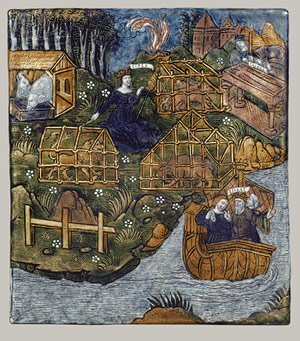
The name is found in Judeo-Christian and Islamic legend as the name of a major archangel. In the Bible, he is mentioned in the Book of Tobit, which is considered canonical in the Roman Catholic, Orthodox and Anglican tradition. Due to Raphael’s deliverance of Sarah from the demon Asmodeus (who killed every husband she married before consumation), Raphael has been invoked as a matchmaker by Catholics.

Raphael also appears in the non-canonical Book of Enoch in which he is responsible for binding the fallen angel Azazel

In Islamic tradition, he is known as Israfel/Israfil and it is believed that he will blow the trumpet on Judgement Day.

It is interesting to note that the modern Hebrew word for a medical doctor is  דוֹקטוֹר (rophe), compare to the first element of Raphael.

Raphael is currently a trend across Europe, in France, Raphaël is the 11th most popular male name, (2010). His rankings in his various forms are as follows:

  • # 3 (Liechtenstein, 2010)
  • # 11 (Rafael, Brazil, 2010)
  • # 17 (Austria, 2010)
  • # 40 (Rafał, Warsaw, Poland, 2010)
  • # 48 (Rafał, Poland, 2009)
  • # 50 (German-speaking, Switzerland, 2010)
  • # 54 (Raphaël, Belgium, 2008)
  • # 55 (Rafael, Spain, 2010)
  • # 56 (Rafael, Croatia, 2009)
  • # 63 (Rafael, France, 2010)
  • # 189 (Rafaël, Netherlands, 2011)
  • # 274 (Rafael, United States, 2011)
  • # 668 (United States, 2011)

Its feminine form of Rafaela is currently the 8th most popular female name in Brazil, (2010), while the French form of Raphaëlle ranked in as the 273rd most popular female name in France, (2010).

Other forms of the masculine include:

  • Rafael (Albanian/Armenian/Catalan/Croatian/Czech/Finnish/Hungarian/Portuguese/Romanian/Romansch/Scandinavian/Slovene/Spanish)
  • Raphel ሩፋኤል (Amharic/Ethiopian)
  • Rupha(e)l ራፋኤል (Amharic/Ethiopian)
  • Israfil اسرافيل, Исрафил (Arabic/Central Asian: used among Muslims)
  • Rapael რაფაელ (Armenian/Georgian)
  • Rafail Рафаил Ραφαήλ (Bulgarian/Greek/Macedonian/RomanianRussian/Serbian)
  • Rafel (Catalan)
  • Raphael (Coptic/English/German)
  • Rafaël (Dutch)
  • Raafael (Estonian)
  • Raphaël (French)
  • Raiféal (Gaelic)
  • Raffaele (Italian)
  • Raffaello (Italian)
  • Raffaelino (Italian)
  • Îsrafîl (Kurdish)
  • Rafla (Lebanese/Syrian: used among Christians)
  • Rafaelis (Lithuanian)
  • Rapolas (Lithuanian)
  • Rafel (Maltese)
  • Rafał (Polish)
  • Arrafieli (Sardinian)
  • Rafiele (Sardinian)
  • İsrafil (Turkish)
  • Rafayil Рафаї́л (Ukrainian)
Common diminiutives are: Raf (Dutch); Rafe (English); Ralph (English); Rafinha (Brazilian-Portuguese); Rafa (Spanish).
Feminine forms include:
  • Rafaela (Croatian/Macedonian/Portuguese/Romansch/Slovene/Spanish)
  • Raphaëlle (French)
  • Raphaela (German)
  • Raphaele (German)
  • Raffaella (Italian)
  • Raffaellina (Italian)
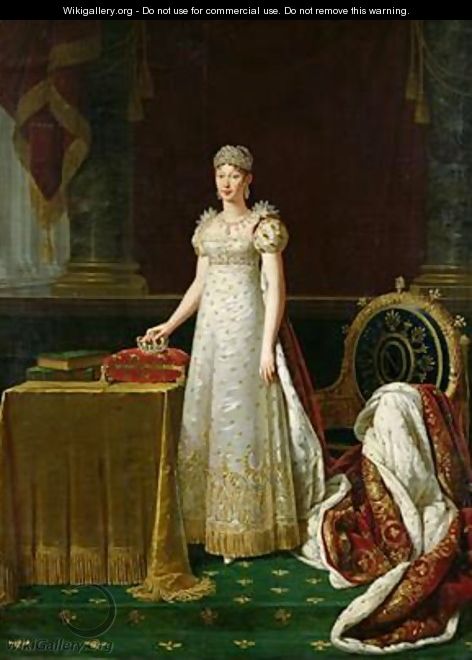
The name was also notably borne by Raphael, or Raffaello Sanzio (1483–1520), an Italian master painter.

Theo

Gender: Masculine
Origin: Greek
Meaning: “god.”

The name is possibly derived from the Greek, theos, meaning, “god.” It is more likely a contracted form of several different names beginning with the element of theo-.

Currently, Theo has become trendy across Europe. As of 2010, Théo was the 14th most popular male name in France. His rankings in other countries are as follows:

  • # 15 (Belgium, 2008)
  • # 19 (Sweden, 2011)
  • # 39 (Norway, 2011)
  • # 44 (Brazil, 2010)
  • # 44 (Teo, Croatia, 2009)
  • # 50 (England/Wales, 2010)
  • # 50 (Teo, Slovenia, 20100
  • # 99 (Teo, Catalonia, 2010)
  • # 126 (Scotland, 2010)
  • # 155 (Teo, France, 2010)
  • # 865 (United States, 2011)

Other forms of the name include:

  • Teo (Catalan/Croatian/Italian/Slovene/Spanish)
  • Theo (Dutch/English/German/Greek/Portuguese/Scandinavian)
  • Théo (French)
  • Téo (Portuguese)
A feminine form is Thea.

Roman

Gender: Masculine
Origin: Latin
Meaning “Roman.”
Eng Masc. (ROH-men) Eng Fem. (roh-MANE); Fre Masc. (hroh-MAHn); Fre Fem. (hroh-MEHN); Pol (ROH-mahn)

The name’s meaning is clear from its very first utterance, most renowned in the State’s through Polish director and film maker, Roman Polanski, it was the name of a Christian martyr who died under Diocletian.

In recent years, the name has had a peak in popularity, it currently ranks in as the 157th most popular male name in the United States (2011), and seems to be rising.

His rankings in other countries are as follows:

  • # 36 (Romain, Belgium, 2008)
  • # 39 (Romain, France, 2010)
  • # 228 (Roman, France, 2010)
  • # 494 (Netherlands, 2011)

Its designated name-days are: February 23 (Slovakia); February 28/29 (Poland), May 28 (Estonia), August 9 (Czech Republic/Poland), October 6/23 (Poland), November 18 (Poland).

Roman is used in Czech, Estonian, German, Polish, Slovakian and Slovenian.

Other forms of the name are:

  • Roman Роман (Croatian/English/German/Norwegian/Polish/Romansch/Russian/Slovak/Slovene/Swedish/Ukrainian)
  • Romain (French)
  • Romanos (Greek)
  • Román (Hungarian/Spanish)
  • Romano (Italian)
  • Romanello/Romanino (Italian: obscure)
  • Romanus (Latin)
  • Romanas (Lithuanian)
  • Reman (Poitvin)
  • Romans (Poitvin)
  • Rouman (Poivin)

In Polish, Romek is the diminutive form.

Feminine forms are:

  • Romana (Croatian/Czech/Italian/Lithuanian/Polish/Slovak/Slovene)
  • Romaine (English/French)
  • Romane (French)
  • Romána (Hungarian)
  • Romanella (Italian)
  • Romanina (Italian)
  • Romanita (Italian/Spanish)
  • Romina (Italian/Spanish)
  • Romanela (Polish: very obscure)

Robin

Gender: Masculine
Origin: English/French
Eng (RAH-bin); Fre (hroh-BAHn); Swe (ROH-bin)

Though the name has become increasinly feminine over years, and is now considered somewhat of a “mom” name, Robin is currently a fashionable male name in several countries.

Robin is a Middle English diminutive form of RobertIt is often associated with Robin Hood of Legend. Robin has been used as an independent given name since at least the 19th-century. Its usage on females began in the 1930s, (most likely being influenced by the bird). It first entered the top 1000 for females in 1932. The highest it ranked for females was in in 1962/1963 when it was consecutively the 25th most popular name for girls in the United States. Despite its popularity on females in the 60s, Robin did not fall out of the U.S. top 1000 for boys during those years. The highest he ever ranked was in 1956 when it was the 147th most popular male name. As of 2011, Robin does not rank in the U.S. top 1000 for either males or females.

His rankings in other countries are as follows:

  • # 45 (France, 2010)
  • # 60 (Belgium, 2008)
  • # 61 (Netherlands, 2011)
  • # 83 (Sweden, 2011)

An obscure Scottish feminine form is Robina.

Gaétan


Gender: Masculine
Origin: German/Polish/Italian/French
Meaning: “from Caieta.”
It (guy-TAH-no); Fre (GAH-eh-TAWn); Pol/Germ (KYE-eh-TAHN)

The name is derived from the Latin place name, Caietanus, meaning,  “from Caieta”. Caieta is now known as Gaeta.

In ancient Greece, this was a town where prisoners were taken to be executed. The town probably got its name from the wet nurse of Zeus in Greek myth.

It was borne by a 16th-century Italian saint, which spurred the popularity of the name throughout Europe. It has been in usage in German speaking countries as well as in Poland in the form of Kajetan and Cajetan, the name Kaj was later spun off from this name, now being more popular than its formal form in Sweden and Denmark.

As of 2010, its French form of Gaétan was the 122nd most popular male name in France.

Other forms of the name include:

  • Caitanu (Asturian)
  • Kaitan (Basque)
  • Gaietà (Catalan)
  • Gaitanu (Corsican)
  • Kajetán (Czech/Hungarian/Slovak)
  • Cajetaan (Dutch)
  • Gaétan (French)
  • Gaëtan (French)
  • Gaetano (Galician/Italian)
  • Kayetan (German)
  • Kajetan (German/Polish/Scandinavian)
  • Gaïtános Γαϊτάνος (Greek)
  • Caietanus (Latin)
  • Kajetonas (Lithuanian)
  • Aitano (Neopolitan)
  • Gaitano (Neopolitan)
  • Caetano (Portuguese)
  • Caetan (Romanian)
  • Cajetan (Romansch)
  • Kaetan Каетан (Russian)
  • Gajetànu (Sardinian)
  • Cayetano (Spanish)

Feminine forms are:

  • Gaetana (Italian)
  • Gaétane (French)
  • Gaëtane (French)
  • Kajetana (German/Polish)
  • Kaia (German)
  • Kaja (German/Polish)
  • Caietana (Latin)

Its designated name day is August 7.

Aurelian

Gender: Masculine
Origin: Latin
Meaning: “golden one.”
Eng (aw-RIL-lee-yen) Fre (Pronunciation)

The name is derived from the Latin cognomen, Aurelianus, which means, “golden one.”

The name was borne by a 3rd-century Roman Emperor.

As of 2010, its French form of Aurélien was the 150th most popular male name in France. Other forms of the name include:

  • Aureliani (Albanian)
  • Aurelián (Aragonese/Czech)
  • Awrelijan Аўрэліян (Belarusian)
  • Avrelian Аврелиан (Bulgarian/Russian/Ukrainian)
  • Aurelià (Catalan)
  • Aurelijan Аурелијан (Croatian/Macedonian/Serbian)
  • Aurelian (English/German/Lombard/Polish/Romanian)
  • Aurélien (French)
  • Aureliano (Galician/Italian/Portuguese/Spanish)
  • Avreliane ავრელიანე (Georgian)
  • Aurelianus (Latin)
  • Aureliāns (Latvian)
  • Aurelianas (Lithuanian)
  • Aurilianu (Sicilian)
A feminine form is Aureliana (Italian/Latin/Portuguese/Spanish)

Celestine

Gender: Masculine (English); Feminine (French)
Origin: Latin
Meaning: ” of the sky; of the heavens.”
Eng (sel-es-TINE; SEL-es-tin); Fre Masc (say-les-TEN); Fre Fem (say-les-TEEN)

The name is derived from the Late Latin male name, Caelestinus, meaning, “of the sky; of the heavens.”

In English, the name was anglicized to Celestine while in French, Célestine was always strictly the feminine form, the French masculine form being, Célestin.

The name was borne by five popes.

In the English-speaking world, Celestine was seldom used, if it was ever used it was usually used for females being a borrowing from the French, though Celestine is a common male name among Nigerian Catholics.

As of 2010, Célestin was the 415th most popular male name in France, while its feminine form of Célestine was the 419th most popular female name in France.

Other forms of the name include:

  • Celestin Целестин Целестин (Asturian/Bulgarian/Romanian/Romansch/Russian/Scandinavian/Serbian/Ukrainian)
  • Celestí (Catalan)
  • Celestýn (Czech)
  • Celestijn (Dutch)
  • Celestinus (Dutch)
  • Celestine (English)
  • Célestin (French)
  • Celestino (Galician/Italian/Portuguese/Spanish)
  • Coelestin (German)
  • Cölestin (German)
  • Zölestin (German)
  • Kelestínos Κελεστίνος (Greek)
  • Celesztin (Hungarian)
  • Caelestinus (Late Latin)
  • Celestinas (Lithuanian)
  • Celestyn (Polish)
  • Celestìnu (Sardinian)
  • Celestín (Slovene)
A famous female bearer was Célestine Galli-Marié (1840–1905), a French mezzo-soprano who created the title role in the opera Carmen
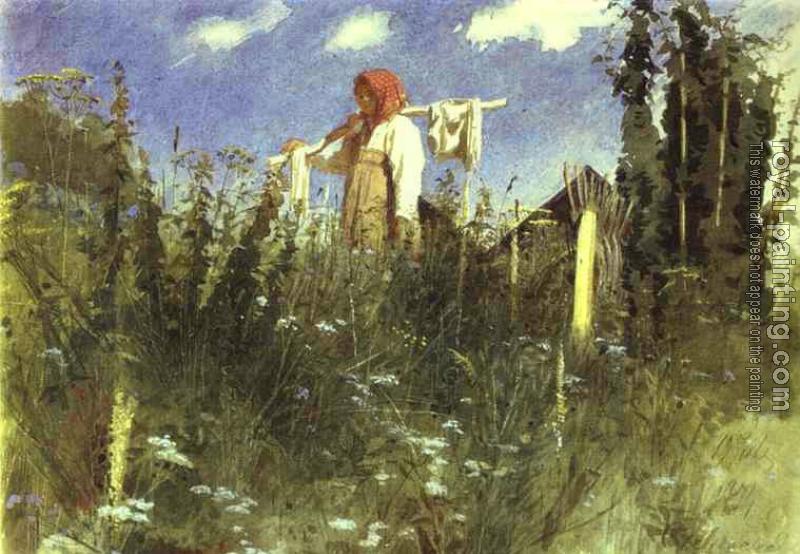
La Celestina, a 15th-century literary piece written by Fernando de Rojas, is considered one of Spain’s greatest pieces of literature.
Celestina is also the name of an 18th-century literary piece written by poet, Charlotte Turner Smith.
Other feminine forms include:
  • Celestina Целестина (Czech/English/Italian/Lithuanian/Portuguese/Romanian/Romansch/Russian/Slovak/Spanish)
  • Célestine (French)
  • Cölestina (German)
  • Zölestina (German)
  • Celesztina (Hungarian)
  • Celestyna (Polish)
  • Kolestina Колестина (Russian)

Celestine is also the name of an order of Benedictine monks and it is also the name of a type of mineral.

Sidony; Sidonie

Gender: Feminine
Origin: Latin
Meaning: “from Sidon.”
Eng (SIDE-e-NEE; sih-DOH-nee); Fre (SEE-doh-NEE); Germ (Pronunciation)

The name is derived from the Late Latin male name, Sidonius, which means, “from Sidon.” Sidon is the Latin name for what is now Saida, in Lebanon.

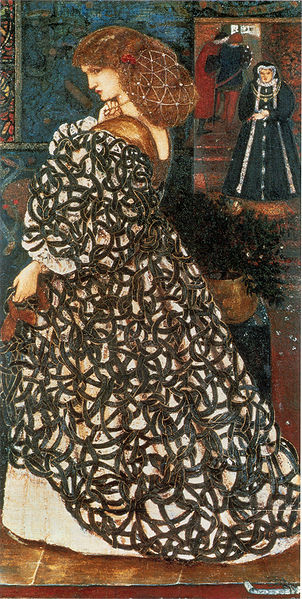
Sidony was quite common in Medieval England, its popularity was inspired by the Shroud of Turin, when the meaning of the name was misunderstood to be from the Greek word, sindon (linen). The name fell out of usage by the Renaissance. Sidonie was revived in 18th-century England, and has occasionally been in out of usage in both the UK and the United States.

In fact, the name was fairly prevalent throughout Medieval Europe, being found among royalty and the nobility alike.

The name is found in the French Medieval Prose, Pontus & Sidonie.

In French, Sidonie is technically a prenom épicène (a gender neutral name), however, it is rarely given to males and has been far more common on females since Medieval times. As of 2009, Sidonie was the 438th most popular female name in France.

Sidonie is also used in German-speaking countries (strictly feminine).

The male form of Sidonius was borne by a 5th-century bishop and saint.

The name was also borne by the legendary Sidonia von Borcke (1548–1620), a Pomeranian noblewoman who was tried and executed for witchcraft, she became the much the subject in English literature and art during the 19th-century.

Other forms of the name include:

  • Sidonija (Croatian/Slovene)
  • Sidonie (Czech/French/German)
  • Zdeňka (Czech)
  • Sidonia (Dutch/Czech/German/Latin/Polish)
  • Sidony (English)
  • Szidónia (Hungarian)
  • Sydonia (Polish/Sorbian)
  • Sidónia (Slovak)

Ange

Gender: Masculine
Origin: French
Meaning: “angel.”
(AWnzh)

The name comes directly from the French word for angel, and has been used as a given name since at least the 8th-century C.E.

It is techinically an epicène name, that is, one among the several names found within the French lexicon which has always been gender neutral. However, Ange by itself is more often given to males, while for females, it is usually paired with a feminine name, such as Marie-Ange

The name was borne by a few medieval saints. One of the most notable being St. Angelus of Jerusalem (1185-1220), a Christian convert of Jewish ancestry who left his native Palestine to join a friary in Sicily. He was eventually martyred by Berenger, a local knight, who killed him in anger after the saint rebuked him for living in an incestuous relationship.

Ange was a very common name among the early Acadians (Cajuns), of Louisiana and French-Canadians.

As of 2009, Ange was the 264th most popular male name in France.

Other forms of the name include:

  • Àngel (Catalan)
  • Angelus (English/German/Late Latin)
  • Angel (French/Romansch)
  • Angeli(n) (French)
  • Angely (French)
  • Angelo (Italian)
  • Anġlu (Maltese)
  • Àncilu (Sicilian)
  • Ángel (Spanish)
For a more comprehensive list, see Angela.