Corentin

Gender: Masculine
Origin: Breton/French
Meaning: debated
(Pronunciation)

Corentin is a franconized form of the Breton male name, Kaourentin, which is possibly related to the Breton word, kaour, meaning, “help.” Other possibilities include kar (friend) or karent (parent), or even the Celtic, korventenn, meaning, “hurricane.”

The name was borne by one of the seven founding saints of Brittany. He is revered as the patron saint of Seafood as it is believed he subsisted on a miraculous fish that would regrow its body parts every time the saint cut off a piece.

As of 2010, Corentin was the 64th most popular male name in France.

Other forms of the name include:

  • Kaourentin (Breton)
  • Corentyn (Cornish)
  • Corentin (French)
  • Corentino (Italian)
Feminine forms include: Corentine (French) and Kaourentina (Breton).

Erwan

Gender: Masculine
Origin: Breton
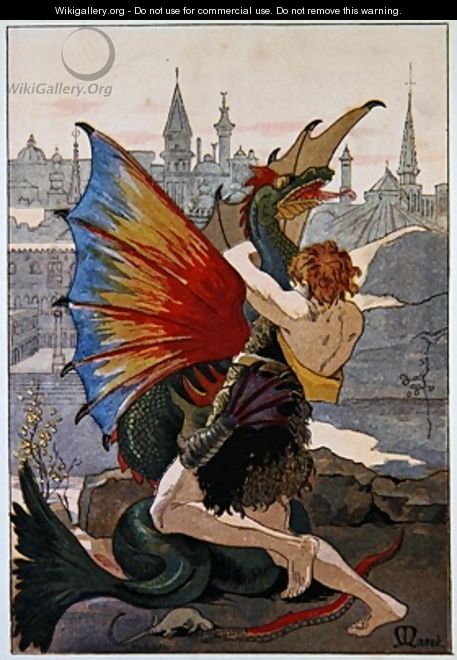
Meaning: “dragon.”
(air-WAHn)

The name is derived from the Breton word, aerouant, meaning, “dragon.” The name was often translated to Yves in French, though neither name have any etymological relation.

As of 2010, Erwan was the 76th most popular male name in France.

Feminine forms are Erwana and Erwanez.

Lilian

Gender: Masculine
Origin: Latin
Meaning: “lily.”
Fre (Pronunciation)

Not to be confused with the feminine English name, Lillian, though they share the same etymology, Lilian has always been a male name in France, its feminine form being Liliane.

Lilian is derived from the Latin lilium (lily).

As of 2010, Lilian was the 78th most popular male name in France.

Wassim

Gender: Masculine
Origin: Arabic  وسیم
Meaning: “handsome.”
(WAH-SEEM)

The name is derived from the Arabic meaning, “handsome.”

As of 2010, Wassim was the 102nd most popular male name in France.

A variation transcription is Wasim.

Feminine form is Wassima.

Nathanael, Nathaniel

Gender: Masculine
Origin: Hebrew, Biblical
Meaning: “God has given.”
Eng (nay-THAN-yel; nah-THAN-yel)

The name is derived from the Hebrew male name, Netan’el (נְתַנְאֵל), meaning, “God has given.”

In the New Testament, the name is often attributed as being the true name of St. Bartholomew, one of the twelve Apostles.

In the English-speaking world, the name was not very common until after the Protestant Reformation, where the name seems to have been particularly common among the early Protestant settlers of North America. It was borne by famous American novelist, Nathaniel Hawthorne, (1804-1864).

Currently, Nathaniel is the 84th most popular name given to boys in the United States, (2011). His rankings in other countries are as follows:

  • # 86 (Canada, BC, 2010)
  • # 103 (Nathanaël, France, 2010)
  • # 580 (Nathanael, United States, 2011)

Other forms of the name include:

  • Natanail Натанаил (Bulgarian)
  • Natanael Натанаило (Croatian/Polish/Portuguese/Serbian/Slovak/Spanish)
  • Nathanael (Czech/Dutch/English/German/Scandinavian)
  • Nathanaël (French)
  • Natanaele/Nataniele (Italian)

An obscure French feminine form is Nathanaëlle.

Common English short forms are Nat, Nate and occasionally Thaniel.

Sources

  1. http://www.behindthename.com/php/find.php?name=nathaniel
  2. http://www.askoxford.com/firstnames/nathaniel?view=uk

Gaétan


Gender: Masculine
Origin: German/Polish/Italian/French
Meaning: “from Caieta.”
It (guy-TAH-no); Fre (GAH-eh-TAWn); Pol/Germ (KYE-eh-TAHN)

The name is derived from the Latin place name, Caietanus, meaning,  “from Caieta”. Caieta is now known as Gaeta.

In ancient Greece, this was a town where prisoners were taken to be executed. The town probably got its name from the wet nurse of Zeus in Greek myth.

It was borne by a 16th-century Italian saint, which spurred the popularity of the name throughout Europe. It has been in usage in German speaking countries as well as in Poland in the form of Kajetan and Cajetan, the name Kaj was later spun off from this name, now being more popular than its formal form in Sweden and Denmark.

As of 2010, its French form of Gaétan was the 122nd most popular male name in France.

Other forms of the name include:

  • Caitanu (Asturian)
  • Kaitan (Basque)
  • Gaietà (Catalan)
  • Gaitanu (Corsican)
  • Kajetán (Czech/Hungarian/Slovak)
  • Cajetaan (Dutch)
  • Gaétan (French)
  • Gaëtan (French)
  • Gaetano (Galician/Italian)
  • Kayetan (German)
  • Kajetan (German/Polish/Scandinavian)
  • Gaïtános Γαϊτάνος (Greek)
  • Caietanus (Latin)
  • Kajetonas (Lithuanian)
  • Aitano (Neopolitan)
  • Gaitano (Neopolitan)
  • Caetano (Portuguese)
  • Caetan (Romanian)
  • Cajetan (Romansch)
  • Kaetan Каетан (Russian)
  • Gajetànu (Sardinian)
  • Cayetano (Spanish)

Feminine forms are:

  • Gaetana (Italian)
  • Gaétane (French)
  • Gaëtane (French)
  • Kajetana (German/Polish)
  • Kaia (German)
  • Kaja (German/Polish)
  • Caietana (Latin)

Its designated name day is August 7.

Aurelian

Gender: Masculine
Origin: Latin
Meaning: “golden one.”
Eng (aw-RIL-lee-yen) Fre (Pronunciation)

The name is derived from the Latin cognomen, Aurelianus, which means, “golden one.”

The name was borne by a 3rd-century Roman Emperor.

As of 2010, its French form of Aurélien was the 150th most popular male name in France. Other forms of the name include:

  • Aureliani (Albanian)
  • Aurelián (Aragonese/Czech)
  • Awrelijan Аўрэліян (Belarusian)
  • Avrelian Аврелиан (Bulgarian/Russian/Ukrainian)
  • Aurelià (Catalan)
  • Aurelijan Аурелијан (Croatian/Macedonian/Serbian)
  • Aurelian (English/German/Lombard/Polish/Romanian)
  • Aurélien (French)
  • Aureliano (Galician/Italian/Portuguese/Spanish)
  • Avreliane ავრელიანე (Georgian)
  • Aurelianus (Latin)
  • Aureliāns (Latvian)
  • Aurelianas (Lithuanian)
  • Aurilianu (Sicilian)
A feminine form is Aureliana (Italian/Latin/Portuguese/Spanish)

Celestine

Gender: Masculine (English); Feminine (French)
Origin: Latin
Meaning: ” of the sky; of the heavens.”
Eng (sel-es-TINE; SEL-es-tin); Fre Masc (say-les-TEN); Fre Fem (say-les-TEEN)

The name is derived from the Late Latin male name, Caelestinus, meaning, “of the sky; of the heavens.”

In English, the name was anglicized to Celestine while in French, Célestine was always strictly the feminine form, the French masculine form being, Célestin.

The name was borne by five popes.

In the English-speaking world, Celestine was seldom used, if it was ever used it was usually used for females being a borrowing from the French, though Celestine is a common male name among Nigerian Catholics.

As of 2010, Célestin was the 415th most popular male name in France, while its feminine form of Célestine was the 419th most popular female name in France.

Other forms of the name include:

  • Celestin Целестин Целестин (Asturian/Bulgarian/Romanian/Romansch/Russian/Scandinavian/Serbian/Ukrainian)
  • Celestí (Catalan)
  • Celestýn (Czech)
  • Celestijn (Dutch)
  • Celestinus (Dutch)
  • Celestine (English)
  • Célestin (French)
  • Celestino (Galician/Italian/Portuguese/Spanish)
  • Coelestin (German)
  • Cölestin (German)
  • Zölestin (German)
  • Kelestínos Κελεστίνος (Greek)
  • Celesztin (Hungarian)
  • Caelestinus (Late Latin)
  • Celestinas (Lithuanian)
  • Celestyn (Polish)
  • Celestìnu (Sardinian)
  • Celestín (Slovene)
A famous female bearer was Célestine Galli-Marié (1840–1905), a French mezzo-soprano who created the title role in the opera Carmen
La Celestina, a 15th-century literary piece written by Fernando de Rojas, is considered one of Spain’s greatest pieces of literature.
Celestina is also the name of an 18th-century literary piece written by poet, Charlotte Turner Smith.
Other feminine forms include:
  • Celestina Целестина (Czech/English/Italian/Lithuanian/Portuguese/Romanian/Romansch/Russian/Slovak/Spanish)
  • Célestine (French)
  • Cölestina (German)
  • Zölestina (German)
  • Celesztina (Hungarian)
  • Celestyna (Polish)
  • Kolestina Колестина (Russian)

Celestine is also the name of an order of Benedictine monks and it is also the name of a type of mineral.

Samia

Gender: Feminine
Origin: Arabic سامية
Meaning: “elevated; high; lofty.”
(sah-MEE-ah)

Actress and comedienne, Kathy Najimy bestowed this Arabic beauty upon her daughter (named in honour of Kathy’s Lebanese-born mother). Samia is a feminine form of Sami, and is used throughout the Islamic world, though Samia itself is used equally among Arabic-speaking Muslims, Christians and Jews.

As of 2009, Samia was the 392nd most popular female name in France. Her variant spellings of Samiya just entered the U.S. top 1000, coming in as the 959th most popular female name in the United States (2011), while Samiyah ranked in slightly higher, being the 793rd most popular female name.

An Eastern European and Central Asian form is Samija.