Oumou

Gender: Feminine
Origin: East African
(OO-moo)

The name is derived from the Arabic, umm أُمّ (mother). The name is very specific to Mali, Senegal, Burkina Faso, the Ivory Coast and Guinea.

As of 2009, Oumou was the 484th most popular female name in France.

The name is borne by famous Mali singer,Oomou Sangeré

Colombe

Gender: Feminine
Origin: French
Meaning: “dove.”
Pronunciation

The name comes directly from the French word for dove and despite it being a modern word, it is an ancient French female name.

It was borne by a 3rd-century Christian martyr and saint who had been killed in Sens.

Traditionally, the name was always more common in Corsica, but has recently risen in popularity in other parts of France. As of 2009, she was the 495th most popular female name in France.

Sainte-Colombe is a term in French used to describe the Holy Spirit.

An obscure masculine form is Colomb.

Maureen

Gender: Feminine
Origin: Irish
(MOI-reen; MAW-reen)

The name is an anglicized form of the Gaelic, Máirín, which was originally used as a diminutive form of Mary.

The name first appeared in the U.S. top 1000 in 1907, coming in as the 898th most popular female name. By 1948, she was the 88th most popular female name in the United States, perhaps due to the fame of Irish actress, Maureen O’Hara (b.1920). As of 2010, Maureen was not in the U.S. top 1000.

As of 2009, Maureen was the 497th most popular female name in France and the 478th most popular in the Netherlands, (2010).

Lisandra

The name could be of one or two origins. It could be a Corsican form of Alexandra or it could be a Latinate form of the Greek female name, Lysandra, which is a feminine form of Lysandros Λυσανδρος , which is composed of the Greek elements, λυσις lysis (to release) and ανδρος andros (man).

Lysandra was borne by a daughter of Ptolomy I Soter.

Lysandra is also the name of a genus of butterfly.

As of 2011, Lisandra was the 2nd most popular female name in Estonia.


Lily, Lillian

Gender: Feminine
Origin: English

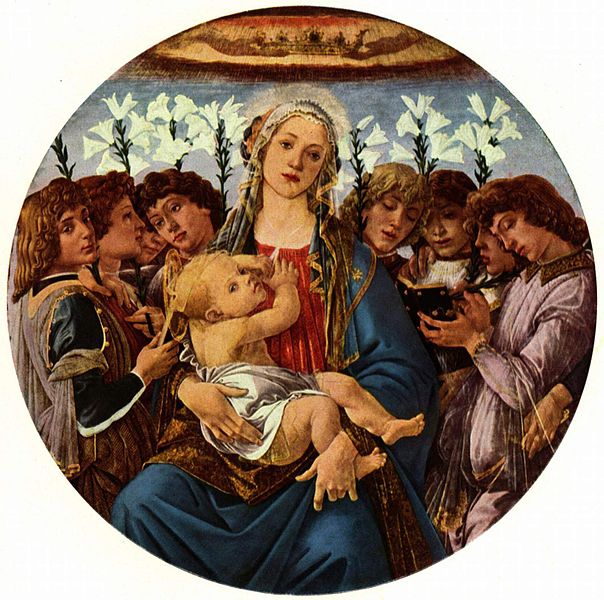
The name comes directly from the name of the flower, (in particular, in reference to lilium candidum, the classic white lily, also known as the madonna lily), and was a popular choice throughout the English-speaking world in the 18th and early part of the 20th centuries.

It has recently been revived. It is currently the 4th most popular female name in the United Kingdom (2009) and the 17th in the United States (2010). So far, this is the highest that Lily has ever ranked in U.S. naming history.

In other countries, her rankings are as follows:

  • # 6 (New Zealand, 2010)
  • # 7 (Australia, NSW, 2010)
  • # 8 (Scotland, 2010)
  • # 10 (Canada, B.C., 2010)
  • # 13 (Ireland, 2010)
  • # 15 (Northern Ireland, 2010)
  • # 45 (France, 2009)
  • # 51 (Belgium, 2008)
  • # 161 (Netherlands, 2010)
  • # 173 (Norway, 2010)

For several centuries, Lily was a symbol of purity and sometime of death, among Roman Catholics, the name was often a symbol of the Virgin Mary.

Other forms of the name include:

  • Lily (Dutch/English/French/German/Scandinavian)
  • Lilly/Lilli/Lillie (German)
  • Lili (Hungarian)
  • Lilja (Icelandic/Finnish)
  • Líle (Irish-Gaelic)
  • Lilia (Polish)
  • Lília (Portuguese)
  • Lilia/Liliya Лилия (Russian/Ukrainian)
  • Lilly (Scandinavian)

Vernacular forms of Lily, (that is names that are not derived from the Latin lilium but mean lily in their native tongue)

  • Kremena (Bulgarian: masculine form is Kremen)
  • Lis/Lys (French)
  • Shoshannah שׁוֹשַׁנָּה (Hebrew)
  • Crina (Romanian: masculine form is Crin)
  • Azucena (Spanish)

Another form of Lily is the Latin Liliana, which is derived from the Latin word, lilium, meaning, “lily.” This has spun off the English female name of Lillian, which has been in usage in the English-speaking world since the 16th-century. Careful on the spelling though, because if spelled with one L that makes it a French masculine name.

Lillian is also sometimes believed to have originally been a diminutive form of Elizabeth, in fact, the name Lily was commonly used as a pet form of Elizabeth.

Currently, Lillian is the 21st most popular female name in the United States, (2010) and is rising. She is somewhat of a vintage, she was the 10th most popular female name for 4 years in a row between 1898-1901. The lowest that Lillian has ranked in U.S. history so far was in 1978, coming in as the 486th most popular female name. Her rankings in other countries are as follows:

  • # 39 (Liliana, Hungary, 2010)
  • # 93 (Australia, NSW, 2010)
  • # 124 (Liliana, United States, 2010)

A 19th-century British short form of Lillian is “Billie.”

Other forms include:

  • Lilyana Лиляна (Bulgarian)
  • Liliana (Czech/English/Hungarian/Italian/Polish/Portuguese/Romanian/Spanish)
  • Lillian (English/Norwegian/Swedish)
  • Liliane (French)
  • Liljana Лилјана (Macedonian/Slovene)
  • Lilianna (Polish)
  • Lilias (Scottish)
  • Lilijana (Slovene)

Masculine French form is Lilian.

Nadir

Gender: Masculine
Origin: Arabic نادر
Meaning: “opposite.”
(NAH-deer)

The name is derived from the Arabic meaning, “opposite.” It is a term found in astrology, astronomy and topography referring to the point opposite the zenith.

As of 2009, Nadir was the 377th most popular male name in France.

A feminine form is Nadira.

Sabri

Gender: Masculine
Origin: Arabic صبريّ
Meaning: “patient.”
(SAH-bree)

The name comes directly from the Arabic meaning, “patient.”

As of 2009, Sabri was the 397th most popular male name in France.

Feminine forms are Sabriyya and Sabriye (Turkish).

Nabil

Gender: Masculine
Origin: Arabic نبيل
Meaning: “noble”
(NAH-BEEL)

The name comes from the Arabic meaning, “noble”, and is popular among Christians, Muslims and even Baha’i.

It was borne by a an early Christian saint and martyr, a king of Mauretania, who was martyred under his brother Gildon, who took the side of the Pagan Romans.

It was also borne by Nabíl-i-Akbar (1829-1892), one of the 19 Apostles of Bahá’u’lláh and the Great Nabíl (1831–1892), a renowned Bahai historian.

As of 2009, Nabil was the 399th most popular male name in France.

A Berber form is Navil and a feminine form is Nabila.

Amalia, Amelia

Gender: Feminine
Origin: Germanic
Meaning: “work.”
(uh-MAHL-yah); (uh-MAHL-ee-ah); (uh-MEE-lee-yah).

Amalia, the pretty, edgy name with the stern meaning, comes from the ancient Germanic word amal, meaning “to work.” However, the name has also been linked to the Greek word amalos, meaning “soft.”

Throughout the centuries, the name has been borne by German nobility and royalty alike. Its more favored form of Amelia was introduced to the English-speaking world when the German Hanover line married into the British royal family in the 18th-century. It was borne by the daughters of George II and III of England.

The name was also borne by Amelia Earhart (1897-1937)

Other forms of the name include:

  • Amàlia (Catalan)
  • Amálie (Czech/Slovak)
  • Amelie (Danish/Finnish/German/Norwegian)
  • Amalia (Dutch/Estonian/Finnish/Galician/German/Greek/Italian/Polish/Spanish/Romanian/Romansch)
  • Amelia (Dutch/English/Estonian/Finnish/German/Polish/Spanish. Polish diminutive forms are Amelcia, Amelka, Mela, Melcia and Melcia)
  • Amaali (Estonian/Finnish)
  • Amalja (Faroese)
  • Malja (Faroese)
  • Malla (Faroese/Norwegian/Swedish: obscure)
  • Amaalia/Amaliia/Amali/Amu (Finnish)
  • Amakka (Finnish)
  • Amalkka (Finnish)
  • Maali/Maalia (Finnish)
  • Amélie (French)
  • Amke (Frisian)
  • Amalie (German/Scandinavian)
  • Amely (German)
  • Amália/Amál (Hungarian)
  • Amélia (Hungarian/Portuguese/Slovak)
  • Amalía /Amelía (Icelandic)
  • Amālija/Amēlija (Latvian)
  • Amalija (Lithuanian/Slovak/Slovene)
  • Amelija (Lithuanian)
  • Amália (Portuguese)
  • Amelita (Spanish: initially a diminutive form, occassionally used as an independent given name)
  • Amaliya (Russian)
  • Ameliya/Hamaliya (Ukrainian)

In recent years Amelia has spiked in popularity coming in as the 41st most popular female name in the United States,(2010). Amelie, which did not even appeared in the Social Security List before 2001, currently comes in at # 681st most popular female name, (2010). Amelia and her various forms’ rankings in other countries are as follows:

Amelia

  • # 5 (England/Wales, 2010)
  • # 6 (Poland, 2009)
  • # 8 (Poland, Warsaw, 2010)
  • # 12 (Australia, NSW, 2010)
  • # 13 (New Zealand, 2010)
  • # 18 (Canada, B.C., 2010)
  • # 34 (Ireland, 2010)
  • # 43 (Scotland, 2010)
  • # 132 (Norway, 2010)
  • # 200 (France, 2009)
Amelie/Amélie
  • # 25 (Austria, 2010)
  • # 32 (Belgium, 2008)
  • # 34 (German-speaking, Switerland, 2010)
  • # 55 (England/Wales, 2010)
  • # 69 (Australia, NSW, 2010)
  • # 80 (Scotland, 2010)
  • # 111 (France, 2009)
  • # 297 (Netherlands, 2010)
Amalia/Amalie
  • # 11 (Amalie, Norway, 2010)
  • # 27 (Amalie, Denmark, 2010)
  • # 42 (Amalia, Romania, 2009)

Amalia does not figure in America’s top 1000. With the spotlight of Malia Obama, and the increasingly popularity of its Amelia counterpart, this name might be a potential hit within the next few years.

Possible nickname options include Amy, Mia, Lia, Mali, Malia and Molly.

There is a Scandinavian masculine form: Melius.

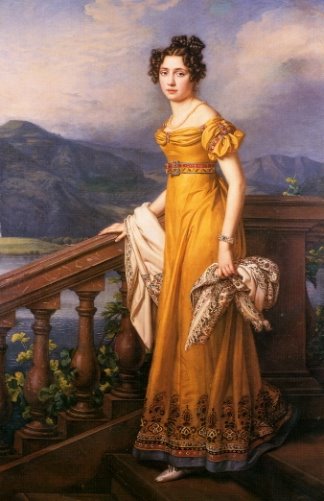
(Upper left, Amalie Auguste of Bavaria).