Daila, Daile

  • Origin: Latvian, Lithuanian, Estonian
  • Meaning: “beauty, grace, artistic refinement.”
  • Lithuanian form: Dailė
  • Gender: Female
  • Pron: DYE-lah; DYE-leh

Derived from the Latvian poetic word daile, meaning, “beauty, grace, or artistic refinement.”
The noun daile itself was standardized by linguist and writer Atis Kronvalds in 1868, who likely modeled it on Lithuanian dailė (“art, artistic creation”). Both words share the Baltic root dail-, conveying ideas of beauty, craftsmanship, and aesthetic harmony.

As a personal name, Daila and its variant Daile first appeared in Latvian name calendars in the late 19th century, but did not come into regular use until the 1920s, during the national revival when many symbolic native words were adopted as given names.

Regional and Linguistic Variants

  • Daile – an older or alternative Latvian form, also used in Estonia.
  • Dailė – Lithuanian form (still occasionally used).
  • Dailīte – rare Latvian diminutive (dye-LEE-teh).
  • Dailis – masculine form used in both Latvian and Lithuanian (DYE-lis).
  • Dailonis – rarer Latvian masculine variant (DYE-loh-nis).

The designated name-day for Daila is February 4th (Latvia); and December 3 for Daile (Latvia).

Sources

Elvira

  • Origin: Visigothic
  • Meaning: Uncertain
  • Usage: Albanian, Bashkir, Bosnian, Catalan, Croatian, Dutch, Estonian, Finnish, Galician, German, Hungarian, Italian, Latvian, Portuguese, Provençal, Romanian, Romansch, Russian, Scandinavian, Slovene, Tatar
  • Transcription: Эльвира (Russian)
  • Gender: Female
  • Eng (el-VY-rah); Sp (el-VEE-rah; el-BEE-rah)

A 19th-century gem and late 20th-century vampiric monikor, the name is of uncertain meaning but has its origins in Medieval Spain. It is likely of Visigothic origins, possibly derived from Gailawera or Geloyra, which stem from gails (happy) or (spear); and wers (friendly, agreeable, true).

It should be noted that Elvira (Latin: Iliberri or Iliberis) was an ancient Iberian and later Roman city located near present-day Granada, in Andalusia, southern Spain. However, in this case, it is likely derived from an Iberian source, meaning “new town.”

It was a popular female name among the royal family of Castille & León, producing two queens who bore this name, Elvira of Castile, Queen of León (965–1017) and Elvira of Castile, Queen of Sicily (c. 1100–1135).

It was later used in Mozart’s 1787 opera Don Giovanni (libretto by Lorenzo Da Ponte), in which Donna Elvira is one of Don Giovanni’s former lovers. This likely popularized the name outside of the Iberian peninsula.

By the turn of the 20th-century, Elvira was not unknown in the United States, though never overly popular, it peaked at #254 in 1914, but fell out the Top 1000 by 1981, the same year Elvira, Mistress of the Dark came on the scene.

The real Halloween link began in 1981, when actress Cassandra Peterson created the camp-horror TV hostess Elvira, Mistress of the Dark for a Los Angeles late-night show (Movie Macabre).

Dressed in a plunging black gown with a beehive of jet hair, Elvira presented old horror movies with sardonic humor — blending Gothic sex appeal, irony, and B-movie kitsch.

The character became a pop-culture icon: Halloween TV specials, films, pinball machines, comic books, and even perfume lines immortalized her as the Queen of Halloween.

Outside the United States, this name does not have such associations. In Sweden, it has been among the top 100 girls’ since 1998 and peaked at #25 in 2014. As of 2024, it came in at #40.

It’s a popular name in the Balkans, even spinning off a male form of Elvir (Bosnian and Albanian).

Other forms include:

  • Elbire (Basque)
  • Elvíra (Czech/Slovakian)
  • Elviira (Estonian, Finnish)
  • Elvire (French)
  • Elwira (Polish, also an alternate Swedish spelling, Sorbian)
  • Elvīra (Latvian)
  • Elvyra (Lithuanian)

Obscure Lithuanian male forms are the Lithuanian, Elvyras; the Polish, Elwir(o), and the Italian Elviro.

Name days: August 25 (Austria), July 16 (Croatia), February 10 (Hungary), January 25 (Spain), March 1 (Sweden), November 21 (Slovakia), August 13 (Latvia).

Sources

Hasso

  • Origin: German
  • Meaning: “Hessian.”
  • Gender: Male
  • HAHS-so

The name is German and meaning, “Hessian, from Hess.” It is the German name of the Chatti as described by Tacitus.

The name experienced some usage at the turn of the 20th-century but is now very rare in German-speaking countries and is more often used on dogs.

It is also used in Estonia where the name-day is October 7th, and to a very rare extent, in Nordic countries.

A notable bearer is Hasso Plattner (b. 1940), founder of the SAP SE software company.

Other forms include:

  • Asso (Estonian)
  • Ats (Estonian)
  • Atso (Estonian)

Sources

Õrne

  • Origin: Estonian
  • Meaning: “tender; fragile; gentle.”
  • Gender: Female

The name comes directly from the Estonian word õrn, meaning, “tender; fragile; gentle.” It has been in use in Estonia since at least the 19th-century. As of 2024, 20 women in Estonia bore this name.

Its designated name-day is September 27th.

Sources

Giselher

  • Origin: German
  • Meaning: “hostage army.”
  • Gender: Male
  • Germ Pron: (GEE-zehl-hair)

Giselher is an early Old High German masculine name formed from two classic Germanic elements, gisel (pledge) and hari (army).

The best-known figure is King Giselher of Burgundy, a 5th-century ruler who appears in both history and legend. He is immortalized as a character in the Nibelungenlied, the great Middle High German epic, alongside his brothers Gunther and Gernot.

It was also the name of an 11th-century Bishop of Madgeburg who succeeded St. Adalbert.

It is found in records as the name of Teutonic Knights in Estonia, Latvia and Poland. It experienced a minor revival in the early 20th-century but is quite rare in contemporary German-speaking countries.

Its Anglo-Saxon version of Gislhere was borne by an 8th-century Bishop of Selsey.

A more recent bearer was German composer, Giselher Klebe (1925-2009).

Its designated name-day in Austria is September 28th.

Variation & International Variations

  • Gizelher (Croatian, Polish)
  • Giselher (Czech; Estonian; French, pronounced JEEZ-e-LAIR; Polish)
  • Giseler, Gisiler (German)
  • Giselcaro (Italian)
  • Gislaharius (Late Latin)
  • Gizelhers (Latvian)
  • Gislahario (Spanish)

Sources

Riku

In Finnish and Estonian, this is a form of Richard. It was among the top 100 most popular boys’ names in Finland in 2004, ranking in at #48. The designated name-day is February 7th in both countries.

It is also a Japanese male name (very rarely female), and can have various meanings depending on the Kanji but the most popular is 陸 (Riku), “land, shore, continent.”

Riku is a familiar character name in anime, manga, and games — for example, in Kingdom Hearts, where Riku is a central figure.

Sources

Elo

Photo by Almada Studio on Pexels.com
  • Origin: Estonian, Finnish
  • Meaning: “life.”
  • Gender: Female (Estonian); Male (Finnish)
  • EH-lo

The name was originally a short form of any name that began with El, most commonly Eliisabet. However, during the 19th-century, in the wake of Estonian national revival, it came to be associated with the Estonian word, elu (life).

In Finland, it has the same meaning and is primarily used on males but has also been sporadically used on females.

Its designated name-day in Estonia is September 27th.

Its also used in Georgia as a short form of Elene (Helen) and Elisabed.

Sources

Elita

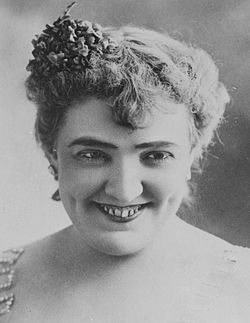
American actress, Elita Proctor Otis
  • Origin: Possibly Latin
  • Usage: Chechen, English, Estonian, Finnish, French, German, Portuguese, Swedish, Spanish.

The name is of uncertain origin or meaning, it is more than likely derived from the Latin, elitus (elite).

It has been used across Europe for centuries. It appears in records in France and Strasbourg during the 16th-century, and was not unheard of in 18th-century America. In the latter case, it may have been used among Calvinist families.

The name is also used in Latvia, likely introduced in the mid 18th-century and experienced popularity in the 1960s, peaking at #27 in 1965.

It was borne by American actress, Elita Proctor Otis (1861-1927); Latvian actress, Elita Kļaviņa (b. 1956); Latvian politician, Elita Krūmiņa (b. 1965) and Latvian journalist, Elita Veidemane (b. 1955).

Early French vernacular forms are Élita and Élite.

Sources

Ot(h)mar, Ottmar, Ottomar, Audomar, Omer

  • Origin: Germanic
  • Meaning: “wealth, fortune; fame.”
  • Gender: Masculine

The root name is the Frankish Audomar, which is composed of the elements aud (wealth, fortune), and mari (fame).

It was borne by an 8th-century saint and monk, an abbot of St. Gall, Switzerland and a 7th-century Frankish saint, after whom the French commune of St-Omer was named.

The designated name-day is September 8th.

Other forms include:

  • Otmar (Alemmanish, Catalan, Czech, German, Polish, Romansh)
  • Eadmær (Anglo-Saxon)
  • Audomarus (Dutch, Late Latin)
  • Odomar (Dutch)
  • Edmar (English, Swedish)
  • Ottomar (Estonian, German, Scandinavian)
  • Audomar (French, Frankish, Polish)
  • Adémar, Adhémar (French)
  • Audomar (French, German)
  • Omer (French)
  • Ottmar (German)
  • Otmár (Hungarian)
  • Ómar (Icelandic)
  • Ademaro (Italian)
  • Ödhmar (Old Norse)
  • Onmé (Picard)
  • Ademar, Adhemar (Portuguese)
  • Ademir (Portuguese – Brazilian)
  • Omeru (Sicilian)
  • Otmaro (Spanish)

French feminine forms which had some use in the 19th-century are Amérine, Omère and Omérine

Sources

Vootele

Photo by Gioele Fazzeri on Pexels.com
  • Origin: Estonian
  • Meaning: unknown
  • Gender: masculine

The name is a Medieval Estonian male name of unknown meaning. It seems to be a reconstruction of a Germanicized Estonian name recorded in the 13th-century as Wottele. It was the name of a 13th-century Estonian warrior, an associate of King Lembitu, who fought in the battle of St. Matthew’s Day.

The designated name day in Estonia is May 12th.

Sources