Phyllis, Phillyda

  • Origin: Greek Φυλλίς
  • Meaning: “leaves; foliage.”
  • Gender: Female

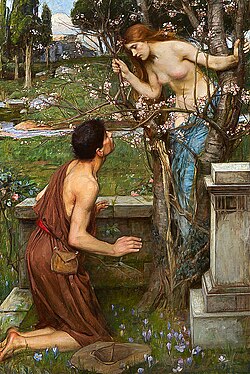
The name appears in Greek mythology. It is connected to a woman who killed herself when her love for Demophon was not returned. She was transformed into an almond or hazelnut tree, depending on the legend. It comes directly from the Greek word, Φυλλίς, meaning, “leaves, foliage,” which shares a root with the words chlorophyll and phyllotaxis. Its Turkish form of Filiz comes from the same root but the meaning slightly changes to “sprout; root.”

It also appears as the name of a minor river god of Bithynia.

It came into widespread use in England in the 16th-century and later spread to the rest of the Anglosphere.
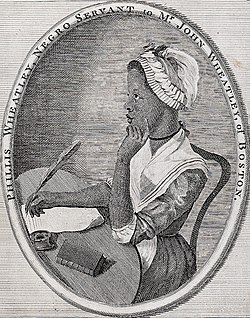
Early Puritan records occasionally include Phyllis/Phillis, reflecting classical learning even among settlers. Phillis Wheatley (1753-1784), the first published African-American female poet, is a striking historical bearer.

An 18th-century English short form was Lissie or Lissy.

It frequently appears in Elizabethan and Restoration poetry and drama. Poets such as Ben Jonson and Andrew Marvell used “Phyllis” as a stock name for a beloved in pastoral verse. Later modernists like Ezra Pound continued this tradition. This usage helped keep it familiar to English speakers for centuries.

It marked its presence in baroque operas (e.g., Handel’s Acis and Galatea includes a character named Phyllis) and in folk songs of the British Isles.

Victorian painters of the Pre-Raphaelite school sometimes chose the Phyllis and Demophon story for mythological canvases.

In the United States, it appeared in the Top 100 Female Names between 1915-1958, peaking at #24 in 1929. In the U.K., it came in at #14 in 1914, #4 in New Zealand in 1911, and #29 in 1922 in Canada.

Its Turkish offshoot of Filiz appeared in the Turkish Top 100 between 1980-1996, peaking at #11 between 1980-1982.

Today, the name is considered dated in the English-speaking world.

Phillyda, pronounced /ˈfɪl.ɪ.də/ in English is an alternate form.

Other forms include:

  • Filida Филлида (Bulgarian, Russian, Serbo-Croatian)
  • Fílide, Fil·lis (Catalan)
  • Fyl(l)is (Czech, Polish, Slovak)
  • Phyllis (Dutch, English, German, Classical Greek, Scandinavian)
  • Phillida (English)
  • Phillis (English)
  • Phyllis, Phyllide (French)
  • Fýllis (Greek – Modern)
  • Fillide, Filide (Italian)
  • Phillidis (Latin)
  • Filis, Filija (Latvian, Lithuanian)
  • Fílide, Fílis (Portuguese)
    • Fílide, Filis (Spanish)
    • Filiz (Turkish)
    • Fillida Філліда (Ukrainian)

Sources
Pacificus, Pacifico, Pacifica, Pacifique

Pacificus is a Late Latin name derived from pax, meaning “peace,” or “peaceful” more specifically.

It’s Italian form of Pacifico was borne by a follower of Saint Francis of Assisi and an 18th-century Italian saint. The designated name-day for the latter is September 24th.

Its feminine form of Pacifica has been in use in Italy since at least the 16th-century.

Its French form of Pacifique is a unisex name and experienced some usage in France at the turn of the 20th-century. It appeared in the French Top 1000 Most Popular Male Names between 1901-1909, peaking at #446 in 1909. Today, the name is an obsolete gem.

Today, Pacific, with the nickname Pace, may make an unusual place and nature name for a boy. Though rare, it is the legit English translation of this name.

Forms include

Male

  • Pacific (English)
  • Pacifique (French)
  • Pacificus (German, Late Latin)
  • Pacyfik (Polish)
  • Pacífico (Portuguese, Spanish)

Female

  • Pacifique (French)
  • Pacifica (Italian)
  • Pacyfika (Polish)
  • Pacífica (Portuguese, Spanish)

Sources

True

  • Origin: English
  • Gender: Unisex
  • (TROO)

The name comes directly from the English word. It has been in use as a unisex given-name since the 16th-century, being introduced by the Puritans.

True first appeared in the U.S. Top 1000 Most Popular Male Names in 1895, ranking in at #986th most popular male name in the United States.

Sources

Uhtred

  • Origin: Anglo-Saxon
  • Meaning: “dawn counsel.”
  • Gender: Male
  • OO-tred

The name is composed of the Anglo-Saxon words, ūht, ūhta (dawn; twilight; pre-dawn) and rǣd (advice; counsel).

The 11th-century earl of Northumbia, Uhtred of Bambaugh or Uhtred the Bold, bore this name. Bernard Cromwell later based his character of the same name on him in the series, The Saxon Stories (2004). Cromwell was also a descendant of Uhtred of Bamburg.

Since the publication of the aforementioned series, the name has had rare, but revived use in the U.K. As of 2024, 5 babies were given this name in the U.K.

Another older form is Uhtræd and Uchtred.

Sources

Elita

American actress, Elita Proctor Otis
  • Origin: Possibly Latin
  • Usage: Chechen, English, Estonian, Finnish, French, German, Portuguese, Swedish, Spanish.

The name is of uncertain origin or meaning, it is more than likely derived from the Latin, elitus (elite).

It has been used across Europe for centuries. It appears in records in France and Strasbourg during the 16th-century, and was not unheard of in 18th-century America. In the latter case, it may have been used among Calvinist families.

The name is also used in Latvia, likely introduced in the mid 18th-century and experienced popularity in the 1960s, peaking at #27 in 1965.

It was borne by American actress, Elita Proctor Otis (1861-1927); Latvian actress, Elita Kļaviņa (b. 1956); Latvian politician, Elita Krūmiņa (b. 1965) and Latvian journalist, Elita Veidemane (b. 1955).

Early French vernacular forms are Élita and Élite.

Sources

Numa

Numa Pompilio and Egeria by Giani Felice
  • Origin: Uncertain
  • Gender: Male

The name is borne in history by Numa Pompilius (circ 8th-century C.E), the second King of Rome. Since he was of Sabine origin, it has been suggested his name was Sabine. However, its meaning has been lost to time. Others have linked it with the Oscan, Nium, also of unknown meaning. It has also been linked with the Greek nomos (νόμος), meaning, “custom; law.”

The name experienced usage in France in the late 19th-century. It appeared among the top 1000 Most Popular Males Names in France between 1900 and 1925. The name peaked at #266 in 1909. It also experienced a revival in Italy around the same time. It was used sporadically in England and the United States.

Notable bearers include French artist, Numa Ayrinhac (1881-1951) and French football player, Numa Andoire (1908-1994).

An obscure French vernacular form is Nume.

Source

Remedios, Remei, Remedy

Our Lady of Remedies

Remedios is a Spanish given name—technically unisex but used almost exclusively for girls—meaning “remedies” or “cures.” It derives from a Marian title, Nuestra Señora de los Remedios (“Our Lady of Remedies”).

The devotion to Our Lady of Remedies originated with the Trinitarian Order in the late 12th century, and it spread widely in Spain after the Reconquista. By the time of the Spanish explorations of the Americas, the Virgin under this title had become a favored patron of soldiers and conquistadores.

It is the name of a character in Gabriel Garcia Marquez’s 1967 novel, One Hundred Years of Solitude.

It is borne by Spanish Flamenco singer, Remedios Amaya (b. 1962) and Spanish painter, Remedios Varo (1908-1963).

Its also the name of several places in Latin America.

Its Catalan form is Remei and Remédios its Portuguese form.

Remedy is a potential English form but has only been in use as a given name since the 20th-century.

Common Spanish diminutives include: Remi, Remita, Medi, Medis, Mecha, Chío, and Chita.

Sources

Leontius, Léonce

  • Origin: Greek
  • Meaning: “lion-like.”
  • Gender: Male
  • Eng Pron (lee-ON-shus)

The name is derived from the Greek genitive λέοντος (leontos), meaning, “belonging to a lion; lion-like.”

It was borne by an 8th-century Byzantine emperor and several saints.

The designated name-day is January 13th.

An early English form is perhaps, Leontes, which appears in Shakespeare’s play, The Winter’s Tale (1610).

Léonce is its unisex French form. It appeared in the French Top 1000 Male Names between 1900-1969, and peaked at #95 in 1909. It simultaneously appeared in the French Top 1000 Female Names between 1900-1940 and peaked at #187 in 1915.

Léonce also appeared in the U.S. Top 1000 Male Names between 1887-1895, peaking at #819 in 1887.

Other masculine forms

  • Liyonṭiyos ܠܝܘܢܛܝܘܣ (Assyrian)
  • Leoncio (Asturian, Spanish)
  • Leontzio (Basque)
  • Leonti, Leontiy, Leonty Леонтий (Bulgarian, Russian, Ukrainian)
  • Lleonci (Catalan)
  • Leontios Ⲗⲉⲟⲛⲧⲓⲟⲥ, Λεοντιος (Coptic, Greek)
  • Leontius (Dutch, English, German, Latin)
  • Leontes (English)
  • Léonce (French)
  • Leonte ლეონტე (Georgian)
  • Leonzio (Italian)
  • Leoncjusz (Polish)
  • Leôncio (Portuguese)
  • Leontie (Romanian)
  • Leontije (Serbo-Croatian)
  • Leonziu (Sicilian)

Feminine forms include

  • Léonce (French)
  • Léoncette (French)
  • Léoncie (French)
  • Léoncine (French)
  • Léonte (French)
  • Leontia (Greek, Latin, Romanian)
  • Leonzia (Italian)
  • Leoncja (Polish)
  • Leôncia (Portuguese)

Another possible female off-shoot is Léontine – popular in France from the late 19th to early 20th centuries, it is pronounced [le.ɔ̃.tin]. It is debated whether it is a direct feminine form of Leontius or related to a Latin source meaning, “from Lentini.” A future entry will be written completely dedicated to Léontine.

Sources

Rhain

  • Origin: Welsh
  • Meaning: debated
  • Gender: Male

In Welsh, Rhain is an old personal name with roots in early medieval Wales.

Rhain appears in early Welsh royal genealogies—e.g., Rhain Dremrudd and Rhain ap Cadwgan, princes of Dyfed and Brycheiniog in the 7th–9th centuries. Medieval English chroniclers translated the name as Regin.

It survives mainly in historical records and place-names (such as Llanrhian in Pembrokeshire, which means “church of Rhain”).

The exact origin is not completely certain, but most Celtic scholars connect it to the Old Welsh and Brittonic stem rān / rēn, which meant “spear” or “lance,” or figuratively “arm of strength, leader.” It has also been linked with the Welsh word, rhain (stiff). In modern Welsh, y rhain means “these.”

Today Rhain is rare as a given name, used mostly in Wales by families reviving early medieval names.

Pronunciation in modern Welsh: /r̥aɪn/ — roughly “rhine,” with the initial rh being the voiceless rolled “r” unique to Welsh.

Sources

Mamilian

  • Origin: Latin
  • Meaning: unknown
  • Gender: Male

The name is derived from the Roman gens name, Mamilius. Its meaning is uncertain. It may relate to the Latin mamilla meaning, “breast; nip; tit” or to mar, meaning “the shining one, splendid one.” It has also been linked with the Celtic mam (strength) and hil (seed).

The most notable bearer is Saint Mamilian of Palermo (San Mamiliano), a 5th-century bishop and martyr venerated in Sicily. The designated name-day is September 15, which on the island of Giglio, there is a yearly festival held in the saint’s honor.

Other forms include:

  • Mamiliá (Catalan)
  • Mamilian (English, German, Polish)
  • Mamilien (French)
  • Mamiliano (Italian)
  • Mamilianus (Latin)
  • Mamilianu (Sicilian)

Feminine forms would include:

  • Mamiliana (Italian)
  • Mamilienne (French)

Sources