Rachel

Gender: Female
Origin: Hebrew
Meaning “ewe”
(RAY-chel); (RAH-huhl)

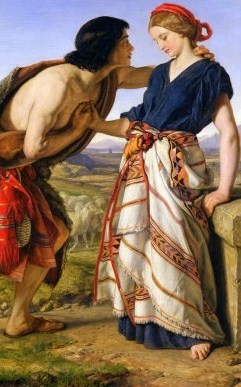
The name is derived from the Hebrew רחל meaning “ewe”, which idiomatically, references purity. In the Bible, it was the name of the second and most favored wife of Jacob. She was the daughter of Laban, the sister of Leah and the mother of Joseph. Jacob labored for Laban for seven years in exchange for the hand of Rachel. After the seven years were up, he was duped into marrying Leah. Rachel later married Jacob and is considered a Jewish matriarch. It is said in Jewish lore that the willows of the brook represent Rachel.

The name has been popular in Britain since the Reformation and is currently ranked in at # 38 of the US top 100 girls names.

Rachel is used in German and French speaking countries and in the Netherlands, in French, it is pronounced hrah-SHEL, and in German, RAH-hel).

Other forms include:
  • Rahel راحيل (Arabic)
  • Raquel (Catalan/Portuguese/Spanish: rah-KEL)
  • Ráchel (Czech: diminutive form is Ráchelka and Cheli)
  • Rakel (Danish/Estonian/Norwegian/Swedish)
  • Rachael/Rachel (English)
  • Raili (Estonian: pronounced sort of like Riley)
  • Rakul (Faroese)
  • Raakel (Finnish)
  • Rahel (German)
  • Ráhel (Hungarian)
  • Rákhel/Rákis (Hungarian)
  • Ráichéal (Irish)
  • Rachele (Italian: rah-KAY-lay)
  • Rachelina (Italian, rah-kay-LEE-nah)
  • Rachelė (Lithuanian: rah-HEL-ay)
  • Rahel (Malayalam)
  • Rachela (Polish: rah-HEH-lah, very unusual in Poland and was once common among Polish Jews).
  • Rahela (Romanian)
  • Rahil/Rakhil/Rakhila (Russian: prevalent among Jewish communities in Russia)
  • Ruchel (Yiddish)

Rachelino is an Italian masculine form.

Flora

Gender: Female
Origin: Latin
Meaning: “floral.”

The name is derived from the Latin word flos, meaning “flower.”

It was the name of the Roman goddess of flowers, she was the wife of Zephyr, the West Wind.

In modern terminology, the name has been used in reference to the entire plant kingdom.

The name was quite common in the middle of the 19th-century. With its two syllable sweetness, and its vintage charm, the name might appeal to those who find such names as Ava, Clara, Cora, Della, Ella, Greta, Mira, Nola, Perla appealing.

Other forms include:

  • Floor (Dutch)
  • Floortje (Dutch: diminutive form of Floor, used as an independent given name)
  • Fleur (French)
  • Fleurette/Florette (French: diminutive forms, used as independent given names)
  • Flore (French)
  • Floretta (German/English)
  • Flóra (Hungarian)
  • Fiora (Italian)
  • Fiorella/Fioretta (Italian: diminutive forms, used as independent given names)
  • Flura (Romansch)
  • Flor (Spanish)
  • Fflur (Welsh)

Agnes

Gender: Female
Origin: Greek and Latin
Meaning: “lamb; pure, chaste, holy.”
(AG-nes)

    The name is of debated origin and meaning. It may be derived from the Greek hagno meaning “pure; chaste; holy.”

    Likewise, it may be derived from the Latin word for “lamb.” Since the lamb later became associated with purity and chastity, the  two above origins and meanings have become interchangeable.

    The name was borne in Greek mythology by an Oceanid nymph, who was said to have raised the god Zeus.

    On Mt. Lyceaus in Arcadia, there was a well sacred to her. When the region was suffering from drought, she prayed and fasted for several days. Afterward, she touched the surface of the well with a branch of an oak tree, inducing a huge rain storm.

    The name was borne in Christian legend by an early virgin martyr who refused to comply with the wishes of a local suitor who later denounced her as a Christian. The local prefect forced her to go through several public humiliations before beheading her.

    It was also borne by a medieval Czech princess, who was later canonized by the Catholic church as a saint. Known as St. Agnes of Bohemia, she is a minor subject in the popular English Christmas carol, Good St. Wenceslaus, and is still revered as a local heroine in her native homeland. Another saintly namesake is  Agnes of Assisi.

    The name was quite popular throughout Europe in the Middle Ages, due to its strong Christian connotations, the word agnes in Latin was also used in reference to Christ’s sacrifice, as in agnes dei, lamb of God.

    The name was prevalent in England before the Reformation, and fell somewhat out of favor, until it was revived in the late 19th-century.

    In recent years, the name has experienced a surge in popularity in a few European countries.

    In Sweden she was the 16th most popular female name of 2007.

    In Hungary, she was the 75th most popular female name of 2005.

    Other forms of the name include:

    • Agnesa/Agnesë (Albanian: the birth name of Mother Theresa of Calcutta)
    • Inas (Arabic)
    • Oanez (Breton: diminutive form of Agnes pronouned WAH-nes).
    • Agnesza Агнеса (Bulgarian)
    • Agnès (Catalan/French: pronounced like ang-YES in French).
    • Gnese (Corsican)
    • Agneza (Croatian)
    • Anežka (Czech)
    • Agnete/Agnethe (Danish)
    • Nancy (English: originally an English pet form, the name has been used as an independent name for quite awhile, its popularity spiked in the 1940s and 50s and is currently considered dated. Another nickname used as an independent form is Nan.
    • Aune (Finnish: pronounced AU-ne the first part is pronounced like how without the H)
    • Iines (Finnish)
    • Agenete/Agnet (Frisian: other forms include Anjes, Anjesse, Anyesse, Anjet and Anjette.
    • Inessa/Nessa (German)
    • Neeske (German/Frisian: initially a diminutive form, used as an independent given name)
    • Hagne (Greek: pronounced AHG-nay)
    • Agnea (Icelandic: pronounced ahg-NAY-ah).
    • Agnéis (Irish-Gaelic)
    • Agnese (Italian/Latvian: pronounced in Italian like ang-YAY-say. It could also be Latvian pronounced (ahg-NEH-seh).
    • Agnesina (Italian: obscure form)
    • Ines (Italian: a borrowing from the Spanish)
    • Ágnes (Hungarian: pronounced like AHG-nesh). Diminutive form is Ági.
    • Baranka (Hungarian: a literal translation)
    • Agnė (Lithuanian: pronounced AHG-nay).
    • Annis/Annice (Medieval English forms: both are pronounced the same ANN-nis)
    • Agnieszka (Polish: pronounced ahg-NYESH-kah, the name is extremely popular in Poland. Medieval diminutive forms include Jagienka, Jagnusia and Jagna. An older form which has fallen out of usage is the Medieval Jagnieszka. Modern diminutive forms include Aga, Agunia and Agusia.
    • Inês (Portuguese)
    • Agneza (Romanian)
    • Neisa/Nesa/Nescha/Nesina (Romansch: credit goes to Capucine)
    • Agnessa (Russianpronounced on-YEZ-ah).
    • Senga (Scottish: an anagram of Agnes, the name is also said to be from the Gaelic seang meaning “slender.”
    • Agnija Агнија (Serbian)
    • Neza (Slovene: originally a Slovenian diminutive form, it is now used as an independent given name, pronounced NEH-zhah).
    • Hańža (Sorbian)
    • Inés (Spanish/Galician: pronounced like ee-NES, the name has become prevalent in other countries, it is used in Slovenia, Croatia, Latvia, Finland and Estonia, only in Finland and Estonia it is spelled Iines pronounced the same way as in Spanish. A French borrowing is spelled Inès.)
    • Agneta/Agnetha/Agnita/Agna (Swedish/Norwegian: pronounced ung-YEH-tah, ung-NEE-tah and ANG-nah, these forms are considered dated in Sweden being replaced by the trendier Agnes. It is borne by Agnetha Fältskog of ABBA fame )
    • Nesta (Welsh)

    Nicknames include: Aggie, Nessa, Ness and Nessie

    An obscure Italian male form is Agnesio.

    Coincidentally, Agni is an Old Norse male name, also found as Ahni and Hogne. Snorre Sturlasson wrote about a legendary King of Sweden named Agni. He is known for defeating the Finnish chief Frosti and taking his daughter Skjalf hostage, who he later married and had children with. The name is believed to be derived from the Nordic agh meaning “spear point” or may possibly be derived from the word agi meaning “fear; dread.” It seems to have fallen out of usage. Maybe a you would be brave enough to use it on your own son ;).
    Beatrice, Beatrix

    Gender: Feminine
    Origin: Latin
    Meaning: “blessed; traveller, voyager.”
    Eng (BEE-uh-TRISS); (BEE-uh-TRICKS)

    The name is of somewhat debated meaning, some sources list it as a derivative of the Latin word beatus meaning “blessed” while other sources claim that it is a feminine form of the Latin name, Viator which means, “traveller” or “voyager.”

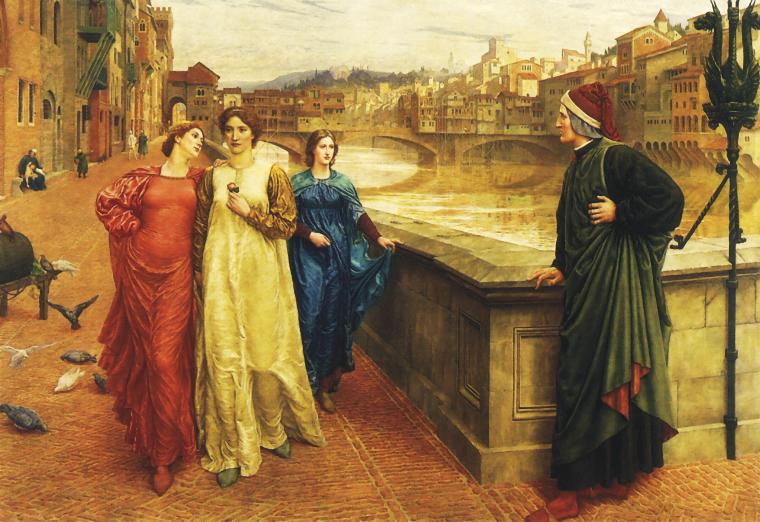
    The famous Italian poet, Dante Aligheri, author of the Inferno, and other works, used Beatrice Portinari, (a local noblewoman whom the author was in love with), as a recurrent theme in his writings. The name has been consistently popular in Italy since the Middle Ages, she was especially popular in the rest of Europe during the Middle Ages as well, but has gone in and out of fashion since, depending on the country. It was particularly popular in England before the Reformation, where it experienced a revival in the 19th-century. Peter Rabbit author, Beatrix Potter, bore the name (1866-1943).T he name is also borne by several early Christian saints, and it is currently borne by Queen Beatrix of the Netherlands.

    Beatrix has not ranked in the U.S. top 1000 since 1883! As of 2005, however, Beatrix was the 88th most popular female name in Hungary. Her counterpart of Beatrice faired much better in the U.S. statistics, though not anywhere near the top 100, Beatrice at least ranks in at # 833 (2008). In 2006, Beatriz was the 59th most popular female name in Spain.

    Other forms of the name include:
    • Batirtze (Basque)
    • Beatriu (Catalan)
    • Beatrijs (Dutch)
    • Beatrix (Dutch/English/German)
    • Béatrice/Béatrix (French: bay-ah-TREES/bay-ah-TREEKS)
    • Beke/Beeke (Frisian: diminutive forms are Bekje. Pronounced BEH-ke)
    • Beatrisa (German)
    • Beatríke Βεατρίκη (Greek: Modern)
    • Beatricse/Beatrisz/Beatrix (Hungarian: a Hungarian diminutive is Trixi)
    • Beatrice (Italian/English/Romanian/Swedish: in Italian, pronounced, bay-ah-TREE-chay. Bice is a common diminutive form, though in recent years, it is considered dated, and the diminutive form of Bea has taken its place instead)
    • Bicetta/Cettina (Italian: originally diminutive forms, now used as independent given names, though, very obscure)
    • Beatrise (Latvian)
    • Beatričė (Lithuanian)
    • Beatriċi (Maltese: the pronunciation is somewhat similar to the Italian)
    • Beatrycze (Polish: beh-ah-TRIH-cheh)
    • Beatryks (Polish: beh-ah-TRIKS)
    • Beatris (Provencal)
    • Beatrisa Беатриса (Russian)
    • Beatrìci (Sardinian)
    • Beitris (Scottish)
    • Beatrica (Slovene: beh-ah-TREET-sah)
    • Beatriz (Spanish/Portuguese: Spanish Iberian: bey-ah-TREETH, Spanish Latin American: bey-ah-TREES; Portuguese Iberian: bee-ah-TREEZH)
    • Beatrixe (Swiss-German)
    • Betrys (Welsh)

    The names, Beata and Viatrix, have also been linked with Beatrice.

    Common English diminutives are Bea, Bee, Trixie and Trissie. A Portuguese short form is Bia.

    Name-days are: January 17 (Lithuania), February 13 (France), July 29 (Lithuania/Poland), December 2 (Sweden).

    Narcissus

    Gender: Male
    Origin: Greek
    Meaning: “sleep; numbness.”
    (nar-SIS-sus)

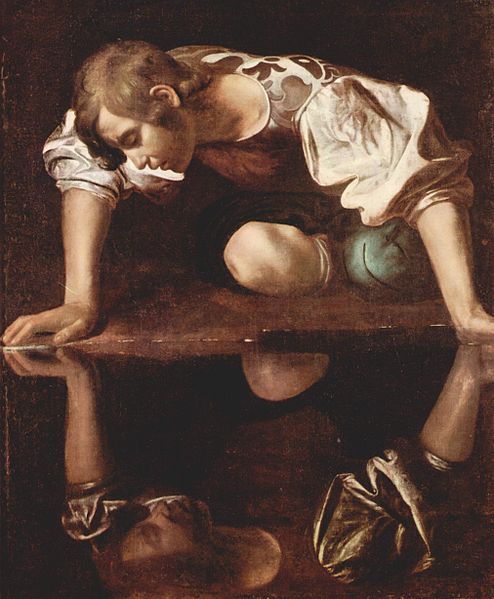
    The name is found in Greek mythology as that of the name of a young boy who thought himself so beautiful that he could not stop staring at his own reflection, until he eventually died.

    The name is also borne by several early Greek saints. The word “narcissim,” is derived from the story of Narcissus.

    • Narcís (Catalan)
    • Narcis (Croatian/Romanian/Serbian/Slovak/Slovene)
    • Narcissus (English/Latin/Dutch)
    • Narcisse (French)
    • Narziss (German/Lexbergerish)
    • Narkissos Ναρκισσος (Greek)
    • Narkisszosz (Hungarian)
    • Narciso (Italian/Spanish/Portuguese)
    • Narcisio (Italian)
    • Narcizas (Lithuanian)
    • Narcyz (Polish)

    Feminine forms are:

    • Nergiz (Azeri: also the Azeri word for daffodil)
    • Narcisa (Italian/Spanish/Portuguese)
    • Narcissa (Latin)
    • Narges نرگس (Persian: also the modern Farsi word for daffodil)
    • Nergis (Turkish: also the modern Turkish word for daffodil)

    Daphne

    Gender: Female
    Origin: Greek
    Meaning: “laurel.”
    (DAF-nee).

      In Greek mythology, the name is borne by a nymph who transformed herself into a laurel tree rather than be overtaken by the sexual advances of the god, Apollo.

      In Greek religion,  the laurel became sacred to the god Apollo and the leaves were used to crown the victors of the Pythian Games.

      Daphne was the subject of Ovid’s Metamorphoses, which elaborated on the myth by claiming that Apollo’s lust was caused by an arrow shot by Eros. A quote from Ovid describing the transformation of Daphne, goes as follows:

      “a heavy numbness seized her limbs, thin bark closed over her breast, her hair turned into leaves, her arms into branches, her feet so swift a moment ago stuck fast in slow-growing roots, her face lost in the canopy. Only her shining beauty was left

      The virginity of Daphne was the subject of the Hellenistic poet, Parthenius, in the Erotica Pathemata. Throughout the centuries, Daphne, the nymph, has been the subject of artists. Other variations of the name include:

      • Dafna Дафне (Croatian/Serbian)
      • Dafné (Czech/Slovak: very rare)
      • Daphne (English/German/Dutch)
      • Daphné (French)
      • Daphne/Daphni Δὰφνη (Greek)
      • Daphnis (Greek: Ancient)
      • Dafne (Italian/Polish/Portuguese/Spanish/Turkish)
      • Dafnė (Lithuanian)
      • Dafni (Turkish)

      The name is borne by Daphne du Maurier (1907-1989) a famous British author and playwrite best known for such works as Rebecca and The Birds. Other notable Daphne’s include Daphne Blake of Scooby-Doo and Daphne Moon on the popular sitcom Frasier. It is also borne by actress Daphne Zuniga.

      The designated name-day in France is October 5.

      Sophia, Sophie, Sofia

      Gender: Female
      Origin: Greek
      Meaning: “wisdom.”
      (so-FEE-yuh); (so-FYE-uh)

      A long time Greek classic, the name suddenly appeared in the U.S top 100 circa 2000, and budged itself into the # 6 spot in 2007.

      Sophia comes directly from the Greek, and was often used as a personification for Wisdom in philosophical, Christian, Jewish and Gnostic texts.

      In Christian lore, Saint Sophia was the mother of three Christian martyrs, Hope (Elpida), Faith (Pisti) and Charity (Agapi). She supposedly died from grief after the death of her daughters, and is now one of the most revered saints of the Eastern Christian churches, making the name a longstanding classic throughout Eastern Europe and modern Greece.

      Sophia is the Greek spelling, which seems to be the most worn form in the Western World. However, Sofia is the variation often used in continental Europe.

      Sophia was not introduced into the English-speaking world until the 18-century, when it was introduced into the British Family Tree by the German Hanovers, from whose line the names Sophie and Sophia often appear.

      In English, the pronunciation of so-FEE-yah, and so-FYE-uh are interchangeable. The former is more of a modern import, and the most popular. The latter is the older English pronunciation of the name, which is seldom heard in the States but is occasionally heard in Britain.

      Other forms the name include:
      • Zofiya (Amharic/Ethiopian)
      • Soffi/Soffiya (Armenian)
      • Sachveja/Sofiya (Belorusian: Zosja is a diminutive form)
      • Sofija София (Bulgarian)
      • Sofia (Catalan/Finnish/German/Italian/Norwegian/Occitanian/Portuguese/Romanian/Slovak/Swedish: in 2007, this was the 59th most popular female name in Norway and the 44th most popular in Sweden)
      • Sònia (Catalan)
      • Sofija (Croatian/Serbian)
      • Sofie (Czech: SOFE-yeh)
      • Soňa (Czech/Slovak: a translation of the Russian diminutive form, Sonya)
      • Žofia/Žofie (Czech/Slovak: ZHOFE-yah, and ZHOFE-yeh. Diminutive forms are: Žofka and Žofa.)
      • Såffi (Danish: an old Danish form of Sophia)
      • Sofie (Danish/Dutch/German/Norwegian/Swedish: so-FEE Scand; zo-FEE German. In 2008, she was the 35th most popular female name in the Netherlands, and in 2007, she was the 10th most popular female name in Norway and the 85th most popular in Sweden)
      • Fie (Dutch: originally a diminutive form, now used as an independent given name, FEE-e)
      • Soovi (Estonian)
      • Sohvi (Finnish)
      • Sophie (French/English/German/Dutch. In 2008, this was the 74th most popular female name in the United States, the 12th most popular in Canada, the 7th most popular in England and Wales and the most popular female name in the Netherlands and Scotland. In 2007, it was the 8th most popular female name in Australia)
      • Sonja (German/Estonian/Finnish/Polish/Scandinavian/Serbian/Slovene/Sorbian: a translation of the Russian diminutive form, Sonya).
      • Sonje (German: ZONE-yeh)
      • Sophia Σοφία (Greek Modern/English/Estonian/Italian)
      • Suffi/Suffia (Greenlandic)
      • Szonja (Hungarian)
      • Zsófia (Hungarian: ZHOH-fee-aw. In 2005, this was the 5th most popular female name in Hungary. A common diminutive form is Zsófika)
      • Soffía (Icelandic)
      • Sonia (Italian/Romanian)
      • Sofija/Sofja (Latvian)
      • Sofija/Zofija/Zopija (Lithuanian)
      • Sofija/Sofijana (Macedonian: Sofa is a diminutive form)
      • Sofija (Maltese)
      • Sophi (Persian)
      • Sofi (Plattdeutsch)
      • Zofia (Polish: diminutive forms are: Sonka, Zochna, Zocha, Zofka, Zońka, Zosia, Zośka, Zosieńka, and Zosia (ZOH-shah)
      • Sónia (Portuguese-European)
      • Sônia (Portuguese-Brazilian)
      • Sofiya/Sofya София (Russian/Ukrainian: Russian diminutives include Sonya, which is used as an independent given name in other European countries, but seldom in Russia)
      • Zofija (Slovene)
      • Sofía (Spanish/Galician/Faroese, in 2006, she was the 17th most popular female name in Spain and the 5th most popular in Chile. Spanish diminutives include Chofa, Fifi, SoficitaSofí and Sofita)
      • Sofya (Turkish)
      • Tzofiya (Yiddish)
      Masculine forms include Sofko (Bulgarian), Sofus/Sophus (Danish/Norwegian/Swedish) and Sofio (Italian).

      The designated name-days are: May 15 (Austria/Germany), May 25 (France), September 17 (Greece), September 30 (Lithuania/Spain),

      Vashti

      Gender: Female
      Origin: Debated
      Meaning: Debated
      ושתי (Hebrew)
      وَ شتی آ (Persian)
      (VAHSH-tee)

      The name is found in the Book of Esther as the name of the first wife of King Ahasuerus. When her husband ordered her to dance naked in front of his guests, Vashti refused, and as a result, her husband divorced her; Ahasuerus later married Esther.

      The Biblical queen also happened to be the granddaughter of King Nebuchadnezzer, the Persian king who destroyed Solomon’s temple and drove the Jews into exile. She was the daughter of Belshazzar, another Biblical villain, who was known for using the sacred chalices of the Jewish temple for his lavish banquets, for which he was struck down by the hand of God through the invasion of the Medes. Vashti was said to be the only survivor of her father’s royal entourage.

      According to the Talmud, Vashti had abducted young Jewish women and forced them into slavery. She would often demand that they undress before her and forced them to work on Shabbat. In Jewish lore, she is seen as a villainess. Among modern feminists, however, she is seen as a woman who refused to be degraded by a patriarchal society.

      Though most agree that the name is most likely derived from a Farsi word meaning “beauty” or “goodness,” other scholars believe that the name may be from the Old Persian superlative vahista meaning “best, excellent”, added with the feminine termination -ī, it becomes vaisti changing the meaning to “excellent woman!,” or “best of women!”.

      According to Hitchcock Bible Names, the name is Hebrew and could possibly mean “that drinks,” or “thread.”

      Still others have argued that it is derived from the ancient Elamite name, Mashti, a name of uncertain origin or meaning but one that was attributed to an ancient Sumerian goddess.

      Modern historians have tried to identify the Biblical Vashti with that of the historical Persian Queen, Stateira and have even suggested that the name can be traced back to Stateira, arguing that Vashti is actually just a diminutive form of Vashtateira.

      The name is currently born by English singer and songwriter, Vashti Bunyon. It is still relatively common in Iran and the name was quite popular in early America, among the Puritans.

      Other forms include: (Note: these forms exists, though they are not necessarily in usage):

      • Vasthi (Dutch)
      • Waschti/Wasti (German)

      Madelief

      Gender: Feminine
      Origin: Dutch
      Meaning “daisy”
      (MAH-deh-LEEF)

      Derived from the Dutch word, madeliefje, meaning “daisy.” The name has been relatively common in the Netherlands since the Middle Ages.

      With the popularity of the names Madelyn, Madeline, Madeleine and Madison, this would make an appealing alternative, while still retaining the possible nickname option of Maddie.

      Jasperine

      Gender: Feminine
      Origin: Dutch
      Pronunciation: Dutch (yahs-peh-REE-neh); English (JAS-peh-REEN).

      The feminine form of the male name Jasper, which is the Dutch form of Caspar, which is Persian and means “treasure.”
      The Jasper stone is a pattered chalcedony rock and was held sacred by certain Native American tribes. Several towns in the United States have been named for the stone.