Sariyah – meaning, origin & history of the first name

  • Origin: Arabic سارية
  • Urdu: سریا
  • Hindi:  सरिया
  • Bengla: সারিয়া
  • Meaning: “clouds at night.”
  • Gender: Female

Sariyah سارية is from an Arabic word that means “clouds at night.”

It is derived from the Arabic root S-R-A, and can be associated with “night rain” or “night travel.”

Saria and Sarya is the Urdu transliteration and is popular in Pakistan and India among Muslims.

Other forms include:

  • Sarija Сария (Abkhazian, Albanian, Azeri, Bashkir, Bosnian, Chechen, Circassian, Dagestani, Kazakh, Ossetian, Tajik)
  • Sәrija Сәрия (Tatar)

Sources

Adhan, Azaan

429px-Jean-Léon_Gérôme_010


The name is derived from the Arabic root ʾadhina أَذِنَ meaning “to listen, to hear, be informed about,” or ʾudhun (أُذُن), meaning “ear.” The Adhan, sometimes romanized as Azaan, is the name of the Islamic call to prayer, which is rung 5 time a day.

Currently, Azaan is the 406th Most Popular Male Name in England & Wales, (2018). Other transliterated forms include: Adaan, Adan, Adhaan, Athan, Edan & Edhaan.

Other forms include:

  • Ezani (Albanian)
  • Ezan Езан (Albanian, Bosnian, Bulgarian, Kurdish, Turkish)
  • Azan Азан (Azeri, Kazakh, Kyrgyz, Malay, Tatar)
  • Azán Аза́н (Chechen)
  • Adan (Javanese)
  • Aadaan (Somali)
  • Azon Азон (Tajik)
  • Ezane (Zazaki)

Sources

Hashim

The name is most likely derived from the Arabic root H26-SH-M  meaning “breaker or pulverizer.” This was a sobriquet for Hāshim ibn ‘Abd Manāf (circ. 5th-century C.E.) who was the great-grandfather of the Prophet Muhammad and found of the Banu Hashim tribe. Borne ‘Amr al-‘Ulā, ot is said he took this name because he used to break up his bread to share in a broth among pilgrims to Mecca and he is also said to have saved the poeple of Mecca from a famine by breaking up his bread into tiny crumbs.

Another transliteration is Hasheem

Currently, Hashim is the 436th Most Popular Male Name in England & Wales (2018).

Other forms include:

  • HIashim ХӀашим (Chechen)
  • Haysim (Indonesian)
  • Hashem هاشم (Persian)
  • Haşim (Turkish)

Sources

Firdaus

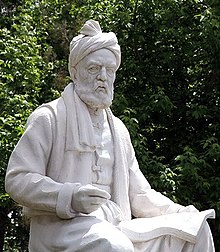
Poet, Firdowsi
  • Origin: Perso-Arabic
  • Gender: Unisex
  • Meaning: heaven; paradise; garden
  • Pronunciation: (FUR-dows)

The name comes directly from the Arabic word فردوس (firdaws), meaning “paradise,” which is ultimately from the Avestan pairidaeza “garden; enclosure.” In Islam, the term firdaws is sometimes used to refer to the highest level of Jannat or Heaven.

The name seems to be traditionally given to both males and females equally. A notable bearer was the 11th-century Persian poet, Firdowsi, who authored the historical epic, Shahnamah (Book of Kings).

Other forms of the name include:

  • Fardawəs (Abkhaz, exclusively male)
  • Firdovs (Chechen, exclusively female)
  • Fildusa (Bosnian, exclusively female)
  • Firdevsa (Bosnian, exclusively female)
  • Firdusa (Bosnian, exclusively female)
  • Firdaws/Firdaous (Maghrebin forms, exclusively female)
  • Pardis (Persian, exclusively female)
  • Fardowsa (Somali, exclusively female)
  • Firdavs (Tajik & Uzbek, exclusively male)
  • Firdausa (Tatar, exclusively female)
  • Firdaves (Tatar, unisex)
  • Firdavis (Tatar, exclusively male)
  • Firdevs (Turkish, unisex)

Sources


Hakim, Hakeem

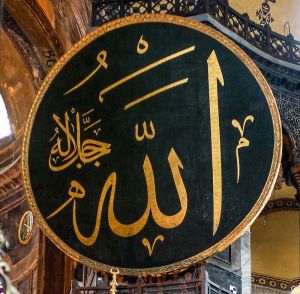
Istanbul,_Hagia_Sophia,_AllahThe name is derived from an Arabic honorific title حكيم that can have several different meanings. The name roughly translates as “sage” or “wise” but it can also mean “physician” or “philosopher” and is often used to denote a doctor, judge or someone highly educated in a particular scientific field in the Arabic world.

It is also used as a given name in most of the Islamic world,as in Islam, Al-Hakim is one of the 99 names of Allah.

As of 2016, Hakeem 905th most popular male name. Hakeem first entered the U.S. top 1000 in 1989 when it peaked at its highest in popularity, coming in as the 586th most popular male name. Hakim has only appeared in the U.S. Top 1000 one time in 1976, when it was the 881st most popular male name.

In France, Hakim appeared in the Top 1000 between 1961 and 2008 and peaked in popularity in 1981 when it was the 161st most popular male name in France.

Another form is

  • Hakimi ჰაქიმი (Georgian)

Sources


Gabriel, Gabriella

Origin: Hebrew גַבְרִיאֵל  Γαβριηλ
Meaning: “strong man of God.”
Eng (GABE-ree-el); (gah-bree-EL-ah); Fre (gah-bree-EL); Germ (GAHP-ree-el); Pol (GAHP-ryel)

The name is derived from the Biblical Hebrew, גַבְרִיאֵל (Gavri-el) meaning, “strong man of God.”

In Judeo-Christian religions, it is the name of a powerful archangel, who is often viewed as a messenger of God. He appears several times in the Old and New Testaments.

Among Christians, one of his most important messages was relayed to the Virgin Mary that she would be the mother of Jesus. Islamic tradition also believes the same, and in Islam, it was the angel Gabriel who revealed the Qu’ran, (through God), to Mohammed.

In Mormon theology, Gabriel is believed to be the embodiment of Noah in the afterlife.

Gabriel is a fairly common name among Christians, Jews and Muslims, making him an extremely cross-cultural portable name.

Currently, in the United States, his popularity has been rising. He is the 24th most popular male name, (2011). In other countries, his rankings in all his various forms are as follows:

  • # 2 (Gabriel(e), Liechtenstein, 2010)
  • # 3 (Brazil, 2011)
  • # 4 (Romania, 2009)
  • # 6 (Gabriele, Italy, 2009)
  • # 7 (France, 2010)
  • # 9 (Quebec, Canada, 2011)
  • # 19 (Croatia, 2009)
  • # 26 (Belgium, 2008)
  • # 28 (Canada, BC, 2010)
  • # 28 (Mexico, 2010)
  • # 29 (Austria, 2010)
  • # 35 (Spain, 2010)
  • # 40 (Poland, 2009)
  • # 47 (Sweden, 2011)
  • # 48 (Norway, 2011)
  • # 52 (Catalonia, 2010)
  • # 78 (England/Wales, 2010)
  • # 95 (Australia, NSW, 2011)
  • # 124 (Scotland, 2010)
  • # 189 (Djibril, France, 2010)
  • # 313 (Jibril, France, 2010)

Other forms of the name include:

  • Jibrail/Jibrīl جبرائيل ጂብሪል (Arabic/Ethiopian)
  • Gabriel გაბრიელი ገብርኤል
    (Armenian/Catalan/Coptic/Czech/Danish/English/Ethiopian/Finnish/French/Georgian/German/Norwegian/Polish/Portuguese/Romanian/Romansch/Spanish/Swedish)
  • Gavrik (Armenian)
  • Cəbrayıl/Cibril (Azeri)
  • Gawryil Гаўрыіл (Belarusian)
  • Džibril/Džebrail (Bosnian)
  • Gavrail Гавраил (Bulgarian)
  • Zheberejil Жәбірейіл (Central Asian)
  • Gabrijel (Croatian/Maltese/Serbian)
  • Gabriël (Dutch)
  • Gaabriel (Estonian)
  • Gabrel (Ethiopian)
  • Kaapo/Kaapro (Finnish)
  • Gabriél Γαβριήλ (Greek)
  • Gavril Γαβριηλ (Greek)
  • Gavriel גַּבְרִיאֵל (Hebrew)
  • Gábriel (Hungarian)
  • Gábor (Hungarian)
  • Gabríel (Icelandic)
  • Jibril (Indonesian)
  • Gaibriéil (Irish-Gaelic)
  • Gabo/Gabbo (Italian)
  • Gabriele (Italian: more common form)
  • Gabriellino (Italian)
  • Gabriello (Italian)
  • Gabrio (Italian)
  • Cibrayîl (Kurdish)
  • Gabrielus (Latin)
  • Gabriels (Latvian)
  • Gabrielius (Lithuanian)
  • Jibrail (Malaysian)
  • Gavriilu Гаврїилъ (Old Church Slavonic)
  • Khabbriele (Puglian)
  • Gabin (Provençal)
  • Gavril Гавриил (Romanian/Russian)
  • Crabiele/Gabilele/Gabriello (Sardinian)
  • Cabbrieli (Sicilian)
  • Gabri’el ܠܒܪܝܐܝܠ (Syrian)
  • Gebrael (Syrian)
  • Cebrâîl (Turkish)
  • Gavrel גַאבְֿרֶעל (Yiddish)

English short form is Gabe.

Its feminine form of Gabriella/Gabriela is also rising in popularity. Currently, Gabriella is the 34th most popular female name in the United States, (2011). Her rankings in other countries are as follows:

  • # 3 (Gabriela, Bulgaria, 2009)
  • # 5 (Gabrielė, Lithuania, 2011)
  • # 5 (Gabrielle, Philippines, 2011)
  • # 7 (Gabriela, Columbia, 2011)
  • # 8 (Gabriela, Romania, 2009)
  • # 9 (Gabriela, Puerto Rico, 2011)
  • # 10 (Gabriela, Brazil, 2010)
  • # 13 (Gabriela, Poland, Warsaw, 2010)
  • # 19 (Gabriela, Poland, 2009)
  • # 28 (Gabrijela, Croatia, 2009)
  • # 30 (Gabriela, Mexico, 2010)
  • # 30 (Gabrielly, Brazil, 2010)
  • # 36 (Gabriela, Croatia, 2009)
  • # 38 (Gabriela, Chile, 2010)
  • # 64 (Australia, NSW, 2011)
  • # 64 (Gabriela, Spain, 2010)
  • # 67 (Gabrielle, France, 2010)
  • # 72 (Canada, BC, 2010)
  • # 94 (Gabrielle, Canada, BC, 2010)
  • # 119 (Gabrielle, United States, 2011)
  • # 466 (France, 2010)

Other feminine forms include:

  • Gebre’elwa ገብርኤሏ (Amharic/Ethiopian)
  • Gabriela (Bulgarian/Croatian/Czech/German/Polish/Portuguese/Romanian/Scandinavian/Slovak/Spanish)
  • Brielle (Cajun: abbreviated form of Gabrielle)
  • Gabrijela (Croatian/Serbian)
  • Gabriëlle (Dutch)
  • Briella/Briela (English)
  • Gabrielle (French/English)
  • Gabria (Italian)
  • Gabrielina (Italian)
  • Gabriella (Italian/English/Hungarian/Scandinavian: more common form in Italy)
  • Gabrielė (Lithuanian)
  • Gavriila Гавриила (Russian)

Czech diminutives are: Gába, Gabika, Gábina, Gabrina and Gabby.

A Polish diminutive is Gabrysia (gah-BRIH-shah).

English short forms are: Gabby and Ella.

Designated name-days are: February 10/27 (Poland), February 19 (Sweden), March 24 (Czech/Finland/Poland/Slovakia/Sweden), September 29 (France/Germany), December 12 (Hungary)


Raphael

Gender: Masculine
Origin: Hebrew רָפָאֵל Ραφαηλ
Meaning: “God is healer.”
Fre (ra-fa-EL); Eng (RAF-ee-el; RAY-fee-əl)

The name is found in Judeo-Christian and Islamic legend as the name of a major archangel. In the Bible, he is mentioned in the Book of Tobit, which is considered canonical in the Roman Catholic, Orthodox and Anglican tradition. Due to Raphael’s deliverance of Sarah from the demon Asmodeus (who killed every husband she married before consumation), Raphael has been invoked as a matchmaker by Catholics.

Raphael also appears in the non-canonical Book of Enoch in which he is responsible for binding the fallen angel Azazel

In Islamic tradition, he is known as Israfel/Israfil and it is believed that he will blow the trumpet on Judgement Day.

It is interesting to note that the modern Hebrew word for a medical doctor is  דוֹקטוֹר (rophe), compare to the first element of Raphael.

Raphael is currently a trend across Europe, in France, Raphaël is the 11th most popular male name, (2010). His rankings in his various forms are as follows:

  • # 3 (Liechtenstein, 2010)
  • # 11 (Rafael, Brazil, 2010)
  • # 17 (Austria, 2010)
  • # 40 (Rafał, Warsaw, Poland, 2010)
  • # 48 (Rafał, Poland, 2009)
  • # 50 (German-speaking, Switzerland, 2010)
  • # 54 (Raphaël, Belgium, 2008)
  • # 55 (Rafael, Spain, 2010)
  • # 56 (Rafael, Croatia, 2009)
  • # 63 (Rafael, France, 2010)
  • # 189 (Rafaël, Netherlands, 2011)
  • # 274 (Rafael, United States, 2011)
  • # 668 (United States, 2011)

Its feminine form of Rafaela is currently the 8th most popular female name in Brazil, (2010), while the French form of Raphaëlle ranked in as the 273rd most popular female name in France, (2010).

Other forms of the masculine include:

  • Rafael (Albanian/Armenian/Catalan/Croatian/Czech/Finnish/Hungarian/Portuguese/Romanian/Romansch/Scandinavian/Slovene/Spanish)
  • Raphel ሩፋኤል (Amharic/Ethiopian)
  • Rupha(e)l ራፋኤል (Amharic/Ethiopian)
  • Israfil اسرافيل, Исрафил (Arabic/Central Asian: used among Muslims)
  • Rapael რაფაელ (Armenian/Georgian)
  • Rafail Рафаил Ραφαήλ (Bulgarian/Greek/Macedonian/RomanianRussian/Serbian)
  • Rafel (Catalan)
  • Raphael (Coptic/English/German)
  • Rafaël (Dutch)
  • Raafael (Estonian)
  • Raphaël (French)
  • Raiféal (Gaelic)
  • Raffaele (Italian)
  • Raffaello (Italian)
  • Raffaelino (Italian)
  • Îsrafîl (Kurdish)
  • Rafla (Lebanese/Syrian: used among Christians)
  • Rafaelis (Lithuanian)
  • Rapolas (Lithuanian)
  • Rafel (Maltese)
  • Rafał (Polish)
  • Arrafieli (Sardinian)
  • Rafiele (Sardinian)
  • İsrafil (Turkish)
  • Rafayil Рафаї́л (Ukrainian)
Common diminiutives are: Raf (Dutch); Rafe (English); Ralph (English); Rafinha (Brazilian-Portuguese); Rafa (Spanish).
Feminine forms include:
  • Rafaela (Croatian/Macedonian/Portuguese/Romansch/Slovene/Spanish)
  • Raphaëlle (French)
  • Raphaela (German)
  • Raphaele (German)
  • Raffaella (Italian)
  • Raffaellina (Italian)
The name was also notably borne by Raphael, or Raffaello Sanzio (1483–1520), an Italian master painter.

Safiyya

Gender: Feminine
Origin: Arabic صفيّة
Meaning: “pure.”
(sah-FEE-yah)

The name is derived from the Arabic word, saf صاف (pure).

The name was borne by Safiyya Bint Huyayy, a Jewish-Bedouin woman who converted to Islam and became one of the Prophet Mohammed’s wives. It was also borne by Safiyya bint ‘Abd al-Muttalib, a Sahaba of Mohammed.

As of 2010, its Maghrebin form of Safia was the 293rd most popular female name in France. Her variant forms appear throughout the French top 500; their rankings are as follows:

  • # 297 (Safa)
  • # 466 (Safiya)
Safiyyah was the 10th most popular female name in Malaysia (2011)

Other forms of Safiya include:

  • Safija Сафия (Albanian/Bosnian/Bulgarian/Central Asian)
  • Safia (Algerian/Berber/Moroccan/Tunisian)
  • Safa (Arabic)
  • Saffiya (Arabic)
  • Safiye (Azeri/Kurdish/Turkish)
  • Shafiyah (Indonesian)
  • Safiyyah (Malaysian)
  • Safiya صفیه (Persian)

Jihane

Gender: Feminine
Origin: Arabic جيهان
Meaning: debated
(jee-HAHN)

There are several possible origins to this name. It is most widely accepted to be derived from the Persian word, جهان (jahan), meaning, “world; universe.” However, it can also be traced to several different Arabic words with JHN as their roots. These include:

  • جهانة (juhanhun), meaning, “young.”
  • جهن (jhen), meaning, “closer.”
  • جهنة (jhenh), meaning, “twilight blue.”

As of 2010, Jihane was the 334th most popular female name in France.

A variant transcription is Jihene.

Sufian

Gender: Masculine
Origin: Arabic
Meaning: debated
(SOOF-yahn)

The name could either be derived from the Arabic ṣafā (صَفا) meaning, “pure” or the Arabic,    ṣūf (صُوف), meaning, “wool.”

The name was borne by Abu Sufyan, originally a staunch opponent to the Prophet Mohammed, he later became a devout Muslim. It was also borne by Sufyan ath-Thawri ibn Said (716–778), a notable Islamic scholar who is credited for putting together many of the hadiths.

A modern notable bearer is American musician, Sufjan Stevens (b.1975).

As of 2010, its Maghrebin form of Sofiane was the 106th most popular male name in France.

Other forms of the name include:

  • Sufyan (Albanian/Arabic)
  • Sofiane (Algerian/Moroccan/Tunisian)
  • Sufian (Arabic/Persian)
  • Süfyan (Azeri/Kurdish/Turkish)
  • Sufjan Суфьян (Bosnian/Bulgarian/Central Asian)
  • Sufyaan (Somalian)