Elisa

Gender: Feminine
Origin: Italian

The name could either be a contracted Italian form of Elisabetta or it may be a feminine form of Eliseo, the Italian form of Elisha.

Its French form of Élise was introduced via the sister of Napoleon Bonaparte, Elisa Bonaparte (1777-1820).

Currently, Elisa is the 7th most popular female name in Italian-speaking Switzerland, (2010) and the 12th most popular in Italy, (2010). Her rankings in other countries are as follows:

  • # 34 (Belgium, 2009)
  • # 47 (France, 2009)
  • # 56 (Austria, 2010)
  • # 115 (Netherlands, 2010)
  • # 496 (United States, 2010)

Paul

Gender: Masculine
Origin: Latin
Meaning: “short; small; humble; few.”
Eng (PAWL)

The name is derived from the Latin Roman family name, Paulus, which could translate as meaning, “small, short; humble; few.”

Paul and his various forms has to be one of the most common male names used throughout the Christian world. It has been used equally among Orthodox Christians, Roman Catholics and Protestants.

Its most famous bearer was Paul of Tarsus, whose real name was Saul. St. Paul, as referred to by the Roman Catholic and Eastern Orthodox Churches, is attributed as being the author of much of the New Testament.

The name was borne by several popes, royals and saints thereafter.

Currently, its Germanic form of Paul is the 8th most popular male name in Germany, (2011). His rankings in other countries are as follows:

  • # 13 (Austria, 2010)
  • # 22 (France, 2009)
  • # 41 (Romania, 2009)
  • # 90 (Ireland, 2010)
  • # 130 (Scotland, 2010)
  • # 178 (United States, 2010)
  • # 485 (Netherlands, 2010)
His foreign equivalents rankings are as follows:
  • # 3 (Pablo, Spain, 2010)
  • # 4 (Páll, Faroe Island, 2010)
  • # 4 (Pau, Catalonia, 2010)
  • # 17 (Paweł, Poland, 2010)
  • # 26 (Pablo, Chile, 2010)
  • # 29 (Pavel, Czech Republic, 2010)
  • # 31 (Pablo, Catalonia, 2010)
  • # 44 (Pau, Spain, 2010)
  • # 91 (Pál, Hungary, 2010)
  • # 144 (Pablo, France, 2009)
  • # 202 (Paolo, France, 2009)
  • # 361 (Pablo, United States, 2010)

Other forms of the name include:

  • Pali (Albanian)
  • Paulë (Albanian)
  • Boulos/Bulos بولس (Arabic)
  • Faulus (Aramaic)
  • Boghos Պողոս (Armenian)
  • Poghos Պողոս (Armenian)
  • Paul (Basque/Dutch/English/Estonian/German/French/Romanian/Scandinavian/Silesian)
  • Paweł Павeл (Belarusian/Polish)
  • Polus (Berber)
  • Paol (Breton)
  • Pavel Павел (Bulgarian/Czech/Russian/Slovene)
  • Pavolo (Calabrian)
  • Pavulu (Calabrian)
  • Pau (Catalan/Occitanian)
  • Pawl (Cornish/Welsh)
  • Paulu (Corsican/Sardinian/Sicilian)
  • Pavao (Croatian)
  • Pavle პავლე Павле (Croatian/Georgian/Macedonian/Serbian)
  • Pavo (Croatian)
  • Palle (Danish)
  • Poul (Danish)
  • Pauwel (Dutch)
  • Paavel (Estonian)
  • Paavo (Estonian/Finnish)
  • Páll (Faroese/Icelandic)
  • Paavali (Finnish)
  • Pauli (Finnish)
  • Pol (Flemmish/Romansch)
  • Paale (Frisian)
  • Pals (Frisian)
  • Paulus पौलुस (Frisian/Hindi/Latin)
  • Pay (Frisian)
  • Powles (Frisian)
  • Pouw (Frisian)
  • Pauli (Fruilian)
  • Pódhl (Gaelic)
  • Pól (Gaelic)
  • Paulo (Galician)
  • Pavlos Παυλος (Greek)
  • Pāl पॉल (Hindi)
  • Pál (Hungarian)
  • Pósa (Hungarian)
  • Paolo (Italian/Portuguese)
  • Paolino (Italian/Portuguese)
  • Paulinus (Latin)
  • Pāvils (Latvian)
  • Paulius (Lithuanian)
  • Povilas (Lithuanian)
  • Paol (Lombard)
  • Paulose (Malayalam)
  • Pawl (Maltese)
  • Pawlu (Maltese)
  • Payl (Manx)
  • Paora (Maori)
  • Pål (Norwegian/Swedish)
  • Pavel (Romanian)
  • Paulin (Romansch)
  • Polet (Romansch)
  • Polin (Romansch)
  • Pulegn (Romansch)
  • Pàl (Scots-Gaelic)
  • Pawůł (Silesian)
  • Pavol (Slovak)
  • Pawoł (Sorbian)
  • Pablo (Spanish)
  • Paoro (Tahitian)
  • Pàul (Tuscan)
  • Pavlo Павло (Ukrainian)

For a Reference a Female forms See Paula and Paulina (soon to come)

Benedict, Benedikt

Gender: Masculine
Origin: Latin
Meaning: “blessed.”

The name comes directly from the Late Latin name Benedictus meaning “blessed.” The name was borne by a 6th-centuy Italian monk and saint who credited for being the founder of the Order of the Benedictines.

The name was very common throughout Medieval Europe, being borne by 16 popes, it was fairly popular in England, in the form of Bennett.

The name was also commonly used among German-Jews, being used as a cognate of the Hebrew male name Baruch בָּרוּךְ (blessed).

In the United States, the name became taboo to use due to its associations with Benedict Arnold (1741-1801) a famous American deserter and traitor to the British.

The name recently skyrocketed in Germany after the succession of the German born Pope Benedict XVI. It is currently the 93rd most popular male name in Germany, (2011). It is especially popular in Bavaria.

His rankings in other countries are as follows:

  • # 1 (Bence, Hungary, 2010)
  • # 32 (Benedek, Hungary, 2010)
  • # 294 (Benoît, France, 2009)

Other forms of the name include:

  • Benedikti (Albanian)
  • Benedet (Aragonese)
  • Benedictu (Asturian)
  • Benedita (Basque)
  • Beñat (Basque)
  • Benead (Breton)
  • Benet (Catalan)
  • Benedettu (Corsican/Maltese/Sardinian)
  • Benedikt Венедикт (Croatian/Czech/German/Icelandic/Norwegian/Russian/Serbian/Scandinavian/Ukrainian)
  • Ben(d)t (Danish/Norwegian)
  • Benedictus (Dutch/Late Latin)
  • Benedict (English/German/Romanian/Scandinavian)
  • Bennett (English)
  • Pentti (Finnish)
  • Bénédict (French)
  • Benoît (French)
  • Beinidict (Gaelic)
  • Bieito (Galician)
  • Benedikhti ბენედიქტე (Georgian)
  • Bendix (German/Norwegian)
  • Bennet (German)
  • Benz (German)
  • Venediktos Βενέδικτος (Greek)
  • Bence (Hungarian)
  • Benedek (Hungarian)
  • Benett (Hungarian)
  • Benedetto (Italian)
  • Benito (Italian/Spanish)
  • Bettino (Italian)
  • Bendiks (Latvian)
  • Benediktas (Lithuanian)
  • Bendik (Norwegian)
  • Benedix (Plattdeutsch)
  • Benedykt (Polish)
  • Benedito (Portuguese)
  • Bento (Portuguese)
  • Benezet (Provençal)
  • Banadet (Romansch)
  • Banadegt (Romansch)
  • Bandet (Romansch)
  • Benedegt (Romansch)
  • Binidittu (Sicilian)
  • Beňadik (Slovak)
  • Bengt (Swedish)
  • Bened (Welsh)
  • Benesh (Yiddish)

Feminine forms include:

  • Benedetta (Corsican/Maltese/Italian/Sardinian)
  • Benedikta (Czech/German)
  • Benedikte (Danish/Norwegian)
  • Bénédicte (French)
  • Benoîte (French)
  • Benita (Italian/Spanish)
  • Bettina (Italian)
  • Benedicta (Latin/Romansch)
  • Benedykta (Polish)
  • Benedita (Portuguese)
  • Bengta (Swedish)

Antonia

Gender: Feminine
Origin: Latin
Eng (an-TOH-nee-ah; AN-tuh-NEE-ah)

The name is a feminine form of Antonius. In Roman times, this name was used for the female offspring of the Antonii clan.

It was borne by several famous Roman matrons, including the daughter of Marc Antony (50 BCE-?).

Currently, Antonia is the 58th most popular female name in Germany, (2011) and the 72nd most popular in Croatia, (2010).

Other forms of the name include:

  • Antonia (Catalan/Corsican/Croatian/Dutch/English/German/Greek/Italian/Polish/Romanian/Romansch/Scandinavian/Spanish)
  • Antonija Антония (Croatian/Macedonian/Russian/Serbian/Slovene)
  • Antonie (Czech/French)
  • Antónia (Hungarian/Portuguese/Slovak)
  • Antonía (Icelandic)
  • Antía (Galician)


Theresa

Gender: Feminine
Origin: Uncertain
Eng (teh-REE-sah; teh-REESE); Spanish (teh-REY-sah); German/Polish (teh-REH-zah); French (teh-HREZ).

The name was first recorded in the 4th century as Therasia. It was borne by the wife of the ex-Roman senator turned Christian Bishop, St. Paulinus of Nola. Therasia had hailed from the Northern Region of Spain, and the name took off as Teresa in both Spain and Portugal.

Its origins are most popularly attributed to the Greek, therizo, meaning, “to harvest” or “to reap.” However, some sources believe that it might be from the Greek word theros meaning “summer” or that it is derived from the name of one of the Santorini islands. It could also very well be an old Iberian name of uncertain etymology. What is certain is that the name’s usage was confined to the Iberian Peninsula up until the 16th-century when it was made famous throughout Europe by St. Teresa of Avila, a Roman Catholic nun and mystic. She is revered as a Doctor of the Church.

In the German-speaking world, it was popularized by Habsburg, Maria Theresa (1717-1780), Empress of the Austro-Hungarian Empire.

It is also borne by a 19th-century French nun, St. Thérèse de Lisieux. She is also revered as a great theologian and Doctor of the Church.

Currently, Teresa/Theresa is the 31st most popular female name in Austria, (2010), the 65th most popular in Germany (2011) and the 100th most popular in Spain, (2010). While in the United States, she comes in at a lowly # 936 (2010).

Popular English nicknames include:  Trace, Tracy, Terry, Tess, Tessa, Tressie (also used as a nickname in Malta), Tress & Reese.
Other forms of the name:
  • Teresa تيريزا (Albanian/Arabic/Catalan/Finnish/German/Italian/Latvian/Polish/Portuguese/Spanish)
  • Terese (Basque/Norwegian/Swedish)
  • Terezija (Croatian/Slovenian)
  • Rezika (Croatian/Slovenian)
  • Resa (Bavarian)
  • Reserl (Bavarian)
  • Resi (Bavarian)
  • Tessa (Bavarian/English/German/Italian)
  • Tereza (Bulgarian/Czech/Maltese/Portuguese-Brazilian/Romanian/Slovak)
  • Teresia (Corsican/Swedish)
  • Terezie (Czech)
  • Thera (Dutch)
  • Theresa (Dutch/German/English)
  • Theresia (Dutch/German/Swedish: common Dutch nicknames are Thera and Trees)
  • Tereesa/Tereese (Estonian)
  • Thérèse (French)
  • Tereixa (Galician)
  • Terisa (German)
  • Therese (German/Scandinavian)
  • Theres (German/Scandinavian)
  • Terézia (Hungarian/Czech/Slovak. Hungarian diminutive form is Teca)
  • Teréz (Hungarian)
  • Teresía (Icelandic)
  • Toiréasa (Irish)
  • Treasa (Irish)
  • Teresiana (Italian)
  • Teresina (Italian)
  • Terina (Italian)
  • Teresija (Latvian)
  • Terēze (Latvian)
  • Tèrìz (Lebanese)
  • Teresė (Lithuanian:Teresijus)
  • Threissya (Malayalam)
  • Trezza (Maltese)
  • Teresita (Spanish)
  • Tessan (Swedish: traditionally a diminutive form, occasionally bestowed as an independent given name)
The designated name-day is often October 15.

Letitia

Gender: Feminine
Origin: Latin
Meaning: “happiness; joy.”
Eng (luh-TISH-ah)

The name is an English form of the Latin female name, Laetitia, which is derived from laeta meaning, “joy; happiness.”

The name was popularized by an early Christian Spanish saint. In Medieval England, the name was used in the form of Lettice, (sounds like lettuce). After the Reformation, it went out of usage but was revived in the 18th-century in the more elaborate incarnation of Letitia. It remained a very popular name in England and the United States between the 18th-century and the 19th-century, leading to the diminutive offshoot of Lettie, which also appears as an an independent given name in records of the same period.

In Rome, it was the name of a minor goddess of gaiety. In modern Italian, the word survives in the form of letizia (joy) and is also used as a given name. Letizia was also the name of Napoleon Bonaparte’s mother.

Currently, its Portuguese form of Letícia is the 20th most popular female name in Brazil, (2011). Her rankings in other countries are as follows:

  • #320 (France, Laëtitia, 2009)
The name is currently borne by Letizia Ortiz Rocasolano (b.1972), the wife of Crown Prince Felipe of Spain.

Other forms of the name include:

  • Levenez (Breton)
  • Letícia (Catalan/Hungarian/Portuguese)
  • Letizia (Corsican/Italian)
  • Lettice (English)
  • Letitia (English)
  • Laëtitia (French)
  • Laetitia (German)
  • Letiţia (Moldovan/Romanian)
  • Letycja (Polish)
  • Leticia (Spanish)
  • Leta (Swiss-German)


Simeon, Simon

Gender: Masculine
Origin: Biblical, Hebrew
Meaning: “he has heard.”
Eng (SIE-mun)

Simeon first appears in the Old Testament as a patriach of the Simeonite tribe and one of the 12 sons of Jacob.

The name origins are debated. The Torah claims that the name is in reference to Leah’s cry of anguish to God over her husband’s deference to her. Being a derivative of the Hebrew shama’on meaning “he has heard my suffering.” In this case, the name would share the same etymology as the name Ishmael (God has heard).

In some classical Rabbinical texts the name is sometimes translated to mean “he who listens to the words of God.” It has even been suggested that it is derived from the Hebrew sham’in meaning “there is sin” which is in reference to Zimri, an ancestor of Simeon’s, who committed the sin of having a relationship with a Midianite woman.

The name was borne by several other characters in the Old and New Testament, in the forms of Simeon and Simon. Simon later became associated with St. Peter. During the early Christian era, the Greek world took the name to mean “snub nosed” due to its similarity in sound to the Greek word σιμοσ (simos).

Simon has always been prevalent in the Western World, it is currently very trendy in continental Europe. The rankings of popularity in various countries are as follows:

  • # 3 (Poland, Szymon, 2010)
  • # 7 (Austria, 2010)
  • # 10 (Belgium, 2009)
  • # 12 (Italy, Simone, 2008)
  • # 26 (Germany, 2011)
  • # 32 (Denmark, 2010)
  • # 37 (Sweden, 2010)
  • # 49 (France, 2009)
  • # 56 (the Netherlands, Siem, 2010)
  • # 60 (Croatian, Šimun, 2010)
  • # 60 (Norway, Simen, 2010)
  • # 64 (Norway, 2010)
  • # 71 (Croatia, Šime, 2010)
  • # 75 (the Netherlands, 2010)
  • # 91 (Hungary, 2010)

Other forms of the name include (divided alphabetically by origin)

  • Simeon Սիմէօն (Albanian/Armenian/Bulgarian)
  • Simon Симон Սիմոն (Albanian/Armenian/English/Finnish/German/Hungarian/Macedonian/Malayalan/Norwegian/Occitanian/Slovenian/Swedish/ Romanian)
  • Samān (Arabic)
  • Shamo (Assyrian)
  • Shamun ܫܡܥܘܢ (Assyrian)
  • Şımon (Azeri)
  • Ximun (Basque)
  • Shyman Шыман (Belarusian)
  • Symon Сымон (Belarusian)
  • Simó (Catalan)
  • Simone (Corsican/Italian)
  • Šime (Croatian)
  • Šimo (Croatian)
  • Šimun (Croatian)
  • Šimon (Czech/Prekmurian/Slovak)
  • Simion (Danish/Romanian)
  • Simoen (Danish)
  • Siemen (Dutch/Frisian)
  • Siem (Dutch)
  • Siimon (Estonian/Finnish)
  • Smeon ስምዖን, (Ethiopian)
  • Símeon /Símun (Faroese)
  • Sema (Finnish)
  • Semen (Finnish/Gascon)
  • Semjon (Finnish)
  • Semoi (Finnish)
  • Siim (Finnish)
  • Siimoni (Finnish)
  • Simeoni (Finnish)
  • Simo (Finnish/Serbian)
  • Symeon Συμεών (Greek)
  • Symeonos Συμεώνος (Greek)
  • Siimuut (Greenlandic)
  • Shimon שמעון (Hebrew)
  • Símon (Icelandic)
  • Síomón (Irish)
  • Sshimeoni (Kosovar)
  • Sīmanis (Latvian) 
  • Sīmans (Latvian)
  • Simons (Latvian)
  • Saimonas (Lithuanian)
  • Saimontas (Lithuanian)
  • Simanas (Lithuanian)
  • Simas (Lithuanian)
  • Simeonas (Lithuanian)
  • Simonas(Lithuanian)
  • Sime Симе (Macedonian)
  • Shimon (Malayalam)
  • Simen/Simian (Norwegian)
  • Simå (Norwegian dialectical form: Norrland & Østerdalen)
  • Sømjo (Norwegian dialectical form: Rogaland)
  • Simonu/Symeonu (Old Church Slavonic)
  • Symeon (Polish)
  • Szymon (Polish: Szymek and Szymuś are diminutives)
  • Simão (Portuguese)
  • Simeão (Portuguese)
  • Simun (Quecha)
  • Schimun (Romansch)
  • Semyon Семён (Russian)
  • Sim (Scottish)
  • Šimej (Slovene)
  • Simón (Spanish)
  • Jimeno (Spanish)
  • Ximeno (Spanish)
  • Simoni (Swahili)
  • Shemod (Syrian)
  • Shimeon (Syrian)
  • Semen/Symon Симон (Ukrainian)
  • Mişon (Turkish)
  • Seimon (Welsh)
  • Simwnt (Welsh)
  • Shimmel (Yiddish)

Feminine forms include:

  • Simona (Czech/Italian/Portuguese/Romanian/Slovak/Slovenian)
  • Simonia/Simonie (Danish)
  • Simoona (Finnish)
  • Simone (French)
  • Simonette (French)
  • Szimóna (Hungarian)
  • Szimonetta (Hungarian)
  • Símonía (Icelandic)
  • Simonetta (Italian)
  • Sima (Lithuanian)
  • Simonė (Lithuanian)
  • Szymona (Polish)
  • Simoneta (Portuguese)
  • Ximena (Portuguese/Spanish)
  • Simoneta/Šimona (Slovak)
  • Simeona (Slovene)
  • Jimena (Spanish)

The designated name-day is October 28, and October 30 in Slovakia.

Adrian

Gender: Masculine
Origin: Latin
Meaning: “from Hadria”

The name is derived from the Latin Hadrianus, a Roman cognomen meaning, “from Hadria.” Hadria was a small town in the North of Italy. It gave its name to the Adriatic Sea.
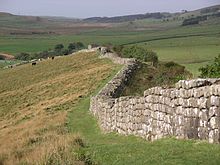
The name was borne by Publius Aelius Hadrianus (76-138 CE), known in the modern world as Emperor Hadrian, he is most famous for the wall he built across Great Britain, known as Hadrian’s Wall.
The name remained common throughout Europe, and is fairly popular across the Western World till this day. It was borne by several saints and popes, including the first and only English pope, Adrian IV, as well as the only Dutch pope, Adrian VI.
Currently, Adrian is the 6th most popular male name in Spain, (2010) and the 7th most popular in Norway, (2010). His rankings in other countries are as follows:
  • # 29 (Catalonia, 2009)
  • # 33 (Poland, 2010)
  • # 43 (Germany, 2011)
  • # 48 (Austria, 2010)
  • # 49 (Croatia, 2010)
  • # 51 (France, Adrien, 2010)
  • # 56 (United States, 2010)
  • # 60 (Sweden, 2010)
  • # 63 (Hungary, 2010)
  • # 81 (Belgium, Adrien, 2009)
  • # 455 (France, Adrian, 2009)

Other forms of the name include:

  • Ad (Afrikaans/Limbergish)
  • Adriaan (Afrikaans/Dutch)
  • Adrianus (Afrikaans/Latin)
  • Arrie (Afrikaans)
  • At (Afrikaans)
  • Daan (Afrikaans)
  • Jaans (Afrikaans)
  • Adrian Адриан (Albanian/Bulgarian/Croatian/Dutch/English/Finnish/Polish/Romanian/Russian/Scandinavian/Ukrainian)
  • Ardian (Albanian)
  • Adrianu (Asturian/Corsican/Sicilian)
  • Adiran (Basque)
  • Adrijan (Bosnian/Croatian/Serbian/Slovene)
  • Hadrijan (Bosnian)
  • Adrià (Catalan)
  • Jadran(ko) (Croatian)
  • Adrián (Czech/Hungarian/Slovak/Spanish)
  • Arie (Dutch)
  • Arjan (Dutch)
  • Hadrian(us) (Dutch/German/Latin)
  • Adrien (French)
  • Hadrien (French)
  • Aidrean (Gaelic)
  • Adrán (Galician)
  • Adrao (Galician)
  • Hadrán (Galician)
  • Hadrao (Galician)
  • Hádrian (Galician)
  • Adrianos Αδριανός (Greek)
  • Adorján (Hungarian)
  • Adrían (Icelandic)
  • Adriano (Italian/Portuguese)
  • Adrio (Italian)
  • Adriāns (Latvian)
  • Adrianas (Lithuanian)
  • Adrijonas (Lithuanian)
  • Adrião (Portuguese)
  • Adriànu (Sardinian)

Feminine forms include:

  • Adriana  (Albanian/Bulgarian/Catalan/Czech/Galician/German/Greek/Italian/Latin/Lithuanian/Polish/Romanian/Russian/Slovak/Spanish)
  • Adrijana (Bosnian/Croatian/Serbian)
  • Hadrijana (Bosnian/Croatian/Serbian)
  • Jadranka (Croatian)
  • Adriána (Czech/Hungarian/Slovak)
  • Ariane (Dutch)
  • Hadriana (Galician/Latin)
  • Adria (German/Italian)
  • Adriane (German)
  • Adrienne (French)
  • Adrienn (Hungarian)
  • Adrianna (Polish)
  • Drina (Spanish)

Polish feminine diminutives are Ada and Adi.

Baptiste

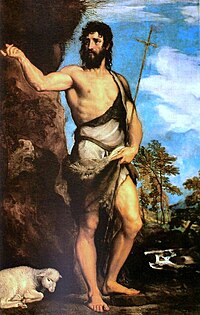
John the Baptiste, Titian

Gender: Masuline
Origin: Greek
Meaning: “to dip.”
Fre (bah-TEEST)

The name is derived from the Greek word βαπτω (bapto) meaning, “to dip.” The name was originally bestowed in honour of St. John the Baptiste and is often paired with John and its various cognates.

Currently, its Spanish form of Bautista, is the 19th most popular male name in Argentina, (2009). While Baptiste ranked in as the 30th most popular name in France and the 80th most popular in Belgium, (2009).

Other forms of the name include:

  • Battista (Corsican/Italian)
  • Battistu (Corsican)
  • Ghjuvan Battistu/Ghjuvan Battista (Corsican)
  • Jean-Baptiste (French)
  • Baptist (German)
  • Podromos πρόδρομοσ (Greek)
  • Giambattista (Italian)
  • Baptista (Occitanian)
  • Batista (Occitanian)
  • Bautista (Spanish)
  • Juan Bautista (Spanish)

A French feminine form is Baptistine.

Rita

The name is a contraction of Margaret but seems to have been used as an independent given name since the Middle Ages.

It was borne by Rita of Armenia (1278-1333) a Byzantine Empress. The name was further popularized in Europe due to the cult of St. Rita of Cascia (1381-1457) a Medieval Italian saint.

The name is used across Europe, including Armenia. Currently, Rita is the 461st most popular female name in Quebec, Canada (2010).

In more recent history it was borne by actress Rita Hayworthe (1918-1987).

Other forms of the name include:

  • Riet (Dutch)
  • Reeta (Finnish)
  • Reetta (Finnish)
  • Riitta (Finnish)
  • Ryta (Polish)

A common Sicilian diminutive is Rituzza.

Source

  1. http://www.behindthename.com/name/rita