Phyllis, Phillyda

  • Origin: Greek Φυλλίς
  • Meaning: “leaves; foliage.”
  • Gender: Female

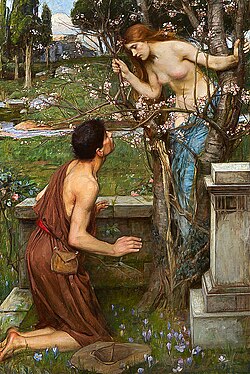
The name appears in Greek mythology. It is connected to a woman who killed herself when her love for Demophon was not returned. She was transformed into an almond or hazelnut tree, depending on the legend. It comes directly from the Greek word, Φυλλίς, meaning, “leaves, foliage,” which shares a root with the words chlorophyll and phyllotaxis. Its Turkish form of Filiz comes from the same root but the meaning slightly changes to “sprout; root.”

It also appears as the name of a minor river god of Bithynia.

It came into widespread use in England in the 16th-century and later spread to the rest of the Anglosphere.
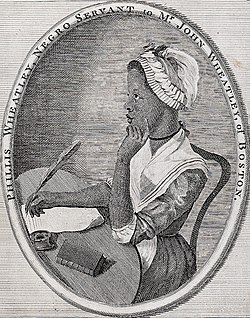
Early Puritan records occasionally include Phyllis/Phillis, reflecting classical learning even among settlers. Phillis Wheatley (1753-1784), the first published African-American female poet, is a striking historical bearer.

An 18th-century English short form was Lissie or Lissy.

It frequently appears in Elizabethan and Restoration poetry and drama. Poets such as Ben Jonson and Andrew Marvell used “Phyllis” as a stock name for a beloved in pastoral verse. Later modernists like Ezra Pound continued this tradition. This usage helped keep it familiar to English speakers for centuries.

It marked its presence in baroque operas (e.g., Handel’s Acis and Galatea includes a character named Phyllis) and in folk songs of the British Isles.

Victorian painters of the Pre-Raphaelite school sometimes chose the Phyllis and Demophon story for mythological canvases.

In the United States, it appeared in the Top 100 Female Names between 1915-1958, peaking at #24 in 1929. In the U.K., it came in at #14 in 1914, #4 in New Zealand in 1911, and #29 in 1922 in Canada.

Its Turkish offshoot of Filiz appeared in the Turkish Top 100 between 1980-1996, peaking at #11 between 1980-1982.

Today, the name is considered dated in the English-speaking world.

Phillyda, pronounced /ˈfɪl.ɪ.də/ in English is an alternate form.

Other forms include:

  • Filida Филлида (Bulgarian, Russian, Serbo-Croatian)
  • Fílide, Fil·lis (Catalan)
  • Fyl(l)is (Czech, Polish, Slovak)
  • Phyllis (Dutch, English, German, Classical Greek, Scandinavian)
  • Phillida (English)
  • Phillis (English)
  • Phyllis, Phyllide (French)
  • Fýllis (Greek – Modern)
  • Fillide, Filide (Italian)
  • Phillidis (Latin)
  • Filis, Filija (Latvian, Lithuanian)
  • Fílide, Fílis (Portuguese)
    • Fílide, Filis (Spanish)
    • Filiz (Turkish)
    • Fillida Філліда (Ukrainian)

Sources

Leontius, Léonce

  • Origin: Greek
  • Meaning: “lion-like.”
  • Gender: Male
  • Eng Pron (lee-ON-shus)

The name is derived from the Greek genitive λέοντος (leontos), meaning, “belonging to a lion; lion-like.”

It was borne by an 8th-century Byzantine emperor and several saints.

The designated name-day is January 13th.

An early English form is perhaps, Leontes, which appears in Shakespeare’s play, The Winter’s Tale (1610).

Léonce is its unisex French form. It appeared in the French Top 1000 Male Names between 1900-1969, and peaked at #95 in 1909. It simultaneously appeared in the French Top 1000 Female Names between 1900-1940 and peaked at #187 in 1915.

Léonce also appeared in the U.S. Top 1000 Male Names between 1887-1895, peaking at #819 in 1887.

Other masculine forms

  • Liyonṭiyos ܠܝܘܢܛܝܘܣ (Assyrian)
  • Leoncio (Asturian, Spanish)
  • Leontzio (Basque)
  • Leonti, Leontiy, Leonty Леонтий (Bulgarian, Russian, Ukrainian)
  • Lleonci (Catalan)
  • Leontios Ⲗⲉⲟⲛⲧⲓⲟⲥ, Λεοντιος (Coptic, Greek)
  • Leontius (Dutch, English, German, Latin)
  • Leontes (English)
  • Léonce (French)
  • Leonte ლეონტე (Georgian)
  • Leonzio (Italian)
  • Leoncjusz (Polish)
  • Leôncio (Portuguese)
  • Leontie (Romanian)
  • Leontije (Serbo-Croatian)
  • Leonziu (Sicilian)

Feminine forms include

  • Léonce (French)
  • Léoncette (French)
  • Léoncie (French)
  • Léoncine (French)
  • Léonte (French)
  • Leontia (Greek, Latin, Romanian)
  • Leonzia (Italian)
  • Leoncja (Polish)
  • Leôncia (Portuguese)

Another possible female off-shoot is Léontine – popular in France from the late 19th to early 20th centuries, it is pronounced [le.ɔ̃.tin]. It is debated whether it is a direct feminine form of Leontius or related to a Latin source meaning, “from Lentini.” A future entry will be written completely dedicated to Léontine.

Sources

Mamilian

  • Origin: Latin
  • Meaning: unknown
  • Gender: Male

The name is derived from the Roman gens name, Mamilius. Its meaning is uncertain. It may relate to the Latin mamilla meaning, “breast; nip; tit” or to mar, meaning “the shining one, splendid one.” It has also been linked with the Celtic mam (strength) and hil (seed).

The most notable bearer is Saint Mamilian of Palermo (San Mamiliano), a 5th-century bishop and martyr venerated in Sicily. The designated name-day is September 15, which on the island of Giglio, there is a yearly festival held in the saint’s honor.

Other forms include:

  • Mamiliá (Catalan)
  • Mamilian (English, German, Polish)
  • Mamilien (French)
  • Mamiliano (Italian)
  • Mamilianus (Latin)
  • Mamilianu (Sicilian)

Feminine forms would include:

  • Mamiliana (Italian)
  • Mamilienne (French)

Sources

Apollinaris, Apollinaire

  • Origin: Greek Ἀπολλινάρις
  • Meaning: “of Apollo.”
  • Gender: Masculine

The name is from the classical Greek, related to Apollo. It was borne by several early Christian saints. The most notable being St. Apollinaris of Ravenna, a Syrian Christian missionary to Ravenna who was martyred there and thereafter became the city’s patron saint.

The French form Apollinaire is linked to the Franco-Polish poet, Guillaume Apollinaire. He lived from 1880 to 1918. He was born Wilhelm Albert Włodzimierz Apolinary Kostrowicki.

Apolinary was common in Poland during the late 19th-century and early 20th-centuries, it is now obsolete. Diminutives include: Apolinek, Apollinek, Apolin, Apollin, Polin, Polinary, Polinarek, Polinaruś, Poli, and Polik.

In Italy, Apollinare was mainly used in the Romagna region due to it being the name of their patrion saint, but it has since fallen out of use.

Apollinaire sporadically appeared in the French Top 1000 between 1900 and 1926 and peaked at #403 in 1923. In 2024, 5 babies were given this name.

Neither its masculine form nor its feminine form had much usage in the English-speaking world. It was mostly used in families of Greek or Eastern European background during the late 19th-century.

Designated name-days include July 20th, July 23rd, and September 12th

Other forms include

  • Abolinarius أبونيناريوس (Arab Christian)
  • Apolighnar Ապողլինար (Armenian)
  • Apolinar Ապոլինար (Armenian, Spanish)
  • Apolinaris ܐܦܘܠܝܢܪܝܣ (Assyrian)
  • Apoliñari (Basque)
  • Apalinariy Апалінарый (Belarusian)
  • Appolinariy Апполінарій (Bulgarian, Ukrainian, Rusyn, Russian)
  • Apol·linar, Apol·linari (Catalan)
  • Apollinaris Ⲁⲡⲟⲗⲗⲓⲛⲁⲣⲓⲥ (Coptic, Dutch, English, German, Greek, Scandinavian)
  • Apollinari (Corsican, Sardinian)
  • Apolinár (Czech, Slovak)
  • Apollinaire (French)
  • Apolinario (Galician, Spanish)
  • Apo’linar აპოლინარ (Georgian)
  • Apollinarios Ἀπολλινάριος (Greek)
  • Apollinár (Hungarian)
  • Apollinare (Italian)
  • Apolenaris (Late Latin)
  • Apolinārs (Latvian)
  • Apolinaras (Lithuanian)
  • Apollinarju (Maltese)
  • Apolinary (Polish)
  • Apolinário (Portuguese)
  • Apolinàri (Provençal)
  • Pulinéra (Romagnol)
  • Apollinari (Romansh)
  • Apolinariu (Romanian)
  • Apolinarije (Serbo-Croatian, Slovenian)
  • Apołinare (Venetian)

Its feminine form is Apollinaria, which is also borne by an early Christian saint.

Other feminine forms include:

  • Abolinarya أبوليناريا (Arab Christian)
  • Apoghlinaria Ապողլինարիա (Armenian)
  • Apolinaria Ապոլինարիա, აპოლინარია (Armenian, Galician, Georgian, Polish, Romanian, Spanish)
  • Apolinaryja, Apolinariya,ܐܦܘܠܝܢܪܝܐ, Аполлинария (Assyrian, Bulgarian, Russian, Rusyn, Ukrainian)
  • Apalinariya, Apalinaryja, Апалінарія (Belarusian)
  • Apollinaria Ⲁⲡⲟⲗⲗⲓⲛⲁⲣⲓⲁ, Ἀπολλιναρία (Coptic, Corsican, German, Greek, Lithuanian, Romansh, Sardinian)
  • Apolinária (Czech, Portuguese, Sardinian, Slovak)
  • Apollinarie (French)
  • Apollinária (Hungarian)
  • Apolinārija (Latvian)
  • Apollinarja (Maltese)
  • Apolinària (Provençal)
  • Apolinarija (Serbo-Croatian, Slovenian)

A traditional feminine diminutive form in Russian is Polina. Polish diminutives include: Apollinka, Apollina, Apolinka, Apolla, Apola, Pola, Polka, Polcia, Polina, and Polinka. Modern Greek diminutives include: Nαρία (Naría), Πόλλα (Pólla), or Λίνα (Lina). Potential English short forms would include: Apple, Pollie, Polly, and Narey, or Narie.

Sources

Bonaventure

  • Origin: Italian
  • Meaning: “good luck.”
  • Gender: Male

Bonaventure is the French and English form of the Medieval Italian male name, Bonaventura. It is ultimately made up of the Latin words, bonus “good” and venturas “the things that will come, the future.” A 13th-century Catholic Saint bore this name. He is considered a Doctor of the Church and known for authoring the biography of St. Francis of Assisi.

The name experienced widespread use throughout Catholic Europe until it fell out of use by the early 20th-century. It was the middle name of actor, Spencer Tracy (1900-1967).

The designated name-day is July 15th and September 11 in Croatia.

In recent years, it was the name of one of the ill-fated Lisbon sisters. This character appeared in Jeffrey Eugenides’ novel, The Virgin Suicides (1993). She is referred to as “Bonnie,” for short.

Other forms include

  • Bonabendur (Basque)
  • Bonaventura (Catalan, Croatian, Czech, Dutch, German, Hungarian, Italian, Scandinavian, Slovene)
  • Boaventura (Galician, Portuguese)
  • Buonaventura (Italian)
    • Bonaventūra, Bonaventūras (Lithuanian)
  • Bonawentura (Polish)
  • Buenaventura (Spanish)

Italian short forms are Ventura, Venturo, and Venturino, also used as independent names.

Sources

Theodard, Diethard

Bergportaal van Sint-Servaasbasiliek te Maastricht by rijksmuseum is licensed under CC-CC0 1.0

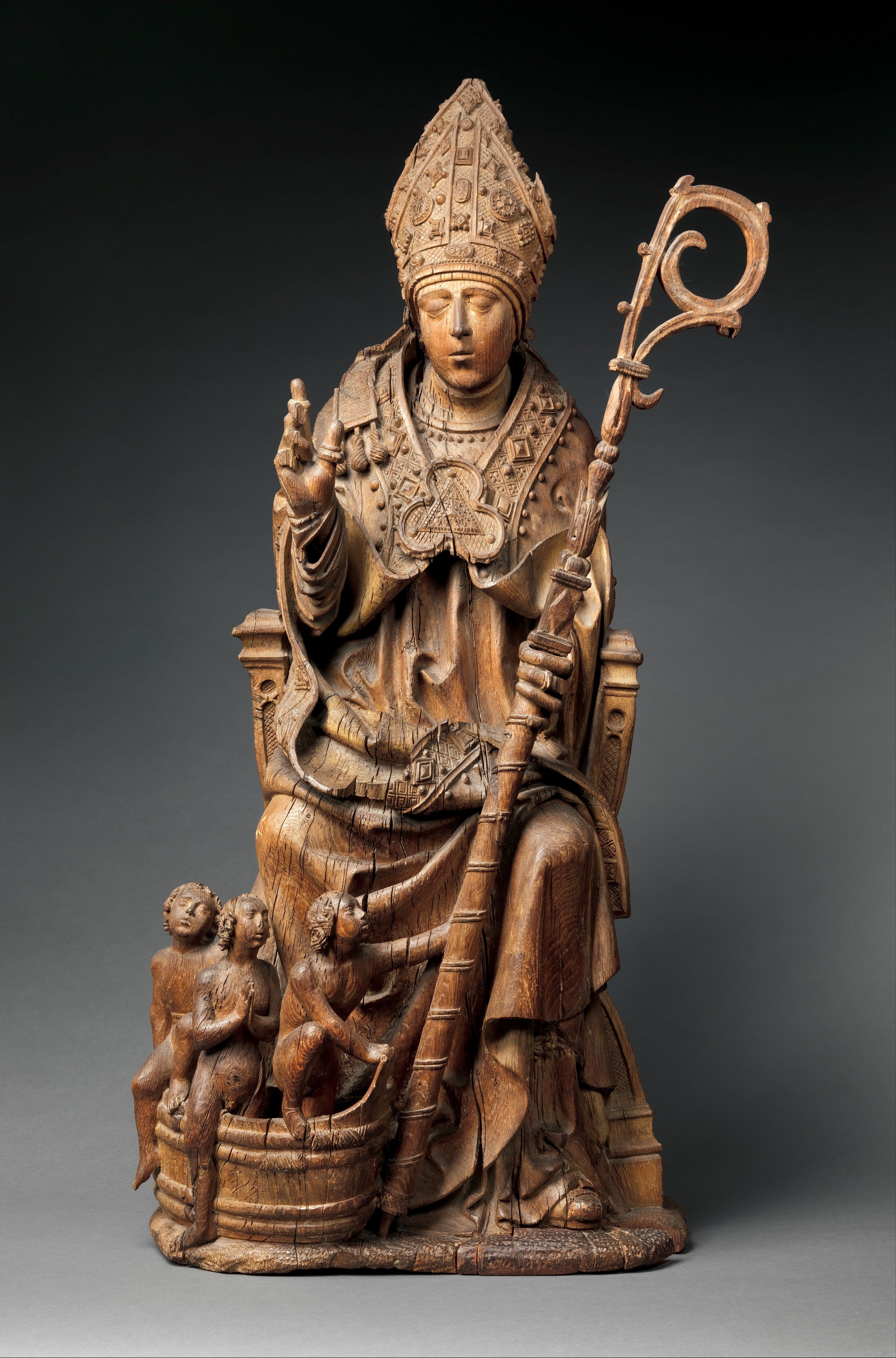
Theodard is a Germanic male name which is composed of the elements, diota (people, tribe) and hart (brave, hard, hardy).

The name was borne by St. Theodard of Maastricht, a 7th-century bishop who was robbed and murdered in Speyer, Germany while on his way to save his church from the confiscation of King Childeric, II. His feast-day is September 10.

Another saint with this name is St. Theodard of Narbonne, a 9th-century archbishop.

Diethard is also the name of a municipality in Germany.

Other forms include:

  • Tjaart (Afrikaans)
  • Teodard (Catalan, Polish)
  • Tjeerd (Dutch, Frisian)
  • Dodart (English)
  • Audard, Odard (French)
  • Théodard (French)
  • Dieuwert (Frisian)
  • Tjaard (Frisian)
  • Dethard, Diethard (German)
  • Dietwart, Thiethard (Old German)
  • Teodardo (Italian, Portuguese, Spanish)

Feminine forms include, Theodara (Old German), Théodare (French), Audarde (French), and Odarde.

Sources

Zenobia

Zenobia is composed of the Greek elements, Zeus (Zeus) and bios (life). It was notably borne by a 1st-century Armenian queen of Georgian descent and later a 3rd-Century Queen of Palmyra who tried to expand into Roman territory but was defeated by Emperor Aurelian.

Zenobia of Palmyra’s name might have been a Hellenized form of her birth name, Bat-Zabbai, which is from the Aramaic meaning “daughter of Zabbai.” Zabbai itself is an Aramaic male name. It seems to be a theophoric name, meaning “gift of–.” The latter part refers to an unknown deity. It may have actually been an Aramaic form of the Hebrew female name, Bathsheba.

Speculation has also linked it with the Arabic female name Zaynab, which can either mean “father’s beauty” or be from the name of a type of flowering tree.

It was borne by the 3rd-century martyrs, Ss. Zenobia and Zenobius, two early Christians who were siblings and beheaded under Emperor Diocletian. Their feast and name-day is October 30.

In the English-speaking world, it is first recorded in Cornwall and Devon, England in the 16th-century. Early English forms of Synibie, Sinobie, Senobie, Cenobie, and Cenoby (Sen-e-bee; SIN-e-bee), would make interesting revivals in the spirit of Sydney and Willoughby. A common English diminutive was Nobby.

Zenobia appeared in the U.S. Top 1000 Most Popular Female names between 1881-1925, peaking at #669 in 1909.

Zenobia is no stranger to English literature, it is the name of a character in Nathaniel Hawthorn’s The Blithedale Romance (1852); Edith Wharton’s Ethan Frome (1911); and is even used by Anne Rice in her the eighth book of her vampire series, Blood and Gold (2001).

Zenobia “Nobby” Hawthorne appears as a character in the P.G. Wodehouse series, Jeeves.

Tina Fey used this as the middle name of daughter, Alice Zenobia.

Other forms include

  • Zenobia Զենոբիա ზენობია ܙܢܘܒܝܐ Armenian, Assyrian, Coptic, Czech, Danish, Galician, Georgian, German, Greek, Italian, Polish, Portuguese, Provencal, Romanian, Swedish, Spanish)
  • Zanubya ܙܢܘܒܝܐ (Assyrian)
  • Zinovia Зіновія Зиновия Ζηνοβία Зіновія (Belarusian, Modern Greek, Romanian, Russian, Ukrainian)
  • Zinovija Зиновия (Bulgarian, Serbian)
  • Cenobia (Catalan, English, Spanish, Swedish)
  • Anobia Ⲁⲛⲟⲃⲓⲁ (Coptic); Zanubiyah زنوبيا (Modern Arabic/Coptic)
  • Zenobie (English, archaic)
  • Senobia, Senobie, Sinobia (English)
  • Synibie, Sinobie, Cenobie, Cenoby (English)
  • Senopia (Finnish)
  • Zénobie, Zénobine (French)
  • Zenovia Ζηνοβία(Greek, modern, Romanian)
  • Zenóbia (Hungarian)
  • Zanobia (Italian, archaic)

Diminutives

  • Zinooba, Nubya (Assyrian)
  • Nobby, Zeena, Zina (English)
  • Pia, Piiu, Piu, Seno, Senu (Finnish)
  • Zena, Zenna (Hungarian)
  • Zenka, Zenobijka, Zenia, Zeba, Zebia, Zebka, Zeniulka, Zenusia, Zeniusia, Zeneczka (Polish)
  • Zina Зина (Russian)

Masculine forms include

  • Zenob Զենոբ (Armenian)
  • Zinovi Զինովի (Armenian)
  • Zenobio ܙܢܘܒܝܐ (Assyrian, Italian, Spanish)
  • Kenoba (Basque)
  • Zinovij Зиновий (Bulgarian, Serbian)
  • Cenobio, Zenobi (Catalan)
  • Zenóbe (French)
  • Zenobios Ζηνόβιος (Greek, classical)
  • Zinovios Ζηνόβιος (Greek, modern)
  • Zenóbiosz (Hungarian)
  • Zanobi (Italian, archaic)
  • Zenobiusz, Zenobi (Polish)
  • Zenovie (Romanian)
  • Zinoviy Зиновий Зіновій (Russian, Ukrainian)

Sources

Ot(h)mar, Ottmar, Ottomar, Audomar, Omer

  • Origin: Germanic
  • Meaning: “wealth, fortune; fame.”
  • Gender: Masculine

The root name is the Frankish Audomar, which is composed of the elements aud (wealth, fortune), and mari (fame).

It was borne by an 8th-century saint and monk, an abbot of St. Gall, Switzerland and a 7th-century Frankish saint, after whom the French commune of St-Omer was named.

The designated name-day is September 8th.

Other forms include:

  • Otmar (Alemmanish, Catalan, Czech, German, Polish, Romansh)
  • Eadmær (Anglo-Saxon)
  • Audomarus (Dutch, Late Latin)
  • Odomar (Dutch)
  • Edmar (English, Swedish)
  • Ottomar (Estonian, German, Scandinavian)
  • Audomar (French, Frankish, Polish)
  • Adémar, Adhémar (French)
  • Audomar (French, German)
  • Omer (French)
  • Ottmar (German)
  • Otmár (Hungarian)
  • Ómar (Icelandic)
  • Ademaro (Italian)
  • Ödhmar (Old Norse)
  • Onmé (Picard)
  • Ademar, Adhemar (Portuguese)
  • Ademir (Portuguese – Brazilian)
  • Omeru (Sicilian)
  • Otmaro (Spanish)

French feminine forms which had some use in the 19th-century are Amérine, Omère and Omérine

Sources

Perpetua

  • Origin: Late Latin
  • Gender: Female
  • Meaning: “perpetual.”
  • Eng pron (per-PET-choo-ah)

The name is derived from the Latin perpetuus, meaning “continous; perpetual.” It was borne by a 3rd-century Christian matyr and saint, the companion of St. Felicity and it was also the name of the sister of St. Augustine of Hippo.

Perpetua and its various forms have been in sporadic use throughout the Catholic world. In Italy, it became synonymous with a priest’s housekeeper. This is due to the eponymous character in Alessandro Manzoni’s 19th-century novel, “The Betrothed.

It experienced sporadic use in England in the 1920s after the release of the now lost 1922 film, Perpetua also known as Love’s Boomerang.

It has recently appeared in English literature as the name of minor characters in Bridget Jones’s Diary (Helen Fielding), and in the Harry Potter series (J.K. Rowling).

It was borne by Scottish landscape painter, Perpetua Pope (1916-2013).

It is the name of Cape Perpetua Oregon which was named for St. Perpetua as well as a typeface.

It’s designated name-day is February 1, March 6th and March 7th.

Forms & Usages

  • Perpetua (Basque, Croatian, Dutch, Galician, German, Italian, Latvian, Lithuanian, Polish, Provençal, Romanian, Spanish)
  • Perpètua (Catalan)
  • Perpétue, Perpétué, Perpetue (French)
  • Perpétua (Hungarian, Portuguese)
  • Perpetuya Перпетуя (Russian)

English short forms include: Perp, Perpie, Perpy, and Petty.

Masculine forms include

  • Perpeta (Basque)
  • Perpetu (Catalan)
  • Perpet (French, Polish)
  • Perpetuo (Italian, Spanish)
  • Perpète (French)
  • Perpetuus (Late Latin)
  • Perpetuüs (German)

Sources

Indalecio

Indalo Symbol of Almeria, Spain
  • Origin: unknown
  • Meaning: unknown
  • Gender: masculine

The name is of debated origin and meaning. It is argued to be derived from an unknown Iberic phrase indal eccius meaning, “messenger of the Gods,” though this etymology seems dubious. It has also been linked with the Basque element, inda meaning “strength.” It has been associated with the neolithic Indalo symbol found in Almería, Spain, now used as a good luck symbol and a popular motif found throughout the town. It was born by St. Indalacio of Almería of the 1st-century C.E. who was said to have evangelized the town of Almería and thus became its first bishop. He was later martyred by the pre-Christian Iberians.

The name is rare but does continue to experience usage in Almería and to a lesser extent, the rest of the Spanish-speaking world, a notable bearer was the Spanish politician, Indalacio Prieto (1833-1962).

In Spain, the designated name day is May 15th.

A common short form is Idalo.

Other forms include:

  • Indalecio (Aragonese, Galician, Italian, Spanish)
  • Indaleki (Basque)
  • Indaleci (Catalan)
  • Indalezio (Italian)
  • Indalizio (Italian)
  • Indaletius (Late Latin)
  • Indalécio (Portuguese)

A feminine form is Indalecia.

Sources