Assia

The name can either be from a Russian diminutive form of Anastasia or it may be from the Arabic آسية.
In the Qu’ran, it is the name of the wife of Pharoah, the women who found Moses and raised him as her own child. Unlike her evil husband, she is considered to be one of the most pious women who ever lived in Islamic tradition. The meaning and origin of the name seems to be lost.

It is currently the 104th most popular female name in France (2009) and the 472nd most popular in Quebec, Canada (2010).

It was borne by Assia Weville, the lover of English poet Ted Hughes. It is also borne by a French pop singer simply known as Assia.

Other forms of the name include:

  • Asiya (Azeri)
  • Asija (Bosnian)
Source

Hadi

Gender: Masculine
Origin: Arabic هادي
Meaning: “leader; guide.”

The name comes from the Arabic meaning “leader; guide.” It is from a theophoric designation for God, Al-Hādi meaning “servant of the Guide.”

It is currently the 475th most popular male names in Quebec, Canada, (2010).

The feminine forms are Hadia, Hadija (Bosnian) Hadya and Hadiya.

Source

  1. http://www.behindthename.com/name/hadi


Alyssa

The name is either derived from the alyssum flower which is composed of the Greek elements, α “not; against” and λυσσα (lyssa) meaning “madness; rabies.” The plant was used as a cure against madness.

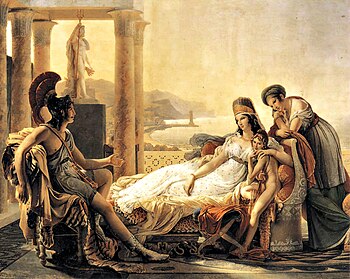
Alternately, it may be an anglicized form of the Greek Elissa which is a Hellenized form of the Phoenician name Elishat meaning “wanderer.” Queen Elissa (also known as Dido) was the name of the legendary foundress of Carthage.

Currently, Alyssa is the 20th most popular female name in the United States, (2010). Her popularity in other countries is as follows:

  • # 42 (Canada, BC, 2010)
  • # 45 (Australia, NSW, 2010)
  • # 100 (Scotland, 2010)
  • # 129 (France, 2009)
  • # 157 (the Netherlands, 2010)

Other forms of Elissa include:

  • Alissa/Alissar  اليسار  اليسا عليسا عليسة (Arabic: a very popular name among Assyrian and Lebanese Christians)
  • Élissa (French)
  • Elissa (Greek/Italian)
  • Elyssa (Greek)
  • Elisa (Spanish)
Source


Ezra

Gender: Masculine
Origin: Hebrew עֶזְרָא
Meaning: “God helps.”
(EZ-rah)

The name may be derived from the ancient Hebrew Azaryahu meaning “God helps.” It is borne in the Old Testament by the author of the Book of Ezra. He is said to have reintroduced the Torah after the return from the Babylonian Exile. The name has always been popular among Jews and Orthodox Christians but did not catch on in the Western Christian world until after the Protestant Reformation.

Ezra is also mentioned in the Qu’ran and is traditonally believed to be a prophet among Muslim scholars. It is believed his tomb is located at Al-‘Uzair in Iraq and is a popular pilgrimage destination for the local Marsh Arabs.

Currently, Ezra is the 243rd most popular male name in the United States, (2010) and the 323rd most popular in the Netherlands (2010).

Other forms of the name include:

  • Uzair عزير (Arabic)
  • Jezdra Ездра (Belarusian/Bulgarian/Russian/Serbian/Ukrainian)
  • Uzajr Узайр (Bosnian/Russian)
  • Esdres (Catalan)
  • Ezra (Croatian/Dutch/English/Hebrew/Scandinavian/Spanish)
  • Ezdráš (Czech)
  • Esra (Finnish/German/Scandinavian)
  • Esdras Εσδρας (French/Greek/Portuguese)
  • Esdra (Italian)
  • Ezdras (Lithuanian)
  • Ezdrasz (Polish)
  • Üzeyir (Turkish)
Source

Theodore

Gender: Masculine
Origin: Greek
Meaning: “god’s gift.”

The name is derived from the Greek Theodoros (Θεοδωρος) which is composed of the elements θεος (theos) meaning “god” and δωρον (doron) “gift.” The name was borne by several early saints, two popes and three tsars of Russia.

In recent American history the name was borne by President Theodore Roosevelt (1858-1919) of whom the Teddy Bear was named for.

It is currently the 263rd most popular male name in the United States, (2010).

An interesting fact: Dorothy is derived from the same Greek roots but in reverse order.

Other forms of the name include:

  • Tewodros ተውዶሮስ (Amharic)
  • Tadros تادرس (Arabic: used among Arab Christians)
  • Todos ܛܘܕܘܫ (Aramaic: used among Assyrian and Chaldean Christians)
  • Hvejdar Хведар (Belarusian)
  • Teodor Теодор (Bulgarian/Catalan/Croatian/Czech/Danish/Estonian/Finnish/Hungarian/Polish/Romanian/Scandinavian/Slovakian/Slovene/Ukrainian)
  • Todor (Bulgarian/Serbiab/Northern Greek)
  • Theirn (Cajun)
  • Theodoor (Dutch)
  • Theodorus (Dutch/Latin)
  • Theodore თევდორე (English/Georgian)
  • Tuudor (Estonian)
  • Teuvo (Finnish)
  • Théodore (French)
  • Theodor (German)
  • Theodoros Θεόδωρος (Greek)
  • Thodoros Θόδωρος (Greek)
  • Fedor (Hungarian)
  • Tivadar (Hungarian)
  • Tódor (Hungarian)
  • Téodóir (Irish)
  • Teodoro (Italian/Portuguese/Spanish)
  • Todaro (Italian)
  • Teodors (Latvian)
  • Thei (Limburgish)
  • Teodoras (Lithuanian)
  • Toše Тоше (Macedonian)
  • Tiodore (Occitanian)
  • Toader (Romanian)
  • Tudor (Romanian/Welsh)
  • Fedor Федор (Russian/Slovene)
  • Fjodor Фёдор (Russian)
  • Teodoru (Sicilian)
  • Fedja (Slovene)
  • Todor (Slovene)
  • Fedir Федір (Ukrainian)
  • Tewdwr/Tudur (Welsh)
Common diminutives include:
  • Tosho Тошо (Bulgarian)
  • Toshko Тошко(Bulgarian)
  • Ted/Teddy (English)
  • Tedo თედო (Georgian)
  • Fedja Федя (Russian)

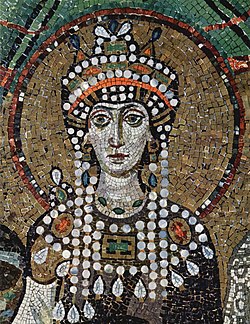
Its feminine form of Theodora was very popular in Byzantium, it was borne by at least five Byzantine Empresses including Empress Theodora who is also revered as a saint.

Other feminine forms include:

  • Teodora Теодора თეოდორა (Bulgarian/Catalan/Crotian/Georgian/Italian/Macedonian/Polish/Portuguese/Romanian/Serbian/Slovene/Spanish/Swedish)
  • Todorka Тодорка (Bulgarian/Macedonian)
  • Theodora Θεοδώρα (Czech/English/German/Greek)
  • Theda (English/German)
  • Théodora (French)
  • Teodóra (Hungarian)
  • Fedora Федора (Russian/Slovene)
  • Feodora Феодора (Russian)

Lawrence

Gender: Masculine
Origin: Latin
Meaning: “from Laurentum.”
Eng (LAW-rents)

The name is derived from the Latin cognomen Laurentius meaning “from Laurentum.” It was popularized by an early Roman deacon, martyr and saint who was roasted alive when he refused to turn over church property to the Roman authorities. According to legend, he is the patron saint of comedians because when he was being roasted he told his torturers “turn me over, I am done on this side.”

It was borne by several other saints.

Lawrence has been a popular given name since Medieval times and it consistently appeared in the U.S. top 100 from 1880-1971. By 1972 it mysteriously and suddenly fell completely out of popularity and it has been so since. It is currently only the 457th most popular male name, (2010).

Other forms include:

  • Nadja/Nadjeh (Arabic: used among Arab Christians)
  • Toufiq  لورنس (Arabic: used among Arab Christians)
  • Loren (Aragonese)
  • Lorient (Aragonese)
  • Lari (Basque)
  • Lawrencij Лаўрэнцій (Belarusian)
  • Laorañs (Breton)
  • Llorenç (Catalan)
  • Larenzu (Corsican)
  • Lovrenco (Croatian)
  • Lovre (Croatian. Currently the 58th most popular name in Croatia, 2010)
  • Lovro (Croatian)
  • Vavřinec (Czech/Slovak: literally from the Czech word for laurel, it has been used as the proper cognate for Lawrence since Christianity was introduced to the area)
  • Laurits/Lauritz (Danish/Estonian/Icelandic/Norwegian)
  • Lasse (Dutch/Norwegian/Swedish. LAHS-se)
  • Laurens (Dutch)
  • Loris (Dutch/French/German/Italian. Currently the 100th most popular male name in France, 2009)
  • Rens (Dutch. Currently the 79th most popular male name in the Netherlands)
  • Larkin (English: a Medieval diminutive form of Lawrence)
  • Lauri (Estonian/Finnish)
  • Lars (Finnish/Norwegian/Swedish. Currently the 14th most popular male name in the Netherlands, the 23rd most popular in Belgium and the 57th most popular in Norway)
  • Lassi (Finnish)
  • Laurent (French)
  • Laurentin (French)
  • Lourens (Frisian)
  • Labhrás (Gaelic) 
  • Loenso (Genovese)
  • Laurenzius (German: archaic)
  • Lenz (German)
  • Lorenz (German)
  • Lavrentios Λαυρεντιος (Greek)
  • Lőrinc (Hungarian)
  • Lárus (Icelandic)
  • Lorenzo (Italian/Spanish. Currently the 5th most popular male name in Italy and 52nd most popular in France (2009). It is also the 187th most popular in the Netherlands and the 322nd most popular in the United States, 2010)
  • Laurentius (Latin)
  • Lau (Limburgish)
  • Lor (Limburgish)
  • Laurynas (Lithuanian)
  • Lawrenz (Maltese)
  • Laurys (Manx)
  • Louothains (Norman)
  • Lavrans (Norwegian)
  • Laurenç (Occitanian)
  • Lleurant (Occitanian)
  • Laurencjusz (Polish)
  • Laurenty (Polish)
  • Wawrzyniec (Polish: literally from the Polish word for laurel, it has been used as the proper cognate for Lawrence since Christianity was introduced to the area)
  • Lourenço (Portuguese)
  • Laurențiu (Romanian)
  • Lavrentie (Romanian)
  • Lurintg (Romansch)
  • Lavrenti Лаврентий ლავრენტი (Russian/Georgian)
  • Larentu (Sardinian)
  • Labhrainn (Scottish)
  • Lovrenc (Slovene)
  • Laurisch (Sorbian)
  • Lorencio (Spanish: Medieval)
  • Lorens (Swedish)
  • Lavrentij Лаврентій (Ukrainian)
  • Lorenso (Venetian)
A common English diminutive is Larry a less common one Laurie
  • Toufiqia (Arabic)
  • Laurendia (Basque)
  • Laurenza (Corsican)
  • Laurenzia (Corsican)
  • Laurentien (Dutch)
  • Renske (Dutch)
  • Laurence (French)
  • Laurentine (French)
  • Lavrentia Λαυρεντία (Greek)
  • Lorentina (Italian)
  • Lorenza (Italian/Spanish)
  • Lorenzina (Italian)
  • Larentia (Latin)
  • Laurentina (Latin)
  • Laurencja (Polish)
  • Laurentyna (Polish)
Source

Solomon

Gender: Masculine
Origin: Hebrew שְׁלֹמֹה
Meaning: “peace.”

The name is borne in the Old Testament by son of David and the King of Israel. He is credited as being the author of Proverbs, the Song of Solomon and Ecclesiastes. In the Talmud he is considered one of the 48 prophets. In Jewish and Christian tradition he is viewed as a wise and holy king but had fallen from grace due to his ego and his marriage to hundreds of foreign wives who led him astray from God. In the Qu’ran, Solomon is a prophet and a messenger from Allah, he is the only one who was ever able to control the djinn with his magical incantations.

The name has always been a popular one among Jews, Muslims and Eastern Orthodox Christians, but has never really been common in the English-speaking world, even after the Protestant Reformation. Currently, Solomon is the 467th most popular male name in the United States, (2010).

Other forms include:

  • Salomo (Afrikaans/Dutch/Finnish/German/Scandinavian)
  • Salomon (Albanian/Croatian/Finnish/French/Polish/Scandinavian/Ukrainian)
  • Sulayman  سليمان (Arabic)
  • Salamon Саламон (Belarusian)
  • Sulejman (Bosnian)
  • Suljo (Bosnian)
  • Solomon Саламон (Bulgarian/English/Macedonian/Romanian/Russian/Serbian)
  • Salomó (Catalan)
  • Šalomoun (Croatian)
  • Saalomon (Estonian)
  • Sálomon (Faroese)
  • Solamh (Gaelic)
  • Solomoni სოლომონი (Georgian)
  • Shlomo שְׁלֹמֹה (Hebrew)
  • Salamon (Hungarian/Occitanian)
  • Silêman (Kurdish)
  • Salomone (Italian)
  • Shelomo (Ladino)
  • Salamans (Latvian)
  • Zālamans (Latvian)
  • Saliamonas (Lithuanian)
  • Sjelomo (Norwegian: archaic)
  • Szlomo (Polish-Yiddish)
  • Salomão (Portuguese)
  • Šalamún (Slovak)
  • Suleymaan (Somalian)
  • Salomón (Spanish)
  • Sөlәjman Сөләйман (Tatar)
  • Süleyman (Turkish)
  • Selyf (Welsh)
  • Zalman (Yiddish)

Common English diminutives are Sol and Solly.

A Russian feminine form which was common among Russian royalty is Solomonia.

Source

  1. http://www.behindthename.com/name/solomon

Khalil

Gender: Masculine
Origin: Arabic خليل
Meaning: “friend.”

The name is derived from the Arabic word for friend. In the Qu’ran, it is a title given to the Prophet Mohammed (Khalil Allah) meaning, “friend of God.”

It is currently the 390th most popular male name in France and the 501st most popular in the United States, (2010).

Another form of the name is the Albanian, Bosnian and Turkish, Halil.

Feminine form is Khalila  خليلة (Arabic).

Source

  1. http://www.behindthename.com/name/khalil

Moses

Gender: Masculine
Origin: Debated
Meaning: debated

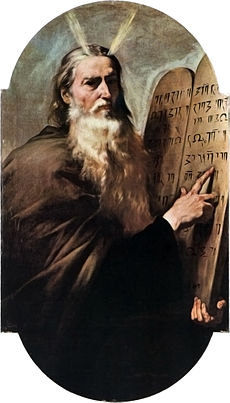
The name is borne in the Old Testament and in the Qu’ran by the a renowned prophet and law giver, who according to tradition was placed in a basket by his Hebrew mother and found by the daughter of Pharaoh (in Judeo-Christian religion) or the wife of Pharaoh (in Islamic tradition) and raised as an Egyptian prince. It is from this tradition that the name is believed to be derived from the Hebrew element משה (mšh) as stated in  Exodus 2:10:

“[…] she called his name Moses (משה): and she said, Because I drew him (משיתהו) out of the water.” (KJV).


It has been suggested that the name is in fact of Egyptian origins, being related to the Coptic elements, mo (water) and uses (saved; delivered) hence: “saved from the water.” Another suggestion is the Egyptian element, ms (child; born) as found in such ancient Egyptian male names as Tuth-Mose and Ram-messes.

The name has always been common among Jews, Muslims and Orthodox Christians, but did not catch on in the English-speaking world until after the Protestant Reformation. Medieval Jews of England used the Middle English form of Moss.

It is currently the 509th most popular male name in the United States, (2010).

Other forms of the name include:

  • Moses (Afrikaans/English/German/Scandinavian/Welsh)
  • Moisiu (Albanian)
  • Musa موسى Муса (Amharic/Arabic/Azeri/Bosnian/Kabyle/Swahili/Tatar/Turkish)
  • Moisen (Aragonese)
  • Movses Մովսես (Armenian)
  • Moises (Basque)
  • Majsjej Майсей (Belarusian)
  • Moizez (Breton)
  • Moisej Моисей (Bulgarian)
  • Moisès (Catalan)
  • Moisije Мојсије (Croatian/Serbian)
  • Moše (Croatian)
  • Mojžíš (Czech/Slovak)
  • Mozes (Dutch)
  • Mooses (Estonian/Finnish)
  • Móses (Faroese/Icelandic)
  • Moïse (French)
  • Maois (Gaelic)
  • Mose მოსე (Georgian/German/Romansch/Swedish)
  • Mouses Μωυσης (Greek)
  • Moshe מֹשֶׁה (Hebrew/Ladino)
  • Mózes (Hungarian)
  • Mosè (Italian)
  • Müsa Мұса (Kazakh)
  • Mosa (Kurdish)
  • Mûsa (Kurdish)
  • Moyses (Latin)
  • Mozus (Latvian)
  • Mozė (Lithuanian)
  • Мојсеј (Macedonian)
  • Moss (Middle English)
  • Moïses (Occitanian/Provençal)
  • Mojżesz (Polish)
  • Moisés (Portuguese/Spanish)
  • Moise (Romanian)
  • Moisej Моісей (Rusyn/Ruthenian)
  • Moiséj Моисе́й (Russian)
  • Muozė (Saimogaitian)
  • Mojzes (Slovene)
  • Muuse (Somalian)
  • Mojsej Мойсей (Ukrainian)
  • Moosõs (Voro)
  • Moishe (Yiddish)
Recently, actress Gwyneth Paltrow bestowed this name on her second child, Moses Bruce Anthony Martin (b. 2006)
Sources

‘Aisha, Aisha

Gender: Feminine
Origin: Arabic عائشة
Meaning: “alive”
(ah-EE-shah)

The name has to be one of the most popular female names among Sunni Muslims as it was borne by the second wife of the prophet Muhammed and according to the Sunnis, she was his favorite wife. After Muhammed’s death, ‘Aisha went to war against Ali the fourth, and as a result, she is viewed negatively among some Shi’a Muslims.

The name itself is derived from the Arabic meaning, “alive” and it is currently the 96th most popular female name in England (2009).

In the United States, it first caught on as a given name among non-Muslims during the 1970s, particularly among African-Americans. The inspiration may have been Princess Aisha of Jordan, daughter of King Hussein (b.1968) and in 1975, Stevie Nicks named her first daughter, Aisha.

Its rankings in other countries are as follows:

# 25 (Bosnia & Herzegovina, 2010 as Ajša)
#478 (the Netherlands, 2010)
#682 (United States, 2010)

Other forms of the name include:

Aisha (Albanian)
Ajshja (Albanian)
Aixa (Asturian: obscure, used in the Middle Ages among the Moors’ of Asturia)
Aiša/Ajša (Bosnian)
Àïxa (Catalan obscure, used in the Middle Ages among the Moors’)
Aïché/Aché (Chadian)
Aïsja (Dutch)
Aisha  بکر (Farsi)
Aïcha (French: used among French-speaking Arabs)
Aischa (German)
Ayesha आयेशा (Indian)
Aisyah (Indonesian/Malay)
Ajsha Айша (Kazakh/Chechen)
Aisza (Polish: obscure. This was used among Polish-Tatar Muslims of the Polish-Common Wealth during the 16th-century)
Aissatou (Senegalese)
Caa’isha (Somalian)
Aisa (Spanish: obscure, used in Medieval Spain among Spanish Muslims)
Asha (Swahili)
Eshe (Swahili)
Gayshә Гайшә (Tatar)
Aişe (Turkish: archaic)
Ayşe (Turkish)