Ariel

Gender: Masculine
Origin: Biblical Hebrew
Meaning: “lion of God.”
אֲרִיאֵל
Eng (Air-ee-el): Mod Heb (AHR-ee-EL)

The name is from the Biblical Hebrew, meaning “lion of God” and is found in the Old Testament as another name for the city of Jerusalem.

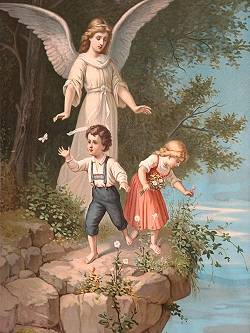
In Jewish and Christian apocrypha, it is also the name of an archangel, believed to be the angel who has authority over the Earth and its elements.

As a given name, it has been used by Jews, exclusively as a masculine name for centuries. It has only been in recent years, most notably, following the release of Walt Disney’s, the Little Mermaid (1989), that is has been given to females.

As a male name, it was the 556th most popular male name in the United States (2009), while for females it was the 206th most popular (2009).

In 2006, Ariel was the 78th most popular male name in Chile.

Shakespeare used this name for one of his characters in his play, The Tempest (1611).

Other forms of the name include:

Ariel (Catalan/English/French/German/Hebrew/Hungarian/Polish/Spanish)
Ariël (Dutch)

Feminine forms include:

Ariëlle (Dutch)
Arielle (French)
Ariela (German/Modern Hebrew/Polish/Spanish)
Ariella (Italian)

Hebrew short forms for the masculine version include: Ari and Arik.

A Polish diminutive form is Arielka.

Other notable bearers include: Ariel Sharon, former Israeli Prime Minister (b.1928); Polish soccer player, Ariel Jakubowski (b.1977); Polish Soccer Player, Ariel Borysiuk (b.1991); Argentine writer, Ariel Dorfman (b.1948); Mexican soap actor, Ariel López Padilla (b.1962); Argentine soccer player, Ariel Ortega (b.1974).

The designated name-day is October 1 (France).

Source

  1. http://www.behindthename.com/name/ariel

Michael

Gender: Masculine
Origin: Hebrew
Meaning: “who is like God?”
Eng (MI-kel)

One of the most prevalent male names in the Western World, and to a certain extent, the Middle Eastern world, the name is derived from a rhetorical Hebrew question מִיכָאֵל (Mikha’el) meaning “who is like God?” or “who is like El” the answer being that no one is like God.

This is in reference to the legend of when one of God’s most powerful angels, (Lucifer depending on the theological tradition), became so arrogant and prideful that he built an army of angels in order to overthrow the throne of God, thinking that he himself could be like God, Michael is believed to have smite the fallen angel, asking him the question “who is like God?” after casting him out of the gates of heaven.

According Mormon saint theology, “who is like God?” refers to the idea that Michael was Adam before he was created by God in human form. The meaning of the name explains that all humans are created in God’s image.

Michael is believed to be a powerful angel in Islamic, Christian and Jewish tradition. He appears several times in the Bible, being mentioned in the Book of Daniel, the Book of Jude and the Book of Revelations. He even appears in the apocryphal Book of Enoch.

In Roman Catholicism, Michael is referred to as St. Michael the Archangel and is considered a powerful saint, especially powerful against demonic attacks and is the patron saint of chivalry, the warrior, police officers, paratroopers, firefighters, soldiers and fighter pilots. Among German Catholics, he is the patron saint of Germany, and in Belgium, he considered the patron saint of Brussels.

In the Eastern Christian tradition, is known as Taxiarch Archangel Michael or simply as Archangel Michael.

In Jewish tradition, Michael is the protector and heavenly warrior of Israel and the advocate of the Jews.

In Islam, he is mentioned in the Qu’ran once, in Sura 2:98 and that Michael was a good angel who stood on the left hand of God (Allah’s) throne.

The archangel is also important in the Bahai faith and the New Age religions.

He plays a role in John Milton’s epic poem, Paradise Lost.

There is no reason to explain why Michael is so popular, especially in the U.S. As of 2008, Michael was the 2nd most popular male name. He was moved down from the 1st position down to the 2nd position back in 1999, when he was overthrown by Jacob.

Between the years 1954 and 1999, Michael was the most popular male name. The lowest that Michael ever ranked in U.S. naming history was in 1892 when he came in as the 59th most popular male name in the United States. In other countries, Michael’s rankings are as follows:

  • # 36 (Australia, 2007)
  • # 36 (Canada, B.C. 2008)
  • # 4 (Denmark, 2009)
  • # 52 (England/Wales, 2008)
  • # 10 (Ireland, 2007)
  • # 239 (the Netherlands, 2008)
  • # 33 (Scotland, 2008)

The Michael form is also used in Afrikaans, Danish, Czech, German and Ripoarisch.

Other forms of the name include:

  • Mëhill/Mhill (Albanian)
  • Mighel (Amazigh/Moroccan)
  • Mikhael/Mikail ميخائيل‎, (Arabic/Coptic)
  • Miguel (Aragonese/Galician/Portuguese/Spanish: mee-GEL)
  • Mikael Միքաել (Armenian)
  • Micael (Asturian)
  • Mikayıl (Azeri)
  • Mikel (Basque)
  • Mitxel (Basque)
  • Miquèu (Bearnais/Occitanian/Gascon/Provençal)
  • Mickaël (Breton)
  • Mikael (Breton/Finnish/Icelandic/Norwegian/Swedish: a Finnish diminutive form is Mika)
  • Mihail Михаил (Bulgarian/Russian: Misha is the most common diminutive form)
  • Michjeli (Calabrian: Chjeli is the diminutive mee-KYAY-lee)
  • Miquel (Catalan: mee-KEL. Quelo is a common diminutive form)
  • Myghal (Cornish)
  • Michal (Czech/Slovak: mee-HAHL: 15th most popular male name in the Czech Republic-2007)
  • Mihajlo/Mihovil (Croatian: diminutive form is Miho)
  • Mihail Михаил (Croatian/Serbian)
  • Mikkel (Danish/Norwegian/Swedish: 6oth most popular male name in Norway-2007)
  • Maikel (Dutch: MY-kel)
  • Michaël (Dutch/Frisian: mee-kah-EL)
  • Michiel (Dutch: 307th most popular male name in the Netherlands-2008)
  • Miikael/Mikhel (Estonian)
  • Mikko (Finnish)
  • Michel (French: MEE-shel)
  • Michêl (Fruilian)
  • Mícheál (Gaelic-Irish)
  • Mìcheal (Gaelic-Scotch)
  • Micheil (Gaelic-Scotch)
  • Mikheil მიხეილი (Georgian)
  • Mikhael/Mikhalis Μιχάλης/Μιχαήλ (Greek: Μίκης (Mikis) is the common pet form))
  • Mikala (Hawaiian)
  • Micha’el מִיכָאֵל‎, (Hebrew)
  • Mihály (Hungarian: 60th most popular male name in Hungary-2008. Misi and Miska are the most common pet forms. MEE-hie)
  • Mikhael (Indonesian)
  • Michea (Italian: obscure/archaic mee-KAY-ah)
  • Michele (Italian: mee-KAY-lay)
  • Michelino (Italian: obscure)
  • Miķelis/Mihails (Latvian)
  • Mykolas (Lithuanian)
  • Mikail (Malayalam)
  • Mikiel (Maltese)
  • Mikaere (Maori)
  • Migueltzin (Nahuatl)
  • Michè (Neopolitan)
  • Miché/Michi (Norman)
  • Miqueu (Occitanian)
  • Mikhailu Мїхаилъ (Old Church Slavonic)
  • Michał (Polish/Sorbian: mee-HOW)
  • Mihai/Mihail (Romanian: diminutive form is Mihaita)
  • Micheli/Mikelli/Migali (Sardinian)
  • Mihailo Михаило (Serbian)
  • Miceli (Sicilian: Celi is a diminutive form. mee-KAY-lee)
  • Miha (Slovene: originally a diminutive form of Mihael, now used exclusively as an independent given name, it was the 11th most popular male name in Slovenia-2005)
  • Mihael (Slovene: 86th most popular male name in Slovenia-2005)
  • Mikâil (Turkish)
  • Mikhailo/Mykhailo Михайло (Ukrainian)
  • Michełe (Venetian)
  • Meical (Welsh)

English diminutive forms are: Mick, Micky, Mike and Mikey. German diminutive forms are Maik (pronounced like Mike), Maiki, Michi and Micki. A Swiss-German dialectical diminutive is is Michu (Bern)

There are also forms that mean “Michael Archangel” and are used in reference to the angel. These are:

  • Michelangelo (Italian)
  • Michelarcangelo (Italian)
  • Michelangiolo (Romansch)
  • Mihangel (Welsh)

Michelangela is an Italian feminine form.

An Italian smush is Michelantonio.

The feminine form of Michelle (an English corruption of the French feminine form Michèle), has been used in the English speaking world since the early 20th-century.

It currently ranks in as the 103rd most popular female name, and the highest it peaked was # 2, in the years 1968, ’69 and again in ’71, ’72.

Its Latinate feminine form has recently sparked in popularity as well (see Michaela for more details)

Other feminine forms include:

  • Micaela (Asturian)
  • Mikelle (Basque)
  • Miquèla (Bearnais)
  • Mikaela (Breton)
  • Miquela (Catalan/Occitanian/Gascon/Provençal)
  • Michelle (English/German: a phonetic corruption of the French Michèle)
  • Michèle (French)
  • Michéline (French: mee-shay-LEEN)
  • Michaelina/Michaeline (Irish: an Irish corruption of the French Micheline and the Italian, Michelina, common diminutive form is Micki/Micky. MY-keh-LEEN-ah; MY-keh-LEEN)
  • Michela (Italian: mee-KAY-lah)
  • Michelina (Italian: mee-kay-LEE-nah)
  • Michalina (Polish: mee-ha-LEE-nah: Michalinka and Misia are the diminutive forms)
  • Miguela (Spanish)
  • Miguelina (Spanish)

The designated name-day for Michael is September 29.

Angela

Gender: Feminine
Origin: Greek
Meaning: “messenger.”
Eng (AN-je-luh)

The name is a feminine form of the Greek male name, Ángelos (αγγελος), meaning, “messenger.”

In Greek mythology, Ángelos was an epithet for the god, Hermes. In later Judeo-Christian culture, the name became associated with angels since it shares the same etymology with the word angel.

The name has been borne by several saints.

In the United States, she currently ranks in at # 133. The highest she peaked in U.S. naming history was between 1974-1976 where she was the 5th most popular female name in the United States.

Her rankings in other countries are as follows:

  • # 91 (Canada, B.C. 2008)
  • # 56 (Chile, 2006)
  • # 481 (the Netherlands, 2006)
  • # 25 (Spain, 2006)

Angela is used in Danish, Dutch, English, German, Icelandic, Italian, Norwegian, Romanian, Romansch, Slovak , Slovene and Swedish.

Its Latinate diminutive form, Angelina, has recently sparked in popularity, due to the fame of American actress, Angelina Jolie.

In the United States, she currently ranks in as the 69th most popular female name (2008). Her rankings in other countries are as follows:

  • # 54 (Australia, 2007)
  • # 91 (Canada, B.C. 2008)
  • # 72 (France, 2006)
  • # 184 (the Netherlands, 2008)
  • # 96 (Sweden, 2007).

Other feminine forms Angela include:

  • Anxhela (Albanian)
  • Anela/Aneliya (Bulgarian)
  • Àngela (Catalan)
  • Angiola (Corsican/Romansch/Sardinian)
  • Angioletta (Corsican/Romansch/Sardinian)
  • Anđela (Croatian)
  • Anděla (Czech)
  • Angèle (French: an obscure diminutive form is Angelette)
  • Anela/Ankela (Hawaiian)
  • Angéla (Hungarian)
  • Aingeal (Irish Gaelic)
  • Angeletta (Italian: obscure diminutive form which was occasionally used as an independent given name)
  • Anġla (Maltese)
  • Ainle (Manx)
  • Aniela (Polish: diminutive form is Anielka)
  • Ângela (Portuguese)
  • Anzhela ангела (Russian)
  • Andjela Анђела (Serbian)
  • Ángela (Spanish)
  • Angelia (Spanish)
  • Angelita (Spanish: a diminutive form occasionally used as an independent given name)

An English diminutive is Angie, German diminutives are Angie and Geli.

Some Italian smush names include Giovannangela, Giuliangela, Mariangela, Michelangela, and Rosangela.

Masculine forms are:

  • Angeru (Basque)
  • Angel Ангел (Bulgarian)
  • Àngel (Catalan)
  • Anđelko (Croatian)
  • Anděl (Czech)
  • Anxo (Galician)
  • Angelos Αγγελος (Greek Modern)
  • Angelo (Italian/Spanish: currently the 284th most popular male name in the United States-2008; and the 98th in Chile-2006)
  • Angelus (Latin)
  • Anġlu (Maltese)
  • Ángel (Spanish)

Other forms of Angelina include:

  • Angiolina (Corsican/Romansch/Sardinian)
  • Angelien (Dutch)
  • Angéline (French)
  • Anzhelina Анжелина (Russian)

Angelina is also used in English, French, German, Italian, Polish, Romanian and Spanish.

Angela’s designated name-day is sometimes January 4th.

Séraphin, Séraphine, Serafina

Seraphim_-_Petites_Heures_de_Jean_de_BerryOrigin: Hebrew
Meaning: “burning ones.”

In the Old Testament, the seraphim (plural for seraph) were a class of celestial beings, in Isaiah they are mentioned as having human forms and in Christian tradition, the seraphim are thought of as the highest ranking group of angels. The word itself is a latinization of the Hebrew word serap meaning “to burn” a word also used to describe the venom of snakes e.g. Isaiah 30:6, the word is used interchangeably with the Hebrew word nachash meaning “serpents.” In Isaiah 6:1-3, the seraphim are described as follows:

“…I saw the Lord seated on a high and lofty throne with the train of His garment filling the temple seraphim were stationed above; each of them had six wings: with two they veiled their faces, with two they veiled their feet, and with two they hovered aloft.” ‘Holy, Holy, Holy is the Lord of Hosts’ they cried one to the other. ‘All earth is filled with His glory!'”

This is the sole use of the word seraphim to describe angelic beings in the canonic Hebrew Bible. In the Book of Enoch, however, the word seraphim appears several times in which they are described as standing closest to the throne of God.

According to Maimonides, a medieval Jewish Rabbi and Scholar, the seraphim are the fifth rank of the ten ranks of angels and the seraphim are apart of the angelarchy of Orthodox Judaism, they are referred to in the Kedushah.

In Christian theology, the seraphim are the highest ranking choir of angels, they are mentioned in Revelations 6-8, they are believed to be the attendants of God’s throne, they are mentioned numerous times by St. Thomas Aquinas and several other famous Christian theologians.

Its feminine form of Serafina, was very popular in medieval Italy, it was borne by a Christian saint, whose cult is paticularly popular in Tuscany. Also known as St. Fina (1238-1253) she was the daughter of a local nobleman by the name of Cambio dei Ciardi. She was paralysed from tuberculosis at a very young age, and suffered miserably on an oak table she used as a bed (of her own volition),

SFinadish

she died at the age of 15. Many miracles and legends are attributed to her, and in the town of San Gimignano where she was born and is buried, a festival is held in her honour on March 12. It is borne by another Italian saint Serafina Sforza  (borne Sveva da Montefeltro) 1434-1478 an Italian noblewoman who chose to live the life of a poor clare after the death of her husband.

Serafina Pekkala is a fictional character in Phillip Pullman’s His Dark Materials triology, the famed Golden Compass and the Amber Spyglass are two notable books of the series. Serafina Ouistit is the pseudonym of Dutch musician and artist Bloem de Wilde de Ligny.

Recently, Ben Affleck and Jennifer Garner named their second daughter Seraphina Rose Elizabeth.

Séraphine is the French feminine counterpart and Séraphin the masculine form. It was borne by Séraphine de Selis Louis a famous French painter (1864-1942). It is also the name of a musical wind instrument. On its masculine front, the name is borne by an Italian saint Serafino de Montegranaro (1540-1604), he was known for his dedication in comforting the poor. Sanctus Seraphin1699-1758 (aka Santo Serafino) was a famous violin maker, it was also borne by Kenyan olympic runner Seraphino Antao (b. 1937) of Goan parents.

Serafim_and_a_bearIt was also borne by a Russian saint Serafim of Sarov (1759-1833) known as one of the first Starsys (Elders) and greatest starsys of the 19th-century.

Serafin is the name of a village in east-central Poland.

Other masculine forms of the name include: (alphabetical by nationality)

  • Séraphin (French)
  • Serafeim (Greek)
  • Serafino (Italian)
  • Seraphinus (Late Latin)
  • Serapinas (Lithuanian)
  • Serafin (Polish/Romansch/Serbo-Croatian)
  • Serafim (Russian/Romanian)
  • Serafín (Spanish)

Feminine forms include:

  • Séraphine (French)
  • Serafina (Italian/Romanian/Spanish/Polish/Serbo-Croatian)
  • Fina (Italian: often used as an independent given name)
  • Serapina (Lithuanian)
  • Serafima (Russian/Romanian)
  • Serafia (Swedish: archaic)
  • The designated name-day in Western European calenders is October 12.