Noor

Gender: Feminine
Origin: Dutch
(NOOR)

The usage of this name is actually somewhat debated. It could be a Dutch short form of Eleanor, or it could be a variant transcription of the Arabic unisex name نور which is derived from the Arabic word for “light.”

Its usage as a male or female name shifts throughout the Islamic world, in the Arabic-speaking world, it tends to be used as a female name, while in the Turkic world, it tends to be used as a masculine name. Its original usage was in reference to the 24th sura of the Qu’ran.

The name is borne by the former Queen Noor of Jordan who was born as Lisa Najeeb Halaby (b.1951). Upon her marriage to King Hussein she took the Islamic name of Noor Al-Hussein (Light of Hussein).

Other notable and interesting bearers include: Noor Inayat Khan (1914-1944) a British British Special Operations Executive agent and heroin of WWII.

It was also borne by a Mughal Empress, Nur Jahan (1577-1645)

Nur is often used more as a name element in many Kazakh, Tatar and Uzbek given names, both male and female depending on the second element of the name.

Feminine offshoots of its Arabic version include:

  • Nour (Algerian/Moroccan/Tunisian)
  • Nuriya (Amharic)
  • Nura نورة (Arabic/Azeri)
  • Nur Нур (Chechen/Tatar)
  • Nuret Нурет (Circassian)
  • Nuraj Нурай (Kazakh. NOO-rye)
  • Nurija Нурія (Kazakh. NOO-ree-yah)
  • Nursha Нурша (Kazakh: NOOR-shah)
  • Nura Нурa (Tatar)
  • Nuru (Swahili)

Male forms

  • Nur (Afghan/Amharic/Kyrgyz/Ughur/Urdu/Turkish)
  • Nuri (Amharic)
  • Nuru (Amharic/Azeri)
  • Nuro (Kurdish)
Noor is also the name of a river in Belgium.
As of 2008, Noor was the 15th most popular female name in Belgium and the 31st most popular in the Netherlands, (2010).

Sumayya

Gender: Feminine
Origin: Arabic  سميّة Сумаыя
Meaning: “high above.”
(soo-MAY-yah)

The name was borne by Sumayya bint Khayyat (died 615 C.E.) an early convert to Islam and also considered the first Muslim Martyr.

As of 2009, Sumayya was the most popular female name in Tajikistan.

Other forms of the name include:

  • Sumejja (Albanian/Bosnian)
  • Soumaia (Algerian/Moroccan)
  • Sumayyah (Indonesian/Malaysian)
  • Sümeyye (Turkish)

Islam

Gender: Masculine
Origin: Arabic
Meaning: “voluntary submission to God.”
(IS-lahm)

The name comes from the Arabic verbal noun meaning, “obedience, subjugation of someone or something, or the voluntary submissal to the Almighty.”

The name is technically unisex, but is more often used for males throughout the Islamic world.

As of 2010, Islam was the 14th most popular male name in Kazakhstan, (2010).

It is borne by the current president of Uzbekistan, Islam Karimov (b.1938).

Amir

Gender: Masculine
Origin: Arabic أمير Амир
Meaning: “prince; commander”
(uh-MEER)
The name is derived from the Arabic word for a prince, ruler, commander or admiral. In the Islamic world, it is used as an honorific title of nobility, office or someone of high eminence. The word itself is derived from the Arabic root amr meaning, “to command.”
The early Islamic caliphs used the title Amir al-Muninin meaning, “Commander of the Faithful”, a reference of their leadership over the adherants of the Islamic faith.
The title was assumed by other Islamic rulers, including sheiks and sultans throughout Central Asia all the way into Saudi Arabic.
The leader of a group of pilgrims to Mecca is often referred to as an amir.
It is used as a given name throughout the Islamic world.
As of 2010, Amir was the 20th most popular male name in Kazakhstan, (2010). His rankings in other other countries are as follows:
  • # 13 (Emir, Bosnia & Herzegovina, 2010)
  • # 28 (Emir, Turkey, 2010)
  • # 66 (Bosnia & Herzegovina, 2010)
  • # 155 (the Netherlands, 2010)
  • # 221 (France, 2009)
  • # 278 (United States, 2010)
Other forms of the name include:
  • Emir (Albanian/Bosnian/Turkish)
  • Əmir (Azeri)
  • Amirs (Latvian)
Feminine forms include, Emira (Albanian/Bosnian/Turkish) and Amira.
Amir can also be a Hebrew male אָמִיר name meaning, “tree top.”

Medina

Gender: Feminine
Origin: Arabic
Meaning: “city.”
(meh-DEE-nah)

The name comes from the name of a city in Saudi Arabia known fully as  المدينة المنورة‎, al-Madīnah al-Munawwarah, “the radiant city.”

It is considered the second holiest city in Islam and is the burial place of the Islamic prophet Mohammed. As a result, the name has been used as a feminine name throughout the Islamic world.

Currently, Madinah (Kazakh) is the 7th most popular female name in Kazakhstan, (2010) while Medina is the 17th most popular in Turkey (2010) and Medina is the 42nd most popular in Bosnia & Herzegovina, (2010).

Other forms of the name include:

  • Medina (Albanian/Bosnian)
  • Madinah Мадинах (Arabic/Kazakh/Indonesian/Iranian/Javanese/Urdu)
  • Mədinə Мәдинә (Azeri/Kyrgyz/Tatar/Tajik/Turkmen)
  • Madina Мадина (Chechen)
  • Medîne (Kurdish)
  • Medine Медине (Turkish/Uzbek)

Murad

Gender: Masculine
Origin: Arabic  مراد
Meaning: “wish; desire.”
(MOO-rahd)

The name is derived from the Arabic meaning, “wish; desire.”

It is currently the 5th most popular male name among babies born in Azerbaijan, (2011).

Other forms of the name include:

  • Murad Мура́д (Albanian/Azeri/Bosnian/Chechen/Egyptian/Iranian/Kazakh/Kurdish/Kyrgyz/Lebanese/Pashtun/Syrian/Tatar/Urdu/Uzbek)
  • Mourad (Algerian/Moroccan/Tunisian)
  • Mұrat Мұрат (Kazakh)
  • Murat (Turkish)
  • Myrat (Turkmen)

It was borne by at least 5 Turkish Sultans.

Waqar

Gender: Masculine
Origin: Arabic وقار
Meaning: “majesty; dignity.”

The name comes directly from the Arabic meaning, “majesty, dignity.”

Its Azeri form of Vüqar is the 3rd most popular name among the general male population in Azerbaijan, (2010). It is sometimes transliterated as Vugar.

Kawthar

Gender: Feminine
Origin: Arabic Катхар
Meaning: “abundance.”

The name is derived from the Arabic word for abundance, it is also the name of the shortest sura in the Qu’ran known as the al-Kawthar.

It is currently the 2nd most popular female name in Kazakhstan, (2010).

Other forms of the name include:

  • Kovsər (Azeri)
  • Kaysar Каусар (Bulgarian/Russian/Tatar: used among Bulgarian and Russian Muslims)
  • Kausar (Indonesian)
  • Kautsar (Javanese)
  • Kewser (Kurdish)
  • Kaysarija Каысария (Tatar)
  • Kәүsәr Кәүсәр (Tatar)
  • Kevser (Turkish)

Zahra

Gender: Feminine
Origin: Arabic  زهراء ‎, زهرة ‎,
Meaning: “bright; shining; brilliant” or “flower blossom.”

The name could either be from the Arabic  زهراء (bright; shining; brilliant). This was used as an epithet for the prophet Mohammed’s daughter, Fatima.

Another possible derivative is that it is from the Arabic زهرة (flower blossom).

Currently, Zahra is the most popular female name in Azerbaijan (2010). Her rankings in other countries are as follows:

  • # 2 (Iran, 2007)
  • # 2 (Zara, Malaysia, 2011)
  • # 7 (Zehra, Turkey, 2010)
  • # 74 (Zara, Bosnia & Herzegovina, 2010)
  • # 374 (France, 2009)
  • # 456 (Netherlands, 2010)

Other forms include:

  • Zahrah (Arabic)
  • Zara (Afghan/Albanian/Baloch/Bashkir/Bosnian/Chechen/Chuvash/Kazakh/Kyrgyz/Persian/Tatar/Tajik/Turkmen/Uzbek)
  • Zohra (Egyptian/Indian/Pakistani)
  • Zehra (Kurdish/Turkish)

Fatima

Gender: Feminine
Origin: Arabic فاطمة
Meaning: “to abstain.”
Sp (FAH-tee-mah); Arab (FAH-TEE-MAH)

The name comes Arabic meaning “to abstain.”

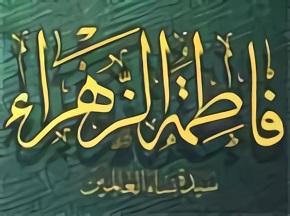
It is an extremely popular name throughout the Islamic world, and is especially popular among Shia Muslims. It was borne by the daughter of the Prophet Mohammed, who was also known as Fatima Zahra (Fatima the Illustrious).

Among Muslims, she is revered as an exemplar among women.

The name is also used among Portuguese and Spanish-speaking Christians in reference to a shrine in Portugal in which the Virgin Mary is believed to have appeared. The name shares the same etymology as the town was named for a Moorish princess who converted to Christianity and was subsequently persecuted by her family.

Currently, its Turkic form of Fatma is the 3rd most popular female name in Azerbaijan, (2010). Her rankings in other countries are as follows:

  • # 1 (Fatemah, Iran, 2007)
  • # 1 (Morocco, 2007)
  • # 1 (Pakistan)
  • # 1 (United Arab Emirates)
  • # 8 (Libya
  • # 13 (Fatma, Turkey, 2010)
  • # 38 (Bosnia & Herzegovina, 2010)
  • # 71 (Catalonia, 2010)
  • # 87 (Spain, 2010)
  • # 92 (Belgium, 2009)
  • # 211 (Netherlands, 2010)
  • # 255 (France, 2009)
  • # 270 (United States, 2010)

Other forms of the name include:

  • Fatima (Albanian/Arabic/Bosnian/Chechen/Chuvash/Kazakh/Kyrgyz/Pashtun/Tajik/Tatar/Urdu/Uzbek)
  • Fatma (Maghrebi Arabic, Turkish/Wolof/Zazaki)
  • Fadime (Azeri/Kurdish/Tunisian/Turkish)
  • Fatimə (Azeri)
  • Faḍma (Berber/Kabyle)
  • Fadumo (Ethiopian)
  • Fatimah (Indonesian/Javanese/Malaysian/Swahili)
  • Fatemah فاطمه (Persian)
  • Fátima (Portuguese/Spanish)
  • Faduma (Somali)
  • Fátímọ̀ (Yoruban)
  • Fatıma (Zazaki)