Unknown's avatar

About Sebastiane

I have studied the origin and meaning of names since I was a child. This site is a past time for me and also a passion. Since this is a hobby, and I have a full-time job, I am unable to consistently keep this site up, but please be patient with me.

Estelle

Gender: Feminine
Origin: Occitanian
Meaning: “star.”
(eh-STEL)

The name is a franconized form of the Occitanian word, estela, meaning, “star.”

The name was borne by a 3rd-century Christian saint and martyr, who sometimes appears in the records as Eustelle, little is known of her, but she was adopted by Occitanian poets as their patron and much was written of her.

Estelle and Estella seem to have appeared in the English-speaking world around the 19th-century, via the Charles Dickens’ novel, Great Expectations (1860), in which Estella is the name of a major character.

In 1911, Estelle was the 106th most popular female name in the United States. While Estella was the 106th most popular female name in 1883.

As of 2010, Estelle was the 185th most popular female name in France.

Other forms of the name include:

  • Estella (English/Hungarian)
  • Estelle (English/French/Swedish)
  • Esztella (Hungarian)
  • Estilla (Hungarian)
  • Estela (Occitanian/Portuguese/Spanish)

The name is borne by British RnB singer, Estelle (b.1980). The crown princess Victoria of Sweden recently chose this name for her daughter in February of 2012.

Emmeline, Emeline

Gender: Feminine
Origin: French
Eng (EM-me-Line; Em-me-LEEN; EM-me-LIN); Fre (ey-meh-LEEN)

The name was originally a diminutive form of the Germanic, Amelia, but has been used as an independent given name since the Middle Ages. It was introduced into England via the Normans and she has had plenty of usage among English-speakers since.

In the English-speaking world, she has appeared as Emaline, Emmaline, Emmeline and Emoline.

Its French form of Emeline seems to have been most common in Maine and New France, appearing in the Census records as early as the 1860s. The highest she ever ranked was in 1886 coming in as the 476th most popular female name in the United States, while Emmaline was at one time the 449th most popular female name back in 1880.

As of 2010, Émeline was the 190th most popular female name in France.

Emmeline is the eponymous heroine of two novels, the modern classic, Emmeline by Judith Rossner (1980) brings to life a legendary figure in Maine lore. It is a modern story of Oedipidus, recounting the tragic tale of a girl named Emmeline who gives birth to an illegitimate child in her teens, gives him away, and ends up unwittingly falling in love and marrying him many years later. An opera of the same name by Tobias Picker was based on the novel.

Emmeline is the name of another eponymous heroin, the first novel written by Charlotte Turner Smith. Emmeline, The Orphan of the Castle (18th-century) is a contemporary take on the Cinderalla story set in 18th-century England.

The name also appears in the Anne of Green Gables series by Lucy Maud Montgomery and J.K. Rowling’s Harry Potter series as the names of minor characters.

Recently, Emaline was the subject of a Ben Folds’ song.

Notable bearers include:

  • St. Emeline, a 10th-century French saint, nun and hermit.
  • Lady Emmeline Stuart-Wortley (1806-1855) a British poet.
  • Emmeline B. Wells (1828-1921), an American suffragette and diarist, it should be noted that her mother had quite an interesting name, Deiadema.
  • Emeline Piggott (1836-1919) was a famous Confederate spy from North Carolina.
  • Emeline Roberts Jones (circ. 19th-century) was the first woman ever to have practiced dentistry in the United States.
  • Emmeline Pankhurst (1859-1928), leader of the British Suffragette movement.
  • Emmeline Pethick-Lawrence, Baroness Pethick-Lawrence (1867-1958) another British womens’ rights activist.
  • Emmeline Lott, an 18th-century British author who wrote of her life as a nanny in the Middle East.
  • Emeline Meaker (d.1883) was the first woman ever to have been tried and executed in Vermont, for the murder of her husband.

Other forms of the name include:

  • Amelina (Old High German)
  • Emeline (English)
  • Emmeline (English)
  • Émeline (French)
  • Emelina (Spanish)

Alizée

Gender: Feminine
Origin: French
Meaning: “tradewind.”
Fre (ah-leey-ZAY)

The name is a feminine form of alizé, which is a French term used to describe the trade winds. The root of the word is derived from the Latin plural dative, alis, meaning, “a wing.”

Since 2009, she has jumped 23 spots coming in as the 205th most popular female name in France, (2010). Corsican pop-singer, Alizée Jacotey may have helped propel this name to popularity.

Though obscure before the 20th-century, the name has appeared before, she occurs in the U.S. and Canadian census records as early as the 1860s in Quebec, Canada and Louisiana.

Other forms of the name include:

  • Alisea (Corsican/Italian)
  • Alisia (Galician/Spanish)

It should be noted that Alizé is also the name of an alcoholic beverage.

Alizée may make a cool and subtle appellation for a November baby as the trade winds are strongest during this month.

Élodie

Gender: Feminine
Origin: Germanic
Meaning: debated
Fre (ay-lo-DEE); Eng (EL-o-DEE)

The name is of debated origin and meaning but is possibly derived from the Germanic elements ala meaning “other; foreign” and od meaning “riches, wealth.” Other sources list it as a derivative of the Franconian al-ôd meaning “inheritance, estate; property.”

It was also the name of an ancient Nubian kingdom and one of the first kingdoms to become Christian and is the name of a species of aquatic plant, also spelled Elodea.

The name was popularized by a 9th-century Spanish saint who was martyred with her sister Nunilona. In the 1980s, Élodie was very popular in France. In 2000, she ranked as high as # 39, now she only ranks in as the 215th most popular female name in France, (2010). But, she may sound fresh and appealing to anglophone parents; if you are curious as to how to best pronounce this in English, think Melody sans M.

Elodie has had some history of usage in the United States, though very sparse. She appears in the census records as early as the 18th-century; most Elodies seems to have been located in Louisiana, (no surprise there). Other interesting variations which appear in the American census records include: Eloda, Eloida, Elodia, and Elodi.

She appears in the U.S. top 1000 3 times, once in 1881, 1883 and then again in 1886. She has not been seen since.

Other forms of the name include:

  • Elodi (Basque)
  • Alòdia (Catalan)
  • Elodia (Corsican/Spanish)
  • Elodie (English)
  • Eloida (English)
  • Lodi (French: diminutive form)
  • Alodia (Italian/Polish/Spanish)
  • Aloida (Latvian)
  • Alodija/Aliodija (Lithuanian)
  • Alódia (Portuguese)

The name was borne by Elodie Lawton Mijatović (1825-1908) a British-Serbian author known for her books on Serbian history and culture as well as her prolific works translating books from Serbian-English and English-Serbian.  It is also borne by French actress Élodie Bouchez-Bangalter (b.1973), French singer Élodie Frégé (b.1982) and French-Canadian radio personality Élodie (Didi) Gagnon

Masculine forms include Alodius and Alodiusz (Polish).

Flavia

Gender: Feminine
Origin: Latin
Meaning: “blonde.”
Classical Lat (FLAU-wee-ah); Late Lat/It (FLAH-vyah); Fre (flah-VEE)

The name is a feminine form of the Roman family name, Flavius, which is derived from the Latin, flavus (blonde; yellow-haired). Its Greek cognate is Xanthe.

Flavius was a family name of a few 1st-century Roman Emperors, notably Vespasian and Domitian. It was later adopted as a first name by several Late Roman emperors including Constantine.

Its feminine form was borne by two early Roman martyrs and saints, making the name remain popular after the dawn of Christianity.

Flavia appears as the name of a major female character in the Anthony Hope novel, The Prisonor of Zenda (1894).

As of 2010, its French form of Flavie was the 224th most popular female name in France.

Other forms of the feminine include:

  • Flavie (French)
  • Flávia (Hungarian)
  • Flavia (Italian/Latin/Romanian/Spanish)
  • Flavina (Italian)
  • Flawia (Polish)
  • Flávia (Portuguese)

Masculine forms include:

  • Flavi (Catalan)
  • Flávió (Hungarian)
  • Fláviusz (Hungarian)
  • Flavio (Italian/Spanish)
  • Flavius (Latin)
  • Flawiusz (Polish)
  • Flaviu (Romanian)

Melanie

Gender: Feminine
Origin: Greek μελαινα
Meaning: “black, dark.”
Brit/Amer Eng (MEL-ah-NEE); Aus Eng (meh-LAH-nee); Fre (may-lah-NEE); Germ (MEL-ah-nee)

The name is derived from the Latin, Melania, which is derived from the Greek, μελαινα (melaina), meaning, “dark; black.”

In Greek Mythology, Melaina was the name of a nymph.

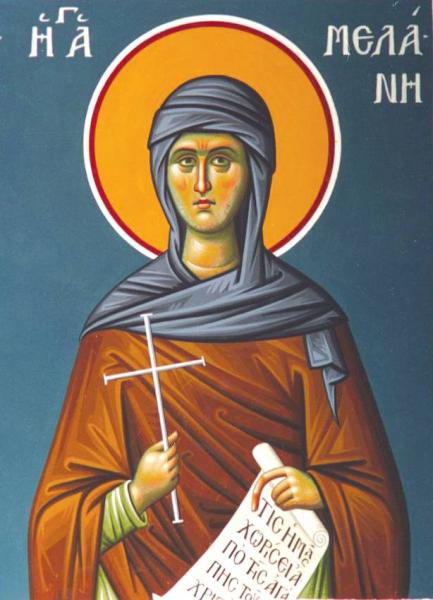
In the early Christian Church, the name was popularized by two 5th-century Roman saints, a grandmother and her granddaughter. Melanie the Younger is known for giving all her wealth to charity.

The name was introduced into England by the conquering Normans, but was never really common. The name became rather common in both the United States and in Britain starting in the early 20th-century, whether it was a French import, or if the character of Melanie Wilkes in Margaret Mitchell’s novel, Gone with the Wind (1936), are attributable to its popularity is up to conjecture.

Currently, Melanie is 89th most popular female name in the United States, (2011). Her rankings in other countries are as follows:

  • # 54 (Austria, 2010)
  • # 60 (Argentina, 2009)
  • # 237 (France, 2010)
  • # 376 (Netherlands, 2011)

Other forms of the name include:

  • Melanya (Armenian)
  • Melanija Меланија Мелания (Croatian/Macedonian/Russian/Serbian/Slovene)
  • Melánie (Czech: meh-LAHN-ye)
  • Melanie (Dutch/English/German)
  • Mélanie (French)
  • Melaina Μελαινα (Greek)
  • Melánia (Hungarian/Slovak)
  • Melani (Hungarian)
  • Melania (Italian/Late Latin/Polish/Spanish)
A common German short form is Mellie.

Italian masculine forms are: Melanio and Melaneo.

Polish diminutives are: Melanka, Melcia and Melusia.

The name is also borne by:

British pop singer, Melanie Brown, (former Spice Girl) b.1975. Melanie Chrisholm, aka Sporty Spice, b. 1974. American actress, Melanie Griffith (b.1957) and French actress and star of Inglorious Bastards, Mélanie Laurent (b. 1983).

The designated name-days are: January 10 (Hungary), January 13 (Poland), June 30 (Slovakia) and December 31 (France/Germany/Poland).

Sources

  1. http://www.behindthename.com/top/search.php?terms=melanie
  2. http://www.askoxford.com/firstnames/melanie?view=uk
  3. http://www.newadvent.org/cathen/10154a.htm
  4. http://ocafs.oca.org/FeastSaintsLife.asp?FSID=103701

Gabriel, Gabriella

Origin: Hebrew גַבְרִיאֵל  Γαβριηλ
Meaning: “strong man of God.”
Eng (GABE-ree-el); (gah-bree-EL-ah); Fre (gah-bree-EL); Germ (GAHP-ree-el); Pol (GAHP-ryel)

The name is derived from the Biblical Hebrew, גַבְרִיאֵל (Gavri-el) meaning, “strong man of God.”

In Judeo-Christian religions, it is the name of a powerful archangel, who is often viewed as a messenger of God. He appears several times in the Old and New Testaments.

Among Christians, one of his most important messages was relayed to the Virgin Mary that she would be the mother of Jesus. Islamic tradition also believes the same, and in Islam, it was the angel Gabriel who revealed the Qu’ran, (through God), to Mohammed.

In Mormon theology, Gabriel is believed to be the embodiment of Noah in the afterlife.

Gabriel is a fairly common name among Christians, Jews and Muslims, making him an extremely cross-cultural portable name.

Currently, in the United States, his popularity has been rising. He is the 24th most popular male name, (2011). In other countries, his rankings in all his various forms are as follows:

  • # 2 (Gabriel(e), Liechtenstein, 2010)
  • # 3 (Brazil, 2011)
  • # 4 (Romania, 2009)
  • # 6 (Gabriele, Italy, 2009)
  • # 7 (France, 2010)
  • # 9 (Quebec, Canada, 2011)
  • # 19 (Croatia, 2009)
  • # 26 (Belgium, 2008)
  • # 28 (Canada, BC, 2010)
  • # 28 (Mexico, 2010)
  • # 29 (Austria, 2010)
  • # 35 (Spain, 2010)
  • # 40 (Poland, 2009)
  • # 47 (Sweden, 2011)
  • # 48 (Norway, 2011)
  • # 52 (Catalonia, 2010)
  • # 78 (England/Wales, 2010)
  • # 95 (Australia, NSW, 2011)
  • # 124 (Scotland, 2010)
  • # 189 (Djibril, France, 2010)
  • # 313 (Jibril, France, 2010)

Other forms of the name include:

  • Jibrail/Jibrīl جبرائيل ጂብሪል (Arabic/Ethiopian)
  • Gabriel გაბრიელი ገብርኤል
    (Armenian/Catalan/Coptic/Czech/Danish/English/Ethiopian/Finnish/French/Georgian/German/Norwegian/Polish/Portuguese/Romanian/Romansch/Spanish/Swedish)
  • Gavrik (Armenian)
  • Cəbrayıl/Cibril (Azeri)
  • Gawryil Гаўрыіл (Belarusian)
  • Džibril/Džebrail (Bosnian)
  • Gavrail Гавраил (Bulgarian)
  • Zheberejil Жәбірейіл (Central Asian)
  • Gabrijel (Croatian/Maltese/Serbian)
  • Gabriël (Dutch)
  • Gaabriel (Estonian)
  • Gabrel (Ethiopian)
  • Kaapo/Kaapro (Finnish)
  • Gabriél Γαβριήλ (Greek)
  • Gavril Γαβριηλ (Greek)
  • Gavriel גַּבְרִיאֵל (Hebrew)
  • Gábriel (Hungarian)
  • Gábor (Hungarian)
  • Gabríel (Icelandic)
  • Jibril (Indonesian)
  • Gaibriéil (Irish-Gaelic)
  • Gabo/Gabbo (Italian)
  • Gabriele (Italian: more common form)
  • Gabriellino (Italian)
  • Gabriello (Italian)
  • Gabrio (Italian)
  • Cibrayîl (Kurdish)
  • Gabrielus (Latin)
  • Gabriels (Latvian)
  • Gabrielius (Lithuanian)
  • Jibrail (Malaysian)
  • Gavriilu Гаврїилъ (Old Church Slavonic)
  • Khabbriele (Puglian)
  • Gabin (Provençal)
  • Gavril Гавриил (Romanian/Russian)
  • Crabiele/Gabilele/Gabriello (Sardinian)
  • Cabbrieli (Sicilian)
  • Gabri’el ܠܒܪܝܐܝܠ (Syrian)
  • Gebrael (Syrian)
  • Cebrâîl (Turkish)
  • Gavrel גַאבְֿרֶעל (Yiddish)

English short form is Gabe.

Its feminine form of Gabriella/Gabriela is also rising in popularity. Currently, Gabriella is the 34th most popular female name in the United States, (2011). Her rankings in other countries are as follows:

  • # 3 (Gabriela, Bulgaria, 2009)
  • # 5 (Gabrielė, Lithuania, 2011)
  • # 5 (Gabrielle, Philippines, 2011)
  • # 7 (Gabriela, Columbia, 2011)
  • # 8 (Gabriela, Romania, 2009)
  • # 9 (Gabriela, Puerto Rico, 2011)
  • # 10 (Gabriela, Brazil, 2010)
  • # 13 (Gabriela, Poland, Warsaw, 2010)
  • # 19 (Gabriela, Poland, 2009)
  • # 28 (Gabrijela, Croatia, 2009)
  • # 30 (Gabriela, Mexico, 2010)
  • # 30 (Gabrielly, Brazil, 2010)
  • # 36 (Gabriela, Croatia, 2009)
  • # 38 (Gabriela, Chile, 2010)
  • # 64 (Australia, NSW, 2011)
  • # 64 (Gabriela, Spain, 2010)
  • # 67 (Gabrielle, France, 2010)
  • # 72 (Canada, BC, 2010)
  • # 94 (Gabrielle, Canada, BC, 2010)
  • # 119 (Gabrielle, United States, 2011)
  • # 466 (France, 2010)

Other feminine forms include:

  • Gebre’elwa ገብርኤሏ (Amharic/Ethiopian)
  • Gabriela (Bulgarian/Croatian/Czech/German/Polish/Portuguese/Romanian/Scandinavian/Slovak/Spanish)
  • Brielle (Cajun: abbreviated form of Gabrielle)
  • Gabrijela (Croatian/Serbian)
  • Gabriëlle (Dutch)
  • Briella/Briela (English)
  • Gabrielle (French/English)
  • Gabria (Italian)
  • Gabrielina (Italian)
  • Gabriella (Italian/English/Hungarian/Scandinavian: more common form in Italy)
  • Gabrielė (Lithuanian)
  • Gavriila Гавриила (Russian)

Czech diminutives are: Gába, Gabika, Gábina, Gabrina and Gabby.

A Polish diminutive is Gabrysia (gah-BRIH-shah).

English short forms are: Gabby and Ella.

Designated name-days are: February 10/27 (Poland), February 19 (Sweden), March 24 (Czech/Finland/Poland/Slovakia/Sweden), September 29 (France/Germany), December 12 (Hungary)

Mathis

Gender: Masculine
Origin: French/German
Eng (MATH-is); Fre (mah-TEES); Germ (MAH-tis)

He has recently become quite trendy in French-speaking and German-speaking countries. In the States, he may make a cool and stride surname-ish alternative to Matthew.

Mathis is a common surname, but he was originally a forename. Bearers of the surname Mathis are most definitely related to a Mathis somewhere down the line, Matisse is one variation which has been used by American parents of a bohemian persuasion; though in France, the Matisse form also appears in the top 500, he is exclusively given to males.

Mathis is a Medieval German contracted form of Mathias. A notable bearer was German Renaissance painter (née Mathias Grünwald) known simply as Mathis (1470-1598).

In France and outside the Hexagone, the French brand of car most undoubtedly propelled this name to its current zenith. The mathis was a car created by Émile Mathis between 1910 and 1950.

As of 2010, Mathis was the 9th most popular male name in France and the 9th most popular in Belgium, (2008).

Jules

Gender: Masculine
Origin: French
Fre (ZHUYL); Eng (JOOLZ)

The name is a French form of Julius

Jules was borne by several notable French personages, but the most notable and the one who may have introduced this name to the English-speaking world is French Sci-Fi writer, Jules Verne (1828-1905).

The name appeared in the U.S. top 1000 between 1880 and 1961. It is uncertain if Verne propelled this name to popularity or if it was already used among Franco-American families. The highest he ranked in U.S. naming history was in # 401 in 1893.

As of 2010, he was the 10th most popular male name in France, his rankings in other countries are as follows:

  • # 16 (Belgium, 2008)
  • # 219 (Netherlands, 2011)

Raphael

Gender: Masculine
Origin: Hebrew רָפָאֵל Ραφαηλ
Meaning: “God is healer.”
Fre (ra-fa-EL); Eng (RAF-ee-el; RAY-fee-əl)

The name is found in Judeo-Christian and Islamic legend as the name of a major archangel. In the Bible, he is mentioned in the Book of Tobit, which is considered canonical in the Roman Catholic, Orthodox and Anglican tradition. Due to Raphael’s deliverance of Sarah from the demon Asmodeus (who killed every husband she married before consumation), Raphael has been invoked as a matchmaker by Catholics.

Raphael also appears in the non-canonical Book of Enoch in which he is responsible for binding the fallen angel Azazel

In Islamic tradition, he is known as Israfel/Israfil and it is believed that he will blow the trumpet on Judgement Day.

It is interesting to note that the modern Hebrew word for a medical doctor is  דוֹקטוֹר (rophe), compare to the first element of Raphael.

Raphael is currently a trend across Europe, in France, Raphaël is the 11th most popular male name, (2010). His rankings in his various forms are as follows:

  • # 3 (Liechtenstein, 2010)
  • # 11 (Rafael, Brazil, 2010)
  • # 17 (Austria, 2010)
  • # 40 (Rafał, Warsaw, Poland, 2010)
  • # 48 (Rafał, Poland, 2009)
  • # 50 (German-speaking, Switzerland, 2010)
  • # 54 (Raphaël, Belgium, 2008)
  • # 55 (Rafael, Spain, 2010)
  • # 56 (Rafael, Croatia, 2009)
  • # 63 (Rafael, France, 2010)
  • # 189 (Rafaël, Netherlands, 2011)
  • # 274 (Rafael, United States, 2011)
  • # 668 (United States, 2011)

Its feminine form of Rafaela is currently the 8th most popular female name in Brazil, (2010), while the French form of Raphaëlle ranked in as the 273rd most popular female name in France, (2010).

Other forms of the masculine include:

  • Rafael (Albanian/Armenian/Catalan/Croatian/Czech/Finnish/Hungarian/Portuguese/Romanian/Romansch/Scandinavian/Slovene/Spanish)
  • Raphel ሩፋኤል (Amharic/Ethiopian)
  • Rupha(e)l ራፋኤል (Amharic/Ethiopian)
  • Israfil اسرافيل, Исрафил (Arabic/Central Asian: used among Muslims)
  • Rapael რაფაელ (Armenian/Georgian)
  • Rafail Рафаил Ραφαήλ (Bulgarian/Greek/Macedonian/RomanianRussian/Serbian)
  • Rafel (Catalan)
  • Raphael (Coptic/English/German)
  • Rafaël (Dutch)
  • Raafael (Estonian)
  • Raphaël (French)
  • Raiféal (Gaelic)
  • Raffaele (Italian)
  • Raffaello (Italian)
  • Raffaelino (Italian)
  • Îsrafîl (Kurdish)
  • Rafla (Lebanese/Syrian: used among Christians)
  • Rafaelis (Lithuanian)
  • Rapolas (Lithuanian)
  • Rafel (Maltese)
  • Rafał (Polish)
  • Arrafieli (Sardinian)
  • Rafiele (Sardinian)
  • İsrafil (Turkish)
  • Rafayil Рафаї́л (Ukrainian)
Common diminiutives are: Raf (Dutch); Rafe (English); Ralph (English); Rafinha (Brazilian-Portuguese); Rafa (Spanish).
Feminine forms include:
  • Rafaela (Croatian/Macedonian/Portuguese/Romansch/Slovene/Spanish)
  • Raphaëlle (French)
  • Raphaela (German)
  • Raphaele (German)
  • Raffaella (Italian)
  • Raffaellina (Italian)
The name was also notably borne by Raphael, or Raffaello Sanzio (1483–1520), an Italian master painter.