Unknown's avatar

About Sebastiane

I have studied the origin and meaning of names since I was a child. This site is a past time for me and also a passion. Since this is a hobby, and I have a full-time job, I am unable to consistently keep this site up, but please be patient with me.

Kehinde

  • Origin: Yoruba
  • Gender: unisex
  • Meaning: “one who comes second.”
  • Pronunciation: KEH-HEEN-DEH

The name is composed of the Yoruba words kẹ́hìn “comes last” and dé “arrives.” The name is usually given to the 2nd oldest twin.

A common short form is Kenny.

A Hispanicised form used in Latin-America & the Caribbean among people of Yoruba descent is Kaindé as in the case of Afro-Cuban singer, Lisa-Kaindé Diaz (b. 1994).

Other forms include: Kẹ́yìndé, Ọmọ́kẹhìndé & Ọlákẹ́hìndé.

Sources

Ayomikun

  • Origin: Yoruba
  • Meaning: “my joy is full.”
  • Gender: unisex
  • Pronunciation: I-yo-ME-koon

The name is composed of the Yoruba words ayọ̀ (joy); mi (my) and kún (full). A common short form is Ayo.

Sources

Khushi

  • Origin: Persian, Hindi خوشی ख़ुशी
  • Meaning: “joy; happiness; mirth; delight.”
  • Gender: feminine
  • Pronunciation: (KUSH-shee)

The name is from the Hindi word ख़ुशी which means “joy; delight; mirth; happiness.” It is a borrowing from the Persian word خوشی of the same meaning.

Another transliteration is Kushi.

Sources

Balin

Eng Pronunciation: BAY-lin

The name is of uncertain origin or meaning, it appears in Arthurian legend as the name of one of King Arthur’s knights, recorded by Thomas Malory in Le Mort d’Arthur, Sir Balin of the 2 swords is the well-meaning but ill-fated knight who ends up unwittingly engaging in a sword fight with his own brother Balan.

Other forms include:

  • Balain, Balaain (French)

The name was also used by J.R.R. Tolkien in The Hobbit for one his dwarves.

Balin or Valin is also the name of a monkey king in the Hindu epic, the Ramayana, in this case, the name is derived from the Sanskrit बलिन् (mighty; robust; strong).

Sources

Lakshmi, Laxmi

  • Origin: Sanskrit लक्ष्मी
  • Kannada: ಲಕ್ಷ್ಮೀ
  • Malayalam: ലക്ഷ്മി
  • Marathi/Hindi: लक्ष्मी
  • Odia: ଲକ୍ଷ୍ମୀ
  • Tamil: லட்சுமி
  • Telugu: లక్ష్మి
  • Meaning: “to perceive, observe, know, understand’ and ‘goal, aim, objective.”
  • Gender: feminine
  • LUCK-shmee

The name is derived from the Sanskrit lakṣ (लक्ष्) and lakṣa (लक्ष), meaning “to perceive, observe, know, understand’ and ‘goal, aim, objective.”

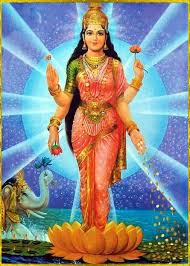
It is borne in Hinduism by the supreme goddess, wife of Vishnu, who is revered as the goddess of beauty, prosperity, luxury, contentment and among other things. She is known as Sri (the Noble One) and Akshara (imperishable), among other names. She is mentioned in the Rigveda as early as approximately 1000 BCE and is also revered in Buddhism and Jainism.

The name is mainly feminine, but is sometimes used among males in honour of the goddess in the same way that Mary, Maria, Marie has been used on males among Roman Catholics in honour of the Virgin Mary.

Sources

Bayram, Bajram

  • Origin: Turkic
  • Meaning: “festival; holiday.”
  • Gender: masculine
  • BY-rahm

The name comes directly from the Turkic word referring to any festival or public holiday, whether religious or secular.

Between 1980-2004, the name appeared in the Top 100 Most Popular Turkish Male Names, and peaked at #42 in 1981.

Sources

Lamara, Lamaria

  • Origin: Georgian ლამარა
  • Meaning: “of Mary.”
  • Gender: feminine
  • lah-MAH-rah; lah-MAHR-yah

The name is derived from the Svan term meaning “of Mary,” referring to the Virgin Mary as in the case of the church name in Svaneti  უშგულის ლამარია (Ushgulis Lamaria). Lamara is the name of a 1928 Georgian play by Grigol Robakidze.

Lamaria ლამარია is also the name of a Svan folk goddess of fertility, cattle, the hearth and women. Her name is most likely influenced by the Christian Virgin Mary and it is unknown if the goddess is a synchronized folk saint or if the name was changed after Christianity was introduced into the area.

Both names have recently become prevalent in Chechnya & Kazakhstan.

It is borne by Georgian soprano Lamara Chqonia (b. 1930).

In the United States, it is sometimes used as a feminine form of Lamar.

Sources

Latif, Latifa

  • Origin: Arabic لَطِيْف
  • Meaning: “gentle; kind; benevolent.”

Latif is a masculine given-name which comes directly from the Arabic word لَطِيف (gentle; kind; benevolent). In Islam, Al-Latif لطيف, (the Kind; the Benevolent) is one of the 99 names of Allah (God). It’s feminine form is Latifa.

Latif & Latifa are commonly used throughout the Islamic world.

A notable American bearer is actress & singer, Queen Latifah.

Other forms include:

  • Latıif (m), Latıifa (f) (Avar)
  • Lətif (m), Lətife (f) (Azeri)
  • Latheef, Latheefa (Dhivehi)
  • Latifah (f) (Indonesian, Malaysian)
  • Letîf (m), Letîfe (f) (Kurdish)
  • Lәtyjif (m), Lәtyjifә (f) (Tatar)
  • Letife (f) (Turkish)
  • Lateef لطیف, Lateefa(h) (Urdu)

Sources

Lowena

  • Origin: Cornish
  • Meaning: “happiness; bliss; joy.”
  • Gender: feminine
  • loh-WEN-ah

The name comes directly from the Cornish noun meaning “happiness; bliss; joy.”

It is sometimes spelled Lowenna to reflect the true pronunciation.

Sources

Chukwudi

  • Origin: Igbo
  • Meaning: “God exists.”
  • Gender: masculine
  • CHUCK-WOOD-DEE

The name is an Igbo male name meaning “God exists.”

A notable bearer is British actor, Chuk Iwuji (b. 1975).

A common short form is Chuk, which sounds exactly like Chuck.

Sources