Perpetua

  • Origin: Late Latin
  • Gender: Female
  • Meaning: “perpetual.”
  • Eng pron (per-PET-choo-ah)

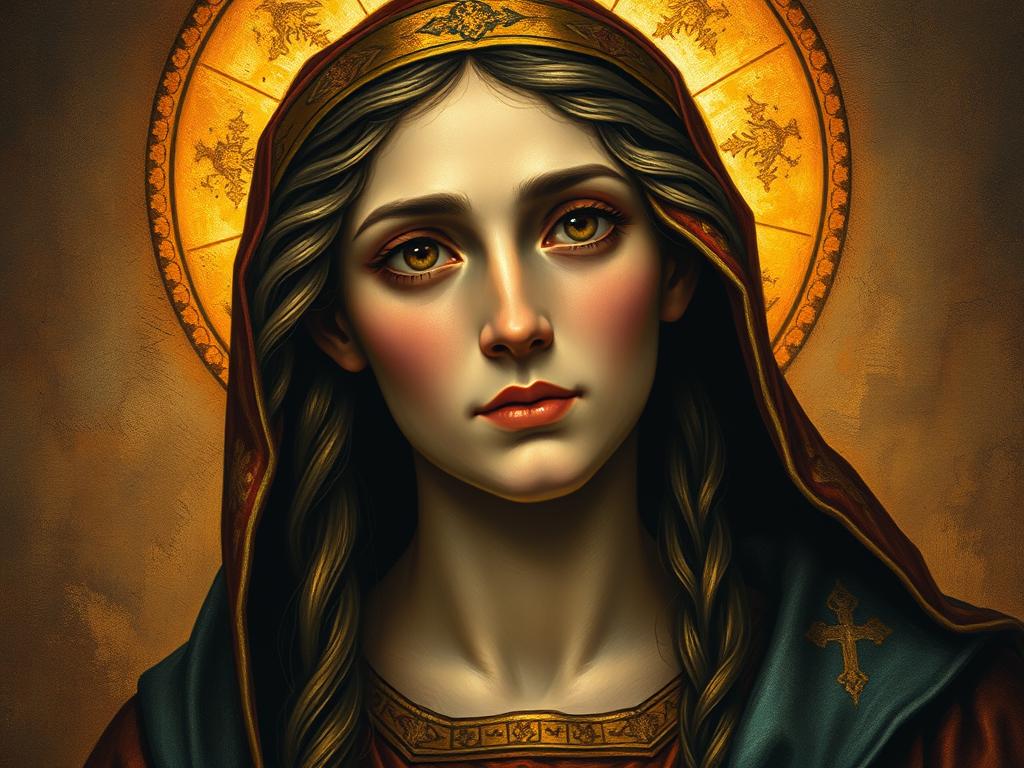
The name is derived from the Latin perpetuus, meaning “continous; perpetual.” It was borne by a 3rd-century Christian matyr and saint, the companion of St. Felicity and it was also the name of the sister of St. Augustine of Hippo.

Perpetua and its various forms have been in sporadic use throughout the Catholic world. In Italy, it became synonymous with a priest’s housekeeper. This is due to the eponymous character in Alessandro Manzoni’s 19th-century novel, “The Betrothed.

It experienced sporadic use in England in the 1920s after the release of the now lost 1922 film, Perpetua also known as Love’s Boomerang.

It has recently appeared in English literature as the name of minor characters in Bridget Jones’s Diary (Helen Fielding), and in the Harry Potter series (J.K. Rowling).

It was borne by Scottish landscape painter, Perpetua Pope (1916-2013).

It is the name of Cape Perpetua Oregon which was named for St. Perpetua as well as a typeface.

It’s designated name-day is February 1, March 6th and March 7th.

Forms & Usages

  • Perpetua (Basque, Croatian, Dutch, Galician, German, Italian, Latvian, Lithuanian, Polish, Provençal, Romanian, Spanish)
  • Perpètua (Catalan)
  • Perpétue, Perpétué, Perpetue (French)
  • Perpétua (Hungarian, Portuguese)
  • Perpetuya Перпетуя (Russian)

English short forms include: Perp, Perpie, Perpy, and Petty.

Masculine forms include

  • Perpeta (Basque)
  • Perpetu (Catalan)
  • Perpet (French, Polish)
  • Perpetuo (Italian, Spanish)
  • Perpète (French)
  • Perpetuus (Late Latin)
  • Perpetuüs (German)

Sources

Poppy

Gender: Feminine
Origin: English

Are you loving Lily? Maybe the popularity has gotten to you. There is this spunky floral moniker that has already reached outrageous popularity in Great Britain. Poppy is a sweet little floral that has been in usage since at least the 19th century. The name may seem a bit too insubstantial for some, hence is why it is sometimes listed as a nickname for such names as Parthenope, Penelope, Persephone, Pippilotta, Philippa, Pomeline and Perpetua.

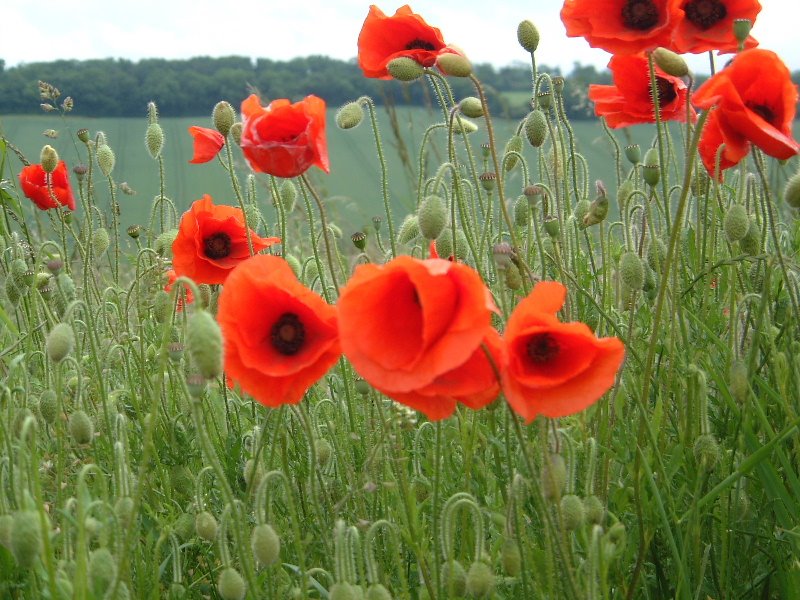
The associations with the flower are beautiful! Who wouldn’t want to be named for a deep red, eye popping flower (no pun intended). Then again, its symbolisms with death and sleep can be a bit of a turn off for others.

In Ancient Rome and Greece, the poppy was a funerary flower, they were usually placed on graves. The poppy got the association of death and sleep, since opium, (which is extracted from poppy seeds), was such a strong barbiturate. In fact, it was so strong, that the ancients used it as an anesthetic while conducting surgeries. However, Poppy does have the redeeming qualities of being associated with resurrection, since after being put under a death like sleep from opium during an operation, the patients always seemed to awaken as if they had come back to life. Its symbolism for dead soldiers comes from a poem written by John McCrae, entitled in Flanders Fields (1915). McCrae writes how he witnessed his friend perish amidst a field of poppies during WWI, and he compares the field of poppies to all the fallen dead soldiers. The name could be a nice way to honour a relative that has perished in a war.

As of 2010, Poppy was the 16th most popular female name in England/Wales. Her rankings in other countries are as follows:
  • # 47 (Scotland, 2010)
  • # 52 (Northern Ireland, 2010)
  • # 66 (Australia, NSW, 2010)
In the United States, it doesn’t even rank in the top 1000. However, with its growing popularity in Britain along with its similar appeal to other red hot climbers such as Scarlett and Ruby, she just might be making her way into the top 1000 by next year.
Another interesting side note is that Poppy is the flower of the month of August. Not a bad choice for an August baby.
A famous American bearer is CNN news anchor and reporter, Poppy Harlow (née Katharine) b.1982