Brīva

  • Origin: Latvian
  • Meaning: “free; freedom.”
  • Gender: Female
  • BREE-vah

The name is derived from the Latvian words, brīvs (free) and brīvība (freedom). It is ultimately derived from the Middle Low German vri, vrie (free).

It was first recorded in Riga in 1931, during a period of strong national consciousness and cultural renewal in independent Latvia.

According to Latvian population records, as of 2008, there were only three women known by this name.

Another form is Brive and its designated name-day is November 18th.

Sources

Hewad

  • Origin: Pashto هېواد
  • Meaning: “country, homeland.”
  • Gender: masculine

The name comes directly from the Pashto word هېواد meaning “country, homeland.”

Another transcription is Haiwad.

Sources

Haik

Gender: Masculine
Origin: Armenian
Meaning: “Armenian.”
Հայկ

Currently the 3rd most popular male name in Armenia (2008), the name is borne in Armenian legend by the founder and patriarch of the Armenian nation.

The name is derived from the nominative plural classical Armenian word, հայ, (hay), meaning, “Armenian.”

The name is borne in Armenian legend by Haik, (or Hayk), son of Moses, a Babylonian prince who fled his homeland along with his royal entourage to what is now Armenia to escape the harsh rule of Bel.

Years later, Haik decides to rebel against the wicked Bel, and he and his warriors defeat him, establishing a kingdom which they called Haykashen.

Margiris, Margier

Gender: Masculine
Origin: Lithuanian
Meaning: “forest dweller.”
Lit (mar-GEE-rees); Pol (MAR-gyare).

The name was borne by a medieval Lithuanian prince who was known for his heroic stand off at the Pilenai Fortress against the Teutonic Knights (d. 1336). Rather than be taken hostage, he and his subjects killed themselves and then burnt themselves in the fortress. There is a famous epic Polish poem which chronicles his exploits, entitled Margier it was written in 1855 by Wladyslaw Syrokmla. Seldom heard in Poland today, the name is still fairly common in Lithuania and its designated feast day is July 12.

Amerigo

Origin: Italian
Gender: Male
Meaning “home ruler.”
(ah-MARE-ee-go)

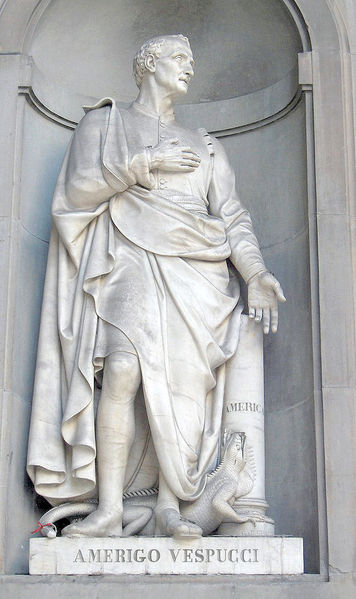
Amerigo is an obscure Italian male name made famous by Amerigo Vespucci, an Italian explorer, navigator and cartographer.

The continents of South and North America get their names from him. America being a feminized latinate version of Amerigo.

Amerigo itself comes from the Germanic elements haim meaning “home” and rich meaning “power, ruler; authority.”

Other forms of the name include:

  • Emerika (Basque)
  • Amèric/Emeric (Catalan)
  • Emmerik (Dutch)
  • Americ/Amery (English)
  • Emery (English: currently the 744th most popular male name in the United States-2008)
  • Aimeric/Aymeric/Émeric (French)
  • Aymeri/Aimery (French)
  • Emmerich (German)
  • Imre/Imrus (Hungarian)
  • Almerigo/Almerico (Italian)
  • Americo (Italian: modern form)
  • Emerico (Italian)
  • Merico/Merigo (Italian)
  • Americus (Latin)
  • Emerikas (Lithuanian)
  • Ajmeryk (P0lish)
  • Amalaryk/Amalryk (Polish)
  • Embryk/Emeryk (Polish)
  • Emmeric (Romanian)
  • Imrich (Slovak/Czech)
  • Américo (Spanish/Portuguese)
  • Emerico (Spanish)
  • Emerik (Swedish/Croatian)

A feminine form is the Spanish, América, currently borne by Ugly Betty star, America Ferrer.

Other feminine forms are:

  • Ameriga/Almeriga (Italian)