Anthony, Antonia

Origin: Latin
Meaning: unknown

The masculine English name, Anthony, is currently the 7th most popular male name in the United States.

The name is derived from a Roman family name, Antonius, which is of speculated origins, it is suspected to be of Etruscan heritage and it was borne by Marcus Antonius, (Marc Antony), who ruled the Roman Empire jointly with Caesar Augustus during the 1st-century B.C.E. His romance with Cleopatra is retold in Shakespeare’s tragedy, Antony and Cleopatra (1606).

The name was popularized in the Christian world due to the cult of St. Anthony the Great, an Egyptian hermit from the 3rd-century C.E. He is mostly noted for his establishment of Christian monasticism, another famous saint is Anthony of Padua, a 13th-century saint, who is known as the patron saint of Portugal and of lost items.

Originally, Antony was the more common form used in the English speaking world, and still is, to a certain extent, in the United Kingdom. The original English pronunciation was AN-tuh-nee, but AN-thuh-nee can also be heard in certain areas of the United States, particularly in the Midwest.

The lowest that Anthony has ranked in United States naming history was in 1885 when he came in as the 105th most popular male name.

His ranking in other countries is as follows:

  • # 48 (Australia, 2007)
  • # 33 Antoine (Belgium, 2006)
  • # 55 (Canada, B.C., 2008)
  • # 16 Antoine (France, 2006)
  • # 70 (France, 2006)
  • # 74 Antonin (France, 2006)
  • # 71 (Ireland, 2007)
  • # 312 (the Netherlands, 2008)
  • # 22 (Spain, 2006)

Its continental form of Anton, has always been a popular choice throughout Northern and Central Europe, in the United States, he is currently the 832nd most popular male name-2008, the highest he ever ranked in U.S. naming history was in 1885 coming in as the 175th most popular male name.

In other countries, his rankings are as follows:

  • # 4 (Finland, among Swedish-speakers, 2007)
  • # 11 (Sweden, 2007)

The feminine form of Antonia, currently does not rank in the U.S. top 1000, she is currently the 5th most popular female name in Chile-2008.

In the Netherlands, its diminutive form of Teun is currently the 36th most popular male name (2008).

Other forms of Anthony include:

  • Antón (Aragonese)
  • Antoniu (Asturian/Romanian/Sicilian)
  • Andoni (Basque)
  • Antolin (Basque)
  • Antton (Basque)
  • Anteng (Bavarian)
  • Dane (Bavarian: not to be confused with the English name Dane, this is pronounced: DAH-neh)
  • Anton Антон ანტონ(Breton/Bulgarian/Dutch/Estonian/Georgian/German/Maltese/Romanian/Russian/Scandinavian/Slovene/Ukrainian)
  • Antoun (Breton)
  • Andon Андон (Bulgarian/Albanian)
  • Antonij Антоний (Bulgarian)
  • Antoni (Catalan/Polish/Romansch: in Catalan, Tonet is the diminutive form. In Polish, the pet form is Antek)
  • Antone (Corsican: Antó is the diminutive form)
  • Ante/Anto (Croatian)
  • Antun (Croatian)
  • Antonín (Czech)
  • Anthonie/Antonie (Dutch)
  • Antheunis/Anthonis (Dutch)
  • Antonius (Dutch/Latin)
  • Antoon (Dutch)
  • Teun (Dutch: originally a diminutive form, now used as an independent given name).
  • Teunis/Theunis (Dutch: originally a diminutive form, now used exclusively as an independent given name)
  • Ton (Dutch/Limburgish)
  • Anteneh (Est0nian)
  • Tõnis (Estonian: originally a diminutive form, also used as an independent given name)
  • Anttoni (Finnish)
  • Antoine (French)
  • Antonin (French/Romansch)
  • Tinus (Frisian)
  • Antain/Antaine/Antoin/Antóin (Gaelic-Irish)
  • Antônios Αντώνιος/Antónis Αντώνης (Greek: modern)
  • Akoni/Anakoni (Hawaiian)
  • Antal (Hungarian)
  • Antoníus (Icelandic)
  • Totono (Indonesian)
  • Antonello (Italian)
  • Antonetto/Antonietto (Italian: obscure archaic diminutive form that was used as an independent given name)
  • Antoniano (Italian)
  • Antonico (Italian)
  • Antonillo (Italian)
  • Antonino (Italian: Nino is the common diminutive form)
  • Antoniuccio/Antonuccio (Italian: archaic form)
  • Antoniusso (Italian: archaic form)
  • Antuono (Italian: archaic, possibly a corruption of the French Antoine)
  • Antoninus (Latin)
  • Antons (Latvian)
  • Tun/Tunnes (Lexumburgish)
  • Antanas (Lithuanian: more common form)
  • Antonijus (Lithuanian)
  • Tonìn (Neopolitan)
  • Tonik (Norwegian: obscure form)
  • Titoan/Titouan (Occitanian/Provençal)
  • Tönnies, Tüns (Plattdeutsch)
  • Antoniusz (Polish: obscure form)
  • António (Portuguese: European)
  • Antônio (Portuguese: Brazilian)
  • Tonnies/Tünnes (Ripoarisch)
  • Antieni (Romansch)
  • Antòni (Sardinian/Occitanian: diminutive form is Tottoi)
  • Antonije Антоније (Serbian)
  • ‘Ntonio (Sicilian)
  • Antonio (Spanish/Italian: Toño and Tonito are the Spanish diminutive forms)
  • Done (Swabian)
  • Antümi (Turkish)
  • Antonij Антоній (Ukrainian)

Various feminine forms include:

  • Antònia (Catalan)
  • Antonieta (Catalan)
  • Antonija Антонија (Croatian/Serbian/Slovene)
  • Antonína (Czech/Slovak)
  • Antonie (Czech: ahn-TONE-yeh)
  • Antonia (Dutch/Italian/Polish/Romansch/Slovene/Spanish)
  • Tonneke (Dutch)
  • Antonie (French)
  • Antonine/Tonine (French: Tonine was originally a diminutive form and is now occasionally used as an independent given name)
  • Antoinette (French/Dutch)
  • Toinette (French: originally a diminutive form, now used as an independent given name)
  • Toinon (French: originally a diminutive form, occasionally used as a diminutive form)
  • Antía (Galician)
  • Antonella (Italian)
  • Antonetta/Antonietta (Italian)
  • Antonica (Italian)
  • Antonilla (Italian)
  • Antonina Антонина (Italian/Polish/Russian: Tosia is the Polish diminutive form and Nina is the Italian diminutive form)
  • Antonita (Italian/Spanish: originally a pet form, now used as an independent given name)
  • Titoana/Titouane (Occitanian/Gascon/Provençal)
  • Antónia (Portuguese/Bearnais/Hungarian/Slovak)
  • Tonia (Romansch)
  • Tonka (Slovene: originally a diminutive form, used as an independent given name)

A common English diminutive form for both the masculine and the feminine is Tony, in French, common diminutive forms are Toine, Toinou and Togne, for males.

Italian feminine diminutive forms are: Tonia, Tonina, Tona, NinaNinetta and Ninuccia. Italian masculine diminutives are: Tonio, Tonello, Tonino, Tonuccio, Nino, Ninuccio, Totò, Toni and Tony.

Italian combined forms are Antonmaria, Antoniomaria and Antonangelo.
Emily, Emil

Gender: Feminine
Origin: Latin
Meaning: “rival.”
(EM-ih-LEE)

The name is an anglicization of the Roman gens name Aemilius which was derived from the Latin aemulus meaning, “rival.”

Contrary to popular belief, Emily is not related to the Germanic, Amalia/Amelia, which is most likely derived from the Germanic element, amal, meaning “to work.”

Emily is just the English feminine form of the Germanic, Emil.

It is believed that Emily was introduced into the English speaking world in the 18th-century, after the German Hanover line had inherited the British throne, but evidence shows that Emily had been in usage in England since at least Norman times and that it may have been introduced through the Normans in 1066.

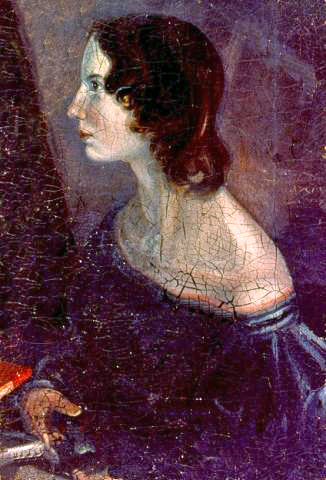
The name was borne by famous American poet, Emily Dickenson (1830-1886) and by English novelist and poet, Emily Brontë (1818-1848).

In modern history, Emily has been extremely popular in the English speaking world for at least a decade. She is currently the 3rd most popular female name in the United States-2008, and was # 1 in 2007, but was overthrown by the similar sounding Emma.

The lowest that Emily has ranked in U.S. history was in 1962, coming in as the 274th most popular female name.

In other countries, her rankings are as follows:

  • # 5 (Australia, 2008)
  • # 3 (Canada, B.C., 2008)
  • # 72 (Chile, 2006)
  • # 3 (England/Wales, 2008)
  • # 7 (Germany, 2009)
  • # 4  (Ireland, 2008)
  • # 3 (Isle of Man, 2008)
  • # 8 (Luxembourg, 2008)
  • # 137 (the Netherlands, 2008)
  • # 6 (New Zealand, 2009)
  • # 6 (Northern Ireland, 2009)
  • # 4 (Scotland, 2009)

Its more Latinate counterpart of Emilia is as follows:

  • # 6 (Faroe Islands, 2008)
  • # 9 (Finland, among Finnish-speakers, 2007)
  • # 2 (Finland, among Swedish-speakers, 2007)
  • # 3 (Iceland, 2004-2007)
  • # 5 (Liechtenstein, 2008)
  • # 401 (United States, 2008)

Its masculine counterpart has never been widely used in the English speaking world, but has been a long time favorite in Northern Europe.

The last time Emil was seen in the U.S. top 1000 was in 1984, coming in at # 967.

The highest that Emil ever ranked in U.S. naming history was at # 90, back in 1881, the same year that the United States saw a huge influx of Scandinavian immigrants.

Currently, Emil is the 5th most popular male name in Norway (2007) and the 9th most popular in Sweden (2007).

Other forms of Emily are:

  • Emiliya Емилия (Bulgarian)
  • Emílie (Czech: eh-MEEL-yeh)
  • Emilý (Faroese)
  • Émilie (French: ay-mee-LEE. 24th most popular female name in Belgium-2006; 41st most popular in France-2006; 292nd most popular in the Netherlands-2008.)
  • Émilienne (French)
  • Eimíle (Gaelic-Irish)
  • Emelie (German/Swedish: 48th most popular female name in Sweden; EM-eh-LEE)
  • Emilie (German/Danish/Dutch/Norwegian/Swedish: EM-ih-LEE)
  • Emele (Hawaiian)
  • Emilía (Icelandic)
  • Emilia (Italian/Dutch/Estonian/Faroese/Finnish/Polish/Romanian/Scandinavian/Spanish: 16th most popular in Chile-2006; 97th most popular in England/Wales-2008; 18th most popular in Sweden-2007).
  • Emiliana (Italian/Portuguese/Romanian/Spanish)
  • Emilietta/Milietta (Italian: obscure diminutive form that were used as independent given names)
  • Aemilia (Latin: ay-MEE-lyah)
  • Aemiliana (Latin)
  • Emīlija (Latvian)
  • Emilija (Lithuanian/Serbian/Croatian/Slovene)
  • Emília (Portuguese/Hungarian/Slovak: 83rd most popular female name in Hungary-2008)
  • Emilja (Slovene)
  • Emilijana (Slovene)
  • Emila (Spanish: obscure, Emilia is more common)

Masculine forms include:

  • Emilli (Basque)
  • Emilion (Breton)
  • Milig (Breton)
  • Emil Емил (Bulgarian/Serbian)
  • Emili (Catalan)
  • Emiel (Dutch)
  • Eemil (Estoanian/Finnish)
  • Eemeli (Finnish)
  • Émile (French)
  • Émilien (French)
  • Amil (German)
  • Emil (German/Croatian/Czech/Faroese/Hungarian/Icelandic/Norwegian/Polish/Slovene/Swedish)
  • Emilián (Hungarian)
  • Emiliano (Italian/Spanish)
  • Emilietto (Italian: obscure diminutive form that was used as an independent given name)
  • Emilio (Italian/Portuguese/Spanish)
  • Miliano (Italian: obscure contracted form)
  • Aemilianus (Latin)
  • Aemilius (Latin/Dutch)
  • Aimil (Manx/Scottish)
  • Emilian (Romanian)
  • Emilij (Russian)
  • Jemilijan (Russian)
  • Emilijan (Serbo-Croatian/Slovene)
  • Ymil/Yjmil (Silisian: a dialect of Polish)
  • Emilijano (Slovene)
  • Emilij (Slovene)
  • Emilijo (Slovene)

The name-days for Emily/Emilia are:  May 19 (Finland); May 23 (Poland); June 24/30 (Poland); July 19 (Hungary); August 19 (Poland); November 14 (Sweden); November 24 (Poland/Slovakia).

The name-days for Emil are: January 31st (Slovakia); May 22 (Czech Republic/Poland); May 28 (Hungary); July 18 (Bulgaria); August 5/8 (Poland); August 8 (Bulgaria); October 6/11 (Poland).

The masculine and feminine forms are borne by several saints and Emilia is the name of at least three Shakespearean characters.

Common English diminutives are Em, Emmie and Millie. A Spanish diminutive is Emilita. A Slavic diminutive is Emilka; in Polish it is sometimes Milcia.

Cornelia, Cornelius

Origin: Latin
Meaning: “horn.”
Eng (kore-NEE-lee-ah); (kore-NEE-lee-us).

The names are ultimately derived from a Roman clan name, known as the Cornelii, they were one of the most distinguished and influential clans in both the Roman Republic and Empire. Infact, it is believed that over %30 percent of all consulships were held by members of the Cornelii.

The name is believed to be derived from the Latin word cornu meaning “horn.”

The name is found in the New Testament, in the Acts, as the name of the first gentile convert to Christianity. The female counterpart was borne in history by Cornelia Africana, (2nd century B.C.E), the mother of the reformers known as the Gracchi brothers.

Other forms of the names include:

  • Kerneels (Afrikaans)
  • Kornel (Czech/Polish/Slovak)
  • Cornelis/Kornelis (Dutch)
  • Corneel/Korneel (Dutch)
  • Cees/Cor/Corné/Kees/Neel/Nelis (Dutch: diminutive forms that are sometimes used as independent given names)
  • Cornel/Cornelius (English)
  • Corneille (French: more common form)
  • Cornélius (French)
  • Cornelius/Kornelius (German: diminutives include, Corni, Corny, Neli and Nelli).
  • Niels (German/Dutch: originally a diminutive form, now used exclusively as an independent given name)
  • Kornél (Hungarian: 59th most popular male name of 2005 in Hungary)
  • Cornelio (Italian: diminutive form is Nello)
  • Korneli/Korneliusz (Polish: diminutive is Kornelek)
  • Cornélio (Portuguese)
  • Cornel/Corneliu (Romanian)
  • Cornel (Romansch)
  • Cornelio (Spanish)

Feminine forms include:

  • Kornelia (Czech/German/Polish: Polish diminutive form is Kornelka)
  • Cornelia (Dutch/English/German/Italian/Romanian/Spanish/Swedish: Dutch diminutive forms are Cokkie. In 2007, Cornelia was the 61st most popular female name in Sweden)
  • Neele (Dutch: originally a diminutive form, used as an independent given name)
  • Cornélie (French)
  • Nele (German: initially a diminutive form, now used as an independent given name, and currently very trendy in German speaking countries NEL-e)
  • Kornélia (Hungarian/Slovakian)

English diminutive forms for males are Corey and Neil, and for females they are usually Corey, Nell or Nellie.

Name-days are September 16/November 16 (Austria/Germany), December 17 (Slovakia)

Albina

Gender: Feminine
Origin: Latin
Meaning: “white; bright.”
Eng (al-BYE-nah)

The name has very ancient roots as it was borne by the Etruscan goddess of the dawn, the name is linked to the Latin word albus meaning “white; bright” and it is also linked to the modern French word (aube)meaning “dawn” and Spanish word (alba) “dawn.” The Latin masculine version is Albinus. Interestingly enough, Albina also coincides with the Romanian word for “bee.”

Though it has Latin roots, the name seems to be especially common in Central Asian countries, such as Chechnya and Kyrgyzstan, and is common among the Tartar populations of Russia.

The name is also used in Hungary, Italy, Poland, Romania, Slovenia, in Spanish-speaking countries and in Portuguese speaking countries.

It is borne by Chechen Human Right’s Activist, Albina Digaeva (b.1978), it is also borne by Russian-Tartar olympic biathlete, Albina Akhatova (b.1976) and Tajik Olympic Archer, Albina Kamaletdinova (b.1969).

It was also borne by a 3rd century Christian martyr.

The designated name-day is usually December 15.

Other forms include:

  • Albína (Czech/Slovak)
  • Albina Альби́на (Russian)

A Russian diminutive form is Alya and Slovenian diminutives are Bina, Binca (BEENT-sah); Albinca.

Masculine forms are:

  • Albin (Czech/English/Polish/German/Norwegian/Swedish)
  • Aubin (French)
  • Albinus (Latin)
  • Albín (Slovakian)

Valeria, Valerie

Gender: Feminine
Origin: Latin
Meaning: “healthy.”
Eng (VAL-eh-REE); It (vah-LAY-ree-ah); Fre (VAH-lay-RHEE)

Valeria is the feminine form of the Latin Valerius, an ancient Roman clan name that indicated strength, boldness or health. The name was popularized in Europe via the cult of St. Valeria, a 2nd century Roman martyr, and the cult of St. Valérie of Limoges.

In the United States, Valerie currently ranks in as the 135th most popular female name (2008). The highest it ranked was in 1959 at # 60. In the Netherlands, she is the 136th most popular female name (2008). Its latinate form of Valeria currently stands as the 73rd most popular female name in the United States. In 2006, she was the 69th most popular female name in Chile and the 55th most popular in Spain.

Other forms of the name include:

  • Valeria (Albanian/Italian/Latin/Norwegian/Romanian/Spanish/Swedish)
  • Valèria (Catalan)
  • Valérie (Czech: vah-LEHR-yeh)
  • Valerie (Dutch/German/English/Swedish)
  • Valériane (French)
  • Valérie (French: VAH-lay-RHEE)
  • Valérine (French)
  • Valeska (German: an old diminutive form, short form is Leska, fairly common in Brazil, perhaps introduced via German immigrants).
  • Valéria (Hungarian/Portuguese/Slovak)
  • Valeriana (Latin/Italian/Spanish)
  • Waleria (Polish: vah-LEHR-yah)
  • Waleriana (Polish)
  • Valeriya Валерия (Russian)
  • Valerija (Slovene/Croatian/Latvian/Lithuanian/Serbian)
  • Valerijana (Slovene)
  • Valerina (Slovene/Italian)

A Slovakian diminutives is Valika, Russian diminutives are Valya and Lera, an English diminutive is Val, German diminutives are Vali and Lilli, Slovene diminutives are, Valči, Valčika andValčka. A French diminutives is Valé.

Masculine forms are

  • Valery (English)
  • Valerian (English)
  • Valère/Valérien/Valéry (French)
  • Vallier (French)
  • Valeriano (Italian/Spanish)
  • Valerino (Italian)
  • Valerio (Italian/Spanish)
  • Valiero (Italian)
  • Valerianus (Latin)
  • Walerian/Waleriusz/Walery (Polish)
  • Valeriu (Romanian)
  • Valeri Валерий (Russian)
  • Valerij/Valerijan/Valerijano/Valerijo/Valerin/Valerjan (Slovene)

A Romanian diminutive form is Vali.

The designated name-days are: April 18 (Czech Republic), April 28, (France, Hungary), June 20 (Slovakia), June 7 (Bulgaria), June 20 (Russia) and December 9 (Lithuania and Croatia).

Viviana, Vivienne, Bibiana

Origin: Latin
Meaning: “alive.”

For many, the name Vivian probably brings to mind the silverscreen and beautiful leading ladies like Vivien Leigh, however, both Vivian and Vivien are masculine forms, though they have not ranked in the U.S. top 1000 for males, for the policy of defining a legitimate name, I have decided to list both Vivian and Vivien as male forms, while Viviane and Vivienne are legitimate feminine forms. In fact, Vivien is still considered a male form in France. Currently, Vivian ranks in the U.S. top 1000 female names as the 207th most popular female name for 2008, with the rising popularity of such vintage names like Ava and Sophie, this one might rise, plus add to the mix that Angelina Jolie and Brad Pitt recently named a child Vivienne.

The name is derived from Vivianus, which is derived from the Latin word vivus meaning “alive.” The name was borne by two saints, one an early Christian martyr, known as St. Viviana or St. Bibiana, the other a French Bishop who was known for providing protection against the Visigothic invasion.

In addition, in some Arthurian legends, the Lady of the Lake is sometimes given the name Viviane.

The name-days are June 2nd (Estonia) and December 2nd.

Other forms of the name include: (divided alphabetically by linguistic origin):

  • Bibijana (Croatian)
  • Viivi (Finnish)
  • Bibiane/Bibienne (French)
  • Viviane/Vivienne (French: common diminutive form is Vienne)
  • Viviette (French: originally a diminutive form; used as an independent given name)
  • Bibiana (German/Italian/Spanish)
  • Bibbiana (Italian)
  • Viviana (Italian/Spanish)
  • Bibianna/Wiwianna (Polish: the latter form is more common and is currently rising in popularity)
  • Bibiána/Viviána (Slovakian/Hungarian: diminutive forms in Slovak are: Vivi, Vivianka, Via and Vianka)
  • Viviann/Vivianne/Vivan/Wivan (Swedish)

Masculine forms

  • Vivian (English)
  • Vivien (French/Hungarian)
  • Bibbiano/Bibiano (Italian)
  • Vivianus (Latin)
  • Bibian (Polish)
  • Vivián (Spanish)

Blandina, Blandine

St. Blandine

St. Blandine

Gender: Feminine
Origin: Latin
Meaning: “charming; flattering; friendly”

Both names come from an early Roman name, a feminine form of Blandinus, which is a derivative of the cognomen, Blandus, meaning “charming; flattering” or “friendly” in Latin.

The name was popularized, in France, in the form of Blandine.

It was the name of an early Christian martyr who had been killed in Lyons in the first-century C.E.

According to legend, she was a slave and Christian of frail health and when an edict against Christians in the area was produced, she and her master were tried and executed.

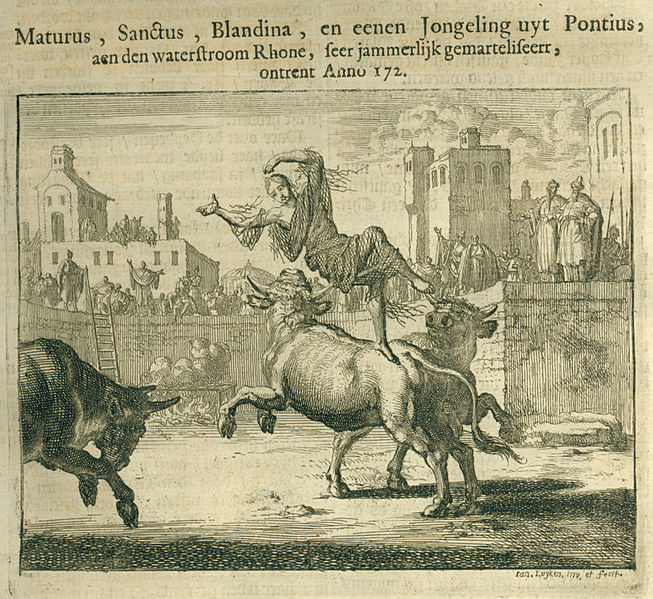
Allegedly, Blandina was tied to a stake in the local arena where wild animals were set loose upon her, the animals did not harm her, afterwards, she was scourged, placed on a burning grate and then thrown before a wild bull. She still didn’t die. She was finally executed with a dagger.

In France the name-day is June 2nd, while in Germany it is October 22.

The name has also had some usage in Italy , Spanish-speaking countries and in the Romantsch speaking cantons of Switzerland.

The Polish forms are Blandyna and the masculine, but very unusual form, of Blandyn.

Cordula

She has a similar feel to the romantic Cordelia, in fact, it is even argued that Cordelia came from Cordula, but I will go further into that in a different entry in the future. For now, the focus is on the lovely Cordula. According to legend, St. Cordula of Cologne was one of the 11,000 companions of St. Ursula, when her friends were being massacred, Cordula cowardly hid in fear and survived, feeling guilty that she survived while her friends were dead, she presented herself to the Huns the next day and was promptly executed. Supposedly Albert the Great found her remains hundreds of years later. Her body was in perfect condition and on her head was written “Cordula, Queen and Virgin.” Her feast day is October 22.

The name is believed to be derived from the Late Latin cor, cordis meaning “heart” with the diminutive feminine suffix -ula attached to the end, hence “little heart.” It has been a common enough name in Germany, due to the popularity of the Saint’s cult.

Cordula was an epic German poem written by Max Waldau in 1854. It is also the name of an orchid from the slipper orchid genus.

Other forms of the name include Kordula which is another form used in Germany but is also used in the Czech Republic, Slovakia and Poland. The Slavic diminutive forms are Kordulka, DulaDulka and Dalinka.

Céline

celine-dionGender: Feminine
Origin: French
Meaning: “heaven.”
Fr (SAY-leen); Eng (seh-LEEN).

The name is a French feminine form of the Old Roman family name Caelinus which is related to the Latin Caelius meaning “heaven.” In this case the name Celia is related.

It is also sometimes considered a contraction of Marcéline.

The name has always been prevalent in French speaking countries and has become common in non Francophone countries as well.

In Belgium it was the 99th most popular female name in 2003, in France she came in at # 97 in 2002. In the Netherlands she came in # 272 in 2008, while in Norway she came in at # 51 in 2007. In the United States she recently fell out of the top 1000, in 2007 she came in at # 995. The name is borne by Canadian singer Celine Dion. Other forms of the name include:

  • Caelina (Latin)
  • Celina (Italian: pronounced chay-LEE-nah. There is also a masculine form: Celino)
  • Celina/Celine (Norwegian: seh-LEE-nah; seh-LEE-nε).
  • Celina (Polish: pronounced tseh-LEE-nah)

The designated name-day in France is October 21.

Vesta

522px-Pompejanischer_Maler_um_80_v._Chr._001Gender: Feminine
Origin: Latin
Meaning: “hearth; fireside.”
(VES-tah)

The name is borne in Roman mythology by the goddess of the hearth, home and family. Not much is really known about her as she is not mentioned in any myths, but it is believed that she was a leftover ancient Etruscan goddess and it has been suggested that she actually had no relation with the Greek goddess Hestia as is popularly believed.

It is believed that the name is derived from the Greek Hestia which means “hearth; fireside.” In ancient Rome, the Vestals were women who took a vow of chastity for 30 years in order to keep the fire of the goddess kindled. It is said that if they broke their vow of chastity, they would be severely punished by being buried alive. In ancient Rome there was also a yearly festival called the Vestalia dedicated to the goddess, it usually occurred between June 7-15.

In Europe, its designated name-day is October 17. Another form of the name is the Estonian Veste. Italian forms are Vestia and Vestina. There is a Polish form: Westyna.