Prosper, Prospera

  • Origin: Latin
  • Meaning: “prosper.”

The name Prosper comes from the Latin Prosperus, meaning “fortunate,” “successful,” or “prosperous.” It is derived from the Latin verb prōspere, “to cause to thrive, to be favorable,” ultimately from pro- (“forward”) and spēs (“hope”).

Saint Prosper of Aquitaine (c. 390–455) was a Christian writer and theologian who defended the doctrines of Saint Augustine. His influence made Prosper a well-established saint’s name in medieval France, especially in Aquitaine and Provence.

In France, the name was relatively common at the turn of the 20th-century, ranking in at #96 in 1902. In the USA, it never ranked as high but did make it to the Top 1000, peaking at # 886 in 1881.

Several other early Christian saints and bishops also bore the name.

The most famous literary bearer is Prospero, the magician-duke in William Shakespeare’s The Tempest (1611).

The Puritans occasionally used Prosper as well.

The designated name-days include: June 25th (Denmark & France), September 2nd (Croatia), June 23rd (Poland).

International Variations

  • Prósperu (Asturian)
  • Pròsper (Catalan)
  • Prosper (Croatian, Dutch, English, French, German, Hungarian, Polish, Scandinavian)
  • Prospert (French, rare)
  • Prospero (Italian)
  • Prosperino (Italian)
  • Prosperus (Latin)
  • Próspero (Portuguese, Spanish)

Female Forms

  • Prospera (Italian)
  • Prosperina (Italian)
  • Prospère (French)
  • Prospérine (French)
  • Próspera (Portuguese, Spanish)

Diminutives

  • Prop (English)
  • Sperry (English)
  • Rino (Italian)

Sources

Early Modern English Versions of Names

The early 20th century brought Janet back from the dead, and the 1980s revived Tiffany and Allison—two names that had once flourished in medieval England before fading into obscurity. Many other forgotten names share a similar story. Countless early English forms were gradually displaced by their Latinized versions, leaving behind a treasure trove of names that feel surprisingly fresh today. With their short, crisp sounds and understated elegance, many of these medieval forms fit seamlessly into modern naming trends.

  • Agace (AG-es) – Early English form of Agatha.
  • Anastace, Anstice (AN-stis) – Medieval English forms of Anastasia.
  • Annis – Vernacular form of Agnes.
  • Appelin, Apolyn, Applyn – Early modern English forms of Apollonia.
  • Avelyn – Old English form of Aveline.
  • Barbery (BAR-beh-ree; BAR-bree) – Middle English vernacular of Barbara.
  • Basily (BAZ-e-lee) – Feminine form of Basil, from Basilia.
  • Beaton (BEE-tun) – Diminutive form of Beata
  • Bennet – early English form of Benedicta, it was a unisex name in Medieval times.
  • Blandin (BLAN-din) – early English form of Blandina
  • Christian – Early English form of Christiana.
  • Collys, Collis (KAHL-lis) – this was used as the English form of Coline, a diminutive form of Nicholin.
  • Clemence – English vernacular form of Clementia.
  • Dowse (DOWS) – English vernacular form of Dulcie.
  • Effemy (EFF-eh-me)– Middle English for Euphemia.
  • Emblem – Early form of Emeline; once written as Emblen or Emelyn.
  • Ibbot, Ebotte (IB-bet; EB-bet)– Pet forms of Isabella or Elizabeth.
  • Jacket – Diminutive form of Jacquetta.
  • Jackman; Jacquemine (would have been pronounced JACK-e-men; JACK-men) – Vernacular English rendering of Jacquemina (French).
  • Josian (JOZE-ee-an)– English forms of Josiana.
  • Julian – Used for Juliana in medieval England; Julian was once unisex.
  • Lavin (LAY-vin) – Middle English form of Lavinia.
  • Lette (LET) – Vernacular form of Leta.
  • Lettice (LET-iss) – Earlier form of Letitia. (Later mocked because of its similarity to “lettuce.”)
  • Marin (MARE-en) – Medieval English for Marina.
  • Nicholin (NICK-o-lin) – Vernacular feminine of Nicholas (Nicholina).
  • Parnell, Parnel (PAR-nel) – English forms of Petronella. (Parnell later fell out of favor when it became slang for a prostitute in the Middle Ages.)
  • Perrin (PARE-in) – Feminine diminutive of Perina (from Petronilla).
  • Pleasance – From Plescencia or Placentia (“pleasant, agreeable”).
  • Rain – Vernacular of Regina.
  • Sabine, Sabin (SAY-bin / SAB-in) – English vernaculars of Sabina.
  • Scolace (SKAL-es) – Early English form of Scolastica (Scholastica).
  • Senobie (SEN-o-bee) – Medieval English version of Zenobia.
  • Sence – Early form of Sancia or Sancha.
  • Swanel – From Swanhild (“battle swan”), found in Middle English records.
  • Thomesin, Thomeson – Feminine diminutives of Thomas (Thomasina).

Phyllis, Phillyda

  • Origin: Greek Φυλλίς
  • Meaning: “leaves; foliage.”
  • Gender: Female

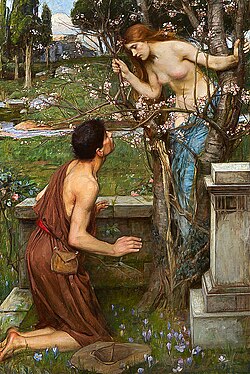
The name appears in Greek mythology. It is connected to a woman who killed herself when her love for Demophon was not returned. She was transformed into an almond or hazelnut tree, depending on the legend. It comes directly from the Greek word, Φυλλίς, meaning, “leaves, foliage,” which shares a root with the words chlorophyll and phyllotaxis. Its Turkish form of Filiz comes from the same root but the meaning slightly changes to “sprout; root.”

It also appears as the name of a minor river god of Bithynia.

It came into widespread use in England in the 16th-century and later spread to the rest of the Anglosphere.

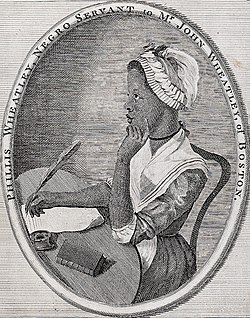
Early Puritan records occasionally include Phyllis/Phillis, reflecting classical learning even among settlers. Phillis Wheatley (1753-1784), the first published African-American female poet, is a striking historical bearer.

An 18th-century English short form was Lissie or Lissy.

It frequently appears in Elizabethan and Restoration poetry and drama. Poets such as Ben Jonson and Andrew Marvell used “Phyllis” as a stock name for a beloved in pastoral verse. Later modernists like Ezra Pound continued this tradition. This usage helped keep it familiar to English speakers for centuries.

It marked its presence in baroque operas (e.g., Handel’s Acis and Galatea includes a character named Phyllis) and in folk songs of the British Isles.

Victorian painters of the Pre-Raphaelite school sometimes chose the Phyllis and Demophon story for mythological canvases.

In the United States, it appeared in the Top 100 Female Names between 1915-1958, peaking at #24 in 1929. In the U.K., it came in at #14 in 1914, #4 in New Zealand in 1911, and #29 in 1922 in Canada.

Its Turkish offshoot of Filiz appeared in the Turkish Top 100 between 1980-1996, peaking at #11 between 1980-1982.

Today, the name is considered dated in the English-speaking world.

Phillyda, pronounced /ˈfɪl.ɪ.də/ in English is an alternate form.

Other forms include:

  • Filida Филлида (Bulgarian, Russian, Serbo-Croatian)
  • Fílide, Fil·lis (Catalan)
  • Fyl(l)is (Czech, Polish, Slovak)
  • Phyllis (Dutch, English, German, Classical Greek, Scandinavian)
  • Phillida (English)
  • Phillis (English)
  • Phyllis, Phyllide (French)
  • Fýllis (Greek – Modern)
  • Fillide, Filide (Italian)
  • Phillidis (Latin)
  • Filis, Filija (Latvian, Lithuanian)
  • Fílide, Fílis (Portuguese)
    • Fílide, Filis (Spanish)
    • Filiz (Turkish)
    • Fillida Філліда (Ukrainian)

Sources

Bonaventure

  • Origin: Italian
  • Meaning: “good luck.”
  • Gender: Male

Bonaventure is the French and English form of the Medieval Italian male name, Bonaventura. It is ultimately made up of the Latin words, bonus “good” and venturas “the things that will come, the future.” A 13th-century Catholic Saint bore this name. He is considered a Doctor of the Church and known for authoring the biography of St. Francis of Assisi.

The name experienced widespread use throughout Catholic Europe until it fell out of use by the early 20th-century. It was the middle name of actor, Spencer Tracy (1900-1967).

The designated name-day is July 15th and September 11 in Croatia.

In recent years, it was the name of one of the ill-fated Lisbon sisters. This character appeared in Jeffrey Eugenides’ novel, The Virgin Suicides (1993). She is referred to as “Bonnie,” for short.

Other forms include

  • Bonabendur (Basque)
  • Bonaventura (Catalan, Croatian, Czech, Dutch, German, Hungarian, Italian, Scandinavian, Slovene)
  • Boaventura (Galician, Portuguese)
  • Buonaventura (Italian)
    • Bonaventūra, Bonaventūras (Lithuanian)
  • Bonawentura (Polish)
  • Buenaventura (Spanish)

Italian short forms are Ventura, Venturo, and Venturino, also used as independent names.

Sources

Poemen

  • Origin: Greek Ποιμήν
  • Meaning: “shepherd.”
  • Gender: Male

The name comes from the Greek Ποιμήν (poimen) meaning, “shepherd.”

In Greek Mythology, the earlier form of Poemenius is known as the name of a satyr. He led the god Dionysos’ satyr troops in a war against India.

It was borne by a 4th-century desert father and Christian saint, known in the Coptic Church as Abba Poemen.

Other forms include:

  • Bayman بیمن (Arabic Egyptian, used by Copts)
  • Pimen Пимен Пимен (Bulgarian, Polish, Russian, Serbian)
  • Poimen ⲡⲓⲙⲏⲛ Ποιμήν (Coptic, German, Greek)
  • Poemen Поемен (English, French, Latin, Ukrainian)
  • P’imen პიმენ (Georgian)
  • Poimén (Hungarian)
  • Pimeno (Italian, Spanish)
  • Pimenus, Poemenius (Latin)
  • Pojmen (Polish)

In Poland, the designated name-day is September 9th

Sources

Zenobia

Zenobia is composed of the Greek elements, Zeus (Zeus) and bios (life). It was notably borne by a 1st-century Armenian queen of Georgian descent and later a 3rd-Century Queen of Palmyra who tried to expand into Roman territory but was defeated by Emperor Aurelian.

Zenobia of Palmyra’s name might have been a Hellenized form of her birth name, Bat-Zabbai, which is from the Aramaic meaning “daughter of Zabbai.” Zabbai itself is an Aramaic male name. It seems to be a theophoric name, meaning “gift of–.” The latter part refers to an unknown deity. It may have actually been an Aramaic form of the Hebrew female name, Bathsheba.

Speculation has also linked it with the Arabic female name Zaynab, which can either mean “father’s beauty” or be from the name of a type of flowering tree.

It was borne by the 3rd-century martyrs, Ss. Zenobia and Zenobius, two early Christians who were siblings and beheaded under Emperor Diocletian. Their feast and name-day is October 30.

In the English-speaking world, it is first recorded in Cornwall and Devon, England in the 16th-century. Early English forms of Synibie, Sinobie, Senobie, Cenobie, and Cenoby (Sen-e-bee; SIN-e-bee), would make interesting revivals in the spirit of Sydney and Willoughby. A common English diminutive was Nobby.

Zenobia appeared in the U.S. Top 1000 Most Popular Female names between 1881-1925, peaking at #669 in 1909.

Zenobia is no stranger to English literature, it is the name of a character in Nathaniel Hawthorn’s The Blithedale Romance (1852); Edith Wharton’s Ethan Frome (1911); and is even used by Anne Rice in her the eighth book of her vampire series, Blood and Gold (2001).

Zenobia “Nobby” Hawthorne appears as a character in the P.G. Wodehouse series, Jeeves.

Tina Fey used this as the middle name of daughter, Alice Zenobia.

Other forms include

  • Zenobia Զենոբիա ზენობია ܙܢܘܒܝܐ Armenian, Assyrian, Coptic, Czech, Danish, Galician, Georgian, German, Greek, Italian, Polish, Portuguese, Provencal, Romanian, Swedish, Spanish)
  • Zanubya ܙܢܘܒܝܐ (Assyrian)
  • Zinovia Зіновія Зиновия Ζηνοβία Зіновія (Belarusian, Modern Greek, Romanian, Russian, Ukrainian)
  • Zinovija Зиновия (Bulgarian, Serbian)
  • Cenobia (Catalan, English, Spanish, Swedish)
  • Anobia Ⲁⲛⲟⲃⲓⲁ (Coptic); Zanubiyah زنوبيا (Modern Arabic/Coptic)
  • Zenobie (English, archaic)
  • Senobia, Senobie, Sinobia (English)
  • Synibie, Sinobie, Cenobie, Cenoby (English)
  • Senopia (Finnish)
  • Zénobie, Zénobine (French)
  • Zenovia Ζηνοβία(Greek, modern, Romanian)
  • Zenóbia (Hungarian)
  • Zanobia (Italian, archaic)

Diminutives

  • Zinooba, Nubya (Assyrian)
  • Nobby, Zeena, Zina (English)
  • Pia, Piiu, Piu, Seno, Senu (Finnish)
  • Zena, Zenna (Hungarian)
  • Zenka, Zenobijka, Zenia, Zeba, Zebia, Zebka, Zeniulka, Zenusia, Zeniusia, Zeneczka (Polish)
  • Zina Зина (Russian)

Masculine forms include

  • Zenob Զենոբ (Armenian)
  • Zinovi Զինովի (Armenian)
  • Zenobio ܙܢܘܒܝܐ (Assyrian, Italian, Spanish)
  • Kenoba (Basque)
  • Zinovij Зиновий (Bulgarian, Serbian)
  • Cenobio, Zenobi (Catalan)
  • Zenóbe (French)
  • Zenobios Ζηνόβιος (Greek, classical)
  • Zinovios Ζηνόβιος (Greek, modern)
  • Zenóbiosz (Hungarian)
  • Zanobi (Italian, archaic)
  • Zenobiusz, Zenobi (Polish)
  • Zenovie (Romanian)
  • Zinoviy Зиновий Зіновій (Russian, Ukrainian)

Sources

Perpetua

  • Origin: Late Latin
  • Gender: Female
  • Meaning: “perpetual.”
  • Eng pron (per-PET-choo-ah)

The name is derived from the Latin perpetuus, meaning “continous; perpetual.” It was borne by a 3rd-century Christian matyr and saint, the companion of St. Felicity and it was also the name of the sister of St. Augustine of Hippo.

Perpetua and its various forms have been in sporadic use throughout the Catholic world. In Italy, it became synonymous with a priest’s housekeeper. This is due to the eponymous character in Alessandro Manzoni’s 19th-century novel, “The Betrothed.

It experienced sporadic use in England in the 1920s after the release of the now lost 1922 film, Perpetua also known as Love’s Boomerang.

It has recently appeared in English literature as the name of minor characters in Bridget Jones’s Diary (Helen Fielding), and in the Harry Potter series (J.K. Rowling).

It was borne by Scottish landscape painter, Perpetua Pope (1916-2013).

It is the name of Cape Perpetua Oregon which was named for St. Perpetua as well as a typeface.

It’s designated name-day is February 1, March 6th and March 7th.

Forms & Usages

  • Perpetua (Basque, Croatian, Dutch, Galician, German, Italian, Latvian, Lithuanian, Polish, Provençal, Romanian, Spanish)
  • Perpètua (Catalan)
  • Perpétue, Perpétué, Perpetue (French)
  • Perpétua (Hungarian, Portuguese)
  • Perpetuya Перпетуя (Russian)

English short forms include: Perp, Perpie, Perpy, and Petty.

Masculine forms include

  • Perpeta (Basque)
  • Perpetu (Catalan)
  • Perpet (French, Polish)
  • Perpetuo (Italian, Spanish)
  • Perpète (French)
  • Perpetuus (Late Latin)
  • Perpetuüs (German)

Sources

Drew, Drogo

Photo by Siddharth Surath on Pexels.com
  • Origin: Germanic
  • Meaning: debated
  • Gender: Masculine

Drew is the modern English form of the Anglo-Norman Dreu(x) which ultimately comes from the Frankish, Drogo, which is likely derived from the Proto-Germanic, *draugaz (illusion, mirage), which later transformed into the Saxon drog (ghost, illusion), compare to the Old Norse word draugr, a type of vampiric supernatural being in Old Norse folklore. The name was introduced into England by the Normans. It has also been linked with the Slavic dragan (dear, precious) but this etymology is less likely.

Dreu(x) was borne by a son of Charlemagne (8th-century CE). It was also borne by a 12th-century saint of Flanders, who has the distinction of being the patron saint of coffee.

It is the progenitor of the French surname Drieux.

Dreux is also the name of a commune in France, but this has a different etymology, possibly related to the Latin Drocus (unknown meaning).

In the 20th-century, Drew was often listed as an offshoot of Andrew in many baby name books. It also was occasionally bestowed on females.

Drew currently ranks in as the 512th most popular male name in the United States (2022), and the 840th most popular female name. As of 2021, it was the 790th most popular male name.

Notable bearers are Drew Carey and Dr. Drew Pinsky.

Drogo is the name of several Hobbits in the Tolkien universe and of the name of the Dothraki lord in the George R.R. Martin book, A Throne of Ice and Fire.

Usage/Forms

  • Drogon (Breton, French)
  • Drew, Drue (English)
  • Drogo (Frankish, German, Polish)
  • Dreu (French)
  • Dreux (French)
  • Druon (French)
  • Drogone (Italian)
  • Dreus (Late Latin)

Sources

Bode, Bodo

Photo by igovar igovar on Pexels.com
  • Origin: German
  • Meaning: “lord, master.”
  • Gender: Masculine
  • Pronunciation: Eng: BOH-dee; Low Germ (BOH-deh); Germ, Eng: BOH-doh

Both names are derived from the Old Saxon bodo (lord). It has alternately been argued to be linked with the Old German, boto (messenger). It may have also been a hypochoristic form of any older Medieval Germanic name which had the bod- element.

It was borne by a 7th-century Frankish saint, who was bishop of Toul, he founded what is now known as the Monastery of Bonmoutier.

Bodo reentered popular use in Germany in the 19th-century. In recent years, its low German form of Bode has entered the U.S. top 1000. It currently ranks in as the 960th most popular male name (2022).

Other forms include:

  • Bode (Dutch, English, Scandinavian)
  • Bodon (French)
  • Bodo (German, Scandinavian)
  • Botho (German)
  • Poto (Italian, archaic)

Sources

Tully, Tullia

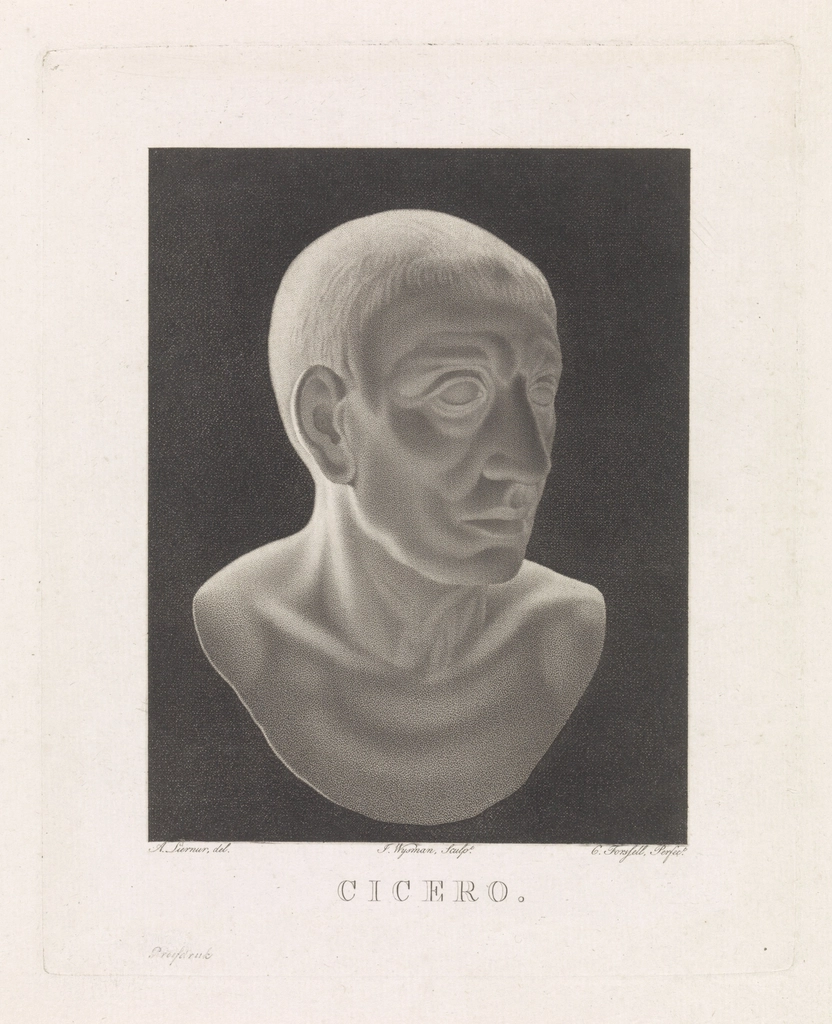
Borstbeeld van Cicero (1778 – by Rijksmuseum is licensed under CC-CC0 1.0
  • Origin: Latin
  • Meaning: unknown

Tully is the English form of the Roman family name, Tullius, which is derived from the praenomen, Tullus, of an unknown meaning. It is likely Etruscan and its meaning has been lost. Other suggestions include that it is from the Latin, tullius (spout of water; gush of blood) or the Latin term, tollere, meaning “to lift,” allegedly referring to the act of a Roman father lifting their newborn son and claiming him.

A notable bearer is Marcus Tullius Cicero.

It was also borne by several male and female saints.

Alternately, Tully has been used on females occasionally, mainly as a diminutive form of Petula.

Male forms

  • Tulli (Catalan)
  • Tullie (French, this is a unisex name in France, though it is rare)
  • Tullió (Hungarian)
  • Tullo (Italian)
  • Tulio (Italian, Spanish)
  • Tullio (Italian)
  • Tuliusz, Tulliusz (Polish)
  • Túlio (Portuguese)

Female forms

  • Túl·lia (Catalan)
  • Tullie (French)
  • Tulia (Hungarian, Italian, Polish, Spanish)
  • Tullia (Italian, Latin)
  • Tulla (Italian)
  • Túlia (Portuguese)

Sources