Colombe

Gender: Feminine
Origin: French
Meaning: “dove.”
Pronunciation

The name comes directly from the French word for dove and despite it being a modern word, it is an ancient French female name.

It was borne by a 3rd-century Christian martyr and saint who had been killed in Sens.

Traditionally, the name was always more common in Corsica, but has recently risen in popularity in other parts of France. As of 2009, she was the 495th most popular female name in France.

Sainte-Colombe is a term in French used to describe the Holy Spirit.

An obscure masculine form is Colomb.

Maureen

Gender: Feminine
Origin: Irish
(MOI-reen; MAW-reen)

The name is an anglicized form of the Gaelic, Máirín, which was originally used as a diminutive form of Mary.

The name first appeared in the U.S. top 1000 in 1907, coming in as the 898th most popular female name. By 1948, she was the 88th most popular female name in the United States, perhaps due to the fame of Irish actress, Maureen O’Hara (b.1920). As of 2010, Maureen was not in the U.S. top 1000.

As of 2009, Maureen was the 497th most popular female name in France and the 478th most popular in the Netherlands, (2010).

Lisandra

The name could be of one or two origins. It could be a Corsican form of Alexandra or it could be a Latinate form of the Greek female name, Lysandra, which is a feminine form of Lysandros Λυσανδρος , which is composed of the Greek elements, λυσις lysis (to release) and ανδρος andros (man).

Lysandra was borne by a daughter of Ptolomy I Soter.

Lysandra is also the name of a genus of butterfly.

As of 2011, Lisandra was the 2nd most popular female name in Estonia.


Lily, Lillian

Gender: Feminine
Origin: English

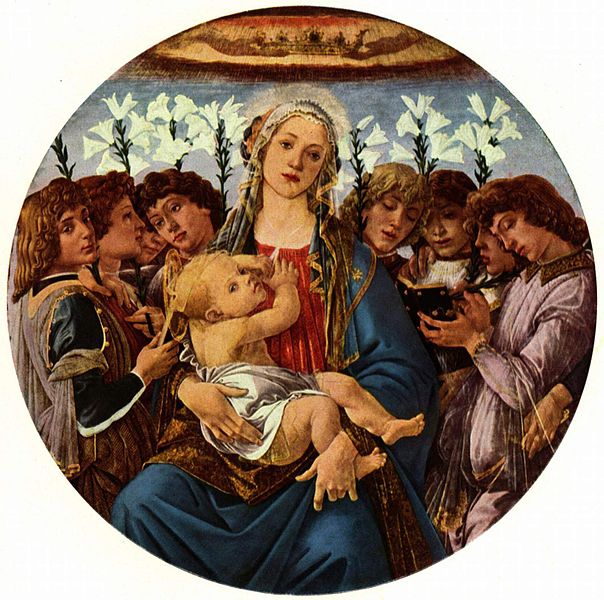
The name comes directly from the name of the flower, (in particular, in reference to lilium candidum, the classic white lily, also known as the madonna lily), and was a popular choice throughout the English-speaking world in the 18th and early part of the 20th centuries.

It has recently been revived. It is currently the 4th most popular female name in the United Kingdom (2009) and the 17th in the United States (2010). So far, this is the highest that Lily has ever ranked in U.S. naming history.

In other countries, her rankings are as follows:

  • # 6 (New Zealand, 2010)
  • # 7 (Australia, NSW, 2010)
  • # 8 (Scotland, 2010)
  • # 10 (Canada, B.C., 2010)
  • # 13 (Ireland, 2010)
  • # 15 (Northern Ireland, 2010)
  • # 45 (France, 2009)
  • # 51 (Belgium, 2008)
  • # 161 (Netherlands, 2010)
  • # 173 (Norway, 2010)

For several centuries, Lily was a symbol of purity and sometime of death, among Roman Catholics, the name was often a symbol of the Virgin Mary.

Other forms of the name include:

  • Lily (Dutch/English/French/German/Scandinavian)
  • Lilly/Lilli/Lillie (German)
  • Lili (Hungarian)
  • Lilja (Icelandic/Finnish)
  • Líle (Irish-Gaelic)
  • Lilia (Polish)
  • Lília (Portuguese)
  • Lilia/Liliya Лилия (Russian/Ukrainian)
  • Lilly (Scandinavian)

Vernacular forms of Lily, (that is names that are not derived from the Latin lilium but mean lily in their native tongue)

  • Kremena (Bulgarian: masculine form is Kremen)
  • Lis/Lys (French)
  • Shoshannah שׁוֹשַׁנָּה (Hebrew)
  • Crina (Romanian: masculine form is Crin)
  • Azucena (Spanish)

Another form of Lily is the Latin Liliana, which is derived from the Latin word, lilium, meaning, “lily.” This has spun off the English female name of Lillian, which has been in usage in the English-speaking world since the 16th-century. Careful on the spelling though, because if spelled with one L that makes it a French masculine name.

Lillian is also sometimes believed to have originally been a diminutive form of Elizabeth, in fact, the name Lily was commonly used as a pet form of Elizabeth.

Currently, Lillian is the 21st most popular female name in the United States, (2010) and is rising. She is somewhat of a vintage, she was the 10th most popular female name for 4 years in a row between 1898-1901. The lowest that Lillian has ranked in U.S. history so far was in 1978, coming in as the 486th most popular female name. Her rankings in other countries are as follows:

  • # 39 (Liliana, Hungary, 2010)
  • # 93 (Australia, NSW, 2010)
  • # 124 (Liliana, United States, 2010)

A 19th-century British short form of Lillian is “Billie.”

Other forms include:

  • Lilyana Лиляна (Bulgarian)
  • Liliana (Czech/English/Hungarian/Italian/Polish/Portuguese/Romanian/Spanish)
  • Lillian (English/Norwegian/Swedish)
  • Liliane (French)
  • Liljana Лилјана (Macedonian/Slovene)
  • Lilianna (Polish)
  • Lilias (Scottish)
  • Lilijana (Slovene)

Masculine French form is Lilian.

Theophilus

Gender: Masculine
Origin: Greek Θεοφιλος
Meaning: “love of God.”
Eng (thee-AHF-ə-ləs); Fre (TAY-o-FEEL); Grk (THAY-oh-FEE-lose)

The name is derived from a theophoric Greek name composed of the elements, theos θεος (god) and philos φιλος (love), hence: “love of God.” It is the Greek cognate to the Latin, Amadeus.

It was a common name in pre-Christian Greece and appears in the New Testament as the name of a person that the Gospel of Luke and the Acts of the Apostles address. It is argued that this was actually a title used to refer to Christian followers in general, others argue that it was indeed the name of one actual person. As to who exactly Theophilus was is shrouded in mystery. Many different Biblical scholars have their own ideas and common theories include that he was either a Roman official, or Theophilus ben Ananus, who was the High Priest at the Temple of Jerusalem during that time, or even the lawyer of St. Paul.

The name was borne by several Byzantine personages, including an Emperor, a famous astrologer and a scientist.

In the English-speaking world, the name was used in Medieval England, it was borne by Theophilus Presbyter (1072-1125), a Benedictine monk a wrote a medieval guide to several medias of art. Theophilus also experienced a vogue among the Puritans of the 17th-century.

As of 2009, its French form of Théophile was the 343rd most popular male name.

Other forms of the name include:

  • Teofil Теофил (Bulgarian/Hungarian/Polish/Russian)
  • Theophilus (Dutch/English/Latin)
  • Théophile (French)
  • Theofil (German)
  • Theophilos (Greek)
  • Teofilo (Italian)
  • Teófilo (Portuguese)
  • Teofilus (Scandinavian)
  • Teófilo (Spanish)
  • Feófil Фео́філ (Russian/Ukrainian)
Feminine forms are Theophila and Teofila.

Octave

Gender: Masculine
Origin: French
Eng (ahk-TAVE); Fre (OKE-TAHV)

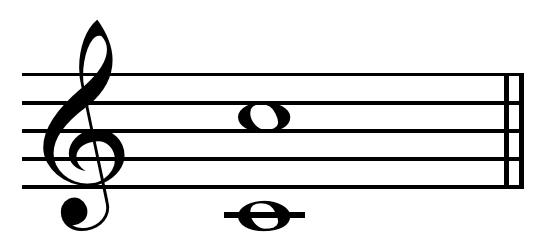
In music, an octave is the space between one musical tone and another with half or double its frequency (1), in poetry, it is used to describe the first 8 lines of a sonnet.

In Roman Catholic liturgy, an octave is the 8th-day after a major feast, such as Easter.

Octave is also happens to be the French form of Octavius which is from the Latin meaning, (the eighth). However, the term octave (in reference to all of the above) occurs in French as well.

As of 2009, Octave was the 344th most popular male name in France.

Aria is slowly but surely rising up the charts, and Octave may make the perfect masculine cognate to a musical theme.

Nadir

Gender: Masculine
Origin: Arabic نادر
Meaning: “opposite.”
(NAH-deer)

The name is derived from the Arabic meaning, “opposite.” It is a term found in astrology, astronomy and topography referring to the point opposite the zenith.

As of 2009, Nadir was the 377th most popular male name in France.

A feminine form is Nadira.

Cedric

Gender: Masculine
Origin: English
Eng (SEE-drik); Fre (say-DREEK)

The name first appeared in Sir Walter Scott’s 1819 novel, Ivanhoe.

It is generally believed that Scott derived the name from the Celtic Cerdic, which is related to the Welsh, caredig, meaning, “love.”

In history, Cerdic was borne by a 6th-century king of Wessex.

The name was also used by Frances Hodgson Burnett for his protaganist in his novel, Little Lord Fauntleroy (1886).

Recently, it is the name of a character in J.K. Rowlings’ Harry Potter Series.

Cédric was extremely popular in France during the 1970s-80s. Between 1976-77, it was the 10th most popular male name in France, then rose two place in 1979 to # 5. Between 1980 and 1986, he went up and down between 5th and 6th place and then dropped drastically in 1988 to # 20. He currently comes in as the 370th most popular male name in France, (2009). As of 2010, he was the 726th most popular male name in the United States.

In France, his sudden popularity may have been due to a popular French comic strip of the same name.

Other forms include:

  • Cédric (French)
  • Cedrik (Swedish)

In France, the designated name-day is January 7.

The name is borne by American Comedian, Cedric the Entertainer (b.1964)

Sabri

Gender: Masculine
Origin: Arabic صبريّ
Meaning: “patient.”
(SAH-bree)

The name comes directly from the Arabic meaning, “patient.”

As of 2009, Sabri was the 397th most popular male name in France.

Feminine forms are Sabriyya and Sabriye (Turkish).

Nabil

Gender: Masculine
Origin: Arabic نبيل
Meaning: “noble”
(NAH-BEEL)

The name comes from the Arabic meaning, “noble”, and is popular among Christians, Muslims and even Baha’i.

It was borne by a an early Christian saint and martyr, a king of Mauretania, who was martyred under his brother Gildon, who took the side of the Pagan Romans.

It was also borne by Nabíl-i-Akbar (1829-1892), one of the 19 Apostles of Bahá’u’lláh and the Great Nabíl (1831–1892), a renowned Bahai historian.

As of 2009, Nabil was the 399th most popular male name in France.

A Berber form is Navil and a feminine form is Nabila.