Ridha, Reza

Gender: Masculine
Origin: Arabic رضاء
Meaning: “contentment.”

The name is derived from the Arabic word and virtue, riḍā, a trait discussed in Sufism and the Qu’ran. Riḍā is used to describe the kind of pleasure or contentment one feels when they are following the commands and will of God and the approval that God bestows upon the follower therein.

The name is especially common among Shi’a Muslims, usually bestowed in reference to the concept or in honour of the 8th Shi’a Iman, ‘Alī al-Riḍā, also known as Ali Reza (765-818 CE).

As of 2009, its Maghrebin form of Reda was the 287th most popular male name in France.  Other forms of the name include:

  • Reda (Algerian/Berber/Moroccan/Tunisian)
  • Ridha (Arabic/Malaysian)
  • Riza (Azeri)
  • Reza رضا  (Persian)
  • Rıza (Turkish)

Lubin

Gender: Masculine
Origin: French
Meaning: “wolf-like.”
(Pronunciation)

The name is possibly derived from the Latin, Lupinus, meaning, “wolf-like.” The name was borne by a 6th-century French saint and bishop of Chartres.

It also appears in Jean-François Marmontel’s 1761 morality tale, Annette & Lubin. The story recounts the illicit affair between two orphaned cousins who subsequently bear children together and become the spectacle of their town in Belgium. The story is supposedly based on true events which occurred in Spa. The two characters have become folk heros in modern Spa and there is a local hill named for them.

Lubin is a term which also appears in French folk-lore as the name of a type of elf who appears on the road to Normandy on Christmas, screaming, “Robert the devil is dead!”. Lubin is also used to describe a type of werewolf which hangs out in graveyards and feeds off the bones of the dead. Despite these rather unsavory connotations, the name still appears in the French top 500. As of 2009, he was the 326th most popular male name.

It is also the name of a city in Poland, though this has a different etymology.


Virgil

Gender: Masculine
Origin: Latin
Meaning: unknown
Eng (VUR-jəl); Fre (vare-ZHEEL)

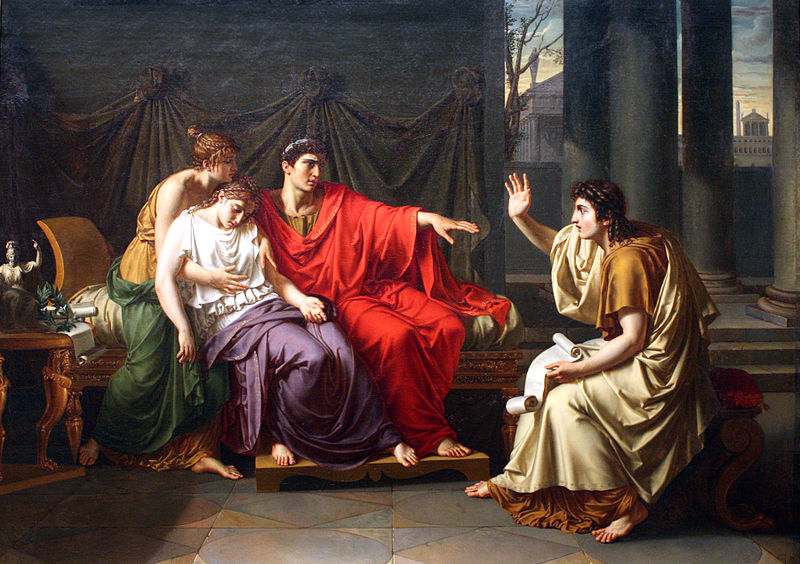
The name was borne by famous Latin poet, Publius Vergilius Maro (70–19 BCE), the author of the Aenead, credited for being one of Rome’s most epic poems.

Dante used Virgil as the guide in his Inferno and part of Purgatorio.

The origins of the name are unclear, Virgil itself is derived from the Latin, Virgilius/Vergilius, a Roman family name of uncertain meaning.

At one time, Virgil was one of the most popular male names in the United States. The highest he ranked was in 1907 coming in as the 93rd most popular male name. As of 2010, Virgil no longer appears in the U.S. top 1000

As of 2009, its French counterpart of Virgile was the 333rd most popular male name in France.

Other forms of the name include:

  • Virgiliu (Albanian/Romanian/Sicilian)
  • Virchilio (Aragonese)
  • Virxiliu (Asturian)
  • Virgili (Catalan/Lombard/Occitanian)
  • Virgilije Вергилиј (Croatian/Macedonian/Serbian/Slovene)
  • Virgilius (Dutch/Latin)
  • Vergil (English/German/Plattdeutsch/Ripoarisch/Scandinavian)
  • Virgil (English/Romanian)
  • Vergíliu (Extramaduran)
  • Virgile (French)
  • Virgjili (Frulian)
  • Feirgil/Veirgil (Gaelic)
  • Virxilio (Galician)
  • Virgill (Icelandic)
  • Virgilio (Italian/Spanish)
  • Vergilius (Latin)
  • Vergīlijs (Latvian)
  • Virgilijus (Lithuanian)
  • Virġilju (Maltese)
  • Bergílio (Mirandese)
  • Wergiliusz (Polish)
  • Virgílio (Portuguese)
  • Vergėlėjos (Samogaitian)
  • Vergílius (Slovak)
  • Fyrsil (Welsh)
The name was also borne by an 8th-century Irish saint and missionary, Virgil of Salzburg.

Jean-Baptiste

Gender: Masculine
Origin: French

One of the most common French male composition names, it was originally bestowed in honour of St. John the Baptiste.

As of 2009, Jean-Baptiste was the 335th most popular male name in France.

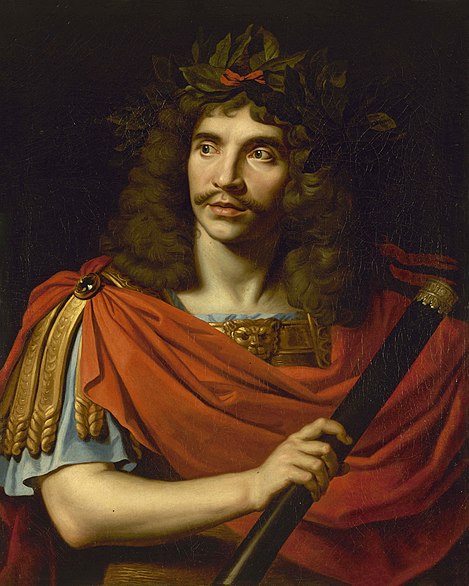
Notable bearers include: American French-born Explorer, Jean-Baptiste Charbonneau (1805-1866); this was also the given name of Molière, born Jean-Baptiste Poquelin (1622-1673).

Other forms of the name include:

  • Johann Baptist (German)
  • Giambattista (Italian)
  • Gianbattista (Italian)
  • Giovanbattista (Italian)

Carpel Tunnel

I am sorry if my posts have been slower the last few weeks, but I have been suffering from an on-again, off-again bout of carpel tunnel syndrome. Thankfully, the regular scheduled program should start again Monday.

Have a great weekend everyone!

Solal

Gender: Masculine
Origin: Hebrew
Meaning: “guide; barefoot.”

The name caused quite a stir when Jean Sarkozy and his wife Jessica, chose this name for their first child. French news reports claimed that the couple named their child after the eponymous hero of Swiss author, Albert Cohen’s 1930 book.

The name also honours the couples’ Sephardic roots as Solal seems to be an especially common name among Spanish Jews. There are a few theories as to the name’s origins. One is that it is derived from the Hebrew, יָחֵף (sovlel) meaning, “barefoot.” Other sources suggest it means “the one who guides,” though I couldn’t find the actual Hebrew link for the latter.

As of 2009, Solal was the 337th most popular male name in France.


Eulalia, Eulalie

Gender: Feminine
Origin: Greek Ευλαλια
Meaning: “to talk well.”
Eng (yoo-LAY-lee-uh; yoo-LAY-lee); Fre (eu-lah-LEE); Cat (oo-LOW-lee-ah); Sp (oo-LAH-lee-ah)

The name is composed of the Greek elements, eu ευ (good) and laleo λαλεω (talk).

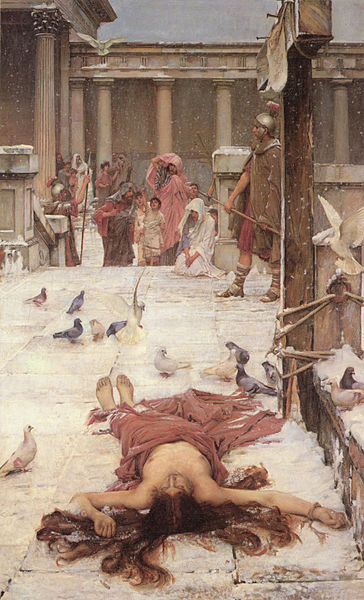
The name was borne by two different early Spanish saints, both of whom are believed to be one and the same person. St. Eulalia of Mérida was a 3rd-century teenage Roman girl who refused to give up her faith, she was subsequently tortured and crucified, legend has it that when she was cut down from her cross, a layer of snow fell to cover her nakedness. The story was the subject of the famous painting by John William Waterhouse, (above).

In the English-speaking world, especially in the United States, Eulalia and her other forms appeared in the U.S. top 1000 from the 19th-century till the 1930s. She never ranked high, the highest only being # 365 in 1893. Her French form of Eulalie also experienced some usage but fell out of the top 1000 by 1900. The highest Eulalie ever ranked in the United States was at # 687 in 1893. Eulalie’s introduction into the United States may have had something to do with Edgar Allan Poe’s 1845 poem, Eulalie.

Eulalie is one of Poe’s less Gothic works, it recounts how a widower once again finds happiness in a girl named Eulalie.

Two famous American bearers were Silent film actress, Eulalie Jensen (1884-1952), and  Eulalie Spence (1894-1981) an African-American play-write of West Indian extraction.

Further up in North America, the name was borne by French-Canadian Blessed and religious foundress, Eulalie Durocher, aka, Soeur Marie Rose Durocher, who is credited for finding the Order of the Holy Name of Jesus and Mary (1811-1849).

In French naming history, Eulalie appears in a famous folktale, Jean, the Soldier, and Eulalie, the Devil’s Daughter.

Notable French bearers are numerous, but one of the most famous has to be an early female journalist by the name of Eulalie de Senancour (1791-1896).

In the United States, Eula was probably the most common form. She consistently remained within  the U.S. top 1000 between 1880 and 1960. The highest she ever ranked was at # 122 in 1908.

As of 2009, its French form of Eulalie was the 472nd most popular female name in France.

Other forms of the name include:

  • Olaria (Aragonese)
  • Olarieta (Aragonese)
  • Olalia (Asturian)
  • Olaya (Asturian)
  • Santolaya (Asturian: literally means, Saint Eulalia, used in reference to St. Eulalia very much in the same way Santiago and Santana)
  • Eulàlia (Catalan)
  • Eulalia (Dutch/English/German/Italian/Latin/Polish/Spanish)
  • Eula (English)
  • Eulalie (English/French)
  • Lalia (English)
  • Aulaire (French: archaic)
  • Evlalia (Greek)
  • Eulália (Hungarian/Portuguese/Slovak)
  • Aulazia (Occitanian/Provençal)
  • Olalla (Spanish)
Eulalia is also the name of a type of grass.
A common French and English short form is Lalie.
Oumou

Gender: Feminine
Origin: East African
(OO-moo)

The name is derived from the Arabic, umm أُمّ (mother). The name is very specific to Mali, Senegal, Burkina Faso, the Ivory Coast and Guinea.

As of 2009, Oumou was the 484th most popular female name in France.

The name is borne by famous Mali singer,Oomou Sangeré