Manoah

  • Origin: Biblical Hebrew מָנ֫וֹחַ
  • Meaning: “rest.”
  • Gender: Male

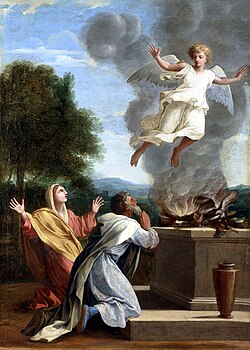
Manoah appears in Judges 13, described as a man from Zorah of the tribe of Dan. His wife is unnamed, but together they become the parents of Samson after an angelic visitation.

The name itself is derived from the Hebrew root נוּחַ (nuach) meaning “to rest, to settle, to repose, to be at ease.”

Between the 18th-century to early 20th-century, Manoah experienced some use in the U.S. and England. Common short forms were Manny, Menno and Noah.

In 2023, it appeared in the Netherlands charts for the most popular male names, though it did not rank in very high, coming in at #422.

International Variations

  • Manué (French)
  • Manoach (German)
  • Manoa (Spanish)

Sources

Voron

  • Origin: Russian Ворон
  • Variant: Vorona.
  • Meaning: “crow; raven.”
  • Gender: Male

It is a Russian male given name and noun meaning “raven.” It comes directly from the Old East Slavic воронъ (voronŭ), which in turn derives from Proto-Slavic voronъ — a term shared by many Slavic languages (e.g., Polish wrona, Czech vran, Bulgarian voron), all referring to the raven or crow.

Sources

Brīva

  • Origin: Latvian
  • Meaning: “free; freedom.”
  • Gender: Female
  • BREE-vah

The name is derived from the Latvian words, brīvs (free) and brīvība (freedom). It is ultimately derived from the Middle Low German vri, vrie (free).

It was first recorded in Riga in 1931, during a period of strong national consciousness and cultural renewal in independent Latvia.

According to Latvian population records, as of 2008, there were only three women known by this name.

Another form is Brive and its designated name-day is November 18th.

Sources

Mihirimah, Mehrmah

  • Origin: Persian
  • Meaning: “sun & moon; affection of the moon; kindness of the moon.”
  • Gender: Female

The name is composed of the Persian elements mehr / mihr / meher (مِهر) — a Persian word meaning “sun,” “affection,” “kindness,” or “love” (and often with connotations tied to the ancient Iranian / Zoroastrian deity Mithra) and māh (ماه), meaning “moon” or “month.”

The name entered wider use through Ottoman royal history, where Mihrimah Sultan (1522–1578) — the daughter of Sultan Suleiman the Magnificent and Hürrem Sultan — became one of the most powerful and educated women of her time.

A modern Persian form is Mehrmah.

An Urdu form is Meharmah and another Turkish form is Mihrümah.

Sources

Phyllodoce

  • Origin: Greek Φυλλοδόκη
  • Modern Greek: Fillodoki
  • Meaning: “receiver of foliage.”
  • Gender: Female
  • Eng pron: FYE-loh-DIS-ee; Grk (Fil-LOH-do-keh)

The name derives from the Ancient Greek elements φύλλον (phyllon), meaning “leaf, foliage,” and δέχομαι (dechomai), “to receive” or “to welcome.”

In Greek mythology, Phyllodoce was one of the Nereids, the fifty sea nymph daughters of Nereus and Doris.

The name Phyllodoce was later adopted in scientific Latin for a genus of mountain heath plants (family Ericaceae), commonly called mountain heathers. These small evergreen shrubs, with delicate purple or pink flowers, grow in alpine and arctic regions.

With its lyrical cadence and mythological roots, Phyllodoce reflects the 18th–19th-century European taste for classical revival names, particularly those drawn from nature and mythology.

Sources

Urdze

  • Origin: Latvian
  • Meaning: “brook, stream; to stir up, to move, to urge.”
  • Gender: Female

Urdze is a rare Latvian feminine given name derived from the noun urga, meaning “stream” or “brook,” and the verb urdzēt, meaning “to stir up, to move, or to urge.”

Urdze was added to the official Latvian name calendar in 1966 and was first recorded in Vidzeme (Valmiera district) in 1975. It remains exceptionally uncommon — as of 2008, records note only one bearer of the name in Latvia.

The designated name-day is November 17th.

Source

  • Pauls Balodis, Latviešu personvārdu etimoloģiskās semantikas teorētiskais modelis un tā realizācija (Rīga: Latvijas Universitāte, 2008), p. 312. Available via the University of Latvia Digital Repository

Niedamir, Niedomira

  • Origin: Polish
  • Meaning: “one who does not give peace.”
  • Pron: (NYEH-dah-MEER; NYEH-daw-MEER-ah)

An Old Polish male name which is composed of the elements, nie (no), dać (to give), and mir/mirz (peace). Its designated name-day is November 16th. Another form is Niedamierz (February 14).

Niedamir survives mainly as a historical curiosity, noted in medieval records and occasionally revived in literature and fantasy contexts, such as the Witcher universe.

The feminine form is Niedomira, which celebrates its name-day on February 14th.

Source

Milvydas, Milvydė

  • Origin: Lithuanian
  • Meaning: “beloved to see.”
  • M (MIL-vee-dahs); F (MIL-vee-dey)

Milvydas is an ancient Baltic male name constructed from the elements, mīlas or mielas, meaning, “dear; kind; beloved,” and vydėti, “to see, to perceive,” or vydas “vision; sight.” Another form is Milvidas.

Male diminutive forms are: Milas, Milius, Vidas, Vidis, and Vydas.

The feminine counterparts are Milvida, Milvyda and Milvydė.

The designated name-day for Milvydė is November 11th.

Female diminutive forms are: Mila, Milė, Milva, Vyda, and Vydė.

Source