The name is from the South African languages, Tswana & Sotho, meaning, “lion.” It was a popular name among the chiefs of the Rolong tribe in what is now Botswana.
It should also be noted that Tau is the 19th letter in the Greek alphabet.
Completely unrelated, but perhaps should be considered is that this is the name of an evil spirit in Guarani mythology
The name is composed of the same Hebrew word אל (‘el) meaning “God,” hence, some translate it to mean “my God is God.” The name is borne by several minor characters in the Old Testament.
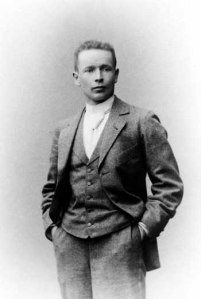
A notable bearer was Finnish Architect, Eliel Saarinen (1873-1950).
Though an obscure Jewish name, it experienced a peak in popularity in Finland and other Scandinavian countries at the end of the 19th-century.
Eliel recently entered the U.S. Top 1000 Most Popular Male Names in 2019, currently ranking in at #664.
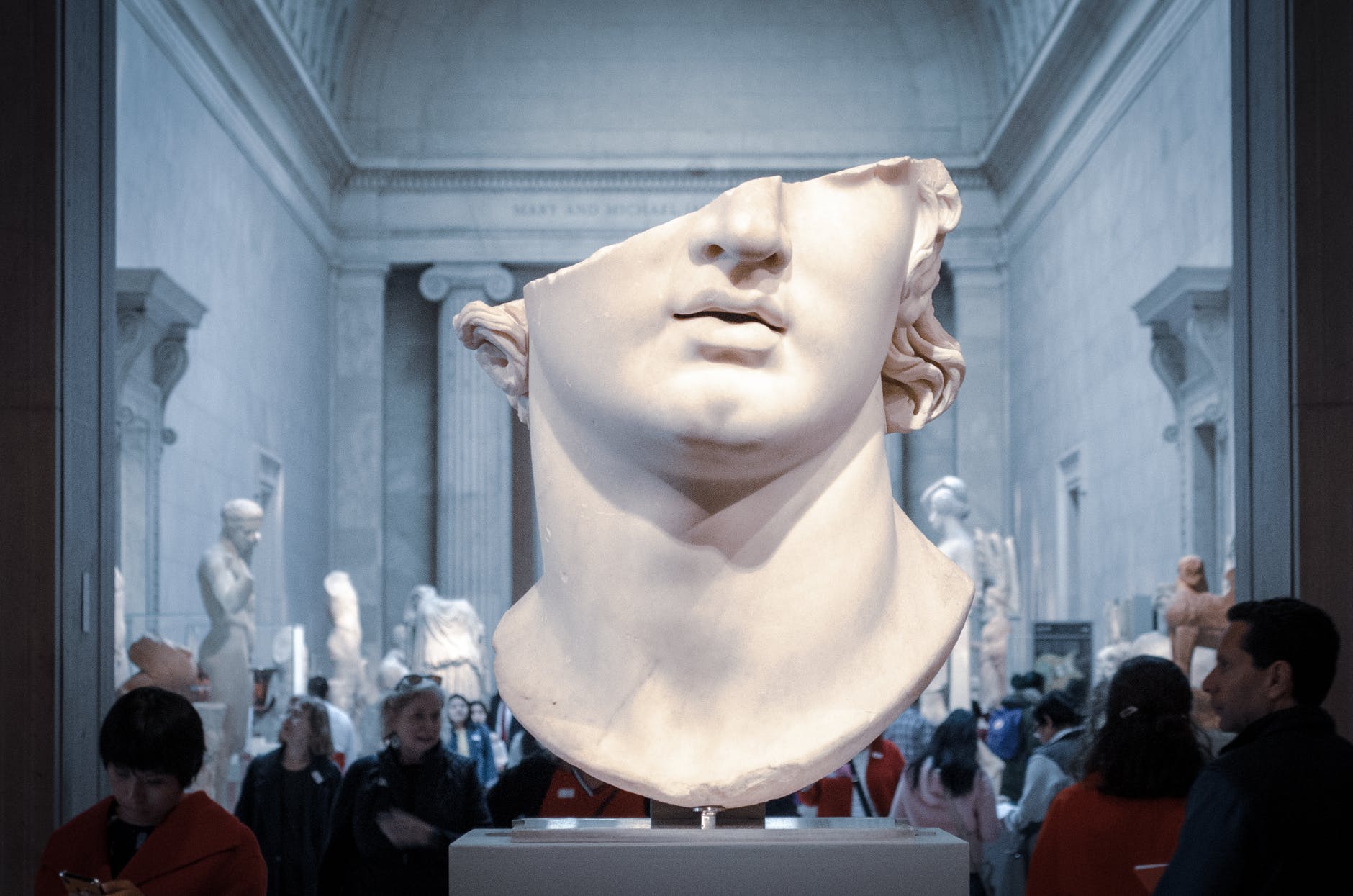
Photo by Jose Antonio Gallego Vu00e1zquez on Pexels.com
Origin: Greek Ἀτρεύς
Meaning: “to not tremble; fearless.”
Gender: masculine
Pronunciation: Eng (AY-tree-us); Grek (ah-TRAY-oos)
The name is composed of the Greek elements, ἀ-, “no” and τρέω, “tremble,” hence meaning, “fearless.”
The name is borne in Greek mythology by the son of Pelops & Hippodamia and the father of Agammennon & Menelaus. Atreus and his brother were expelled from their kingdom after killing their elder brother for the throne. Atreus took refuge in Mycenae where he sat-in as a temporary king while Eurystheus was fighting in a war, but ultimately, Atreus took over the the throne. His descendants thereafter are known as Atreides.
In Frank Herbert’s Dune Series, House of Atreides is the name of one of the great houses.
The name has recently entered the U.S. Top 1000 in 2019, currently ranking in as the 788th most popular name in the United States.
Pronunciation: ENG uh-MYE-es; AME-ee-us; FR (AH-mee-AHS); FR Can (AH-mee-AH)
The name is of uncertain origin or meaning, but first appeared in use in 16th-century England, usually spelled Amyas. It is speculated to be a modern form of the Anglo-Norman male name, Amis, which is a masculine form of Amice (friend). Another theory links it to an Anglo-Norman surname meaning “from Amiens.”
In literature, Amyas appears as the name of a minor character in Edmund Spenser’s The Faerie Queen (1590). It also appears in Mark Twain’s A Connecticut Yankee in King Arthur’s Court (1889), Charles Kingsley 1855 novel, Westward Ho! and in Agatha Christie’s Five Little Pigs (1942).
It was borne by Sir. Amyas Brampfylde (1560-1626), a British member of Parliament & English diplomat, Amias Paulet (1532-1588). In more recent times, it has been borne by British Air Marshal, Amyas Borton (1886-1969), New Zealand architecht, Amyas Connell (1901-1980) & is currently borne by Sir Amyas Morse (b. 1949), Comptroller and Auditor General of the National Audit Office.
Recently, Amias appeared in the U.S. Top 1000 Most Popular Male Names, coming in as the 819th most popular male name.
The name comes directly from the Lithuanian word migla, meaning “fog; mist.” This is also the word for the plant, “bluegrass.”
It has been in the Top Most Popular Female Names in Lithuania since 1999, and peaked at #10 in 2010. As of 2019, it ranks in as the 21st most popular female name in Lithuania.
A notable bearer is Lithuanian Track Cyclist, Miglė Marozaitė (b. 1996).
The designated nameday in Lithuania is May 11th.
Other forms include: Migla, Miglena, Migleta, Miglija, Miglutė,Migle & Miglita.
The name comes from the Tumbuka word for “laugh,” and was recently popularized by the 2017 novel by Angie Thomas, The Hate U Give.
Sekani recently entered the U.S. Top 1000 and currently ranks in as the 872nd most popular male name (2019).
It should also be noted that Sekani is the name of a First Nations tribe indigenous to the interior of British Columbia. In this case, Sekani is an anglicization of the word tse’khene meaning “people on the rocks.”
Rawdah روضة comes directly from the Arabic word for a “garden” or “meadow.” It is likely used by non-Arab Muslim parents in reference to Rawḍah ash-Sharifah (Arabic: روضة الشريفة, lit. ‘The Noble Garden’), which is a place located between the minbar and burial chamber of the Prophet Muhammed in Mecca.
The word itself is not used as a given-name in Arabic-speaking countries, but is used in non-Arabic Islamic countries, such as Southeast Asia and Turkey.
Its Turkish form of Ravza is currently the 78th most popular female name in Turkey. This form is also used among Bosnians & Albanians.
The name is derived from the Sanskrit word dhruva, meaning, “constant; immovable, fixed” and is also synonymous with the polar star.
Dhruva appears in the Hindu text, Vishnu Parana as the name of the son of Uttānapāda’s second and less favored wife. Dhruva wants to sit on his father’s lap like his older brother, but is thrown off as he is the son of a second wife. Dhruva is heartbroken and is consoled by his mother to contemplate his fate in life and advises him to work hard for what he wants. Dhruva goes into the woods and prays to Vishnu, who eventually transform him into the polar star.
Other forms include:
Druwa (Indonesian/Javanese)
Dhruv entered the U.S. Top 1000 Male Names in 2019 and ranks in at #997
The Germanic name, Richilde, is most often heard under the guise of the Mid-century sounding Richelle in the Anglophone world.
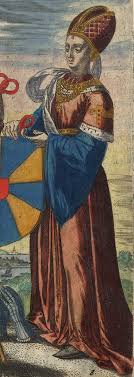
Richilde was borne by the 2nd wife of Charles the Bald (9th-century CE) who was inturn deemed consort and Empress of the Franks, and it was also borne by the 11th-century Richilde of Hainault, consort of Flanders.
The 13th-century Richeza of Poland is recorded as Richilde in some history texts, but it seems Richeza has a separate etymology.
Richilde is composed of the Old Germanic elements, ric (rich) & hiltja (battle). It was particularly common in Norman England; the earliest incarnation of it’s more modern sounding Richelle is recorded in 13th-century England as Richell.
In modern French, richelle is also the word for neapolitan wheat and is also a French surname which may likely be a matrynomic based on the aforementioned Richilde.
Richelle appeared in the U.S. Top 1000 between 1963 and 1991, most likely influenced by the popularity of the name Michelle, and peaked at #603 in 1972.
L’Insee, the French statistical office, has recorded 8 Richelles born in France since 1991, but these statistics only go so far as back as 1900. In any event, the Richelle form is recorded in several medieval French records.
The name is borne by American fantasy author, Richelle Mead (b.1976).