Tully is the English form of the Roman family name, Tullius, which is derived from the praenomen, Tullus, of an unknown meaning. It is likely Etruscan and its meaning has been lost. Other suggestions include that it is from the Latin, tullius (spout of water; gush of blood) or the Latin term, tollere, meaning “to lift,” allegedly referring to the act of a Roman father lifting their newborn son and claiming him.
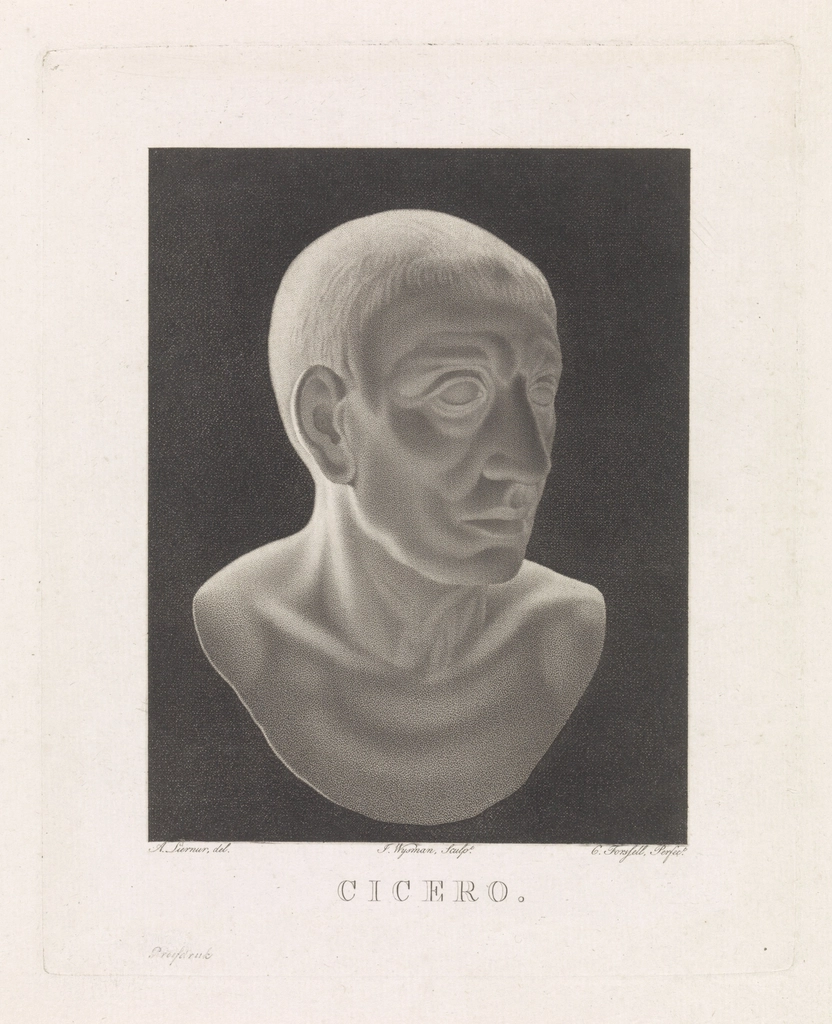
A notable bearer is Marcus Tullius Cicero.
It was also borne by several male and female saints.
Alternately, Tully has been used on females occasionally, mainly as a diminutive form of Petula.
Male forms
Tulli (Catalan)
Tullie (French, this is a unisex name in France, though it is rare)
The name is of uncertain origin or meaning, it has been suggested to be from an Old Roman gens name, Velius, possibly meaning “concealed.” It may have also been taken from the name of an Ancient Roman city in Salerno, which possibly has the same meaning as above, and has also been suggested to be a contracted form of Evelia or Evelina. It is mainly used in Lazio and Tuscany. It was further popularized in Italy by the 1923 novel by Bruno Cicognani, La Velia.
It is also the name of a genus of aquatic insect in the family veliidae.
It appeared in the U.S. Top 1000 Popular Female Names between 1929 and 1930, peaking at #836 in 1929.
There are also the masculine forms of Velio, Velino (Italian), Velius (Latin) and the Bulgarian, Velian Велиян.
From the name of the Ancient Egyptian God of the dead, the afterlife and resurrection, its exact etymology is unknown and debated amongst Egyptologists. The most popular theories is that it either derives from the wsr (the mighty one) or jrt (eye). It is often vocalized as Asar,Ausar, Ausir, Wesir, modern Coptic forms are Usir and Usire. Among Copts, it is sometimes Arabized as Uzair, which has a similar sound, but different etymology. However, it has been suggested by linguists that the two names are actually related.
In the United States, it recently entered the U.S. Top 1000 Male Names, it is currently the 976th most popular male names.
Both names are derive from the Latin galilaeus, meaning “from Galilee,” which ultimately derives from the Hebrew, גָּלִיל, meaning “district; circle; hill; knoll.” The name was used in honor of the place name in the New Testament.
Galileo was borne by Galileo Galilei (1564-1642), he in turn was named for an ancestor.
As of 2022, its feminine counterpart of Galilea appears in the U.S. Top 1000 Most Popular Female names, coming in at #731.
From the word of the same meaning, it ultimately derives from the Anglo-Saxon lufu (love). As a female given name, it has been in use since the Anglo-Saxon period, starting off as a pre-Christian name and later used as a vernacular form of the Greek female name, Agape, being used in honour of several saints who bore the name and was later used by the Puritans.
It forms the basis of several diathematic Anglo-Saxon female names, such as Loveday and Lovewell.
It appeared in the U.S. Top 1000 Most Popular Female Names between 1880-1893 and peaked at #793 in 1885. It reappeared in 2022, coming in as the 752nd most popular female name.
If you are wondering why it also appears in the U.S. Top 1000 Most Popular Male Names, this is actually a different name, Love (pronounced LOO-veh), is the Swedish form of Louis. Its appearance in the U.S. Top 1000 Most Popular Male Names also occurs when there was a huge peak in immigration from Sweden to the United States between 1880 and trickling away by 1909.
Anglo-Saxon forms are Lufu (LOO-voo) and Lufa (LOO-vah), a modern English alternative would be Lova which is also a Swedish feminine form of Love.
Historical Use: England, Medieval France (see French forms)
Modern Usage: English-speaking countries, Spanish-Speaking Countries, Brazil, Philippines
Contrary to popular belief, this is not from a surname, rather, the surname is from the first name. It is a Germanic dithematic name, derived from the Anglo-Saxon Deorwine, composed of the elements deór (wild animal, beast, deer) and wine (friend). Deór had a connotation of brave, compare the modern English words of deer and dire, both of which derive from the same element. It may also derive from the Frankish elements, daroth (spear, lance, javelin) and wini (friend). It was in use in both Medieval France and Anglo-Saxon England. The surname is actually from a patronymic, denoting someone who had a father named Darwin.
A notable bearer is Charles Darwin, English naturalist and writer, best known as the originator of the theory of biological evolution by natural selection (1809-1882). It is also the name of a city in Australia, which is the capital of the Northern Territory.
Darwin has been in and out of the U.S. Top 1000 Most Popular Male Names since 1881, it peaked at #297 in 1983. As of 2022, it was the 986th most popular male name.
Modern feminine forms include Darva and Darwina.
Darwin and Darvin has also experienced recent popular usage in Latin America.