Clement

Gender: Masculine
Origin: Latin
Meaning: “merciful, mild.”

The name is an anglicized form of the Late Latin, Clemens, which is derived from Clementius, meaning, “merciful; gentle.”

The name was extremely popular throughout Medieval Europe as it was borne by several saints and Popes, most notably St. Clement I, the third Pope and St. Clement of Alexandria, an Eastern Christian theologian who reconciled Christian and Platonic philosophies.

In England, the name fell out of usage after the Protestant Reformation, but was revived in the 19th-century.

Currently, Clement is the 20th most popular male name in Belgium, (2009) and the 40th most popular in France, (2009).

Its Latin form of Clemens is the 45th most popular male name in Austria, (2010).

Other forms of the name include:

  • Kelmen (Basque)
  • Klemañs (Breton)
  • Kliment Климентკლემენტ Κλήμης (Bulgarian/Czech/Georgian/Greek/Macedonian/Russian/Serbian/Slovak)
  • Climent (Catalan)
  • Klement (Croatian/Czech/German/Slovak)
  • Clement (English/Romanian)
  • Klemens (Finnish/German/Polish/Scandinavian)
  • Clément (French)
  • Clemens (German)
  • Klemenz (German)
  • Kelemen (Hungarian)
  • Kelen (Hungarian)
  • Clemente (Italian/Spanish)
  • Clementino (Italian)
  • Clemenzio (Italian)
  • Clementius (Late Latin)
  • Klements (Latvian)
  • Klemensas (Lithuanian)
  • Clementi (Sardinian)
  • Klemen (Slovene)
  • Klimant (Sorbian)

Feminine forms include:

  • Clementine (English)
  • Clemence (English)
  • Clemency (English)
  • Clémence (French)
  • Clémentine (French)
  • Klemencia (Hungarian)
  • Clementa (Italian)
  • Clementina (Italian/Portuguese/Spanish)
  • Clemenza (Italian)
  • Clemenzia (Italian)
  • Mentina (Italian)
  • Clementia (Latin)
  • Klimentina Климентина (Macedonian)
  • Klemencja (Polish)
  • Klementyna (Polish)
  • Klementina (Slovene)


Valentine

Origin: Latin
Meaning: “strong; vigorous; healthy.”
(Eng masc: val-en-TINE; Fre fem: vah-lown-TEEN)

The name is derived from the Roman family name, Valentinus, which is derived from the Latin, valens, meaning: “strong, vigourous; healthy.”

In the modern world, the name is mostly associated with the holiday, it was borne by several early Christian martyrs, one of whom whose feast day happened to coincide with the ancient Roman festival of Lupercalia.

The anglicized form of Valentine is masculine, while in French, Valentine is feminine. This is a natural evolution, as Valentine is actually the feminine form of the French masculine,Valentin.

Valentine does not rank in the U.S. top 1000, but Valentine and Valentin are fairly common names in French-speaking countries.

Currently, Valentin is the 36th most popular male name in Austria, (2010). His rankings in other countries are as follows:

  • # 12 (Hungary, Bálint, 2010)
  • # 40 (France, Valentin, 2009)
  • # 106 (the Netherlands, Valentijn, 2010)
  • # 792 (United States, Valentin, 2010)

Other forms of the masculine include:

  • Valentini (Albanian)
  • Balendin (Basque)
  • Vàledin Валедин (Bulgarian)
  • Valentin Валентин (Bulgarian/Croatian/Czech/Estonian/French/German/Scandinavian/Slovene/Romanian/Russian)
  • Valentí (Catalan)
  • Valentyn (Czech)
  • Valentijn (Dutch: same pronunciation as in English)
  • Valentine (English)
  • Valjo/Valju (Estonian: has a different etymology but has been traditionally used as a cognate for Valentinus)
  • Balantin (Extramadurian)
  • Bálint (Hungarian)
  • Valente (Italian)
  • Valentiniano (Italian)
  • Valentino (Italian)
  • Valento (Italian)
  • Valenzano (Italian)
  • Valenzo (Italian)
  • Valentinus (Latin)
  • Valentins (Latvian)
  • Valentinas (Lithuanian)
  • Walentyn (Polish)
  • Walenty (Polish)
  • Valentim (Portuguese)
  • Ualan (Scottish)
  • Valintinu (Sicilian)
  • Valentín (Slovak/Spanish)
  • Folant (Welsh)

Valentina is currently the 19th most popular female name in Austria, (2010), her rankings in other countries are as follows:

  • # 28 (Italy, 2009)
  • # 47 (Croatia, 2010)
  • # 61 (Slovenia, 2010)
  • # 71 (France, Valentine, 2009)
  • # 81 (Catelonia, 2009)
  • # 91 (Belgium, Valentine, 2009)
  • # 92 (Spain, 2010)
  • # 97 (Germany, 2011)
  • # 152 (United States, 2010)
  • # 444 (the Netherlands 2010)

Other forms include:

  • Valentina Валентина (Catalan/Croatian/German/Hungarian/Italian/Romanian/Russian/Slovene/Spanish)
  • Valentine (French)
  • Valentína (Icelandic/Slovak)
  • Valenta (Italian)
  • Valenzia (Italian)
  • Walentyna (Polish)
  • Valentyna Валентина (Ukrainian)

The designated name-day is of course, February 14.

Sources

  1. Calendarium Romanum (Libreria Editrice Vatican, 1969), p. 117
  2. http://www.behindthename.com/php/search.php?nmd=n&terms=Valentine
  3. http://www.askoxford.com/firstnames/valentine?view=uk
  4. http://saints.sqpn.com/saint-valentine-of-rome/
  5. http://ocafs.oca.org/FeastSaintsLife.asp?FSID=101926
  6. http://www.newadvent.org/cathen/15254a.htm

Constantine

Gender: Masculine
Origin: Latin

The name was originally a diminutive form of the Latin male name Constans, but due to the fame and notoriety of Constantine the Great, the name exclusively became an independent given name in the beginning of the Middle Ages.

Currently, its German form of Konstantin is the 39th most popular male name in Austria, (2010) and the 60th most popular in Germany, (2011).

Other forms of the name include:

  • Kosta (Albanian)
  • Kostandin (Albanian/Basque)
  • Kostandini (Albanian)
  • Kostandianos Կոստանդիանոս (Armenian)
  • Kustentin (Breton)
  • Konstantin Константин (Bulgarian/Croatian/Czech/Finnish/German/Hungarian/Macedonian/Plattdeutsch/Russian/Scandinavian/Serbian/Slovene)
  • Constantí (Catalan)
  • Constantijn (Dutch)
  • Stijn (Dutch)
  • Constantine (English)
  • Kuestantinos (Ethiopian)
  • Konsta (Finnish)
  • Constantin (French/German/Romanian)
  • Konstantine კონსტანტინე (Georgian)
  • Constantinos Κωνσταντινος (Greek)
  • Costas Κώστας (Greek)
  • Dinos Ντίνος (Greek)
  • Konstantínus (Icelandic)
  • Costantino (Italian)
  • Costanzo (Italian)
  • Konstantīns (Latvian)
  • Konstantinas (Lithuanian)
  • Konstantyn (Polish)
  • Konstanty (Polish)
  • Constantim (Portuguese)
  • Constantino (Portuguese/Spanish)
  • Costel (Romanian)
  • Costin (Romanian)
  • Dinu (Romanian)
  • Kuonstantėns (Saimogaitian)
  • Antine (Sardinian)
  • Costantìnu (Sardinian)
  • Custantino (Sicilian)
  • Konštantín (Slovakian)
  • Kostyantyn остянтин (Ukrainian)
  • Cystennin (Welsh)
Common Russian diminutives are Kosta and Kostya.

Feminine forms include:

  • Konstandina (Albanian/Greek/Slovene)
  • Konstantina Константина Κωνσταντίνα (Bulgarian/Croatian/Czech/Greek/Macedonian/Hungarian/Russian/Serbian/Slovene)
  • Dina (Greek)
  • Konstantyna (Polish)
  • Costantina (Italian)
  • Constantina (Latin/Portuguese/Romanian/Spanish)
  • Costela (Romanian)

Adrian

Gender: Masculine
Origin: Latin
Meaning: “from Hadria”

The name is derived from the Latin Hadrianus, a Roman cognomen meaning, “from Hadria.” Hadria was a small town in the North of Italy. It gave its name to the Adriatic Sea.
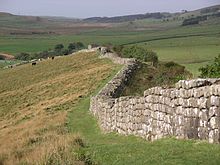
The name was borne by Publius Aelius Hadrianus (76-138 CE), known in the modern world as Emperor Hadrian, he is most famous for the wall he built across Great Britain, known as Hadrian’s Wall.
The name remained common throughout Europe, and is fairly popular across the Western World till this day. It was borne by several saints and popes, including the first and only English pope, Adrian IV, as well as the only Dutch pope, Adrian VI.
Currently, Adrian is the 6th most popular male name in Spain, (2010) and the 7th most popular in Norway, (2010). His rankings in other countries are as follows:
  • # 29 (Catalonia, 2009)
  • # 33 (Poland, 2010)
  • # 43 (Germany, 2011)
  • # 48 (Austria, 2010)
  • # 49 (Croatia, 2010)
  • # 51 (France, Adrien, 2010)
  • # 56 (United States, 2010)
  • # 60 (Sweden, 2010)
  • # 63 (Hungary, 2010)
  • # 81 (Belgium, Adrien, 2009)
  • # 455 (France, Adrian, 2009)

Other forms of the name include:

  • Ad (Afrikaans/Limbergish)
  • Adriaan (Afrikaans/Dutch)
  • Adrianus (Afrikaans/Latin)
  • Arrie (Afrikaans)
  • At (Afrikaans)
  • Daan (Afrikaans)
  • Jaans (Afrikaans)
  • Adrian Адриан (Albanian/Bulgarian/Croatian/Dutch/English/Finnish/Polish/Romanian/Russian/Scandinavian/Ukrainian)
  • Ardian (Albanian)
  • Adrianu (Asturian/Corsican/Sicilian)
  • Adiran (Basque)
  • Adrijan (Bosnian/Croatian/Serbian/Slovene)
  • Hadrijan (Bosnian)
  • Adrià (Catalan)
  • Jadran(ko) (Croatian)
  • Adrián (Czech/Hungarian/Slovak/Spanish)
  • Arie (Dutch)
  • Arjan (Dutch)
  • Hadrian(us) (Dutch/German/Latin)
  • Adrien (French)
  • Hadrien (French)
  • Aidrean (Gaelic)
  • Adrán (Galician)
  • Adrao (Galician)
  • Hadrán (Galician)
  • Hadrao (Galician)
  • Hádrian (Galician)
  • Adrianos Αδριανός (Greek)
  • Adorján (Hungarian)
  • Adrían (Icelandic)
  • Adriano (Italian/Portuguese)
  • Adrio (Italian)
  • Adriāns (Latvian)
  • Adrianas (Lithuanian)
  • Adrijonas (Lithuanian)
  • Adrião (Portuguese)
  • Adriànu (Sardinian)

Feminine forms include:

  • Adriana  (Albanian/Bulgarian/Catalan/Czech/Galician/German/Greek/Italian/Latin/Lithuanian/Polish/Romanian/Russian/Slovak/Spanish)
  • Adrijana (Bosnian/Croatian/Serbian)
  • Hadrijana (Bosnian/Croatian/Serbian)
  • Jadranka (Croatian)
  • Adriána (Czech/Hungarian/Slovak)
  • Ariane (Dutch)
  • Hadriana (Galician/Latin)
  • Adria (German/Italian)
  • Adriane (German)
  • Adrienne (French)
  • Adrienn (Hungarian)
  • Adrianna (Polish)
  • Drina (Spanish)

Polish feminine diminutives are Ada and Adi.

Cillian, Killian

Gender: Masculine
Origin: Gaelic
Meaning: debated
(KILL-yen); (KIL-lee-en)

The name is either derived from the Gaelic, keallach, meaning, “strife,” or the word, ceall meaning, “church; monastery.”

Killian is usually the anglicized version and its one of the few Irish names used outside the English speaking world. It has been in usage in Germany, Poland and France, no doubt, due to the associations with the saint.

It was borne by Saint Killian, the author of the Life of St. Bridget, he was also a missionary to Artois and Franconia and is considered the patron saint of Franconia.

In modern day Bavaria, the name is still quite popular, often rendered as Kilian.

The name is also borne by actor Cillian Murphy.

Kelly is occasionally used as a nickname.

The feast day of St. Killian is July 8.

Currently, Cillian is the 21st most popular male name in Ireland, (2010). His rankings in other countries are as follows:

  • # 43 (Austria, Kilian, 2010)
  • # 62 (Northern Ireland, Cillian, 2010)
  • # 62 (Ireland, Killian, 2010)
  • # 88 (Germany, Kilian, 2011)
  • # 110 (France, Killian, 2009)
  • # 173 (France, Kilian, 2009)
  • # 763 (United States, Killian, 2010)

Other forms include:

  • Quilià (Catalan)
  • Killianus (Dutch/Latin)
  • Killian (English)
  • Kelian (French)
  • Kilien (French)
  • Kilian (German/French/Polish/Romanian)
  • Cillín (Irish-Gaelic)
  • Chiliano (Italian)

Obscure feminine forms include:

  • Kiliane (French)
  • Kiliana (Polish)

Melina

Gender: Feminine
Origin: Greek/Italian/Bosnian

The name is of various origins depending on the bearer of the name. In Greek, it is most likely derived from melos meaning “honey.” In Italian, it is an abstraction of Carmelina, which is an elaborate form of Carmel. In former Yugoslavia, it is associated with the name of a city, located in what is now Bosnia-Herzegovina.

The name was borne by famous Greek actress Melina Mercouri (1920-1994) and Greek-American actress, Melina Kanakaredes (b.1967).

It is currently the 30th most popular female name in Argentina, (2009), the 59th most popular in France, (2009), the 60th most popular in Bosnia & Herzegovina (2010) and the 502nd most popular in the United States, (2010).

Other forms of the name include the French Mélina and Méline.

Malena

Gender: Feminine
Origin: Croatian/Bosnian/Czech/Italian/Serbian/Spanish/Swedish
(mah-LAY-nah)

The name is an abstract form of Maria Magdalena, Mahulena and Magdalena.

As of 2009, Malena was the 19th most popular female name in Argentina. Its popularity in Argentina may be due to a famous tango song, Malena, by Homero Manzi and Lucio Demarre.

In the former Yugoslavia, it is the name of a title song by Videosex and Idoli.

Recently the name was brought to the public attention by the 2000 academy award winning Italian film starring Monica Belucci.

The name is borne by Swedish pop star, Malena Ernman (b.1970).

Another form is the Danish and Norwegian, Malene.

Morena

Gender: Feminine
Origin: Maltese/Romansch/Spanish
Meaning: “brown; brunette.”
(moh-RAY-nah)

The name comes from a Latin element meaning “dark skinned; olive skinned; brownish” and in modern Spanish it is the word for brunette.

In Italian, morena is used to describe a particular form of sediment, composed of rock debris, carried in a glacier in its flow down stream. This is referred to in English as moraine. Its usage in Switzerland and Northern Italy may be in reference to the above, used as a sort of nature name.

The name is very popular among Romansch-speakers in Switzerland and is currently the 18th most popular female name in Argentina, (2009).

It is borne by Maltese pop singer, Morena (b.1984).

Alternately, the name could be from an Old Slavic source and is used as another name for the goddess Morana, (or Marzanna), in Slavic mythology. It is believe her name is linked with the Old Slavic word for frost.

A masculine form is Moreno, used in Italian, Portuguese, Maltese, Romansch and Spanish.

Rocío

Gender: Feminine
Origin: Spanish
Meaning: “dew”
Sp (roh-THEE-o); Lat Am Sp (roh-SEE-oh)

The name comes directly from the Spanish word for dew and was originally used in reference to an epithet of the Virgin Mary, María del Rocío (Mary of the Dew).

La Virgen El Rocío is a famous shrine found in Almonte Spain, where each year, a famous procession is held for a birch carved statue of the Virgin Mary known as María del Rocío. The procession attracts at least one million people a year.

The name is currently the 16th most popular female name in Argentina, (2009).

Its rankings in other countries are as follows:

  • # 29 (Spain, 2010)
  • # 34 (Chile, 2010)
  • # 72 (Catalonia, 2010)