Angelina

Gender: Feminine
Origin: Greek/Italian
Eng (AN-je-LEE-nah); It (ahn-jay-LEE-nah)

The name is often listed as an Italian diminutive form of Angela, but seems to have a much longer history as an independent given name stretching all the way back to the Byzantine Empire.

The name seems to have been used as a feminine form of Angelos for the female offspring of the Angelos family. The Angelos family was the ruling dynasty of the Byzantine Empire during the 12th-century, it is believed that their name was either derived from the traditional Angelos or may have been from a toponym (Agel), a district near Amida.

As a result, the name became fairly common among South Eastern European royalty of the Middle Ages, one of whom, St. Angelina of Serbia (15th-century, CE), is revered as a saint in the Serbian Orthodox Church.

Theodora Angelina, Duchess of Austria (d.1246), the wife of Leopold VI of Austria, was from the Angelos family. As a result, the name has had some usage in German-speaking countries, but really exploded in popularity during the last decade, perhaps more to due to the fame of actress, Angelina Jolie (b.1975).

Angelina also seems to have been a common name in 18th and 19th-century America. It was borne by Angelina Eberly (1798-1860) a famous innkeeper during the Texas Archives War. In addition, it was borne by early suffragette and abolitionist activist, Angelina Grimké (1805-1879) as well as Angelina Weld Grimké, (1880-1958), a poet and writer.

The name is currently experiencing a sharp rise in popularity. It is the 59th most popular female name in Austria, (2010) and her rankings in other countries are as follows:

  • # 84 (Germany, 2011)
  • # 86 (Australia, 2010)
  • # 93 (United States, 2010)
  • # 107 (France, 2009)
  • # 224 (Netherlands, 2010)

Other forms of the name include:

  • Angjelina (Albanian)
  • Angelina Ангелина Անգելինա (Armenian/Bulgarian/Croatian/Dutch/English/German/Greek/Hungarian/Italian/Macedonian/Polish/Russian/Serbian/Slovene/Spanish)
  • Angéline (French)
  • Andżelina (Polish)


Hira

Gender: Feminine
Origin: Arabic
(HEE-rah)

The name is of uncertain meaning but is taken from the name of a cave in Mecca where it is believed the Prophet Mohammed first received his visions and revelations from God through the angel Gabriel.

The name is often used as a feminine given name, bestowed in reference to the event that took place.

Currently, Hira is the 483rd most popular female name in Germany, (2011).

Rania

Gender: Feminine
Origin: Arabic/Greek
Meaning: “to gaze at.”

The name could either be from the Arabic, rana رنا, meaning, “to gaze at”, or it could be a Greek contraction of Ourania, the modern Greek form of Urania (sky).

It is currently borne by Queen Rania of Jordan (b.1970)

Rania ranked in as the 489th most popular female name in Germany, (2011). The name is sometimes transliterated as Ranya or Raniya. A Bosnian form is Ranja.


Annalena

Gender: Feminine
Origin: German/Italian/Swedish

The name could be a form of Magdalena or it could be a composition of Anna and Lena. Currently, Anna-Lena is the 50th most popular female name in Austria, (2010), while Annalena is the 130th most popular female name in Germany, (2011).

The name is also used in Italy and Sweden. It can either be spelled Annalena or Anna-Lena.

Letitia

Gender: Feminine
Origin: Latin
Meaning: “happiness; joy.”
Eng (luh-TISH-ah)

The name is an English form of the Latin female name, Laetitia, which is derived from laeta meaning, “joy; happiness.”

The name was popularized by an early Christian Spanish saint. In Medieval England, the name was used in the form of Lettice, (sounds like lettuce). After the Reformation, it went out of usage but was revived in the 18th-century in the more elaborate incarnation of Letitia. It remained a very popular name in England and the United States between the 18th-century and the 19th-century, leading to the diminutive offshoot of Lettie, which also appears as an an independent given name in records of the same period.

In Rome, it was the name of a minor goddess of gaiety. In modern Italian, the word survives in the form of letizia (joy) and is also used as a given name. Letizia was also the name of Napoleon Bonaparte’s mother.

Currently, its Portuguese form of Letícia is the 20th most popular female name in Brazil, (2011). Her rankings in other countries are as follows:

  • #320 (France, Laëtitia, 2009)
The name is currently borne by Letizia Ortiz Rocasolano (b.1972), the wife of Crown Prince Felipe of Spain.

Other forms of the name include:

  • Levenez (Breton)
  • Letícia (Catalan/Hungarian/Portuguese)
  • Letizia (Corsican/Italian)
  • Lettice (English)
  • Letitia (English)
  • Laëtitia (French)
  • Laetitia (German)
  • Letiţia (Moldovan/Romanian)
  • Letycja (Polish)
  • Leticia (Spanish)
  • Leta (Swiss-German)


Dahlia, Dalia

Gender: Feminine
(DAHL-yah)

A name with various different meanings and references depending on how you choose to spell it. It is an edgier floral appellation that could overcome a Lily or Daisy any day, as well as a name that can fit into any culture or society. Along with its easy pronunciation and feminine, vivacious sound, the name is pleasing to just about any language on the planet.

If you prefer the Dalia route, then the name can either be Lithuanian, Hebrew or Arabic. If spelled like the flower, the meaning stems from the surname of the botanist who first classified the species, Anders Dahl; Dahl being a common Swedish surname meaning “valley. ”

Dalia by Emily Blivet

Dalia by Emily Blivet

The name could be derived from the Lithuanian word for “fate; luck; lot.” It was the name from the Baltic goddess of weaving, fate and childbirth and she is believed to have been interchangeable with the goddess Laima. The name is still relatively popular in Lithuania, and is currently borne by Lithuania’s President, Dalia Grybauskaitė (b.1956).

The name is also very common in the Middle East. In Israel, it is a more modern Hebrew word name meaning “branch.” In Arabic, it means “grapevine.”

The name is occasionally used in Mexico, where the dahlia is considered the national flower. In fact, the ancient Aztecs used the flower for ceremonial purposes and fashioned its stems into pipes.

Currently, Dalia is the 476th most popular female name in Germany, (2011), and the 969th most popular in the United States, (2010). Its floral counterpart of Dahlia came in as the 650th most popular female name in the United States, (2010).

A possible nickname option is the sweet, yet vintagy Dolly

Florian

Gender: Masculine
Origin: Latin
Meaning: “flower.”

The name is derived from the Latin Florianus, which is derived from the Roman gens name Florus, meaning “flower.”

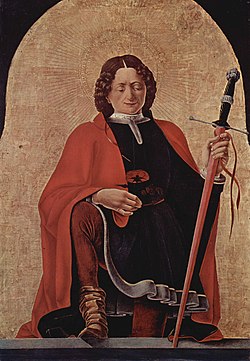
The name is borne by an early Christian saint and martyr who is considered the patron saint of Upper Austria, Poland and firefighters. In German slang, fighfighters are sometimes generically referred to as Florian, and there is a German folk saying called the Florian Principle which refers to a prayer to the saint, which goes:

O holy Saint Florian, spare my house, kindle others

This saying is the equivalent of the English saying, “not in my backyard.”

Florian has always been a popular name in German-speaking countries. It is currently the 10th most popular male name in Austria, (2010). His rankings in other countries are as follows:

  • # 35 (Germany, 2011)
  • # 79 (France, 2009)
  • # 84 (Belgium, 2009)
  • # 100 (Hungary, 2010)
  • # 155 (the Netherlands, 2010)

Other forms of the name include:

  • Florian Флориан (Albanian/Bulgarian/Dutch/English/French/German/Hungarian/Polish/Romanian/Russian/Spanish/Ukrainian)
  • Florià (Catalan)
  • Florijan (Croatian/Slovene)
  • Florián (Czech/Slovak)
  • Floriaan (Dutch)
  • Florianus (Dutch/Latin)
  • Flórián (Hungarian)
  • Flóris (Hungarian)
  • Fóris (Hungarian)
  • Fiorino (Italian)
  • Floreano (Italian)
  • Floriano (Italian/Portuguese)
  • Florians (Latvian)
  • Florijonas (Lithuanian)
  • Tworzyjan (Polish: sometimes used as a vernacular form)
  • Florin (Romanian)
  • Flurin (Romansch)
  • Florianu (Sicilian)
  • Florjan (Slovene)

Feminine forms include:

  • Floriana (Albanian/Italian/Romanian)
  • Florijana (Croatian/Slovene)
  • Floriane (French/German)
  • Fiorina (Italian)
  • Floreana (Italian)
  • Florianna (Polish)
  • Floryjana (Polish: archaic form)
  • Florina (Romanian)
  • Flurina (Romansch)
  • Florika (Slovene)
  • Florjana (Slovene)
Polish diminutives are Floszka and Tworka.


Simeon, Simon

Gender: Masculine
Origin: Biblical, Hebrew
Meaning: “he has heard.”
Eng (SIE-mun)

Simeon first appears in the Old Testament as a patriach of the Simeonite tribe and one of the 12 sons of Jacob.

The name origins are debated. The Torah claims that the name is in reference to Leah’s cry of anguish to God over her husband’s deference to her. Being a derivative of the Hebrew shama’on meaning “he has heard my suffering.” In this case, the name would share the same etymology as the name Ishmael (God has heard).

In some classical Rabbinical texts the name is sometimes translated to mean “he who listens to the words of God.” It has even been suggested that it is derived from the Hebrew sham’in meaning “there is sin” which is in reference to Zimri, an ancestor of Simeon’s, who committed the sin of having a relationship with a Midianite woman.

The name was borne by several other characters in the Old and New Testament, in the forms of Simeon and Simon. Simon later became associated with St. Peter. During the early Christian era, the Greek world took the name to mean “snub nosed” due to its similarity in sound to the Greek word σιμοσ (simos).

Simon has always been prevalent in the Western World, it is currently very trendy in continental Europe. The rankings of popularity in various countries are as follows:

  • # 3 (Poland, Szymon, 2010)
  • # 7 (Austria, 2010)
  • # 10 (Belgium, 2009)
  • # 12 (Italy, Simone, 2008)
  • # 26 (Germany, 2011)
  • # 32 (Denmark, 2010)
  • # 37 (Sweden, 2010)
  • # 49 (France, 2009)
  • # 56 (the Netherlands, Siem, 2010)
  • # 60 (Croatian, Šimun, 2010)
  • # 60 (Norway, Simen, 2010)
  • # 64 (Norway, 2010)
  • # 71 (Croatia, Šime, 2010)
  • # 75 (the Netherlands, 2010)
  • # 91 (Hungary, 2010)

Other forms of the name include (divided alphabetically by origin)

  • Simeon Սիմէօն (Albanian/Armenian/Bulgarian)
  • Simon Симон Սիմոն (Albanian/Armenian/English/Finnish/German/Hungarian/Macedonian/Malayalan/Norwegian/Occitanian/Slovenian/Swedish/ Romanian)
  • Samān (Arabic)
  • Shamo (Assyrian)
  • Shamun ܫܡܥܘܢ (Assyrian)
  • Şımon (Azeri)
  • Ximun (Basque)
  • Shyman Шыман (Belarusian)
  • Symon Сымон (Belarusian)
  • Simó (Catalan)
  • Simone (Corsican/Italian)
  • Šime (Croatian)
  • Šimo (Croatian)
  • Šimun (Croatian)
  • Šimon (Czech/Prekmurian/Slovak)
  • Simion (Danish/Romanian)
  • Simoen (Danish)
  • Siemen (Dutch/Frisian)
  • Siem (Dutch)
  • Siimon (Estonian/Finnish)
  • Smeon ስምዖን, (Ethiopian)
  • Símeon /Símun (Faroese)
  • Sema (Finnish)
  • Semen (Finnish/Gascon)
  • Semjon (Finnish)
  • Semoi (Finnish)
  • Siim (Finnish)
  • Siimoni (Finnish)
  • Simeoni (Finnish)
  • Simo (Finnish/Serbian)
  • Symeon Συμεών (Greek)
  • Symeonos Συμεώνος (Greek)
  • Siimuut (Greenlandic)
  • Shimon שמעון (Hebrew)
  • Símon (Icelandic)
  • Síomón (Irish)
  • Sshimeoni (Kosovar)
  • Sīmanis (Latvian) 
  • Sīmans (Latvian)
  • Simons (Latvian)
  • Saimonas (Lithuanian)
  • Saimontas (Lithuanian)
  • Simanas (Lithuanian)
  • Simas (Lithuanian)
  • Simeonas (Lithuanian)
  • Simonas(Lithuanian)
  • Sime Симе (Macedonian)
  • Shimon (Malayalam)
  • Simen/Simian (Norwegian)
  • Simå (Norwegian dialectical form: Norrland & Østerdalen)
  • Sømjo (Norwegian dialectical form: Rogaland)
  • Simonu/Symeonu (Old Church Slavonic)
  • Symeon (Polish)
  • Szymon (Polish: Szymek and Szymuś are diminutives)
  • Simão (Portuguese)
  • Simeão (Portuguese)
  • Simun (Quecha)
  • Schimun (Romansch)
  • Semyon Семён (Russian)
  • Sim (Scottish)
  • Šimej (Slovene)
  • Simón (Spanish)
  • Jimeno (Spanish)
  • Ximeno (Spanish)
  • Simoni (Swahili)
  • Shemod (Syrian)
  • Shimeon (Syrian)
  • Semen/Symon Симон (Ukrainian)
  • Mişon (Turkish)
  • Seimon (Welsh)
  • Simwnt (Welsh)
  • Shimmel (Yiddish)

Feminine forms include:

  • Simona (Czech/Italian/Portuguese/Romanian/Slovak/Slovenian)
  • Simonia/Simonie (Danish)
  • Simoona (Finnish)
  • Simone (French)
  • Simonette (French)
  • Szimóna (Hungarian)
  • Szimonetta (Hungarian)
  • Símonía (Icelandic)
  • Simonetta (Italian)
  • Sima (Lithuanian)
  • Simonė (Lithuanian)
  • Szymona (Polish)
  • Simoneta (Portuguese)
  • Ximena (Portuguese/Spanish)
  • Simoneta/Šimona (Slovak)
  • Simeona (Slovene)
  • Jimena (Spanish)

The designated name-day is October 28, and October 30 in Slovakia.

Tobias

Gender: Masculine
Origin: Hebrew
Meaning: “Yahweh is good.”
Eng (toh-BYE-us)

The name is a Greek form of the Hebrew male name, Toviyyah טוֹבִיָּה, which appears in the Old Testament as the name of an Ammonite. It is borne by several other minor characters in the Old Testament. In earlier versions of the New Testament, it is the name of Tobit in the Book of Tobit.

The name gained popularity in England after the Reformation and is often shortened to Toby. It is currently the 2nd most popular male name in Austria and his rankings in other countries are as follows:

  • # 11 (Norway, 2010)
  • # 20 (Denmark, 2010)
  • # 95 (Netherlands, 2010)
  • # 519 (United States, 2010)

Other forms of the name include:

  • Tobias (Dutch/English/German/Scandinavian)
  • Tobiáš (Czech)
  • Topias (Finnish)
  • Topi (Finnish)
  • Tobie (French)
  • Tuvya טוּבִיָה (Hebrew)
  • Tóbiás (Hungarian)
  • Tobia (Italian)
  • Tobasz (Polish)
  • Tobiasz (Polish)
  • Tobijasz (Polish)
  • Tovija Товия (Russian)
  • Tovij Товий (Russian) 
  • Tevye (Yiddish)

Christos

Gender: Masculine
Origin: Greek Χριστός Χρήστος
Meaning: “anointed.”
(HREES-tose)

The name actually has pre-Christians origins, but in post-Byzantine Greece has often been associated with Χρίστος (Chrístos), literally meaning “the anointed”, derived from a theological term referring to Jesus as the Messiah. This is where the word Christ comes from. Other sources have suggested that the name actually comes from the Greek, Χρήστος (Chrestos) meaning, “useful.”

Both spellings are used in modern day Greece and are seen as variations of each other. The former is derived from the Greek verb χριω (chrio) “to anoint.”

Christós is used as a designation for Jesus Christ in modern Greek and is actually considered a completely different name from Chrístos, even though they share the same etymology. They are even pronounced differently. The former being emphasized on the last syllable and the latter emphasized on the penultimate syllable.

Currently, Christos is the 494th most popular male name in Germany, (2011).