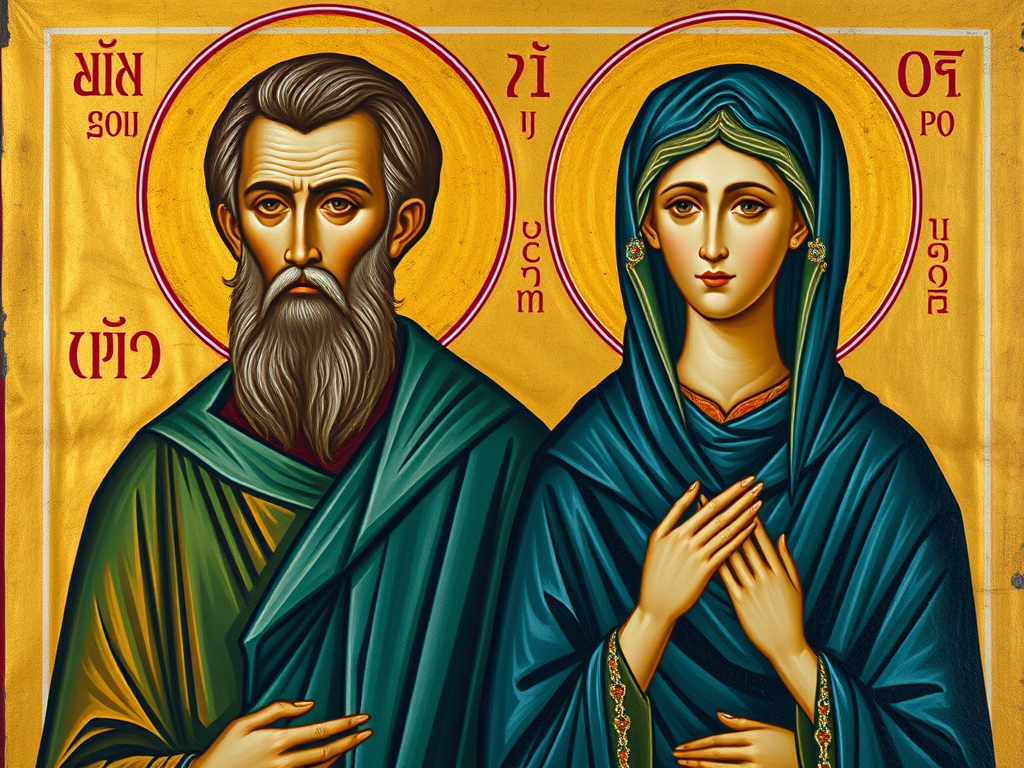
Ziri, Taziri

  • Origin: Berber
  • Transcription: ⵣⵉⵔⵉ, زيري
  • Meaning: “moonlight.”

Ziri is an ancient masculine Berber name derived from the Tamazigt tziri, taziri, meaning, “moonlight.” Taziri or Thiziri (ⵜⵉⵣⵉⵔⵉ) is used as its female counterpart.

In history, Ziri was borne by Ziri ibn Manad, a 10th-century Berber king who founded the Zirid dynasty.

Sources

Shubh, Shubha

  • Origin: Sanskrit
  • Shubh (शुभ), Shubha (शुभा)
  • Meaning: auspicious; good luck; good; beautiful; excellent.”

Both names come from Sanskrit, where the root śubha / शुभ means “auspicious, fortunate, good, beautiful, excellent.”

Forms & Gender

Shubh is most often a masculine given name in modern India, though it can also be used more generally as a unisex name meaning “auspicious” or “good omen.”

Shubha adds the feminine suffix -ā, making it the standard feminine form, commonly used across Hindu communities in India and the diaspora.

Pronunciation
Shoobh (with a long “oo,” rhyming with move). In classical Sanskrit the initial “ś” is a soft sh sound.

Religious & Cultural Resonance
The word appears throughout Hindu, Buddhist, and Jain texts to describe anything auspicious or spiritually pure. It carries connotations of good fortune and positive beginnings, which is why it’s a popular choice for children’s names and for ceremonial greetings like “Shubha Deepavali” (“Auspicious Diwali”).

Variants & Related Names
Regional spellings include Subh, Shubho (Bengali masculine form), and compounds such as Shubham शुभम् (male name meaning, “auspiciousness”) or Shubhangi शुभांगी ( female name meaning, “having an auspicious body/limbs”).

Sources

Afsoun, Füsun

Photo by Amir Abbaspoor on Pexels.com
  • Origin: Persian
  • Meaning: “charm; spell; magic; incantation.”
  • Gender: Female
  • Variant Transcriptions: Afsoon, Afsun
  • uf-SOON; feuf-SOON

The name comes directly from the Persian word, افسون (afsoun), meaning, “charm; spell; magic; incantation.”

The Turkish female name, Füsun is of the same etymology.

Sources

Odhrán, Odharnait

  • Origin: Irish-Gaelic
  • Meaning: “dun, pale, sallow, greenish-grey.”
  • Masc pron: Masc. (AW-rawn); Fem (AR-net)

Both names are rooted in the Old Irish adjective odhar, meaning “dun, pale, sallow, greenish-grey.” The word originally described earthy or muted colors — the shade of an animal’s coat, or a green-brown hue in nature.

Odhrán (modern spelling in Irish, often Anglicized as Oran or Orin) is a diminutive form: odhar + -án, meaning “little pale one” or “little sallow/greenish one.”

Odharnait is the feminine form, built from odhar + –ainait, a feminine diminutive ending.

Odhrán is well-attested in medieval Ireland. A 6th-century saint named Odhrán of Iona (also called Odran) was a companion of St. Columba and is remembered as one of the first Irish Christian martyrs. His feast day is celebrated on October 27.

Anglicized Male Variations

  • Odran
  • Otteran
  • Oran, Oren, Orrin

Anglicized Female Variations

  • Eorna
  • Odarnata (Latinized)
  • Odarnat
  • Orna, Ornat

Sources

Chariton, Charitina, Charitinë

  • Origin: Greek Χαρίτων
  • Meaning: “grace; kindness.”

Chariton is an ancient Greek masculine name derived from χάρις (charis), meaning “grace, kindness, favor.”

The name was borne by Saint Chariton the Confessor (4th century), a revered Christian monk and founder of several monasteries in the Judaean Desert. His feast day is observed in the Eastern Orthodox Church on September 28.


Chariton also appears in classical Greek literature as a personal name. It was the name of a 1st-century Greek writer.

International Variations

  • Khariton خاريتون, Խարիտոն, ⲭⲁⲣⲓⲧⲟⲛ, Харитон (Arabic, Armenian, Bulgarian, Coptic, Russian)
  • Hariton ܚܪܝܛܘܢ, Харитина (Assyrian, Bulgarian, Estonian, Macedonian, Romanian, Serbian)
  • Charitón (Czech)
  • Chariton (English, German, French, Polish)
  • Caritón (Galician, Spanish)
  • Kharit’on ხარიტონ (Georgian)
  • Karíton (Icelandic)
  • Caritone (Italian)
  • Charitonas (Lithuanian)
  • Caritão (Portuguese)
  • Kharyton Xaryton (Ukrainian).

Charitine, Charitina

The feminine form of Charitine (Χαριτίνη) is the feminine counterpart, and it was latinized as Charitina. An English pronuncitation would be KARE-e-TEE-nee (Grk), and KARE-e-TEE-nah or KARE-e-TIE-nuh).

Saint Charitine of Rome (also known as Charitina, 4th century) is a virgin martyr honored in the Eastern Orthodox Church and Catholic Churches. The feast day and designated name-day is October 8th.

Charitina was later borne by a Medieval Russian Orthodox saint of Lithuania. Very little is known of her hagiography other than her being an indigenous Lithuanian woman who was born pagan but later converted to Christianity.

Female International Variations

  • Haritina خاريتينا / حاريتينا (Arabic, mainly used among Arab-speaking Christians)
  • Kharitine არიტონ, ხარიტინე (Armenian, Georgian)
  • Haritini, Haritina ܚܪܝܛܝܢ (Assyrian)
  • Harycina Харыціна (Belarusian)
  • Haritina Харитина (Bulgarian, Macedonian, Serbian, Romanian)
  • Charitinë (English, Greek – Classical)
  • Charitine (French, SHAH-HHREE-TEEN)
  • Charitini, Haritini (Greek – Modern)
  • Charitina Харитина (Latin, Lithuanian, Russian)
  • Charytyna (Polish)
  • Kharytyna Харитина (Ukrainian)

Sources

Ngọc

  • Origin: Vietnamese 玉
  • Meaning: “jade; precious stone; gem.”
  • Gender: Unisex
  • Pron: gawk (with the final -c a short stop, not a full “k” release). In IPA: [ŋôk].

Ngọc is a Vietnamese given name and element of compound names, derived from the Sino-Vietnamese reading of the Chinese character 玉 (yù in Mandarin), meaning “jade, precious stone, gem.”

Sources

Naenia, Nenia

  • Origin: Latin
  • Meaning: “dirge, incantation; funeral lament; lullaby.”
  • Gender: Female
  • Naenia (nye-NEE-ah); More Common Nenia (nay-NEE-ah)

Naenia (also spelled Nenia) comes from the Latin word naenia, meaning “funeral song, dirge, lament.” In everyday Latin, naenia could simply mean a lullaby or simple song, but in a religious context it carried the specific sense of a funeral lament.

In Roman religion Naenia Dea was the personification—and later minor goddess—of funerary rites. She presided over the chants sung at funerals and was believed to ease the soul’s passage to the underworld. Varro (1st c. BCE) and later Christian authors such as Augustine mention her as a distinct deity. There was even a modest sacellum Naeniae (small shrine) outside the Porta Viminalis in Rome, emphasizing her association with burial grounds beyond the city walls.

Sources

Rostam

  • Origin: Persian رستم
  • Meaning: unknown
  • Gender: Male

Rostam is an ancient Persian name that likely descends from Old Persian or Sogdian roots. Its meaning is debated, but the most popular theory is that it derives from *rautas-taxma “strong like a river.”

The name is immortalized in Ferdowsi’s 10th-century Persian epic, the Shahnameh, where Rostam is the towering national hero described as:

  • a mighty warrior of the kingdom of Zabul.
  • tamer of the legendary horse Rakhsh.
  • defender of Iran against its enemies
  • and the tragic father of Sohrab in one of the most famous father-son duels in world literature.

Because of this epic, Rostam is to Persian culture what Hercules is to the Greek tradition.

Rostam has been a popular masculine name across Iran, Afghanistan, Tajikistan, and Central Asia for over a thousand years. It also appears as Rustam in many languages of the region—Azerbaijani, Uzbek, Pashto, and even in parts of the Caucasus and South Asia.

International Variations

  • Rüstəm (Azeri)
  • Rustam Рустам, رستم (Chechen, Kazakh, Kyrgyz, Indonesian, Pashto, Tajik, Urdu, Uyghur, Uzbek)
  • Rostom როსტომ (Georgian)
  • Rustem Рустем (Russian)
  • Rustan, Rusten (Scandinavian)
  • Röstäm Рөстәм (Tatar)
  • Rüstem (Turkish)

Sources

Gandalf

  • Origin: Old Norse
  • Meaning: “witchcraft elf; magic elf.”
  • Gender: Male
  • GAN-dalf

From the Old Norse, Gandálfr, it’s a compound of gandr (“magic, charm, witchcraft; monster) supernatural being”) + álfr (“elf”).

Gandalf is listed in the Völuspá—one of the earliest poems of the Poetic Edda—as the name of a dwarf, not a wizard. Many dwarf-names in Tolkien’s The Hobbit and The Lord of the Rings come directly from this same list.

When creating the Grey Wizard of Middle-earth, Tolkien borrowed the ancient name wholesale, changing only the grammar from Old Norse Gandalfr to the more Anglicized Gandalf.

Cultural Impact: Since the publication of The Hobbit (1937) and The Lord of the Rings (1954–55), Gandalf has become one of the most recognized fantasy names worldwide.

Nordic Variations

  • Gandálfr (Old Norse)
  • Gandálfur (Icelandic)
  • Gandalv (Norwegian)

Sources