Zana

Gender: Feminine
Origin: Albanian
Meaning: “fairy.”
(ZAH-nah)

Zana comes from the name of a group of mythical female beings in Albanian and Romanian folklore.

In Romanian myth, the Zână are viewed as guardians of newborns and young children. In modern Romanian, the term zână is also used to refer to an attractive woman.

In Albanian lore, the zanas are a symbol of fertility and they are believed to be a remnant of the Roman goddess, Diana, who was worshipped as Thana by the ancient Illyrians.

The name is a common Albanian female name and has come into usage in the former Yugoslav Republic where it was most likely popularized by Albanian-Serbian singer, Zana Nimani.

The name currently appears in the Bosnian top 100, coming in as the 90th most popular female name, (2010).

Uma

The name could be of a few different etymologies depending on the bearer of the name.

In Hinduism, it is an epithet for the goddess, Parvati, said to be derived from the Sanskrit exclamation,  उ मा  (u ma) meaning, “oh don’t” a reprimand from the goddess’ mother from severe austerity.

It could also be a Hebrew name meaning, “nation.”

The name is currently very popular in Bosnia & Herzegovina, coming in as the 81st most popular female name, (2010). In this case, the name may be a borrowing from the Sanskrit or it could be a short form of the Bosnian female name, Umihana, which is a Bosnian form of the Islamic epithet, Umm-ul-Banin, meaning (mother of several sons). Umm-ul-Banin was the epithet of Fatimah, the second wife of Ali. Another Bosnian form is Umija.

The name was brought to the spotlight, in the Western World, via American actress, Uma Thurman (b.1970). In the actress’ case, she was named for the Tibetan Dbuma Chenpo, the db being silent.

Almina

Gender: Feminine
Origin: debated
(ahl-MEE-nah)

The name is of uncertain origin and meaning. A few possibilities is that it could be from the Arabic, al-Mina meaning, “the port.” It appears as a place name throughout the Middle East, North Africa and Spain.

Another possibility is that it is a Bosnian elaborate form of Alma, which is either from the Turkish meaning, “apple” or from the Spanish meaning, “soul.”

It may also very well be a contraction of Wilhelmina, and appears in the Netherlands in the form of Elmina, though now the name is rather rare.

A most notable bearer was Almina, Countess of Carnarvon (1876-1969), she is most famous for being present at the excavation and opening of Tutankhamen’s tomb in Egypt.

Currently, Almina is the 82nd most popular female name in Bosnia & Herzegovina, (2010).

The name seems to have had some usage in 19th-century America, as it was the 817th most popular female name in 1883.

Nadia

Gender: Feminine
Origin: Slavonic/Arabic نديّة
Meaning: see below
(NAHD-yah); (NAH-dee-uh)

Nadia has a touch of class, a mysterious vibe and an exotic appeal. Nadia is also very cross-cultural, she has two different origins and meanings and can easily be used in virtually every country in the world.

First, we have Slavic Nadia, a derivative of the Russian Nadezhda, meaning, “hope.” If that meaning isn’t sweet enough for you, then you might like Nadia’s meaning in Arabic, “delicate; tender; moist.” Though its Arabic version is sometimes transliterated as Nadiyya نديّة, its pronounced exactly the same way as its Slavic homonym.

During the Soviet era of Russia, Nadia was used as a neologism, that is one of the hundreds of Russian given names created during the Russian Revolution to celebrate communistic ideas. In this case, Nadia was suppose to be a formation of nad (above) and ia/ija (era).

Nadia has enjoyed popularity outside of the East. It suddenly became vogue in France in the 19th century, possibly due to the Ballet Russe, where it was later francanized to Nadine. In Germany, it is often rendered as Nadja (NAHD-yah). The name is very popular throughout Eastern Europe.

The name is borne by Nadia Comaneci a famous Romanian Olympic gold gymnast.

Currently, Nadja is the 86th most popular female name in Bosnia & Herzegovina. Her Nadia counterpart’s rankings in other countries are as follows:

  • # 22 (Poland, 2010)
  • # 69 (Catalonia, 2010)
  • # 96 (Spain, 2010)
  • # 240 (Netherlands, 2010)
  • # 247 (United States, 2010)
  • # 444 (France, 2009)

Other forms include:

  • Nadia Надя Ναδια Nადია (Albanian/Bulgarian/Dutch/English/Georgian/German/Greek/Lithuanian/Macedonian/Polish/Romanian/Scandinavian/Spanish)
  • Nadiyya (Arabic: variant transcripted form)
  • NadyaՆադյա (Arabic/Armenian/Persian)
  • Nadiye (Azeri/Kurdish/Turkish)
  • Nadja Надя (Bosnian/Chechen/Circassian/Croatian/Estonian/German/Kazakh/Kyrgyz/Latvian/Serbian/Slovene/Russian/Tatar/Turkmen/Ukrainian)
  • Naďa (Czech/Slovak)
  • Nadine (French/English)
  • Nádja (Hungarian)
  • Nadinka (Hungarian)
  • Nadea (Italian: obscure)
  • Nadiana (Italian: obscure)
  • Nadina (Italian)
  • Nádia (Portuguese)
  • Nodja Нодя (Tajik/Uzbek)

Unusual Italian masculine forms are: Naddo/Naddo, Nadio and Nadino.

Designated name-days are: January 17 (Italy), August 1 (Hungary/Spain), August 18 (Poland), September 30/December 18 (German),

Senne

Gender: Masculine
Origin: Dutch
(SEN-neh)

The name was originally a diminutive form of Alexander, now used exclusively as an independent given name. As of 2008, Senne was the 32nd most popular male name in Belgium, while its feminine form of Senna, was the 45th most popular female name in the Netherlands, (2010).

Arthur

Gender: Masculine
Origin: Debated
Meaning: Debated
Eng (ARE-ther)

The name is of debated origin and meaning. Several theories have been attributed to the name’s origins, one is that it is derived from an obscure Roman cognomen, Artorius, which is believed to be of Etruscan origins of unknown meaning. Another theory is that it is derived from an ancient Brittonic name, *Arto-rīg-ios , meaning “bear-king.” An even less likely alternative is that it is connected with Welsh Artgwr (bear-man). A newer and yet unlikely suggestion is that it is related to the Greek Arcturus,  that is, the name of the brightest star in the Constellation Boötes, meaning “bear guardian.”

The name was borne by a mythical British king who is the topic of several medieval romances. His existence has never been proven, yet his legacy has left an indelible mark in Western Europe, especially in England and France. The name’s usage among the general populous can be traced all the way Medieval England. It surged in popularity in the 19th-century when English Romanticism had become popular.

As of 2008, Arthur was the 6th most popular male name in Belgium. His rankings in other countries are as follows:

  • # 4 (Brazil, 2010)
  • # 10 (Arturs, Latvia, 2010)
  • # 15 (France, 2009)
  • # 23 (Arttu, Finland, 2010)
  • # 82 (England/Wales, 2010)
  • # 99 (Arturo, Spain, 2010)
  • # 288 (Netherlands, 2010)
  • # 389 (United States, 2010)
  • # 420 (Arturo, United States, 2010)

Other forms of the name include:

  • Artur Артур Արթուր (Albanian/Armenian/Basque/Belarusian/Bosnian/Bulgarian/Catalan/Croatian/Czech/Estonian/Galician/German/Kazakh/Picard/Polish/Portuguese/Romanian/Romansch/Russian/Serbian/Slovak/Slovene/Ukrainian)
  • Dury (Alsatian)
  • Arturu (Asturian/Maltese)
  • Artús (Asturian/Catalan)
  • Artza (Basque)
  • Arzhur (Breton)
  • Artuš (Czech/Slovak)
  • Arthur (Dutch/English/Flemish/French/German/Scandinavian/Welsh)
  • Arto (Finnish)
  • Arttu (Finnish)
  • Artturi (Finnish)
  • Atte (Frisian)
  • Arturo (Galician/Italian/Spanish)
  • Arthoúros Αρθούρος (Greek)
  • Artúr (Hungarian/Icelandic/Irish)
  • Artù (Italian)
  • Arturi ართური (Georgian)
  • Arturs (Latvian)
  • Artūras (Lithuanian)
  • Turu (Maltese)
  • Èrthu (Norman)
  • Artús (Occitanian)
  • Artair (Scottish)
Diminutives include:
  • Arturek (Czech/Polish)
  • Tuur (Dutch)
  • Art (English)
  • Artie (English)

Feminine forms include the Italian: Artura and Arturina

Rune

Gender: Masculine
Origin: Old Norse
Meaning: “secret, lore.”
Scan (ROO-neh); Eng (ROON)

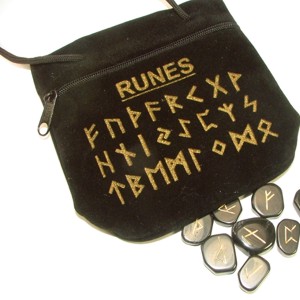
The name is derived from the Old Norse male name, Rúni which is derived from the Norse element, rún, meaning, “secret, lore.” It shares the same etymology as the ancient Germanic alphabet known as runes.

As of 2008, Rune was the 33rd most popular male name in Belgium.

A feminine form is Runa.

Seppe

Gender: Masculine
Origin: Frisian
(SEP-peh)

The name is a Frisian diminutive form of any name beginning with the sieg element (victory).

It is now used exclusively as an independent given name.

As of 2008, it was the 34th most popular male name in Belgium.

Another form of Siebe was the 64th most popular male name in Belgium, (2008).