Fuad

  • Origin: Arabic فُؤاد
  • Meaning: “heart.”
  • Gender: masculine
  • Pronunciation: foo-AD

The name comes directly from the Arabic word for heart. It is used equally among Arab- Muslims & Christians. Among Christians, particularly Palestinians, Chaldeans and Lebanese Christians who profess Roman Catholicism, it is used in reference to the Sacred Heart of Jesus or the Immaculate Heart of Mary, in the same way the Spanish name Corazón is used in the Spanish-speaking world, though in the Arabic case, the name is strictly masculine.

Among Muslims, the term fu’ad is used at least 5 times in the Quran. The name is used throughout the Islamic world.

It is even used among Non-Arab groups in the Middle East, such as Mizrachi Jews.

The name was borne by two Egyptian kings.

Other forms include:

  • Fuad (Amharic, Azeri, Bosnian, Indonesian)
  • Fouad (Maghrebi)
  • Fuat (Turkish)
  • Fawad (Urdu)

A feminine form is Fuada(h).

Sources

Sariyah – meaning, origin & history of the first name

  • Origin: Arabic سارية
  • Urdu: سریا
  • Hindi:  सरिया
  • Bengla: সারিয়া
  • Meaning: “clouds at night.”
  • Gender: Female

Sariyah سارية is from an Arabic word that means “clouds at night.”

It is derived from the Arabic root S-R-A, and can be associated with “night rain” or “night travel.”

Saria and Sarya is the Urdu transliteration and is popular in Pakistan and India among Muslims.

Other forms include:

  • Sarija Сария (Abkhazian, Albanian, Azeri, Bashkir, Bosnian, Chechen, Circassian, Dagestani, Kazakh, Ossetian, Tajik)
  • Sәrija Сәрия (Tatar)

Sources

Aizah, Aiza

Aizah


This is another cross-cultural name that stems from across the globe. It is pronounced (I-zah) in all of its incarnations.

Its recent appearance in the U.K. Top 500 is most likely due to its use among the Pakistani community, in which case it derives from the Arabic Aydhah meaning, “replacement; substitute.” Others have suggested it derives from the Arabic عزّ (‘izz) meaning “glory, honour, majesty, power.” Aiza is also used as a Central Asian form of Aydhah. Another transliteration is Aizah.

Aiza is a Basque name and is recorded as a female name as early as the 12th-century in Navarre, it is the feminine form of Aizo which is of uncertain meaning. It has been suggested to be from aits (rock, stone). Although, there was a Basque king who had the feminine form as his byname, it is sometimes hispanified as Arista, which in his case may have been a corruption of the Basque Aritza (oak). As a result, Aiza appears as a surname throughout the Spanish-speaking world. Aiza has also been suggested to mean”cliff, rock” or “abyss.” Another Basque feminine form is Aizeti.

Aiza has also been very rarely used as feminine given-name in Latvia, its inspiration may be the Latvian word for river or gorge or it may be a contraction of another unknown name. The database of Latvian name statistics indicates the name has been used at least 6 times.

Finally, Aiza can be Japanese, from the Kanji characters 愛 (ai) meaning “love, affection” and 座 (za) meaning “seat; pin; cushion.”

Currently, Aiza is the 314th Most Popular Female Name in England & Wales (2018).

Sources

Adhan, Azaan

429px-Jean-Léon_Gérôme_010


The name is derived from the Arabic root ʾadhina أَذِنَ meaning “to listen, to hear, be informed about,” or ʾudhun (أُذُن), meaning “ear.” The Adhan, sometimes romanized as Azaan, is the name of the Islamic call to prayer, which is rung 5 time a day.

Currently, Azaan is the 406th Most Popular Male Name in England & Wales, (2018). Other transliterated forms include: Adaan, Adan, Adhaan, Athan, Edan & Edhaan.

Other forms include:

  • Ezani (Albanian)
  • Ezan Езан (Albanian, Bosnian, Bulgarian, Kurdish, Turkish)
  • Azan Азан (Azeri, Kazakh, Kyrgyz, Malay, Tatar)
  • Azán Аза́н (Chechen)
  • Adan (Javanese)
  • Aadaan (Somali)
  • Azon Азон (Tajik)
  • Ezane (Zazaki)

Sources

Hashim

The name is most likely derived from the Arabic root H26-SH-M  meaning “breaker or pulverizer.” This was a sobriquet for Hāshim ibn ‘Abd Manāf (circ. 5th-century C.E.) who was the great-grandfather of the Prophet Muhammad and found of the Banu Hashim tribe. Borne ‘Amr al-‘Ulā, ot is said he took this name because he used to break up his bread to share in a broth among pilgrims to Mecca and he is also said to have saved the poeple of Mecca from a famine by breaking up his bread into tiny crumbs.

Another transliteration is Hasheem

Currently, Hashim is the 436th Most Popular Male Name in England & Wales (2018).

Other forms include:

  • HIashim ХӀашим (Chechen)
  • Haysim (Indonesian)
  • Hashem هاشم (Persian)
  • Haşim (Turkish)

Sources

Israa, Isra

  • Origin: Arabic
  • Meaning: “night journey”
  • Gender: Female
  • Pronunciation: is-RAH

The name is derived from the Arabic سرى (sara) meaning “to travel at night.” In Islam, it is the the name of the 17th Chapter of the Quran, which outlines the journey the Prophet Muhammad took between Mecca and Jerusalem.

Isra is currently the 181st Most Popular Female name in the Netherlands & the 351st Most Popular in France, while its other transliterated form of Israa is the 433rd Most Popular Female Name in France (2018).

Isra is used throughout the Islamic world, while Israa is usually used in mainly, Arabic-speaking Muslim countries. Another transliteration is Isra’

Other forms include:

  • Isrá (Bashkir)
  • Îsra (Kurdish)
  • İsra (Turkish)

Sources

Dunya, Dounia

download

The name is derived from the Arabic dunyā (دُنْيَا) meaning “world, kingdom, universe.”

It is a concept in Islam used to describe worldly concerns, and it is also used to describe anything that is close or near.

Its Maghrebi form of Dounia is currently the 445th most popular female name in France.

Other forms include:

  • Dynja (Albanian)
  • Dünya (Azeri/Turkish)
  • Donja Донъя (Bashkir)
  • Dunja (Bosnian)
  • Djunjà/ дюня̀/Dunjà дуня̀ (Bulgarian)
  • Denya (Egyptian-Arabic)
  • Donya  دنیا (Egyptian-Arabic/Javanese/Persian)
  • Duniya (Hausa)
  • Ddunit (Kabyle)
  • Dünïe дүние (Kazakh)
  • Dinya (Kurdish)
  • Düynö (Kyrgyz)
  • Dunia (Malay/Indonesian/Swahili)
  • Dinja (Maltese)
  • Dunida (Somali)
  • Dunyo дунё (Tajik/Uzbek)
  • Dön’ya дөнья (Tatar)
  • Dünyä (Turkmen)
  • Duniyâ دنیا (Urdu)

Sources

Firdaus

Poet, Firdowsi
  • Origin: Perso-Arabic
  • Gender: Unisex
  • Meaning: heaven; paradise; garden
  • Pronunciation: (FUR-dows)

The name comes directly from the Arabic word فردوس (firdaws), meaning “paradise,” which is ultimately from the Avestan pairidaeza “garden; enclosure.” In Islam, the term firdaws is sometimes used to refer to the highest level of Jannat or Heaven.

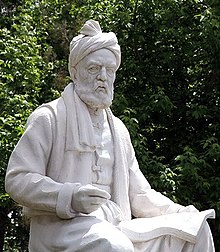
The name seems to be traditionally given to both males and females equally. A notable bearer was the 11th-century Persian poet, Firdowsi, who authored the historical epic, Shahnamah (Book of Kings).

Other forms of the name include:

  • Fardawəs (Abkhaz, exclusively male)
  • Firdovs (Chechen, exclusively female)
  • Fildusa (Bosnian, exclusively female)
  • Firdevsa (Bosnian, exclusively female)
  • Firdusa (Bosnian, exclusively female)
  • Firdaws/Firdaous (Maghrebin forms, exclusively female)
  • Pardis (Persian, exclusively female)
  • Fardowsa (Somali, exclusively female)
  • Firdavs (Tajik & Uzbek, exclusively male)
  • Firdausa (Tatar, exclusively female)
  • Firdaves (Tatar, unisex)
  • Firdavis (Tatar, exclusively male)
  • Firdevs (Turkish, unisex)

Sources


Hakim, Hakeem

Istanbul,_Hagia_Sophia,_AllahThe name is derived from an Arabic honorific title حكيم that can have several different meanings. The name roughly translates as “sage” or “wise” but it can also mean “physician” or “philosopher” and is often used to denote a doctor, judge or someone highly educated in a particular scientific field in the Arabic world.

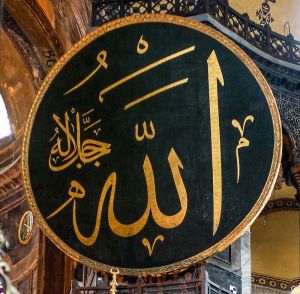
It is also used as a given name in most of the Islamic world,as in Islam, Al-Hakim is one of the 99 names of Allah.

As of 2016, Hakeem 905th most popular male name. Hakeem first entered the U.S. top 1000 in 1989 when it peaked at its highest in popularity, coming in as the 586th most popular male name. Hakim has only appeared in the U.S. Top 1000 one time in 1976, when it was the 881st most popular male name.

In France, Hakim appeared in the Top 1000 between 1961 and 2008 and peaked in popularity in 1981 when it was the 161st most popular male name in France.

Another form is

  • Hakimi ჰაქიმი (Georgian)

Sources