Mizan

  • Origin: Arabic موازين‎; Ethiopic ሚዛን
  • Meaning: “balance; scales.”
  • Gender: Male

The name comes from the ancient Semitic root √W-Z-N / √ʾ-Z-N, meaning “to weigh, measure, or balance.”

Its Arabic use is from mīzān (ميزان) → “balance, scales,” appearing throughout the Qur’an as the mīzān al-ʿadl — the scales of divine justice and its Geʽez / Amharic use comes from mäzan / mizan (መዛን), meaning “measure, equilibrium, fairness.”

Compare to Hebrew moznaim (מאזניים) “the balances,” also symbolizing moral and cosmic fairness and the name of the astrological sign of Libra, though it is not used as a given-name.

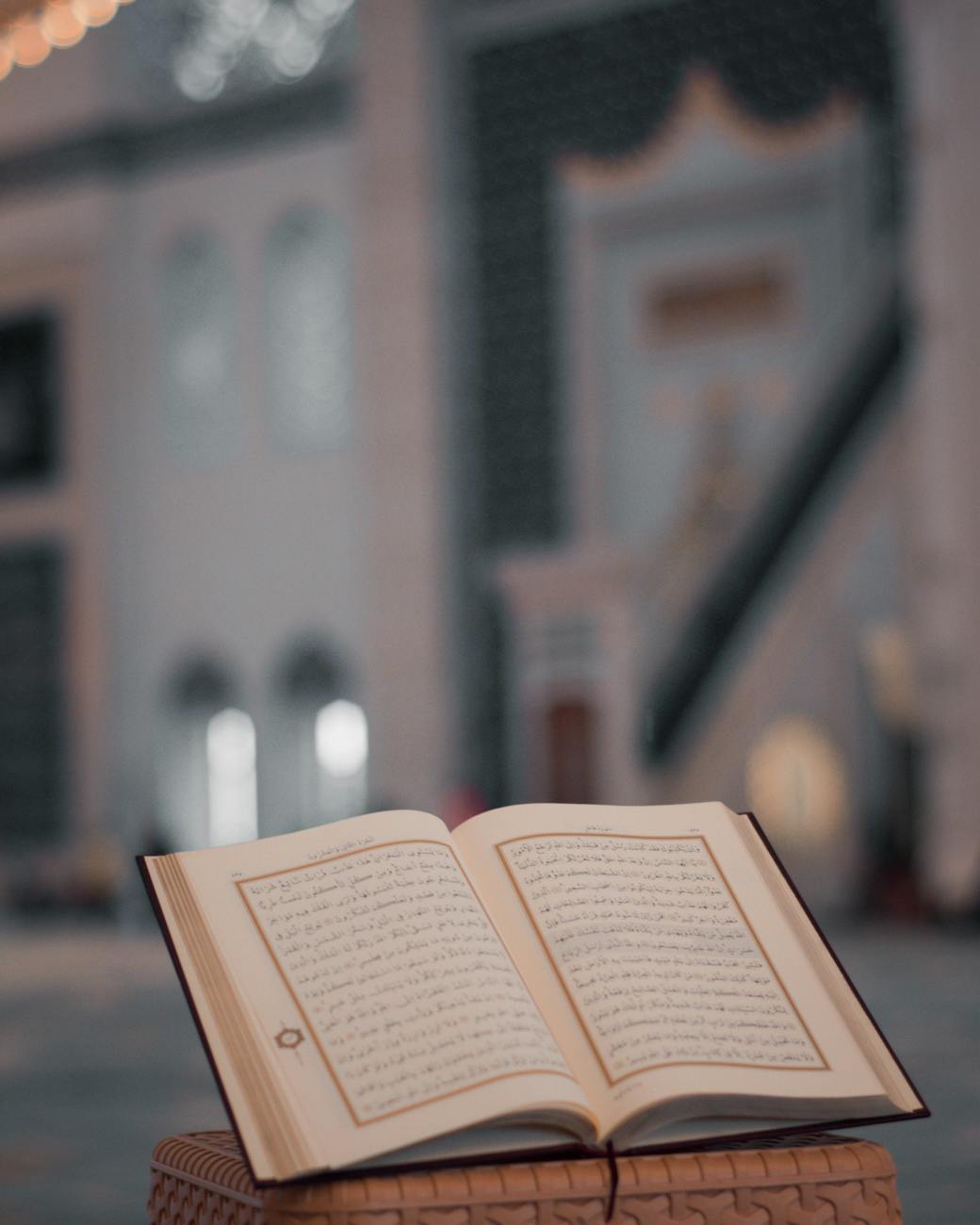
In the Islamic world, Mizan represents the moral equilibrium of the universe — the balance by which every soul’s deeds are weighed.

In Ethiopian usage, Mizan retains the literal sense of “measure” but has become a spiritual and philosophical name, expressing inner balance and moral clarity. It’s also a familiar place name — as in Mizan Teferi, “Prince of Balance,” a town in southwest Ethiopia.

A Kurdish form is Mîzan.

Mizani is the Swahili form and is a unisex name.

Sources

Jabbar

Photo by Ahmet Polat on Pexels.com
  • Origin: Arabic جبّار
  • Meaning: “mighty; powerful.”
  • Gender: masculine

The name comes directly from the Arabic جبّار (jabbar), meaning “mighty; powerful.” In Islam, the term الجبّار (al-jabbar) is one of the 99 names of Allah.

Another variation is Abd-al-Jabbar (عبد الجبار), meaning “servant of the Almighty.”

Jabbar has appeared in the U.S. Top 1000 Most Popular Male Names in 1972, coming in as the 910th most popular male name. Its Swahili form of Jabari became common in the African-American community in the 1970s. It is currently the 920th most popular male name in the United States.

Sources

Duha

  • Origin: Arabic ضحى
  • Meaning: “forenoon.”
  • Gender: unisex
  • DOO-hah

The name comes directly from the Arabic word for forenoon or late morning. In Islam, it is used in reference to Salat ad-Duha صَلَاة الضحى‎‎, a voluntary prayer that is said between Fajr and Dhuhr and is used mainly for the atonement of sins.

It is also the name of the 93rd chapter in the Qu’ran, al-Ḍuḥā الضحى‎, (the Morning).

As a given-name, it is traditionally unisex, but has been more often bestowed on females.

Other forms include:

  • Duha Духа (Albanian, Arabic (standard), Bashkir, Bosnian, Chechen, Kazakh, Kurdish, Turkish)
  • Zuha ज़ुहा (Azeri, Hindi)
  • Doha, Dohaa للال چاشت (Bengali, Urdu)
  • Dhuha (Javanese, Malaysian)
  • Zoha ضحی (Persian)
  • Zuho Зуҳо (Tajik, Uzbek)

Sources

Fuad

  • Origin: Arabic فُؤاد
  • Meaning: “heart.”
  • Gender: masculine
  • Pronunciation: foo-AD

The name comes directly from the Arabic word for heart. It is used equally among Arab- Muslims & Christians. Among Christians, particularly Palestinians, Chaldeans and Lebanese Christians who profess Roman Catholicism, it is used in reference to the Sacred Heart of Jesus or the Immaculate Heart of Mary, in the same way the Spanish name Corazón is used in the Spanish-speaking world, though in the Arabic case, the name is strictly masculine.

Among Muslims, the term fu’ad is used at least 5 times in the Quran. The name is used throughout the Islamic world.

It is even used among Non-Arab groups in the Middle East, such as Mizrachi Jews.

The name was borne by two Egyptian kings.

Other forms include:

  • Fuad (Amharic, Azeri, Bosnian, Indonesian)
  • Fouad (Maghrebi)
  • Fuat (Turkish)
  • Fawad (Urdu)

A feminine form is Fuada(h).

Sources

Nora, Nour

1024px-Dawn._Buryatia,_Russia


This multicultural name has recently experienced a revival. In European countries, the name stems from any name ending in the -nora element, such as Honora & Eleanora. In Arabic, Nora is a variant transliteration of Nurah, which is a strictly feminine version of the unisex Arabic name, Nur (light). Nur is used as one of the 99 attributes of Allah, al-Nur (the light).

The name was used by Henrik Ibsen for his main character in his play, A Doll’s House (1878).

Outside of East Asia, there isn’t a counry where Nora is unhead of or is not in use. Nora has been in out of the U.S. Top 100 since 1880! She currently ranks in as the 30th Most Popular Female Name in the United States. Her rankings in other countries are as follows:

  • #2 (Norway, 2018)
  • #10 (Netherlands, 2018)
  • #11 (Hungary, 2018)
  • #14 (Switzerland, 2018)
  • #15 (Denmark, 2018)
  • #20 (Belgium, 2018)
  • #23 (Austria, 2018)
  • #26 (Catalonia, Spain, 2018)
  • #28 (Sweden, 2018)
  • #38 (Canada, BC, 2018)
  • #47 (Spain, 2018)
  • #64 (Norah, Netherlands, 2018)
  • #79 (Bosnia & Herzegovina, 2018)
  • #84 (Norah, Canada, BC, 2018)
  • #85 (Italy, 2018)
  • #119 (France, 2018)
  • #140 (Norah, United States, 2018)
  • #184 (Norah, France, 2018)
  • #197 (England & Wales, 2018)
  • #283 (Norah, England & Wales, 2018)

Its Dutch version of Noor also ranks high in several popularity charts. This name is also used by Muslim families as a variation of Nur. Her rankings in other countries are as follows:

  • #10 (Netherlands, 2018)
  • #25 (Belgium, 2018)
  • #279 (England & Wales, 2018)
  • #311 (France, 2018)

Noortje is another Dutch version which currently ranks in as the 203rd Most Popular Female Name in the Netherlands.

Other forms of its European version include:

  • Nora Нора Νόρα (Bulgarian, Greek)
  • Noera (Dutch)
  • Noor (Dutch)
  • Noortje (Dutch)
  • Norah (Dutch, English, French)
  • Nonie (English)
  • Noreen (English, Irish)
  • Noora (Estonian, Finnish)
  • Nóra Но́ра (Faroese, Hungarian, Irish, Russian)
  • Nuura (Finnish, Scandinavian)
  • Nóirín (Gaelic)
  • Norina (Italian, Provençal, Romansch)
  • Norá (Sami)
  • Norea (Scandinavian)
  • Norena (Scandinavian)
  • Noria (Scandinavian)
  • Norita (Spanish, Scandinavian)

The Arabic Nur is traditionally a unisex name which is popularly used in many Islamic countries. Its Maghrebi form of Nour currently ranks in the following popularity charts for girls:

  • #40 (Belgium, 2018)
  • #48 (Catalonia, Spain, 2018)
  • #48 (France, 2018)
  • #76 (Spain, 2018)
  • #137 (Italy, 2018)
  • #197 (Netherlands, 2018)

Nur is currently the 87th Most Popular Female Name in Bosnia & Herzegovina (2018).

Other forms of the Arabic version include:

  • Noora, Nura (Arabic, strictly feminine)
  • Noura (Maghrebi Arabic, strictly feminine)
  • Núria (Catalan)
  • Nor (Malay, unisex)
  • Nuru (Swahili, strictly feminine)

Sources

Dunya, Dounia

download

The name is derived from the Arabic dunyā (دُنْيَا) meaning “world, kingdom, universe.”

It is a concept in Islam used to describe worldly concerns, and it is also used to describe anything that is close or near.

Its Maghrebi form of Dounia is currently the 445th most popular female name in France.

Other forms include:

  • Dynja (Albanian)
  • Dünya (Azeri/Turkish)
  • Donja Донъя (Bashkir)
  • Dunja (Bosnian)
  • Djunjà/ дюня̀/Dunjà дуня̀ (Bulgarian)
  • Denya (Egyptian-Arabic)
  • Donya  دنیا (Egyptian-Arabic/Javanese/Persian)
  • Duniya (Hausa)
  • Ddunit (Kabyle)
  • Dünïe дүние (Kazakh)
  • Dinya (Kurdish)
  • Düynö (Kyrgyz)
  • Dunia (Malay/Indonesian/Swahili)
  • Dinja (Maltese)
  • Dunida (Somali)
  • Dunyo дунё (Tajik/Uzbek)
  • Dön’ya дөнья (Tatar)
  • Dünyä (Turkmen)
  • Duniyâ دنیا (Urdu)

Sources

Asha

AshaThe name can have several origins and meanings. It is principally a Sanskrit name that can mean “hope; aspiration; wish; desire.” It is also the name of a concept in Zoroastrianism, roughly translating as “truth; righteousness; correct order.” It is is the name of several places across Europe, spelled Ascha, it is the name of several places in Germany. It also can coincide with the Polish diminutive form of Joanna (Asia) pronounced (AH-shah). Lastly, it is the Somalian and Swahili form of Aisha (life) and is also the Swahili word for life.
It is definitely a cross-cultural name.

It is the name of a village in Cyprus, according to legend the name derives from the Greek askia, which means “without any shade” and might refer to the fact the town has few trees. Alternately, it is also said to come from aski, which is the name of a type of alcoholic vessel and the villagers like to boast their town bears this name due to the fact they drank so much wine.

Ascha is the name of a municipality in Lower Bavaria. It is also the name of a tributary of the Schwarzach River in Bavaria. Its etymology is unknown, but is believed to derive from a Slavic source.

In the United States, Asha appeared in the U.S. Top 1000 2000 and 2003 and peaked at #882 in 2000. In the U.K. & Wales, Asha peaked at #313 in 2003.

A notable bearer is Indian actress and singer, Asha Bhosle (b.1933).

Sources

Hakim, Hakeem

Istanbul,_Hagia_Sophia,_AllahThe name is derived from an Arabic honorific title حكيم that can have several different meanings. The name roughly translates as “sage” or “wise” but it can also mean “physician” or “philosopher” and is often used to denote a doctor, judge or someone highly educated in a particular scientific field in the Arabic world.

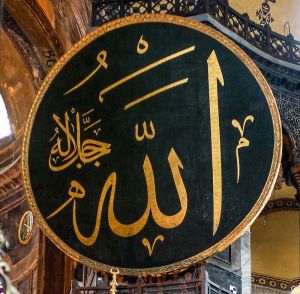
It is also used as a given name in most of the Islamic world,as in Islam, Al-Hakim is one of the 99 names of Allah.

As of 2016, Hakeem 905th most popular male name. Hakeem first entered the U.S. top 1000 in 1989 when it peaked at its highest in popularity, coming in as the 586th most popular male name. Hakim has only appeared in the U.S. Top 1000 one time in 1976, when it was the 881st most popular male name.

In France, Hakim appeared in the Top 1000 between 1961 and 2008 and peaked in popularity in 1981 when it was the 161st most popular male name in France.

Another form is

  • Hakimi ჰაქიმი (Georgian)

Sources


Kwanzaa Baby Names

In honour of Kwanzaa, here is a list of Swahili baby names.

Male

  • Amri “power”
  • Angavu “transparent; clear; lucid”
  • Bwana “man”
  • Ekundu “red”
  • Eusi “black; dark”
  • Faraji “consolation”
  • Hakimu “judge; chief; leader”
  • Imamu “spiritual leader”
  • Jelani “mighty”
  • Jengo “building”
  • Jumaane “born on Tuesday”
  • Kiapo “oath”
  • Kibwe “blessed”
  • Kijana “young boy”
  • Kimbilio “haven; refuge”
  • Kiume “virility; stamina; strength”
  • Kinubi “harp; lyre”
  • Kovu “scar”
  • Kurunzi “torch”
  • Kuumba “creativity”
  • Macheo “sunrise; dawn”
  • Maliki “king; ruler”
  • Mavuno “harvesttime”
  • Mchunju: name of a tree endemic to all of Africa
  • Mito “rivers; streams”
  • Miti “trees”
  • Mosi “first child”
  • Moto “fire; flame”
  • Mwezi “moon; month”
  • Neno “word; utterance”
  • Refu “long; tall; high”
  • Salaam “peace; tranquility”
  • Sefu “sword”
  • Simba “lion”
  • Takatifu “sacred; holy; consecrated”
  • Tendaji “makes things happen”
  • Theluji “snow”
  • Ushindi “victory; triumph; success”
  • Usiku “night”
  • Utulivu “serenity”
  • Wimbo “song; hymn”
  • Zuberi “strong”

Female

  • Adia “present; gift”
  • Afya “strength; well-being”
  • Anasa “pleasure; delight; luxury”
  • Anga “sky; air; the heavens; radiance; brilliance”
  • Anza “to begin; start; originate”
  • Asali “honey”
  • Asmini “jasmine”
  • Asha “life”
  • Bahari “sea”
  • Binti “daughter; young lady”
  • Busara “wisdom; knowledge”
  • Dalili “omen”
  • Dua “prayer”
  • Dunia “world; earth”
  • Ema “good; pleasant; kind; nice”
  • Furaha “joy”
  • Hanja “brown”
  • Hekima “wisdom; prudence; judiciousness”
  • Hidaya “beautiful; desirable”
  • Imani “faith; belief; trust”
  • Imara “power”
  • Ishara “sign”
  • Jana “yesterday”
  • Jasiri “brave”
  • Johari “jewel”
  • Jua “sun; sunshine”
  • Kamaria: Swahili form of Qamar (Arabic, moon)
  • Kaskazi “north wind; hot season; summer”
  • Katika “dance; to sever; to cut”
  • Kibibimlima “daisy”
  • Kijani “green”
  • Kilima “mound; hill”
  • Kipepeo “butterfly”
  • Kinara “candle holder”
  • Kinubi/Vinubi “nubian lyre”
  • Kisima “water spring”
  • Kiwara “savannah, plain, unfertile land”
  • Kura “destiny; fate; chance”
  • Kweli “truth”
  • Lulu “pearl”
  • Madaha “grace”
  • Maisha “life”
  • Majani “leaves”
  • Maji “water”
  • Malaika “angel; small child”
  • Malkia “queen”
  • Marjani “coral”
  • Maua “flowers”
  • Mkarkara “passion flower”
  • Naima “ecstasy”
  • Neema “prosperty; good fortune”
  • Nia “purpose”
  • Njozi “dream”
  • Nuru “brightness; light”
  • Nya “to rain; let fall”
  • Nyesha “to rain”
  • Nyoni “bird”
  • Nyota “star; fortune; luck”
  • Nyuki “bee”
  • Peremende “peppermint; sweet”
  • Penda “love”
  • Peponi “heaven; paradise”
  • Raha “joy”
  • Sanaa “artwork”
  • Safari “journey”
  • Safi “pure”
  • Sala “prayer”
  • Sarabi “mirage”
  • Sauda “dark complexion”
  • Sauti “voice; noise; sound; volume
  • Shani “curiosity”
  • Sungara “rabbit; hare; intelligent person”
  • Subira “patience”
  • Swala “antelope”
  • Swara “gazelle”
  • Tamu “sweet; delicious”
  • Taraji “hope”
  • Taswira “image”
  • Tazamia “to hope; to expect”
  • Tulia “to be quiet; to relax; to settle down”
  • Tumba “flower bud”
  • Tumaini “hope”
  • Ua “flower”
  • Uhuru “freedom”
  • Umande “dew”
  • Umoja “unity, oneness; harmony; alliance”
  • Ujima “collective work & responsibility”
  • Uru “diamond”
  • Vuna “reap; harvest”
  • Waridi “rose”
  • Zuri “beautiful”