 Gender: Masculine
Origin: Greek Ἡρακλῆς
Meaning: “glory of Hera.”
Hercules is the Latin form of the Greek, Herakles. Herakles is composed of the Greek elements, Hera (as in the goddess) and cleos (κλεος) meaning, “glory; fame.”
The name was of course borne in Greek mythology by the divine hero, son of Zeus and Alcmene. In a rage of jealousy and to spite Zeus, Hera cursed Hercules into madness, driving him to kill his own children. In order to atone for his sins, Hercules performed twelve seemingly impossible feats, which he successfully accomplished thereafter becoming divine.
Hercules was a popular figure in Ancient Greece and later enjoyed popularity in the Roman Empire. His festival of Heraklea occurred between July and August. Thus the name may make an interesting choice for a child born during these months.
The name remained common even after the introduction of Christianity. It is especially common in Southeastern Europe and Greece.
Irakli, the Georgian form of the name, was borne by two Georgian Kings, the most notable being Irakli II (1720-1798).
As of 2011, Irakli was the 11th most popular male name in the Republic of Georgia.
In the English-speaking world, Hercules had some usage between the 16th and 19th-centuries. Notable bearers include:
- Hercules Huncks (circ. 1600s) one of the Regicides of King Charles I of England.
- Hercules Ross (1745-1816) a Scots tradesmen and abolitionist.
- Hercules Brabazon Sharpe, (1821-1906) a British artist
- Hercules Robinson, 1st Baron Rosmead, (1824-1897) the 5th governor of Hong Kong.
- Hercules Linton (1837-1900) a famous Scottish shipbuilder and designer.
Other forms of the name include:
- Herakliu (Albanian)
- Gjerakl Геракл (Belarusian)
- Herakl Херакъл (Bulgarian)
- Hèracles (Catalan)
- Hèrcules (Catalan)
- Heraklo (Croatian)
- Herkul (Croatian/Macedonian/Serbian/Slovene)
- Héraklés (Czech)
- Hercule (French)
- Earcail (Gaelic)
- Irakli ირაქლი (Georgian)
- Herakles Ηρακλης (German/Greek/Polish/Scandinavian)
- Eracle (Italian)
- Ercole (Italian)
- Hērakls (Latvian)
- Heraklis (Lithuanian)
- Eracles (Occitanian)
- Éracle (Piedmontese)
- Héracles (Portuguese)
- Heracle (Romanian)
- Gerakl Гера́кл (Russian)
- Erculi (Sicilian)
- Heraclio (Spanish)
- Ercwlff (Welsh)
 Gender: Feminine
 The name was also borne by a legendary Egyptian Christian saint who was believed to have originally been a prostitute. She was converted by St. Paphnutius who had disguised himself as a “customer.” Thaïs became a fervent Christian, abandoning her comfortable life as a high-end prostitute and spending three years in repentance eventually dying in peace as a hermit in the Egyptian desert. Her story is the inspiration behind the Anatole France novel Thaïs (1890) which was later adapted into an opera of the same name. Demetre Chiparus famous sculpture, Thaïs, was in turn inspired by the Opera.
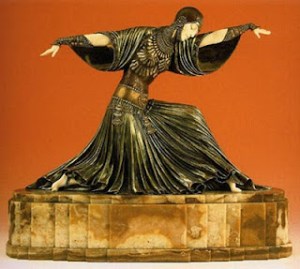 Due to the cult of St. Thaïs of Egypt, the name remained in use throughout the former Byzantine Empire. She was used to a certain extent on the continent and in 18th-century England during the Romantic Period.
 Gender: Feminine
 Another interesting Polish offshoot is Polonia, which is rare in Poland these days but might make an interesting choice for Polish-American parents who want to honour their heritage as polonia is a term used to describe the Polish diaspora in the United States. She may be the Polish-American answer to the Irish-American, Erin.
 Gender: Feminine
 Origin: Greek
 Gender: Feminine
 Gender: Masculine
 Gender: Masculine
 Gender: Masculine
 Gender: Masculine