Damian

Gender: Masculine
Origin: Greek
Meaning: “to tame.”

The name is derived from the Greek Damianos ,which, in turn, is derived from the Greek word, damao, meaning, “to tame.”

The name is borne by the twin brother of St. Cosmo. They were martyred together in 4th century Greek Syria.

The designated feast day is July 1st in the Greek Orthodox calender.

In recent years, Damian has risen increasingly in popularity coming in at # 133 most popular male name in the United States. Its French counterpart of Damien comes in at # 189. The name is also quite popular in Poland. The feminine offshoot is Damiana and there is also the rare French female name of Damienne.

Other forms include:

  • Damyan Дамян (Bulgarian)
  • Damjan Дамјан (Croatian/Serbian/Slovene)
  • Damiaan (Dutch)
  • Damian (English/German/Polish)
  • Damien (French)
  • Damio (Italian)
  • Damiano (Italian)
  • Damianos Δαμιανος (Greek)
  • Damianus (Latin)
  • Damião (Portuguese)
  • Demyan Демьян (Russian/Ukrainian)
  • Damijan (Slovene)
  • Damián (Spanish)

Feminine forms include:

  • Damienne (French)
  • Damia (Greek)
  • Damiana (Italian/Spanish)
  • Damijana (Slovene)

Cosmas, Cosmo

Gender: Masculine
Origin: Greek
Meaning: “order; decency; beauty.”

Cosmas is a transliteration of the Greek, Kosmas.

The name was borne by an early Christian martyr who was killed along with his brother, Damian.

According to legend, the two saints were physicians, therefore they have been considered the patron saints of doctors and pharmacists.

Their feast day is celebrated on July 1st, (in the Greek Orthodox Church).

The name has spun several offshoots. Cosmo and Cosimo are the Italian forms. Cosima is a feminine form that has been occasionaly used in Great Britan. It was borne by the wife of Richard Wagner, Cosima Wagner (1837-1930). It has a few Romanian offshoots Cosmin and Cosmina.

Other forms include:

  • Cosme (Catalan/French/Portuguese/Spanish)
  • Kuzma (Croatian)
  • Kosma (Czech)
  • Côme (French)
  • Cosmas (German/Latin)
  • Kosmas Κοσμας (Greek)
  • Kozma (Hungarian)
  • Cosimo (Italian)
  • Cosimino (Italian)
  • Cosma (Italian)
  • Kosma (Polish)
  • Cosmin (Romanian)
  • Kuzma Кузьма (Russian)
  • Gòsamu (Sardinian)

Feminine forms include:

  • Cosima (English/Italian/German)
  • Cosimina (Italian)
  • Cosmina (Romanian)

Malvina, Malwina

Gender: Feminine
Origin: Scottish/Polish
Eng (mel-VEE-nah); Pol (mahl-VEE-nah)
The name is of debated origin and meaning but was possibly created by the Scottish poet James MacPherson for a character in one of his Ossian poems in the 18th century. MacPherson may have gotten the name from the Gaelic Malamhin meaning “smooth brow”. Other sources claim that it origins are Germanic and that it is comprised of the elements mahal meaning “justice” and wine meaning “friend.”For whatever reason, the name became extremely popular in both Poland and Lithuania. One possible explanation is that in Polish, it sounds similar to the Polish botanical word malwa meaning “mallow flower.” In both Poland and Lithuania, its designated name day is July 4th. Nicknames include Malwinka.

Thomas

Gender: Masculine
Origin: Aramaic
Meaning: “twin”
(TOM-us)

The Latinized form of the Aramaic Tau’ma which is derived from the word T’oma (תאומא) meaning “twin.” The name was introduced to the world via St. Thomas the Apostle, a character that plays a prominent role in the New Testament. He is best known for his disbelief when he first heard that Christ had resurrected from the dead, hence the saying “doubting Thomas.”

Tau’ma was a nickname given to him to differentiate him from Judas Iscariot, (Thomas’ real name being Judas or Jude). He is also known as Didymos, (the Greek word for twin), and Jude. His evangelization was attributed to the area of Persia and India. Thomas is a very popular name among Indian Christians and Persian Christians. His feast is celebrated on July 3rd. The name was introduced into the English speaking world via the Normans after they had conquered England. Since that time Thomas has been a relatively popular male name.

  • Tomas (Albanian)
  • Touma توما‎, (Arabic)
  • Tovmas (Armenian)
  • Foma (Azeri/Russian)
  • Tomás (Aragonese/Asturian/Spanish)
  • Tomas (Basque)
  • Dammerl (Baverian)
  • Tòmas (Bearnais)
  • Tamaš Тамаш (Belarusian)
  • Toma Тома (Bosnian/Bulgarian/Georgian)
  • Tomaz (Breton)
  • 多馬 Duoma (Chinese Biblical)
  • 湯瑪斯 Tangmasi, 湯瑪士 Tangmashi, 托馬斯 Tuomasi, (Chinese General Translation)
  • Tumasgiu (Corsican)
  • Tomo/Tome (Croatian: occassionally Tomislav is used as a translation, though technically it has no etymological relation to Thomas)
  • Tomáš (Czech)
  • Thomas (Danish/Dutch/English/French/German/Indonesian/Latin/Luxemborgish/Norwegian/Swedish)
  • Maas (Dutch: originally a diminutive form, sometimes used as an independent given name)
  • Toomas (Estonian)
  • Tummas (Faroese)
  • Tuomas/Tuomo (Finnish)
  • Maes (Flemmish)
  • Tomas (Filipino/Tagalog)
  • Theumis (Frisian)
  • Tomé (Galician)
  • Thōmâs Θωμᾶς/Thomás Θωμάς/Didymos Δίδυμος (Greek: Modern)
  • Teom (Hebrew)
  • Tamás (Hungarian)
  • Tómas (Icelandic)
  • Tomás (Irish)
  • Tommasso (Italian)
  • Tommassino (Italian)
  • Tomasiello/Tommasuccio (Italian: obscure)
  • トーマス Tomasu (Japanese)
  • Tomas (Karakalpak: a Turkic language spoken in Uzbekistan)
  • 도마 Doma /Toma (Korean Biblical)
  • 토머스 Tomeoseu/T’omŏsŭ (Korean: General Translation)
  • Thomasê (Kurdish)
  • Toms (Latvian)
  • Tomas (Lithuanian)
  • Томислав, Τоми, Томо, Томас, Τоме (Macedonian)
  • Thoma/Thommen/Oummen/Thommy (Malayalam)
  • Tamihana (Maori)
  • Tumas (Maltese)
  • Tuami (Moroccan-Arabic)
  • Thomé (Occitanian)
  • توماس Tomasp (Persian)
  • Tomasz (Polish: Tomek is a popular diminutive, equivalent to Tommy or Tom)
  • Tomás, Tomé (Portuguese)
  • Tomašis/Tomerdos (Romani: language of the Roma people)
  • Tumasch (Romansch)
  • Tuoms (Saimogaitian: a dialect of Lithuanian)
  • Tomasi (Samoan)
  • Tomasso (Sardinian)
  • Tam/Tòmas (Scottish)
  • Тома Toma (Serbian)
  • Tomáš (Slovakian)
  • Tomaž (Slovene)
  • Tomás (Spanish)
  • Thoma (Swahili)
  • Tāmas தாமஸ்/Tōmā தோமா (Tamil)
  • To-mus โทมัส (Thai)
  • Choma (Ukrainian)
  • Tomaš (Upper Sorbian)
  • Tomaxo (Venetian)
  • Tomos/Twm (Welsh)
  • Teomo (Yiddish)


  • Thomasina, Thomasine, Thomazina and Tammy, Tamsin. Popular nicknames include Tom and Tommy.

The Julian Clan

Julius, Julia, Julie, Juliette, Julilla we go into the name Julius lets remained focused on Julus/Iulus, (the names were rendered in Latin as Iulus, Iulius, Iulia and Iulilla). In Roman legend he was sometimes known as Ascanius and some sources have him down as the son of Aeneas and Creusa. He fled with his parents to the area of Rome to escape the raging war between Troy and Greece. In Virgil’s Aeneid, it mentions that Iulus had a role in founding the city of Rome. Other legendary sources, however, proclaim that Iulus was actually the son of Aeneas and Lavinia and that he was born in Lazio Italy, (the region in which Rome is situated), and he grew up to found the little city state of Alba Longa. His grandson was Aeneas Silvus. Supposedly, Julus grandmother was Venus. The origins of Julus/Iulus are not definite, but many sources believe that it is derived from the Greek Ioulos meaning “downy-bearded.” If this meaning is accurate it would suggest that the name was originally used to describe a pubescent boy who shows the first budding signs of facial hair. In that case, the name would be used in reference to someone who looked youthful

Flash forward to the Roman Republic and we have the well known Julius Caesar. He is most notable for his revolutionary move of transforming the Republic into an Empire and thus proclaiming himself Emperor of Rome. Julius Caesar had both a daughter and sister named Julia. His sister was known as Julia while his daughter was known as Julia Caesaris Minor.
In Christian legend, Julia is also borne by the early Martyr Saint Julia of Carthage. Julia was a Carthaginian noble woman but as a little girl, she was kidnapped and sold as a slave to a Roman master. Legend has it that she came from a Christian family, while her master was a follower of the old Roman gods. When her master had taken her to the Isle of Corsica, he tried to force her to participate in a local pagan festival. Julia refused to join in the festivities, however, and since she was not a Roman citizen, she had to die the undignified way of crucifixion. She is now considered the patron saint of Corsica and her feast is held on May 23rd.
Julilla is a Latin diminutive off shoot of the name and might make an interesting twist on both Julia and the currently popular Lily. Julia is a very popular name throughout Europe, while Julie (ZHEW-LEE) is its French counterpart. In most of mainland Europe, though, Julia is pronounced (YOOL-yah); in Spain and South America as (HOO-lee-ah) and in Italy where its rendered as Giulia (JOO-lee-ah).

From the French we get the diminutive spin off of Juliette, now considered a full fledged name in France and the Italian Giulietta, also considered an independent name in its own right. This is where we run into the anglicized Juliet.

Juliet
his particular spelling is an Anglicization of the Italian Giulietta. The name was first introduced into the English speaking world by William Shakespeare for his character in his star-crossed play, Romeo & Juliet (1596). Shakespeare based his play off of an Italian romance which had been translated into English by Arthur Brooke in 1562. The original tale was set in Siena and was written in 1467 by Masiuccio Salernitano who insisted it was based off of a true story. The character names, however, are a little different, they are named Mariotto (a diminutive form of Mario) and Gianozza a diminutive form of Giovanna. In 1530, another Italian author by the name of Luigi da Porto, took the same tale and changed the characters names to Romeo and Giulietta and reset the story in the city of his hometown Verona. It is from this version that Shakespeare’s inspiration had come.

Julian, Julien, Juliane, Juliana, Julienne
Julian is just an offshoot of Julius. Julian and Julien were born by several early Christian saints, as well as Julien the Hospotelier and Julian the Apostate. Juliana was born by several Italian saints throughout the ages, though rendered in its native language as Giuliana. Julienne is a French feminine form of Julien.

Julitta
Probably another ancient diminutive form of Julia, though some sources insist it is a Latin form of Judith, the name was borne by an early Christian martyr, who, when she refused to give up her religion was punished by watching her infant son get bludgeoned.

Júlírós
An Icelandic Smush, the name is appears on the approved list of Icelandic female names. Pronounced as (YOO-lih-ROSE), the name literally means “July Rose.”

Other forms of the name include:

Male Versions

  • Julen (Basque)
  • Jolyon (English)
  • Julien/Jules (French)
  • Julian (German/Polish/English)
  • Gyula (Hungarian)
  • Giulio/Giuliano (Italian)
  • Juliusz (Polish)
  • Iuliu/Iulian (Romanian)
  • Juli (Romansch)
  • Yulian (Russian/Bulgarian)
  • Yuli (Russian)
  • Július (Slovakian)
  • Julij (Slovenian)
  • Julián (Spanish)
  • Julio (Spanish/Portuguese)
  • Yuliy (Ukrainian)

Female Versions

  • Xhulia/Xhuliana (Albanian)
  • Iulia (Bulgarian/Romanian)
  • Yuliana (Bulgarian)
  • Julija (Croatian/Lithuanian/Slovene)
  • Juliana (Dutch/English/German/Portuguese/Spanish)
  • Jula/Jule (German)
  • Juli (German)
  • Juliane (German/French)
  • Ioula/Ioulía (Greek Modern)
  • Gillian (English)
  • Julia (English, German, Polish)
  • Juliet (English)
  • Juulia (Estonian)
  • Julie/Julienne (French)
  • Juliette (French)
  • Julina/Juline (German)
  • Juli/Júlia/Julinka/Juliska (Hungarian)
  • Julianna (Hungarian/Polish)
  • Júlía (Icelandic)
  • Iúile (Irish)
  • Giulia/Giuliana/Giulietta (Italian)
  • Julitta (Latin/Dutch/Romansch)
  • Džūliaja (Latvian)
  • Jūlija (Latvian)
  • Julita (Polish)
  • Iuliana (Romanian)
  • Iulscha (Romansch)
  • Geletta (Romansch)
  • Gelgia (Romansch)
  • Uliana (Russian)
  • Yulia (Russian)
  • Julijana (Slovenian)
  • Julieta (Spanish)
  • Yuliya (Ukrainian/Bulgarian)
  • Ulyana (Ukrainian)

Ondine, Undine

Gender: Feminine
Origin: Latin
Meaning: “wave.”
(ahn-DEEN); (un-DEEN)

The name is derived from the Latin unda meaning “wave.”

In early European folklore undines were a sort of water sprite who could gain a soul if they married a mortal and bore a child, the downside was that as soon as they became mortal they would age and die.

The Swiss scientist and alchemist Paracelsus spent a considerable time writing about them.

In 1812, the German writer, Baron Friedirch de la Motte Fouque, made the legend a subject of his famous romantic novel Ondine.

In it Ondine falls in love and marries the local knight Huldebrand. She bears his child, but as soon as the baby is born, she starts to age. Huldebrand has an affair with a lowly local woman and Ondine catches her husband in the act. She lays a curse on Huldebrand that he would die in his sleep. Afterward, Ondine rushes to the town square’s fountain and disappears in the midst of the waters, never to be seen again. The same story was later adapted by E.T.A. Hoffman into an opera.

Ondine and Undine became popular first name choices in both France and Germany. Nicknames include Ondy, Ondinette and Dina.

Other forms of the name include:

  • Ondina (Asturian/Italian/Portuguese/Spanish)
  • Ondine (French)
  • Undine (German/English)
  • Undina (Icelandic)
  • Undīne (Latvian)
  • Undinė (Lithuanian)
  • Ondyna (Polish: very obscure)

Designated name-days are: April 18 (Lithuania) and November 15 (Latvia)

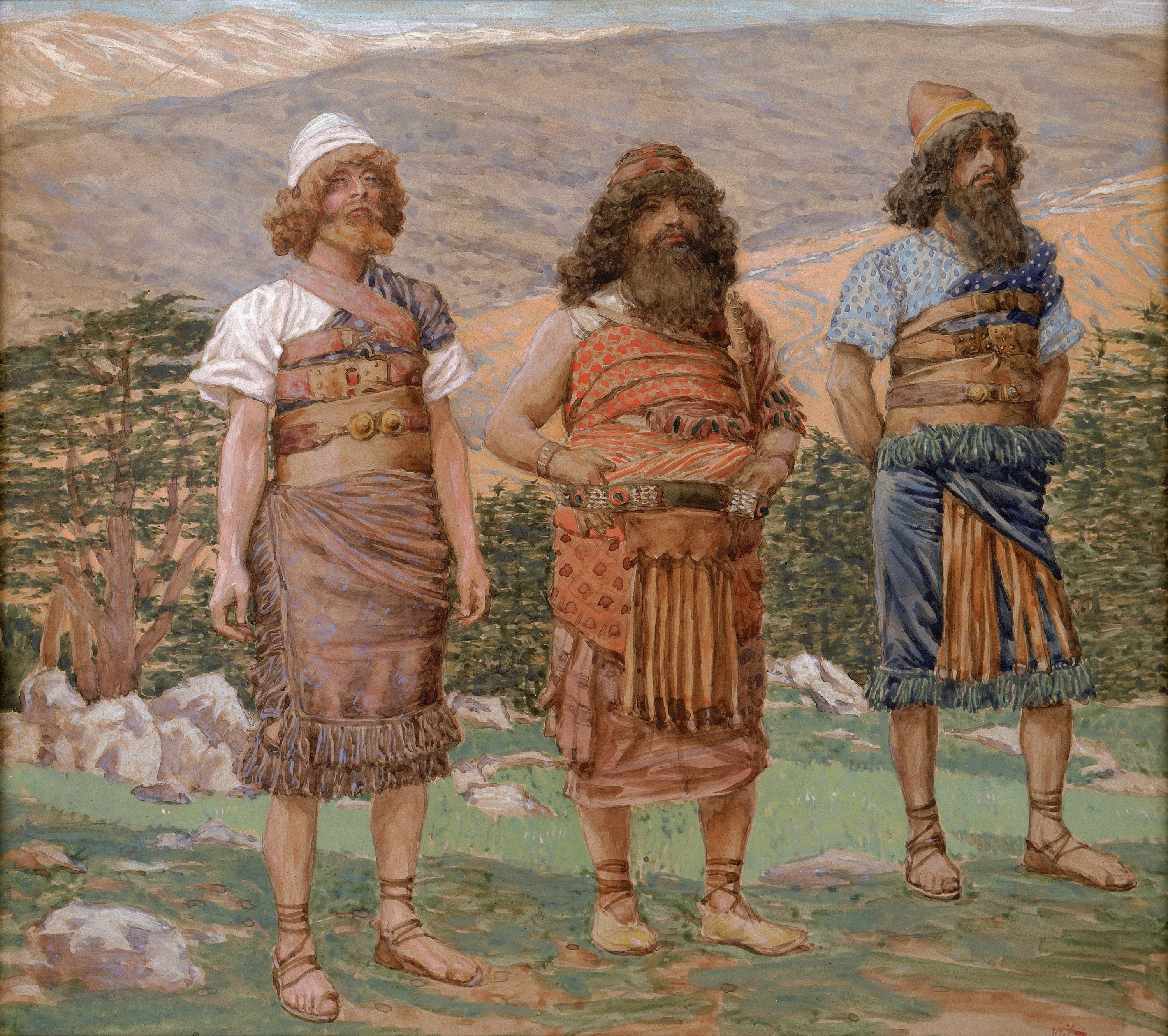
Ham

Gender: Masculine
Origin: Biblical/Hebrew
Meaning: “hot.”

The name is born in the Old Testament by one of the 3 sons of Noah. Noah cursed Ham after Ham had seen Noah naked while drunk. He is said to be the forefather of the Egyptians and Canaanites.

Other forms include: (NOTE: all these forms exists, but are scarcely used in their home countries)

  • Cham حام (Arabic)
  • Cam (Catalan/Italian/Portuguese/Spanish)
  • Chám (Czech)
  • Cham (Dutch/Polish)
  • Ham (English/French/German)
  • Haam (Estonian/Finnish)
  • Ham חָם (Hebrew: Modern)
  • Kám (Hungarian)
  • Chamas (Lithuanian)
  • Kam (Norwegian)
  • Xham (Walon)

Kinga

Gender: Feminine
Origin: Polish/Hungarian
(KEEN-gah)

Kinga is the Polish and Hungarian form of the Germanic, Kunigunde.

Composed of the elements kuoni meaning, “brave” and gunde, meaning, “war”. The name was borne by a Hungarian princess and Polish Queen (1224-1292). She was the daughter of Hungarian king, Bela IV and married King Boleslaw V of Poland.

After she was widowed, she entered the Poor Clares. She was known for her piety and dedication to the poor. Her feast is held on July 24.

The name is still very common in Poland, as well as in Hungary.

Other forms include the Polish Kunigunda and the English/French Conegonde.

Nephele

Gender: Feminine
Origin: Greek
Meaning: “cloud”
Νεφέλη
(NEF-eh-LEE)

The name is borne in Greek mythology by the cloud bearing nephelai nymphs. They were the daughters of Oceanus and were responsible for the rain and the water which brought nourishment to the earth and plants. It was believed that it was they themselves who were felling the rain from cloudy pitchers they held in the sky.

It was also borne by the mother of Phrixos & Helle by Athamas. Athamas’ evil second wife, Ino, plotted to have Nephele’s children murdered. Nephele sent for a golden ram who took her children to safety.

A third Nephele found in Greek mythology was the mother of centaurs by Ixion. She was a woman created from a cloud

The Latin name is Nebula.

Other forms that should be noted (Note: These forms exist but are not necessarily in usage)

  • Nèfele (Catalan/Galician/Spanish)
  • Néphélé (French)
  • Nefele (Italian/Polish/Portuguese)
  • Nefelė (Lithuanian)

Adalbert, Wojciech, Vojtěch

Gender: Masculine
Origin: German/Polish/Czech/Slovak
(Adal-bert) (VOY-chehk); (VOY-tyek).

The name, Adalbert, is derived from the Germanic elements adal meaning “noble” and behrt meaning “bright; shining; illustrious.”

The name was borne by a 9th century saint, who was known as the apostle of the Slavs.

He was a German Bishop of the town of Madgeburg who was assigned under the Pope as a missionary to Russia, upon the request of Queen Olga. Olga’s son oppossed Adalbert’s visit, and had his companions slain while Adalbert himself barely escaped alive. He returned to Germany where he established several archbishopric’s and trained missionaries for the Slavic tribes.

His feast day is commemorated on June 20.

One of his students was St. Adalbert of Prague, also known as Vojtech, in Czech, (or Slovakian), and as Wojciech, in Polish.

He was born into a noble Czech family in Bohemia and studied in Madgeburg under Adalbert of Madgeburg. He returned to Prague and entered the priesthood, eventually becoming the Bishop of Prague.

He was noted for his rejection of wealth and insisted to live a life of poverty. As a result, he gave up his Bishop’s position and decided to become a hermit instead. However, the pope had other plans for him in mind. The pope talked him back into becoming a bishop and was sent on a mission to convert the neighboring Slavs and Prussians in Poland.

He was succesful in coverting the Polish King Boleslaw the Brave, but met resistance in the west of Poland.

He was beheaded by the locals when he attempted to cut down an oak tree. He was martyred in what is now Elblag, Poland.

King Boleslaw retrieved his body and consecrated a church, in his honour, in Gniezno, Poland, where his body is still interned. His cult is still very popular in Poland, where he is known as Wojchiech (VOY-chehk).

Other forms of the name include:

  • Apke (Frisian)
  • Adalberta (Basque)
  • Adalbertu (Corsican)
  • Adalbert (Czech/Catalan/English/French/German/Hungarian/Polish/Slovak/Slovene)
  • Adelbert/Edelbert (German)
  • Adelbrecht (German)
  • Adelspret (German: Austrian dialectical form)
  • Aðalbert (Icelandic)
  • Adalbertus (Latin)
  • Adalberts (Latvian)
  • Adalbertas (Lithuanian)
  • Ahlert/Alert (Plattdeutsch)
  • Adal’bert Адальберт (Russian)
  • Aebi (Swiss-German)
  • Adalberto (Spanish/Galician/Italian/Portuguese)
  • Edilberto (Spanish)

Feminine forms are Adalberta and Adalbertina.