Regina

Gender: Feminine
Origin: Latin
Meaning: “queen.”
Eng (reh-JEE-nah); Old Eng (reh-JYE-nah); It (ray-JEE-nah); Sp (rey-HEE-nah); Pol/Russ (reh-GHEE-nah).

The name is of late Latin origins and in the Middle Ages, was popularized by a French saint.

Saint Reine/Regina was a virgin martyr whose cult was especially popular in the area of Autun France. Her feast day is September 7th.

In Medieval England, the name was used as a epithet for the Virgin Mary, referencing her as Queen of Heaven. The name fell out of usage after the Reformation and was revived in the 19th-century.

Other famous Reginas include a concubine to Emperor Charlemagne (708); she was the mother of Drogo and Hugh.

Currently, the name is borne by Regina Spektor (b.1980).

Other forms include:

Regina (Croatian/Dutch/English/German/Italian/Lithuanian/Polish/Romansch/Swedish)
Regína (Czech/Hungarian/Slovak)
Regine (Danish/German/Norwegian)
Regiina (Estonian)
Reine (French: archaic)
Régine (French)
Gina (Italian/English)
Reggina (Italian)
Reginella (Italian)
Reginetta (Italian)
Reina/Reyna (Spanish/Estonian)

An obscure Italian male form is Regino.

Source

  1. http://www.behindthename.com/php/find.php?name=regina

Gregory

Gender: Masculine
Origin: Greek
Meaning:”watchful; alert.”
(GREG-eh-ree)

The name is derived from the Late Latin male name, Gregorius, which is derived from the Greek, Gregorios Γρηγόριος, meaning, “watchful; vigilant; alert.”

The name was borne by several saints in the early church, including, St. Gregory Thaumaturgus (3rd-century), St. Gregory of Nyssa (4th-century), St. Gregory of Nazianus (4th-century) and St. Gregory of Tours (6th-century).

It was also borne by St. Gregory 1 the Great, a 6th-century pope and Doctor of the Church. Due to his notoriety, the name became a popular one chosen among popes thereafter.

Currently, Gregory ranks in as the 248th most popular male name in the United States. The highest he has ranked in U.S. naming history was in 1963 coming in as the 21st most popular male name. This may have been in part, due to the fame of American actor, Gregory Peck.

The designated name-days in the West are March 11 and September 3rd.

In the Eastern calendar, the designated name-days are: January 1, January 14, January 18, January 21, January 23, February 1, February 7, February 12, February 23, March 17, March 25, April 15, April 19, April 23, June 6, June 28, August 1, August 21, August 22, August 25, September 10, September 12, October 11, October 13, October 14, November 18, November 20, November 27, November 30, December 3, December 6, December 7, December 11 and December 20.

Other forms of the name include:

Jerjer جريجوري (Arabic)
Krikor/Grigor Գրիգոր (Armenian)
Ryhor Рыгор (Belarusian)
Grigor Григор (Bulgarian/Macedonian/Welsh)
Gregori (Catalan/Romansch)
Grgur (Croatian)
Řehoř (Czech)
Gregers (Danish/Norwegian)
Gregorius (Dutch/Latin)
Gregory (Dutch/English)
Graekaris (Faroese)
Reijo (Finnish)
Reko (Finnish)
Grégory/Grégoire (French)
Joris (Frisian)
Grigol/Grigoli გრიგოლი (Georgian)
Gregor (German/Hungarian/Icelandic/Romansch/Scottish/Slovak/Slovene)
Gergely (Hungarian)
Gréagóir (Irish-Gaelic)
Gregorio (Italian/Spanish)
Goretto (Italian: obscure)
Goriano (Italian: obscure)
Gorino (Italian: obscure)
Grigorijs (Latvian)
Gregoras/Gregorijus/Grigalius (Lithuanian)
Grigorii Григории, Григоріи (Old Church Slavonic)
Grzegosz (Polish)
Gregório (Portuguese)
Gligor/Grigore (Romanian)
Grigoriy Григорий (Russian)
Griogair (Scottish-Gaelic)
Grigoriye Григорије; Gligoriye Глигорије; Grgur Гргур (Serbian)
Grega/Gregori (Slovene)
Greger (Swedish)
Hryhoriy Григорій (Ukrainian)

Diminutives

Greg/Gregg (Dutch/English)
Gregie (Dutch)
Gergõ (Hungarian)
Gorio/Goro (Italian)
Grzeszek (Polish)
Grisha (Russian)
Greig (Scottish)
Goyo (Spanish)

Feminine forms include:

Jorina/Jorinna (Frisian)
Gregoria (Italian/Spanish)
Gregorina (Italian)
Goretta (Italian)
Gorina (Italian)

Source

  1. http://www.behindthename.com/name/gregory

Czesław

Gender: Masculine
Origin: Polish
Meaning: debated
(CHES-wahf)

The name is composed of the Old Slavic elements, cza- (referring to expectation) or chest (honour; worship).

The name was relatively common Poland at the start of the 20th-century all the way to the 1950s. The name is still prevalent, but is considered somewhat dated.

The name was often unofficially anglicized to Chester among Polish immigrants to the United States.

The name was borne by a 13th-century Polish saint; by Polish-Lithuanian poet Czesław Miłosz (1911-2004); and by famous Polish rock musician, Czesław Nieman (1939-2004).

Another Polish form, albeit rare, is Czasław.

Diminutives include: Czach, Czasz, Czaszek, Czaszko, Czesz, Czeszek, Czeszko, Czeszk, Czak and Czakan.

Polish feminine forms are Czesława and Czasława.

Female diminutives include: Czeszka & Czesia.

Other forms include:

  • Časlav Часлав (Croatian/Serbian)
  • Česlav (Czech/Slovak)
  • Ceslas (Dutch)
  • Ceslaus (Late Latin)
  • Česlovas (Lithuanian)
  • Chestislav Честислав (Old Church Slavonic)

A Lithuanian feminine form is Česlova.

Designated name-days are: January 12, April 19, April 20, July 20 and September 2 (Poland).

Sources

  1. http://www.behindthename.com/name/czesl16aw
  2. http://pl.wikipedia.org/wiki/Czesława

Witomysł

Gender: Masculine
Origin: Polish
Meaning: “Lord thoughts; lordly thoughts.”

The name is a very old Polish male name composed of the elements, wito, meaning (lord) and mysł (thoughts).

The name is out of usage in Poland and is mostly associated with the name of a village.

The designated name-days are June 11 and September 2nd.

Sources

  1. http://www.behindthename.com/namedays/lists/9.php
  2. http://pl.wikipedia.org/wiki/Witomysł

Czech

Gender: Masculine
Origin: Polish
Meaning: “to expect; Czech.”
(CHEK)

The name is of uncertain derivation, some sources list it as a derivative of Czesław, while others contend that it is from the Old Polish referring to someone from the Czech lands.

The name appears in Polish legend as the name of the legendary progenitor of the Czech people, the brother of Lech (progenitor of the Poles) and Rus (progenitor of the Russians).

The name is extremely rare in Poland, but its designated name-day is September 2.

Other forms are Czechasz (CHEH-hahsh); and Czechoń (CHEH-hoing).

Sources

  1. http://pl.wikipedia.org/wiki/Czech_(imię)
  2. http://www.behindthename.com/namedays/lists/9.php

Bronisław

Gender: Masculine
Origin: Polish
Meaning: “protection glory; glorious protection.”
(BRO-nee-SWAHV)

The name is composed of the Old Slavonic element, broni, meaning, “protection” and slav, meaning “glory.”

In Poland, both Bronisław and its feminine form of Bronisława were both very popular from the beginning of the 20th-century up until after the second world war, nowadays, the name has a very dated feel in its home country.

In the United States, the name was often mistranslated as Bruno.

The name is borne by the current President-elect of Poland, Bronisław Komorowski (b.1952).

Other famous bearers include: Bronisław Huberman, a famous Polish violinist (1882-1947); Bronisław Malinowski, a famous Polish anthropologist (1884-1942).

Other forms of the name include the Polish Bronisz (BROH-neesh); in addition to:

Branislav Бранислав (Croatian/Macedonian/Serbian/Slovene)
Branko Бранко (Croatian/Macedonian/Serbian/Slovene)
Bronislav Бронислав (Czech/Russian/Slovak)
Bronislovas/Bronius (Lithuanian)
Barnisław (Polish)
Bronsław (Polish)
Brunisław (Polish)
Brosław (Polish)

The diminutive form is Bronek.

Feminine forms include:

Branka Бранка (Croatian/Macedonian/Serbian/Slovene)
Branislava Бранислава (Croatian/Macedonian/Serbian/Slovene)
Bronislava Бронислава (Czech/Russian/Slovak)
Bronislova (Lithuanian)
Bronisława (Polish)

The feminine diminutive form is Bronia.

Serb0-Croat diminutives are Brañka and Brankica.

Designated name-days are: August 18, August 30, September 1, September 3 and October 6.

Sources

  1. http://pl.wikipedia.org/wiki/Bronisław

Aegidius, Giles

Gender: Masculine
Origin: Greek
Meaning: “kid, young goat.”
Eng (JILES); FRE (ZHEEL)

Aegidius is a Late Latin name derived from the Greek (αιγιδιον) aigidion, meaning, “kid, young goat.”

Other sources have suggested that it may also come from the Latin aigis, a type of goatskin shield which ultimately derives from the above Greek source.

The name was borne by an 8th-century Christian saint of Greek origin, who ended up settling in what is now the South of France. He was renowned for his miracles and was revered as the patron saint of the crippled during the Middle Ages.

In Old French, the name was rendered as Aegidie, which eventually was contracted to Gidie ultimately becoming Gilles. The name was introduced into England after the Norman Conquest in this form and hence its English derivative became Giles.

Other forms of the name include:

Jilji (Czech)
Egidius (Dutch)
Gillis (Dutch)
Giles (English)
Gidie (French)
Gilles (French)
Ägidius/Ägydius (German)
Egyd (German)
Gilg/Gilgian (German)
Ilg (German)
Egyed (Hungarian)
Egidio (Italian/Spanish)
Egilio (Italian)
Gidio (Italian)
Gilio (Italian)
Gillo (Italian)
Zilio (Italian)
Egidijus (Lithuanian)
Gèli (Occitanian)
Egidiusz (Polish)
Idzi (Polish)
Egídio (Portuguese)
Gil (Portuguese/Spanish)
Egidi/Egidij (Slovene)
Egi (Slovene)
Ilgo (Slovene)
Ilj (Slovene)
Iljko (Slovene)
Tilen (Slovene)
Tilj (Slovene)
Tilih (Slovene)

Feminine forms include

Egida (Italian/Slovene)
Egide (Italian)
Egidia (Italian/Spanish)
Egidija (Slovene)
Egilia (Italian)
Gilia /Gilla (Italian)
Tilka (Slovene)
Zilia/Zilla (Italian)

The designated name-day is September 1.

Source

  1. http://www.behindthename.com/php/related.php?name=giles

Egon

Gender: Masculine
Origin: German
Meaning: “sword.”
Eng (EE-gahn); Germ (EH-gone)

The name is derived from the Old Germanic, ekka, meaning “sword.” Some sources list the name as a Hungarian form of Eugene, or as a German contraction of the Old German name, Eckhard, which would mean, “sword strength” or “strong as a sword.”

In German-speaking countries, the name is considered old fashioned. In the Anglo-phone world, it is associated with 1980 films and TV series, Ghostbusters, Ghostbusters II and The Real Ghostbusters, in which one of the main characters was named Egon Spengler.

The name was also borne by the early 20th-century Austrian painter, Egon Schiele (1890-1918).

Another form of the name is Egino (German).

The designated name-days are: March 11 (Sweden); July 15 (Germany, Poland); September 1 (Hungary); November 17 (Estonia)

Sources

  1. http://de.wikipedia.org/wiki/Egon
  2. http://www.behindthename.com/php/find.php?name=egon

Bernard, Bernadette

Gender: Masculine
Origin: Old German
Meaning: “brave as a bear; hardy as a bear.”
(Am. Eng) (ber-NARD); (Brit. Eng) (BER-nerd)

The name is composed of the Old High Germanic elements, bern (bear) and hard (brave; hardy).

The name was introduced into England by the conquering Normans in the 10th-century, replacing the more Anglo-Saxon version of Beornheard.

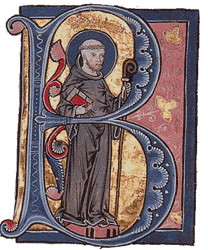
It became quite prevalent throughout Western Europe during the middle ages due to the associations with St. Bernard of Menthon, a Swiss monastic credited to building hospices in the Alps, (it is from him that the breed of dog, the St. Bernard, takes its name) and St. Bernard of Clairvaux, an influential 12th-century French theologian who is revered as both a saint and Doctor of the Church by the Catholic Church.

As of 2009, the name fell out of the U.S. top 1000 most popular male names. The highest he ever ranked in U.S. naming history was at # 45 in 1919 and again in 1921.

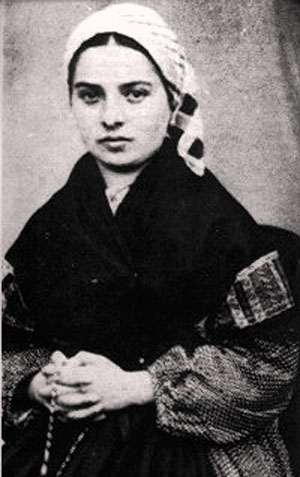
Its more popular feminine version of Bernadette became prevalent, especially among Catholics throughout the Western World, after the Canonization of St. Bernadette Soubirous (née Marie-Bernarde Soubirous). St. Bernadette was a 19th-century French peasant girl credited to seeing visions of the Virgin Mary in Lourdes, France.

Before her recognition throughout the world, Bernadette was primarily a diminutive, used as an affectionate form of the French feminine name, Bernarde.

The last time Bernadette ranked in the U.S. top 1000 was in 1993, coming in at # 891. The highest she ever ranked in U.S. naming history was in 1946, coming in as the 188th most popular female name. Its Hungarian cognate of Bernadett currently ranks in as the 76th most popular female name in Hungary (2009).

Variations

Bernard

Bernardi (Albanian)
Bernal (Aragonese/Galician)
Beñat (Basque)
Bernarta (Basque)
Bernez (Breton)
Bernat (Catalan)
Bernardu (Corsican/Sardinian)
Bernard (Croatian/Czech/English/French/German/Polish/Romanian/Romansch/Slovenian/Swedish)
Bernhardt/Bernhart (Danish/Finnish/German/Norwegian/Swedish)
Berend (Dutch)
Bernaard (Dutch)
Bernhard (Dutch/Estonian/German)
Päärn/Pärn/Pärno (Estonian)
Pääro (Estonian)
Pearn/Pearu (Estonian)
Bernardin (French/Romansch)
Bent (Frisian)
Bernaldo (Galician)
Bernaldino (Galician)
Berendt (German)
Berinhard (German: archaic)
Bernd/Berndt (German/Swedish)
Bernárd (Hungarian)
Bernát (Hungarian)
Bennardo/Bennardino (Italian)
Berardo (Italian)
Bernadetto (Italian)
Bernardino (Italian)
Bernardo (Italian/Portuguese/Spanish)
Bernoardo (Italian)
Bearnárd (Irish-Gaelic)
Bernardus (Late Latin)
Bernards (Latvian)
Bierants (Latvian)
Biernis (Latvian)
Bernardas (Lithuanian)
Beurnard (Poitevin)

Bernadette

Bernardete (Albanian/Portuguese)
Bernada (Catalan/Occitanian)
Bernadeta (Catalan/Occitanian/Polish)
Bernarda (Croatian/German/Italian/Slovene/Spanish/Polish/Portuguese)
Bernadette (English/French)
Bernarde (French)
Bernardine (French)
Bernadett (Hungarian)
Bernadetta/Bernardetta (Italian)
Bernardina (Italian)
Bernadetė (Lithuanian)
Bernardka (Slovenian)
Bernardita (Spanish)

Common English diminutives for both names are Bernie & Benny.

In French it is Bébère, Nanard and Bernie for males.

A Polish female diminutive is Bernardetka.

The designated name-day is August 20.

Source

  1. http://www.behindthename.com/name/bernard