Rehoboth (Hebrew: רְחוֹבוֹת, Reḥovot) is a biblical place-name from the Old Testament. It is usually translated as “broad places,” being from the Hebrew root rḥb (רחב), meaning “to be wide, spacious.”
In Genesis 26:22, Isaac digs a well and names it Rehoboth. There are other towns called Rehoboth mentioned in Genesis 10:11 and 36:37.
Rehoboth, Massachusetts, founded in 1643, is one of the oldest towns in the state. Rehoboth Beach is the name of a town in Delaware, and Rehovot is the name of a town near Tel Aviv in Israel.
As a male given-name, it came into use among 18th-century American protestants due to its Biblical associations.
It’s an edgy choice with early colonial American appeal. Are you daring enough to use this name?
The name ultimately comes from Greek Νεῖλος (Neílos), the ancient Greek name of the River Nile.
In Ancient Egyptian, the river was called jtr-w (Iteru, “Great River”). The Greek form Neílos may reflect a Semitic root n-h-r, meaning “river,” which is also the source of Hebrew nahar and related words.
In Greek mythology, Neilos was personified as the river-god of the Nile, one of the Potamoi (river deities).
The Latinized form Nilus became a well-known monastic name and is borne by several Christian saints, including St. Nilus the Syrian, a disciple of St. John Chrysostom, and St. Nilus of Sinai.
Nil is the Slavic form used for males. In Turkey, the same name arose independently as a female given name of the same etymology.
In Italian, it may also be used as a short form ofDanilo.
An Italian feminine form is Nila.
Nile is an English name that was often used in reference to the surname. It may make an interesting modern adaptation for parents looking for a cool but modern saints name.
Pacificus is a Late Latin name derived from pax, meaning “peace,” or “peaceful” more specifically.
It’s Italian form of Pacifico was borne by a follower of Saint Francis of Assisi and an 18th-century Italian saint. The designated name-day for the latter is September 24th.
Its feminine form of Pacifica has been in use in Italy since at least the 16th-century.
Its French form of Pacifique is a unisex name and experienced some usage in France at the turn of the 20th-century. It appeared in the French Top 1000 Most Popular Male Names between 1901-1909, peaking at #446 in 1909. Today, the name is an obsolete gem.
Today, Pacific, with the nickname Pace, may make an unusual place and nature name for a boy. Though rare, it is the legit English translation of this name.
S.L. Uckelman. “Pacifica”. In S.L. Uckelman, ed. The Dictionary of Medieval Names from European Sources, Edition 2023, no. 1. http://dmnes.org/2023/1/name/Pacifica.
The male name Onelio is rare in Italy and appears mainly in Tuscany and Emilia-Romagna; its feminine forms of Onelia is slightly more common. Its origin is uncertain.
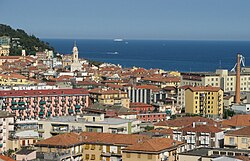
Some scholars connect it to the Ligurian city of Oneglia, which also produced the surnames Onelli and Onelio. Others link it to the Latin Honorius (“honourable”), while less common theories suggest the Latin alnus (“alder tree”) or the Old Germanic awi (“health”).
Italian immigrants introduced the name to Brazil, where it has occasional use.
Related masculine forms include Onello and Oneglio. The feminine counterpart is Onelia, with other variants such as Oneglia and Onella.
The name is Hebrew, either derived from צל (tsel) (shadow) or צלל (tsalal) (to ring like a bell). In Genesis 4:19, it is the name of one of the two wives of Lamech.
Though it never became a widespread Jewish name until recently, it had usage in the Protestant Anglo world since the 16th-century and experienced mild popularity in the mid to late 19th-century. It appeared in the U.S. Top 100 between 1881 and 1886, peaking at #679. It was borne by Zillah Oakes (circ. 1870s), the namesake of the city of Zillah, Washington. It was also borne by New Zealand Politician, Zillah Smith Gill (1859-1937).
In English literature, Lord Byron used it as the name of the wife of Abel in his 1821 play, Cain. It is the name of a servant in Emily Brontë’s Wuthering Heights (1847), and the name of the titular heroin in the 1865 operetta by Australian composer, William Wilkins Russell. In recent years, it is the name of a character in Madeleine L’Engle’s, A Swiftly Tilting Planet (1978).
It may have occasionally been used as a form or short form of Cecilia.
The name is derived from the Latin perpetuus, meaning “continous; perpetual.” It was borne by a 3rd-century Christian matyr and saint, the companion of St. Felicity and it was also the name of the sister of St. Augustine of Hippo.
Perpetua and its various forms have been in sporadic use throughout the Catholic world. In Italy, it became synonymous with a priest’s housekeeper. This is due to the eponymous character in Alessandro Manzoni’s 19th-century novel, “The Betrothed.“
It experienced sporadic use in England in the 1920s after the release of the now lost 1922 film, Perpetua also known as Love’s Boomerang.
It has recently appeared in English literature as the name of minor characters in Bridget Jones’s Diary (Helen Fielding), and in the Harry Potter series (J.K. Rowling).
It was borne by Scottish landscape painter, Perpetua Pope (1916-2013).
It is the name of Cape Perpetua Oregon which was named for St. Perpetua as well as a typeface.
It’s designated name-day is February 1, March 6th and March 7th.
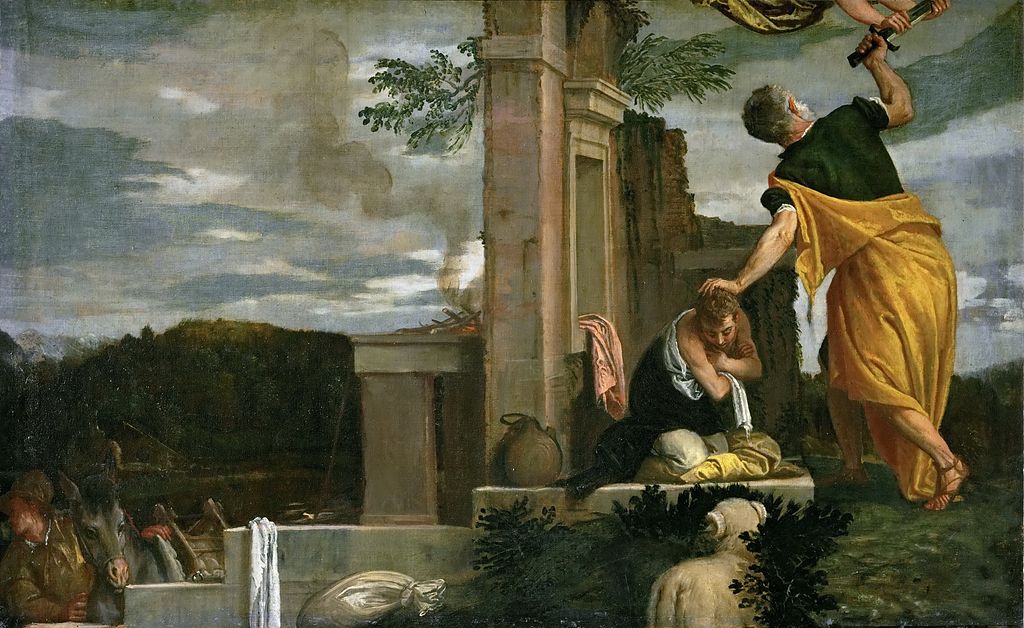
The name comes directly from the Biblical Hebrew יִרְאֶה (jireh) meaning, “to provide” or “to see.” In the Bible, it is the name of a place the where Abraham attempted to sacrifice Isaac before God intervened and provided a ram in his place. It has been in sporadic use as both a male and female given name in England and the United States since the 17th-century. It was born by a 19th-century Michigan politican, Jira Payne.
It has recently appeared in the U.S. Top 1000 Most Popular Male Names, coming in at #848 (2023). Its sudden appearance may have been popularized by the Elevation Worship and Maverick City Music song of the same name, released in 2021.
Its Spanish version of Yireh, is used as a unisex given name in Latin American countries.
Drew is the modern English form of the Anglo-Norman Dreu(x) which ultimately comes from the Frankish, Drogo, which is likely derived from the Proto-Germanic, *draugaz (illusion, mirage), which later transformed into the Saxon drog (ghost, illusion), compare to the Old Norse word draugr, a type of vampiric supernatural being in Old Norse folklore. The name was introduced into England by the Normans. It has also been linked with the Slavic dragan (dear, precious) but this etymology is less likely.
Dreu(x) was borne by a son of Charlemagne (8th-century CE). It was also borne by a 12th-century saint of Flanders, who has the distinction of being the patron saint of coffee.
It is the progenitor of the French surname Drieux.
Dreux is also the name of a commune in France, but this has a different etymology, possibly related to the Latin Drocus (unknown meaning).
In the 20th-century, Drew was often listed as an offshoot of Andrew in many baby name books. It also was occasionally bestowed on females.
Drew currently ranks in as the 512th most popular male name in the United States (2022), and the 840th most popular female name. As of 2021, it was the 790th most popular male name.
Notable bearers are Drew Carey and Dr. Drew Pinsky.
Drogo is the name of several Hobbits in the Tolkien universe and of the name of the Dothraki lord in the George R.R. Martin book, A Throne of Ice and Fire.
Nectar is the English form of the Greek NektariosΝεκτάριος, which is derived from νέκταρ (nektar), meaning “nectar, the drink of the gods. Nectar is not a name that has ever been in common use in the English-speaking world, but since it is the name of several Eastern and Western Christian saints, the proper English male translation of the name would be Nectar; or it would have appeared thus in the calendar.
It was borne by St. Nectaire of Auvergne, a 4th-century Christian missionary to the Gauls in what is now the Massif Central region of France. According to Gregory of Tours, he was sent by Pope Fabian, along with his brothers, where he transformed a temple that was dedicated to Apollo on Mont Cornadore into a cathedral that still stands, and was subsequently beheaded by the local Gaulic chieftain. The commune of Saint-Nectaire in the Puy-de-Dôme department of France gets its name from him, as does the cheese of the same name; or the latter technically comes from the Marshal of Senneterre, which is a linguistic corruption of Saint-Nectaire.
Osborn and Asbjørn are both composed of the Norse elements áss (god) & bjǫrn (bear), essentially meaning “divine bear.” Osborn is the modern Anglo-Saxon equivalent of Osbeorn, the latter of which was prevalent in Anglo-Saxon England and survived into the Norman period as Osbern, later developing into the common English patronymic surnames of Osbourne & Osbourn. Its Scandinavian equivalents still survive today in the forms of Esben (Danish), Espen (Danish, Norwegian) and still Asbjørn (Norwegian); and Asbjörn & Esbjörn (Swedish).
Osbeorn was borne by the son of Siward of Northumbria (circ. 11th-century CE) and one of the fallen of the Battle of the Seven Sleepers in Scotland. It was also borne by Osbern de Crépon (circ. 11th-century CE), one of the stewards of the Duke of Normandy. There are several other famous Anglophone personages who bear it as a surname and forename.
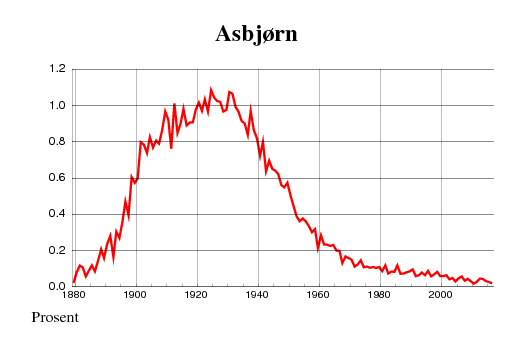
Asbjørn appeared in the Norwegian Top 100 Male Names between between 1945 & 1967, it peaked at #35 in 1946-7, while Espen appeared in the Top 100 in Norway between 1957-2004, peaking at #8 in 1982.
The designated name-day for Asbjörn is May 10th in Sweden.
General Scandinavian diminutive forms used in all Norse countries are Ebbe, Bjarne & Bjarni.
Short forms in English include Oz(z), Ozzie & Ozzy.