Chad

Gender: Masculine
Origin: English
Eng (CHAD)

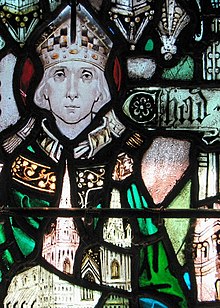
The name is a modern English form of the Anglo-Saxon, Ceadda (CHAD-duh). The meaning and origins of the name are somewhat of a mystery, but since St. Chad was believed to have been of Celtic origins it has been suggested that it may be a derivative of the Welsh, cad, meaning “battle.”

The name was borne by a major 7th-century English saint. His cult was very popular in England before the Protestant Reformation and the name seems to have died out with the Reformation as well. Chad was not revived until the mid-20th-century. Between 1972-1973, Chad peaked at its highest coming in as the 23rd most popular male name in the United States. As of 2010, he is the 547th most popular male name.

The designated name-day is March 2nd.

Source

  1. http://www.behindthename.com/name/chad


‘Aisha, Aisha

Gender: Feminine
Origin: Arabic عائشة
Meaning: “alive”
(ah-EE-shah)

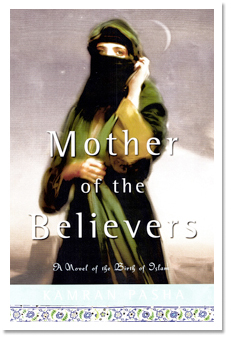
The name has to be one of the most popular female names among Sunni Muslims as it was borne by the second wife of the prophet Muhammed and according to the Sunnis, she was his favorite wife. After Muhammed’s death, ‘Aisha went to war against Ali the fourth, and as a result, she is viewed negatively among some Shi’a Muslims.

The name itself is derived from the Arabic meaning, “alive” and it is currently the 96th most popular female name in England (2009).

In the United States, it first caught on as a given name among non-Muslims during the 1970s, particularly among African-Americans. The inspiration may have been Princess Aisha of Jordan, daughter of King Hussein (b.1968) and in 1975, Stevie Nicks named her first daughter, Aisha.

Its rankings in other countries are as follows:

# 25 (Bosnia & Herzegovina, 2010 as Ajša)
#478 (the Netherlands, 2010)
#682 (United States, 2010)

Other forms of the name include:

Aisha (Albanian)
Ajshja (Albanian)
Aixa (Asturian: obscure, used in the Middle Ages among the Moors’ of Asturia)
Aiša/Ajša (Bosnian)
Àïxa (Catalan obscure, used in the Middle Ages among the Moors’)
Aïché/Aché (Chadian)
Aïsja (Dutch)
Aisha  بکر (Farsi)
Aïcha (French: used among French-speaking Arabs)
Aischa (German)
Ayesha आयेशा (Indian)
Aisyah (Indonesian/Malay)
Ajsha Айша (Kazakh/Chechen)
Aisza (Polish: obscure. This was used among Polish-Tatar Muslims of the Polish-Common Wealth during the 16th-century)
Aissatou (Senegalese)
Caa’isha (Somalian)
Aisa (Spanish: obscure, used in Medieval Spain among Spanish Muslims)
Asha (Swahili)
Eshe (Swahili)
Gayshә Гайшә (Tatar)
Aişe (Turkish: archaic)
Ayşe (Turkish)

Rory, Ruaidhrí

Gender: Masculine
Origin: Gaelic (Irish)
Meaning: red king)
(RORE-ree)

Rory is an anglicized form of the Irish Gaelic male name, Ruaidhrí, which is composed of the Gaelic words ruaidh (red) and  (king). The name was borne by two Irish kings, notably the last high king of Ireland who ruled in the 12th-century.

Its more modern Gaelic equivalent of Ruairí is currently the 66th most popular male name in Northern Ireland and the 88th most popular in Ireland (2010). Rory itself is the 37th most popular name in Scotland (2010). His rankings in other countries are as follows:

# 57 (Ireland, 2010)
# 61 (Northern Ireland, 2010)
#750 (United States, 2010)

Other forms of the name include:

Ruairí (Irish)
Ruaidrí (Irish)
Ruairi (Scottish)
Ruairidh/Ruaraidh/Ruaridh (Scottish)

Source

  1. http://www.behindthename.com/name/rory

Holiday Season Names

Originally this post was entitled Christmas names, but I decided to change the topic to Holiday season names in general. Whether you are celebrating Christmas, Devali, Hanukkah, Yuletide, Kwanzaa or even Yalda, below are a list of names that have a seasonal feel. Enjoy!

Have a Happy Holiday and a Merry Christmas!

Female

  • Adoración (from the Spanish meaning, “adoration”, the name is usually given in reference to the Adoration of the Magi on January 6th. Adora is another variation)
  • Atiya (an Arabic name, it is a feminine form of Ata, meaning, “gift.”)
  • Amjalina (from the Belarusian word for “mistletoe”, it is also the name of a village in Brest. ahm-yah-LEE-nah)
  • Aoi (from the Japanese  ” meaning “holly.”)
  • Božica (from the Serbian and Croatian word for Christmas and often used on girls born during the Christmas season. boh-ZHEET-sah)
  • Chipo (the name is from the Shona word for “gift”, perhaps a good option for a little girl born during Kwanzaa).
  • Cinnamon
  • Epiphany (January 6th marks the epiphany and traditionally the official end of the Christmas season)
  • Eudora (this option is never listed on the Christmas themed list I see on the baby name blogs. From the Greek, meaning “good gift”, this would make a beautiful and unique choice for a little girl born during the Holiday season).
  • Eve (For a Christmas Eve baby)
  • Ginger
  • Godiva (Godiva Chocolates are occassionally given as a gift during the Holiday season, plus it is from the Anglo-Saxon meaning, “god’s gift.”)
  • Hadiyya (another easily pronounceable Arabic choice meaning “gift.”)
  • Hestia (from the Greek meaning “hearth; fireside.”)
  • Inbal (from the Hebrew meaning “tongue of a bell.” Also would make a great Hanukkah names)
  • Ling (from the Chinese meaning “bell chime”)
  • Metrodora (from the Greek meaning, “mother’s gift”)
  • Mjata (from the Belarusian nature name meaning “mint.” MYAH-tah)
  • Nadzieja (from the Polish and Belarusian word meaning “hope.” nod-JAY-yah)
  • Nina (although often viewed as a form of Anne, this is also a Quecha name meaning, “fire.”)
  • Rei (from the Japanese meaning “bell.”)
  • Saffron (traditionally used in Scandinavia, especially in Sweden, as a holiday spice, especially to flavor the famous lussekatte (St. Lucy buns)
  • Sterre (from the Dutch word for star and currently a very trendy female name in the Netherlands. STER-reh)
  • Suzu (another Japanese name meaning “bell.”)
  • Tisa (from the name of the Slovene river which also coincides with the word for the yew tree. TEE-sah)
  • Tuyet (from the Vietnamese meaning “snow.”)
  • Wigilia (pronounced vee-GEEL-yah, this is the Polish word for Christmas Eve although rare, it is occassionally used as a given name)
  • Yalda (name of the Persian holiday which celebrates the Winter Solstice, it is also a very common female name in Iran).
  • Zavjeja (from the Belarusian nature name meaning “blizzard” zah-VYAY-yah)
  • Zhuravina (from the Belarusian nature name meaning “cranberry.” zhoo-rah-VEE-nah)
Male
  • Aputsiag (from the Greenlandic meaning, “snowflake.”)
  • Ata (from the Arabic, meaning, “gift.”)
  • Bor (from the South Slavic word for “pine tree.”)
  • Bożydar (from the Polish literally meaning “god’s gift.”)
  • Csaba (bonus: it is a Hungarian name that can meaning either shepherd or gift. It is pronounced CHAH-baw and it is currently a very trendy name for Hungarian baby boys).
  • Celyn (from the Welsh meaning “holly” KEL-in)
  • Darko (a South Slavic name literally meaning “little gift.”)
  • Doron (from the Hebrew meaning “gift” this name would also make a great Hanukkah choice.)
  • Edur (from the Basque meaning, “snow.”)
  • Hurik (from the Armenian meaning, “small fire.”)
  • Iker (from the Basque meaning “adoration”, used in reference to the Adoration of the Magi which occurs on January 6th).
  • Ivor (from the Old Norse meaning, “yew tree.”)
  • Joash (from the Biblical Hebrew meaning, “fire of Yahweh”).
  • Kirabo (from the Lagunda meaning, “gift”, the name is also reminiscent of the animal name, Caribou. This may make an interesting choice for a Kwanzaa baby).
  • Mattan (from the Old Hebrew name meaning simply, “gift,” a cool and more unusual alternative to Matthew).
  • Milad (from the Arabic meaning, “Christmas”, the name is sometimes used among Coptic and Arabic Christians as a male given name).
  • Neo (another cool African name meaning “gift” in Tswana, bonus, it also means “new” in Greek, it would also make a great name for a New Years baby.)
  • Oren (from the modern Hebrew meaning, “pine tree.“)
  • Plamen (from the Bulgarian meaning, “flame; fire.“)
  • Pyry (from the Finnish meaning “snowstorm; blizzard.”)
  • Shai (from the Hebrew meaning, “gift”, pronounced as SHY)
  • Yule

Conrad, Cord, Kurt & Koen

It sounds like it could be the name of a law firm, but all of the above are derivatives of the Germanic name Conrad.

Conrad is composed of the Germanic elements, kuoni (brave) and rad (counsel). It was borne by a 10th-century Bavarian saint, and his name has left its mark on Catholic Germany since. In fact, it was a very popular name in Medieval Germany and Konrad has seemed to have been so common that the proverb Hinz und Kunz (the equivalent of the English, Every Tom, Dick & Harry) was created.

It was also borne by several illustrious German kings and dukes.

Conrad is still a fairly common name  modern Germany and is currently rising in popularity in the United States. As of 2010, it was the 772nd most popular male name. Its Dutch diminutive form of Koen has recently appeared in the U.S. top 1000, coming in as the 940th most popular male name (2010). In the Netherlands, Koen ranks significantly higher, he is the 39th most popular male name (2010). In English, it is pronounced (KOH-en) like the common Jewish surname, while in Dutch it is pronounced (KOON).

In 2009, Konrad was the 44th most popular male name in Poland.

The once popular Kurt and the newly introduced Cord are also Germanic contractions.

Other forms of the name include the following:

Conráu (Asturian)
Korrada (Basque)
Konrad Конрад (Belarusian/Bulgarian/Estonian/Finnish/Polish/Scandinavian/Slovene/Ukrainian/Russian)
Conradí (Catalan)
Conradu (Corsican)
Konrád (Czech/Hungarian/Slovak)
Coenraad (Dutch)
Kiefer (Dutch)
Koenraad (Dutch)
Konradijn/Conradijn (Dutch)
Kuber (Dutch)
Conrad (English/French/German/Swedish)
Konradin (German: archaic)
Kunó (Hungarian)
Konráður (Icelandic)
Corrado (Italian)
Corradino (Italian: archaic)
Konrads (Latvian)
Konradas (Lithuanian)
Kondrat (Polish: archaic)
Conrado (Portuguese/Spanish)
Corràdu (Sardinian)
Currado (Sicilian)
Curradino (Sicilian)

In German, Conrad/Konrad has a plethora of diminutives such as: Cohen, Conni, Conz, Curd, Keno, Koni, Konni, Konz, Kord, Kuno and Kuntz.

Feminine forms include:

Conradine/Konradine (German/Norwegian)
Corrada (Italian)
Corradina (Italian)
Konradyna (Polish)

The designated name-days are: February 14 (Poland), February 19 (Poland), April 21 (Hungary & Poland), June 1 (Poland), August 1 (Poland), October 4 (Poland), November 12 (Estonia & Poland), November 21 (Poland) and November 26 (Poland & Germany).

Source

  1. http://www.behindthename.com/name/conrad
 

Neil, Nigel

Gender: Masculine
Origin: Gaelic
Meaning: debated
Eng (NEEL)

An anglicized form of the Gaelic Niall, the name is of debated meaning, it could either mean “cloud”, “champion” or “passion.”

It was borne by Niall of the Nine Hostages, a 6th-century Irish king and eponymous ancestor of the Uí Néill clan who ruled Ireland from the 6th-century to the 10th-century.

The name caught on among Viking settlers in the form of Njal and it was brought back to Iceland and became popular in other areas of Europe with large viking settlements. It was through the Normans, (descendants of Viking settlers), that the name was first introduced to England and it came to be Latinized as Nigellus later evolving into the common British  name, Nigel.

Nigellus is actually derived from the Latin word niger (black) but was only ever used as a form of Niel. It was incorrectly believed by the early Norman clerics that the Norman form of Néel was from the Norman word for black. The common Middle English spelling was Neal.

Currently Neil is the 683rd most popular male name in the United States, (2010). Its original Gaelic form of Niall (NIE-all) is the 91st most popular male name in Ireland (2010) and the 95th most popular in Northern Ireland (2010). Meanwhile, its late Latin equivalent of Nigel is the 932nd most popular male name in the United States and the 239th most popular in the Netherlands (2010).

A feminine offshoot is the floral, Nigella, borne by British TV chef, Nigella Lawson. It is also the scientific name for the plant known as Love-in-the-Mist.

Other feminine forms include the Scottish Neilina, the Icelandic Njála and the continental Scandinavian Nilsine.

Other masculine forms include:

Nils (Danish/Swedish)
Nigel (English)
Njáll (Icelandic)
Néel (Norman)
Njål (Norwegian)

Source

  1. http://www.behindthename.com/name/neil

Hamza

Gender: Masculine
Origin: Arabic حمزة
Meaning: “strong; steadfast.”

The name is believed to be derived from the Arabic word, hamuza, meaning “strong; steadfast.” The name was borne by the uncle of the Prophet Mohammed, an early convert known for his bravery in battle.

Currently, Hamza 12th most popular male name in Bosnia & Herzegovina, (2010). His rankings in other countries are as follows:

# 97 (Belgium, 2010)
#125 (France, 2008)
#198 (the Netherlands, 2010)
# 757 (United States, 2010)

Other forms of the name include:

Həmzə (Azeri)
Ḥamza Х̣амза (Chechen/Kazakh/Tatar/Russian/Uzbek)

Source

  1. http://www.behindthename.com/name/hamza


Brice

Gender: Masculine
Origin: English
Eng (BRICE); Fre (BREES)

The name is derived from the Latinized Gaulish name, Bricius, which is in turn derived from a Celtic root either meaning “speckled” or “enchantment.”

The name was borne by a 5th-century saint and disciple of St. Martin of Tours.

Currently, Brice ranked in as the 867th most popular male name in the United States (2010), unfortunately, it’s non-legit spelling of Bryce is the 112th most popular male name. This spelling has only seemed to have appeared within the last 10 years, possibly to reflect the proper English pronunciation.

Other forms of the name include:

Brcko (Croatian)
Bricije (Croatian)
Brizio (Italian)
Brictius (Late Latin)
Bricius (Late Latin)
Brixius (Late Latin)
Bricio (Spanish)

In France, the designated name-day is November 13.

Source

  1. http://www.behindthename.com/name/brice

Ramiro

Gender: Masculine
Origin: Spanish/Germanic
Meaning: “famous advice.”
(rah-MEE-ro)

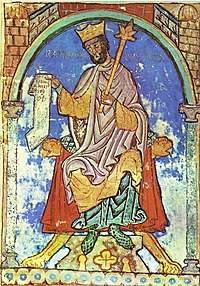
The name is derived from the Latinized form a Visigothic name, Ramirus. It is composed of the Germanic elements ragin (advice) and mari (famous).The name was borne by a 6th-century Leonese saint and martyr. It was also borne by several Spanish kings.

Currently, Ramiro is 770th most popular male name in the United States (2010).

Other forms of the name include:

Ramir (Catalan)
Ramire (French)

Source

  1. http://www.behindthename.com/name/ramiro

Landry

Gender: Masculine
Origin: German
Meaning: “land ruler.”
Eng (LAN-dree); Fre (LAWn-DREE)

Considered the second oldest surname in France, it is a name steeped in history and religion. It is currently one of the most popular male names among Cajun-Americans.

The earliest record of the name Landry is in the 5th-century, where it is recorded as the name of the Bishop of  Sées, later canonized as a saint. In the 5th-century it was borne by another male saint, St. Landry the Bishop of Paris, he is particularly noted for founding the first hospital in Paris, the Hôtel-Dieu. Another Medieval saint who bears the name is St. Landry of Metz.

The name was such a common given name in Medieval France that it later carried over as a patronymic.

St. Landry Parish in Louisiana was named by French settlers in honour of St. Landry of Paris. The name has since fallen out of fashion in France but has remained a classic among the Acadians of Louisiana. In fact, it is currently the 891st most popular male name in the United States, 2010.

The name is derived from the Frankish name, Landericus, which is composed of the Germanic elements, land (land) and ric (power; rule; might).

The name is currently borne by American football player, Landry Jones (b.1989).

It is the name of a town in France, which was also named in honour of St. Landry of Paris.

Other forms of the name include:

Landerik (Czech)
Landerico (Italian/Spanish)
Landeryk (Polish)

Source

  1. http://www.behindthename.com/top/lists/us/2010