Donald

Gender: Masculine
Origin: Scottish
Meaning: “world ruler.”

The name is composed of the Scots Gaelic elements dumno (world) and val (ruler). The name has always been very popular in Scotland and was borne by two different Medieval Scottish kings.

It is currently the 377th most popular male name in the United States, (2010).

Other forms of the name include:

  • Donald (Breton/French/German/Polish)
  • Donal/Donál (Irish)
  • Domhnall (Irish)
  • Domnall (Irish)
  • Domnall/Domnhall (Scottish)

Common nicknames are Don, Donnie and Dolly.

Scottish feminine forms are Donaldina, Donella and Dolina.

Source

  1. http://www.behindthename.com/name/donald


Lawrence

Gender: Masculine
Origin: Latin
Meaning: “from Laurentum.”
Eng (LAW-rents)

The name is derived from the Latin cognomen Laurentius meaning “from Laurentum.” It was popularized by an early Roman deacon, martyr and saint who was roasted alive when he refused to turn over church property to the Roman authorities. According to legend, he is the patron saint of comedians because when he was being roasted he told his torturers “turn me over, I am done on this side.”

It was borne by several other saints.

Lawrence has been a popular given name since Medieval times and it consistently appeared in the U.S. top 100 from 1880-1971. By 1972 it mysteriously and suddenly fell completely out of popularity and it has been so since. It is currently only the 457th most popular male name, (2010).

Other forms include:

  • Nadja/Nadjeh (Arabic: used among Arab Christians)
  • Toufiq  لورنس (Arabic: used among Arab Christians)
  • Loren (Aragonese)
  • Lorient (Aragonese)
  • Lari (Basque)
  • Lawrencij Лаўрэнцій (Belarusian)
  • Laorañs (Breton)
  • Llorenç (Catalan)
  • Larenzu (Corsican)
  • Lovrenco (Croatian)
  • Lovre (Croatian. Currently the 58th most popular name in Croatia, 2010)
  • Lovro (Croatian)
  • Vavřinec (Czech/Slovak: literally from the Czech word for laurel, it has been used as the proper cognate for Lawrence since Christianity was introduced to the area)
  • Laurits/Lauritz (Danish/Estonian/Icelandic/Norwegian)
  • Lasse (Dutch/Norwegian/Swedish. LAHS-se)
  • Laurens (Dutch)
  • Loris (Dutch/French/German/Italian. Currently the 100th most popular male name in France, 2009)
  • Rens (Dutch. Currently the 79th most popular male name in the Netherlands)
  • Larkin (English: a Medieval diminutive form of Lawrence)
  • Lauri (Estonian/Finnish)
  • Lars (Finnish/Norwegian/Swedish. Currently the 14th most popular male name in the Netherlands, the 23rd most popular in Belgium and the 57th most popular in Norway)
  • Lassi (Finnish)
  • Laurent (French)
  • Laurentin (French)
  • Lourens (Frisian)
  • Labhrás (Gaelic) 
  • Loenso (Genovese)
  • Laurenzius (German: archaic)
  • Lenz (German)
  • Lorenz (German)
  • Lavrentios Λαυρεντιος (Greek)
  • Lőrinc (Hungarian)
  • Lárus (Icelandic)
  • Lorenzo (Italian/Spanish. Currently the 5th most popular male name in Italy and 52nd most popular in France (2009). It is also the 187th most popular in the Netherlands and the 322nd most popular in the United States, 2010)
  • Laurentius (Latin)
  • Lau (Limburgish)
  • Lor (Limburgish)
  • Laurynas (Lithuanian)
  • Lawrenz (Maltese)
  • Laurys (Manx)
  • Louothains (Norman)
  • Lavrans (Norwegian)
  • Laurenç (Occitanian)
  • Lleurant (Occitanian)
  • Laurencjusz (Polish)
  • Laurenty (Polish)
  • Wawrzyniec (Polish: literally from the Polish word for laurel, it has been used as the proper cognate for Lawrence since Christianity was introduced to the area)
  • Lourenço (Portuguese)
  • Laurențiu (Romanian)
  • Lavrentie (Romanian)
  • Lurintg (Romansch)
  • Lavrenti Лаврентий ლავრენტი (Russian/Georgian)
  • Larentu (Sardinian)
  • Labhrainn (Scottish)
  • Lovrenc (Slovene)
  • Laurisch (Sorbian)
  • Lorencio (Spanish: Medieval)
  • Lorens (Swedish)
  • Lavrentij Лаврентій (Ukrainian)
  • Lorenso (Venetian)
A common English diminutive is Larry a less common one Laurie
  • Toufiqia (Arabic)
  • Laurendia (Basque)
  • Laurenza (Corsican)
  • Laurenzia (Corsican)
  • Laurentien (Dutch)
  • Renske (Dutch)
  • Laurence (French)
  • Laurentine (French)
  • Lavrentia Λαυρεντία (Greek)
  • Lorentina (Italian)
  • Lorenza (Italian/Spanish)
  • Lorenzina (Italian)
  • Larentia (Latin)
  • Laurentina (Latin)
  • Laurencja (Polish)
  • Laurentyna (Polish)
Source

Lance

Gender: Masculine
Origin: English
Meaning: “land.”
(LANTZ)

The name is derived from the Old German name, Lanzo which is derived from the Germanic element, land meaning “land.”

In recent years the name has come to be associated with the weapon and it is most likely the reason why the name is used.

It is currently the 445th most popular male name in the United States, (2010).

Other forms are the German Lanze and Lanzo.

The name is borne by American cyclist Lance Armstrong (b.1971) and former Backstreet Boy, Lance Bass (b.1979).

Source

  1. http://www.behindthename.com/name/lance


Arabella

Gender: Feminine
Origin: Scottish
Meaning: “invokable”
Eng. (air-uh-BEL-luh)

A popular female name in Medieval Scotland it is derived from the Latin orabilis meaning “invokable.”

The name was borne by Lady Arabella Stuart (1575-1615) was a Scottish noblewoman who had been considered a successor to Queen Elizabeth I.

Currently, Arabella is the 386th most popular female name in the United States, (2010).

Other forms of the name include:

  • Arbella (English: archaic)
  • Orabel (English: archaic)
  • Orable (English: archaic)
  • Orabilis (Latin)
Source

Dulce

Gender: Feminine
Origin: Spanish/Portuguese
Meaning: “sweet; candy.”
DOOL-the (Spanish), DOOL-se (Latin American Spanish)

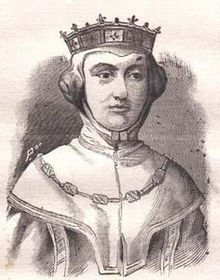
The name comes directly from the Spanish and Portuguese word for “sweet; candy” and has been used in the Iberian peninsula since the early Middle Ages. It was borne by Douce I of Provence (1090-1129), Douce II of Provenece (b.1166) Dulce of Barcelona (1160-1198) and Dulce I of Léon (b.1195).

Currently it is the 409th most popular female name in the United States, (2010).

It was commonly bestowed among Jews and Christians. Other forms of the name include:

  • Dulcía (Aragonese)
  • Dulze (Basque)
  • Esti (Basque)
  • Estinñe (Basque)
  • Dolça (Catalan/Ladino/Occitanian/Provençal)
  • Dowse (English: archaic)
  • Duce (English: archaic)
  • Dulcie (English)
  • Dulcinea (English/Spanish)
  • Douce (French: archaic)
  • Aldonza/Aldonça (Galician)
  • Dolce (Italian: archaic. DOLE-chay)
  • Zusa (Yiddish. A direct translation of Dolça, this was used among Spanish-Jews who had been expelled from Spain and had settled in Germany and Poland introducing it to Yiddish-speakers, thus creating a Yiddish cognate. A masculine cognate is Zusman)
Source

Gideon

Gender: Masculine
Origin: Hebrew גִּדְעוֹן

The name name could either be Hebrew for “destroyer” or “tree feller.” It is borne in the Old Testament by one of the Hebrew Judges, (Judges 6–8). He is also mentioned in Epistle to the Hebrews: Chapter 11 as an example of a man of faith.

In the Book of Mormon, it is borne by a powerful Nephite leader.

Regarded as a saint in the Catholic Church, it was occasionally used as a given name in Medieval England, but exploded in popularity after the Protestant Reformation, especially in Germany and the Netherlands.

Currently, Gideon is the 461st most popular male name in the United States and the 496th most popular in the Netherlands, (2010).

Other forms of the name include:

  • Gideon Гидеон (Afrikaans/Dutch/English/Estonian/German/Scandinavian/Serbian)
  • Gedeó (Catalan)
  • Gédéon (French)
  • Gid’on גִּדְעוֹן (Hebrew)
  • Gedeon Гедео́н (Hungarian/Polish/Russian)
  • Gedeone (Italian)
  • Gideonas (Lithuanian)
  • Gideão (Portuguese)
  • Gedeón (Spanish)
The name was borne by the first discoverer of the dinosaur, Gideon Mantell (1790-1852).
Common English diminutives are Gid and Giddy.
Source


Adelaide

Gender: Feminine
Origin: Old German
Meaning: “noble kind; noble sort.”
Eng (AD-ə-layd)

An English form of the German name, Adelheid, it is composed of the Germanic elements, adel (noble) and heid (kind, sort, type). It was borne by a 10th-century saint and wife of Otto the Great.

Its popularity in the English-speaking world was sparked in the 19th-century when William IV took Adelaide of Saxe-Meiningen as his wife. As a result, several places throughout the former British Empire were named in her honour, including Adelaide, Australia.

In addition, the name has been borne by several other royal personages throughout history.

Currently, Adelaide is the 434th most popular name in the United States, (2010).

Other forms of the name include:

  • Adelgjejda Адэльгейда (Belarusian)
  • Adeljajda АдэлЯйда (Belarusian)
  • Adelaid (Breton)
  • Adelaida Аделаида (Catalan/Czech/Hungarian/Russian/Slovene/Spanish)
  • Adléta (Czech)
  • Adelaide (Danish/English/Italian/Portuguese/Swedish)
  • Alhed (Danish)
  • Adelheid (Dutch/Finnish/German/Norwegian)
  • Adelheidis (Dutch)
  • Aleida (Dutch/German)
  • Alida (Dutch/Hungarian/Latvian)
  • Aadelheide (Estonian)
  • Alide (Estonian)
  • Adélaïde (French)
  • Alette (French/Norwegian)
  • Aleit (Frisian)
  • Elke (Frisian)
  • Talea (Frisian)
  • Tale (Frisian)
  • Talia/Thalia (Frisian)
  • Talisa (Frisian)
  • Talke/Thalke (Frisian)
  • Adelaira (Galician)
  • Delaira (Galician)
  • Alheit (German)
  • Alke (German)
  • Heide (German)
  • Heidi (German)
  • Adina (Hungarian)
  • Aletta (Hungarian/Italian)
  • Alett (Hungarian)
  • Alitta (Hungarian)
  • Adelasia (Italian: archaic)
  • Aalis (Medieval French)
  • Alides (Norwegian: archaic)
  • Adalais (Occitanian)
  • Asalais or Azalaïs (Occitanian)
  • Ahlheid (Plattdeutsch)
  • Ahlheit (Plattdeutsch)
  • Adelajda (Polish)

Common English diminutives are: Addie, Del and Lady.

The designated name-days are: January 30 (Poland), February 5 (Poland), December 12 (Poland), December 16 (Estonia/Germany/Poland), December 17 (France).

Source

  1. http://www.behindthename.com/name/adelaide

Khalil

Gender: Masculine
Origin: Arabic خليل
Meaning: “friend.”

The name is derived from the Arabic word for friend. In the Qu’ran, it is a title given to the Prophet Mohammed (Khalil Allah) meaning, “friend of God.”

It is currently the 390th most popular male name in France and the 501st most popular in the United States, (2010).

Another form of the name is the Albanian, Bosnian and Turkish, Halil.

Feminine form is Khalila  خليلة (Arabic).

Source

  1. http://www.behindthename.com/name/khalil

Cyrus

Gender: Masculine
Origin: Persian

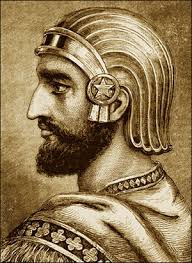
The name is found in History and in the Old Testament as the name of one of the most powerful leaders who ever lived, Cyrus the Great (c. 600 BC or 576 BC–530 BC). He was a conqueror of the Babylonians and who, according to the Bible, freed the captive Jews, allowing them to return to their homeland. It is also borne by several other Persian kings.

Cyrus, in its Persian form, has always been a popular male name in Iran. In the English-speaking world, it did not catch on until after the Protestant Reformation. Currently, Cyrus is the 488th most popular male name in the United States, (2010). The name is commonly used among Iranian-Americans, due to it being such a classic name in Iran and the fact that it is easily translatable to English.

As for its etymology, general consensus agrees that it may derive from the ancient Persian elements khor (sun) and vash (likeness). However, the noted linguist, Karl Hoffman (1915-1996), argued that it is based on an Indo-European root meaning “to humiliate.”

Other forms of the name include:

  • Kores (Afrikaans)
  • Kyowros Կյուրոս (Armenian)
  • Ciru (Asturian)
  • Kir Кир (Azeri/Belarusian/Bosnian/Bulgarian/Croatian/Kyrgyz/Polish/Russian/Rusyn/SerbianUkrainian)
  • Kuir (Basque)
  • Ziro (Basque)
  • Kirus (Breton)
  • Cir (Catalan/Occitanian)
  • Kýros (Czech/Icelandic/Slovak/Slovene)
  • Cyrus (Dutch/English/French/Latin/Polish/Romanian)
  • Kyros Κυρος (Estonian/German/Greek/Scandinavian)
  • Kyyros (Finnish)
  • Cyr (French)
  • Syrus (Frisian)
  • Cíoras (Gaelic)
  • K’iros კიროს (Georgian)
  • Koresh כּוֹרֶשׁ (Hebrew)
  • Círus/Cýrus (Hungarian)
  • Kurus (Hungarian)
  • Cirino (Italian)
  • Ciro (Italian. CHEE-ro)
  • Cirotto (Italian)
  • Kurushi Куруши (Kyrgyz)
  • Kûruşê (Kurdish)
  • Kīrs (Latvian)
  • Kyras (Lithuanian)
  • Kurusy (Malay)
  • Kurush/Kourosh کوروش‎ (Persian)
  • Ciro (Spanish/Portuguese. SEE-ro; THEE-ro)
  • Kiros (Turkish)
The designated name-days are: January 31 (Poland) and September 12 (Poland).
The name has several feminine offshoots, including Cyra, (Eng. SY-rah), which was a popular female name during the Byzantine empire and the Russian, Kira (KEER-ah). Kira  is currently the 90th most popular female name in Hungary, (2010) and the 308th most popular in the United States, (2010). Other feminine forms include:
  • Kira Кира (Bulgarian/German/Hungarian/Latvian/Polish/Russian/Ukrainian)
  • Cyra (English/Latin/Polish)
  • Kiira (Estonian/Finnish)
  • Kyra (Greek/English)
  • Kíra (Hungarian)
  • Cira (Italian/Spanish)
  • Cirina (Italian)
The designated name-days for Kira are: March 10 (Latvia), March 12 (Russia), July 7 (Poland), October 12 (Latvia). November 7 (Estonia).
Source

Moses

Gender: Masculine
Origin: Debated
Meaning: debated

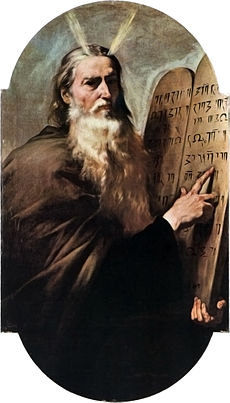
The name is borne in the Old Testament and in the Qu’ran by the a renowned prophet and law giver, who according to tradition was placed in a basket by his Hebrew mother and found by the daughter of Pharaoh (in Judeo-Christian religion) or the wife of Pharaoh (in Islamic tradition) and raised as an Egyptian prince. It is from this tradition that the name is believed to be derived from the Hebrew element משה (mšh) as stated in  Exodus 2:10:

“[…] she called his name Moses (משה): and she said, Because I drew him (משיתהו) out of the water.” (KJV).


It has been suggested that the name is in fact of Egyptian origins, being related to the Coptic elements, mo (water) and uses (saved; delivered) hence: “saved from the water.” Another suggestion is the Egyptian element, ms (child; born) as found in such ancient Egyptian male names as Tuth-Mose and Ram-messes.

The name has always been common among Jews, Muslims and Orthodox Christians, but did not catch on in the English-speaking world until after the Protestant Reformation. Medieval Jews of England used the Middle English form of Moss.

It is currently the 509th most popular male name in the United States, (2010).

Other forms of the name include:

  • Moses (Afrikaans/English/German/Scandinavian/Welsh)
  • Moisiu (Albanian)
  • Musa موسى Муса (Amharic/Arabic/Azeri/Bosnian/Kabyle/Swahili/Tatar/Turkish)
  • Moisen (Aragonese)
  • Movses Մովսես (Armenian)
  • Moises (Basque)
  • Majsjej Майсей (Belarusian)
  • Moizez (Breton)
  • Moisej Моисей (Bulgarian)
  • Moisès (Catalan)
  • Moisije Мојсије (Croatian/Serbian)
  • Moše (Croatian)
  • Mojžíš (Czech/Slovak)
  • Mozes (Dutch)
  • Mooses (Estonian/Finnish)
  • Móses (Faroese/Icelandic)
  • Moïse (French)
  • Maois (Gaelic)
  • Mose მოსე (Georgian/German/Romansch/Swedish)
  • Mouses Μωυσης (Greek)
  • Moshe מֹשֶׁה (Hebrew/Ladino)
  • Mózes (Hungarian)
  • Mosè (Italian)
  • Müsa Мұса (Kazakh)
  • Mosa (Kurdish)
  • Mûsa (Kurdish)
  • Moyses (Latin)
  • Mozus (Latvian)
  • Mozė (Lithuanian)
  • Мојсеј (Macedonian)
  • Moss (Middle English)
  • Moïses (Occitanian/Provençal)
  • Mojżesz (Polish)
  • Moisés (Portuguese/Spanish)
  • Moise (Romanian)
  • Moisej Моісей (Rusyn/Ruthenian)
  • Moiséj Моисе́й (Russian)
  • Muozė (Saimogaitian)
  • Mojzes (Slovene)
  • Muuse (Somalian)
  • Mojsej Мойсей (Ukrainian)
  • Moosõs (Voro)
  • Moishe (Yiddish)
Recently, actress Gwyneth Paltrow bestowed this name on her second child, Moses Bruce Anthony Martin (b. 2006)
Sources