
Photo by Artem Beliaikin on Pexels.com
Arhana is a Sanskrit female name that comes directly from the Sanskrit noun अर्हण (arhana) meaning, “honour; worship; respect.” It’s masculine form is Arhan, which is sometimes transliterated as Arhaan.
Sources
Arhana is a Sanskrit female name that comes directly from the Sanskrit noun अर्हण (arhana) meaning, “honour; worship; respect.” It’s masculine form is Arhan, which is sometimes transliterated as Arhaan.
Sources

The name is derived from the Sanskrit lakṣ (लक्ष्) and lakṣa (लक्ष), meaning “to perceive, observe, know, understand’ and ‘goal, aim, objective.”
It is borne in Hinduism by the supreme goddess, wife of Vishnu, who is revered as the goddess of beauty, prosperity, luxury, contentment and among other things. She is known as Sri (the Noble One) and Akshara (imperishable), among other names. She is mentioned in the Rigveda as early as approximately 1000 BCE and is also revered in Buddhism and Jainism.
The name is mainly feminine, but is sometimes used among males in honour of the goddess in the same way that Mary, Maria, Marie has been used on males among Roman Catholics in honour of the Virgin Mary.
Sources
The name is derived from the Sanskrit प्रीति (prīti), which means, “love; joy; kindness; pleasure; favor; affection; sweetheart.” Another form is Pritika.
It is sometimes transliterations as Preeti & Preetika.
A notable bearer is British Secretary of State for the Home Department, Priti Patel (b. 1972).
Sources
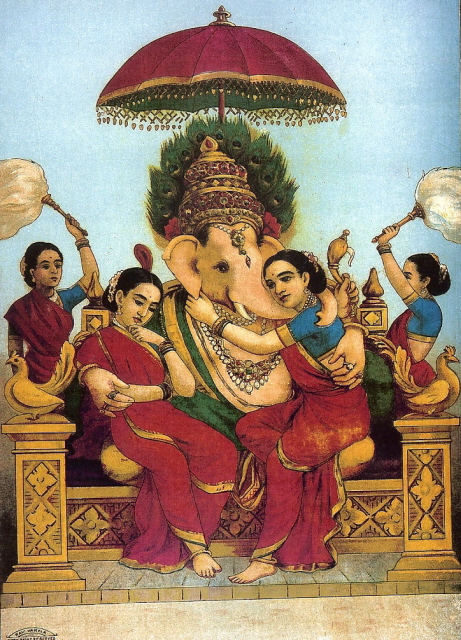
The name comes from the Sanskrit noun सिद्धि (siddhi), meaning “perfection, attainment, accomplishment,” which is a concept that refers to the attainment of magical, paranormal or psychic abilities through meditation and yoga. It is a concept found in Yoga, Buddhism and Hinduism.
In Hinduism, it is the name of one of Lord Ganesha’s wives, the other being named Riddhi.
Sources
The name is derived from the Sanskrit नीरव (nirava), meaning, “calm; silent; noiseless.”
Another transliteration is Neerav.
Sources

By W.carter – Own work, CC0, https://commons.wikimedia.org/w/index.php?curid=69918182
The name Varsha वर्षा is a Sanskrit female name meaning rain and refers to the varsha (rainy) season in the Hindu calendar.
The name is borne by Indian actress, Varsha Usgaonkar (b. 1968).
A masculine form is Varshan.
Sources

The name is most likely from the Sanskrit word रीतिका (ritika) meaning “brass; bell metal,” but may also be linked to the Sanskrit रीति (riti) meaning “stream.”
A notable bearer is Indian actress, Ritika Singh (b. 1993).
Sources

The name is derived from the Sanskrit हरि (hari), which means “brown; yellow; green; fawn-coloured.” The word itself is derived from a proto-Indo-European root word, *ǵʰel- meaning, “to shine; yellow; green.” It is linked with the Persian word zar (gold), the Greek khlores (green), Slavic zelen (green) & zolto (gold); and even shares the same root with the modern English word yellow.
In Hinduism, Hari is used interchangeably with Vishnu and sometimes Krishna.
Hari is used to refere to God or the Supreme Being in many other Southeast Asian religions, such as in Sikhism, Buddhism & Jainism.
Hari in many Indian languages is also used as a euphemism for any brown fauna, such as lions, monkeys and horses. The feminine form of Harí is the name of a mythological matriarch of the monkey species, mentioned in Sanskrit epics.
Currently, Hari is the 440th Most Popular Male Name in England & Wales, (2018).
Sources
