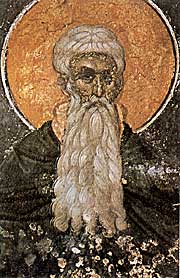
Arsenius

Gender: Masculine
Origin: Greek
Meaning: “virile.”
(are-SEE-nee-us)

The name is a Latinized form of the Greek male name, Arsenios Αρσενιος. The name was borne by a 5th-century Greek saint.

Its Central Asian form of Arsen Арсен is currently the 21st most popular male name in Kazakhstan, (2010).

Other forms of the name include:

  • Arsen Արսեն Арсен (Albanian/Armenian/Azeri/Bashkir/Bosnian/Chechen/Chuvash/Circassian/Croatian/Czecg/Georgian/Kazakh/Kyrgyz/Ossetian/Slovak/Slovene/Tatar/Tajik/Turkmen/Uzbek)
  • Arseniu (Asturian)
  • Arseni Арсений არსენი (Bulgarian/Catalan/Georgian/Russian/Ukrainian)
  • Arsène (French)
  • Arsenios (Greek)
  • Arzén (Hungarian)
  • Arsenio (Italian/Portuguese/Spanish)
  • Arsenijs (Latvian)
  • Arsenijus (Lithuanian)
  • Arsenije Арсеније (Macedonian/Serbian)
  • Arseniusz (Polish)
  • Arsenie (Romanian)

Russian diminutives include:

  • Arsenyushka
  • Arsya
  • Ars
  • Arsyuta
  • Arsyusha
  • Asya
  • Senya
  • Syusha

Ruslan

Gender: Masculine
Origin: Russian Руслан
Meaning: uncertain
(ROOS-lahn)

The name is of uncertain origin or meaning but is believed to be of Turkic origins. It has sometimes been connected with the Turkish male name, Arslan (lion).

It was first used by Alexander Pushkin for his 1820 epic fairytale romance and poem, Ruslan & Ludmila.

The name has been used throughout Russia and Central Asia since.

It is currently the 18th most popular male name in Kazakhstan, (2010).

The feminine form is Ruslana.

Damir

Gender: Masculine
Origin: Slavic Дамир
Meaning: “giver of peace.”
(DAH-MEER)

The name is composed of the Slavic elements, dati (to give) and mir (peace).

It is currently the 17th most popular male name in Kazakhstan, (2010) and the 89th most popular male name in Bosnia & Herzegovina, (2010).

Feminine form is Damira.

Islam

Gender: Masculine
Origin: Arabic
Meaning: “voluntary submission to God.”
(IS-lahm)

The name comes from the Arabic verbal noun meaning, “obedience, subjugation of someone or something, or the voluntary submissal to the Almighty.”

The name is technically unisex, but is more often used for males throughout the Islamic world.

As of 2010, Islam was the 14th most popular male name in Kazakhstan, (2010).

It is borne by the current president of Uzbekistan, Islam Karimov (b.1938).

Amir

Gender: Masculine
Origin: Arabic أمير Амир
Meaning: “prince; commander”
(uh-MEER)
The name is derived from the Arabic word for a prince, ruler, commander or admiral. In the Islamic world, it is used as an honorific title of nobility, office or someone of high eminence. The word itself is derived from the Arabic root amr meaning, “to command.”
The early Islamic caliphs used the title Amir al-Muninin meaning, “Commander of the Faithful”, a reference of their leadership over the adherants of the Islamic faith.
The title was assumed by other Islamic rulers, including sheiks and sultans throughout Central Asia all the way into Saudi Arabic.
The leader of a group of pilgrims to Mecca is often referred to as an amir.
It is used as a given name throughout the Islamic world.
As of 2010, Amir was the 20th most popular male name in Kazakhstan, (2010). His rankings in other other countries are as follows:
  • # 13 (Emir, Bosnia & Herzegovina, 2010)
  • # 28 (Emir, Turkey, 2010)
  • # 66 (Bosnia & Herzegovina, 2010)
  • # 155 (the Netherlands, 2010)
  • # 221 (France, 2009)
  • # 278 (United States, 2010)
Other forms of the name include:
  • Emir (Albanian/Bosnian/Turkish)
  • Əmir (Azeri)
  • Amirs (Latvian)
Feminine forms include, Emira (Albanian/Bosnian/Turkish) and Amira.
Amir can also be a Hebrew male אָמִיר name meaning, “tree top.”

Sabina

Gender: Feminine
Origin: Latin Сабина
Meaning: “Sabine.”
Eng (suh-BEE-nah; suh-BYE-nah).

The name comes from a Roman cognomen, Sabinus, which was usually carried by people of Sabine origins. The Sabines were an ancient Italic people who lived in Central Italy and whose culture was eventually absorbed by the Romans.

The name was borne by an early Christian saint and martyr. It is also the name of a region in Italy which takes its name from the tribe.

It is also the name of a genus of tree, which has probably further popularized the name.

The name could also be from the Arabic, sometimes transliterated as Sabeen, meaning “follower of another religion” and was said to be a name given to the Prophet Mohammed by non-Muslims.

Currently, Sabina is the 13th most popular female name in Kazakhstan, (2010), while Sabine is the 392nd most popular in the Netherlands, (2010).

The name is used throughout Europe and Central Asia.

Other forms include:

  • Sabien (Dutch)
  • Sabine (German/French)
  • Szabina (Hungarian)
  • Sabeena (Indian)
  • Savina (Italian)

Masculine forms include:

  • Sabino (Italian)
  • Savino (Italian)
  • Sabinus (Latin)
  • Sabin (Romanian)

A Czech and Polish diminutive is Sabinka.