Agnes

Gender: Female
Origin: Greek and Latin
Meaning: “lamb; pure, chaste, holy.”
(AG-nes)

    The name is of debated origin and meaning. It may be derived from the Greek hagno meaning “pure; chaste; holy.”

    Likewise, it may be derived from the Latin word for “lamb.” Since the lamb later became associated with purity and chastity, the  two above origins and meanings have become interchangeable.

    The name was borne in Greek mythology by an Oceanid nymph, who was said to have raised the god Zeus.

    On Mt. Lyceaus in Arcadia, there was a well sacred to her. When the region was suffering from drought, she prayed and fasted for several days. Afterward, she touched the surface of the well with a branch of an oak tree, inducing a huge rain storm.

    The name was borne in Christian legend by an early virgin martyr who refused to comply with the wishes of a local suitor who later denounced her as a Christian. The local prefect forced her to go through several public humiliations before beheading her.

    It was also borne by a medieval Czech princess, who was later canonized by the Catholic church as a saint. Known as St. Agnes of Bohemia, she is a minor subject in the popular English Christmas carol, Good St. Wenceslaus, and is still revered as a local heroine in her native homeland. Another saintly namesake is  Agnes of Assisi.

    The name was quite popular throughout Europe in the Middle Ages, due to its strong Christian connotations, the word agnes in Latin was also used in reference to Christ’s sacrifice, as in agnes dei, lamb of God.

    The name was prevalent in England before the Reformation, and fell somewhat out of favor, until it was revived in the late 19th-century.

    In recent years, the name has experienced a surge in popularity in a few European countries.

    In Sweden she was the 16th most popular female name of 2007.

    In Hungary, she was the 75th most popular female name of 2005.

    Other forms of the name include:

    • Agnesa/Agnesë (Albanian: the birth name of Mother Theresa of Calcutta)
    • Inas (Arabic)
    • Oanez (Breton: diminutive form of Agnes pronouned WAH-nes).
    • Agnesza Агнеса (Bulgarian)
    • Agnès (Catalan/French: pronounced like ang-YES in French).
    • Gnese (Corsican)
    • Agneza (Croatian)
    • Anežka (Czech)
    • Agnete/Agnethe (Danish)
    • Nancy (English: originally an English pet form, the name has been used as an independent name for quite awhile, its popularity spiked in the 1940s and 50s and is currently considered dated. Another nickname used as an independent form is Nan.
    • Aune (Finnish: pronounced AU-ne the first part is pronounced like how without the H)
    • Iines (Finnish)
    • Agenete/Agnet (Frisian: other forms include Anjes, Anjesse, Anyesse, Anjet and Anjette.
    • Inessa/Nessa (German)
    • Neeske (German/Frisian: initially a diminutive form, used as an independent given name)
    • Hagne (Greek: pronounced AHG-nay)
    • Agnea (Icelandic: pronounced ahg-NAY-ah).
    • Agnéis (Irish-Gaelic)
    • Agnese (Italian/Latvian: pronounced in Italian like ang-YAY-say. It could also be Latvian pronounced (ahg-NEH-seh).
    • Agnesina (Italian: obscure form)
    • Ines (Italian: a borrowing from the Spanish)
    • Ágnes (Hungarian: pronounced like AHG-nesh). Diminutive form is Ági.
    • Baranka (Hungarian: a literal translation)
    • Agnė (Lithuanian: pronounced AHG-nay).
    • Annis/Annice (Medieval English forms: both are pronounced the same ANN-nis)
    • Agnieszka (Polish: pronounced ahg-NYESH-kah, the name is extremely popular in Poland. Medieval diminutive forms include Jagienka, Jagnusia and Jagna. An older form which has fallen out of usage is the Medieval Jagnieszka. Modern diminutive forms include Aga, Agunia and Agusia.
    • Inês (Portuguese)
    • Agneza (Romanian)
    • Neisa/Nesa/Nescha/Nesina (Romansch: credit goes to Capucine)
    • Agnessa (Russianpronounced on-YEZ-ah).
    • Senga (Scottish: an anagram of Agnes, the name is also said to be from the Gaelic seang meaning “slender.”
    • Agnija Агнија (Serbian)
    • Neza (Slovene: originally a Slovenian diminutive form, it is now used as an independent given name, pronounced NEH-zhah).
    • Hańža (Sorbian)
    • Inés (Spanish/Galician: pronounced like ee-NES, the name has become prevalent in other countries, it is used in Slovenia, Croatia, Latvia, Finland and Estonia, only in Finland and Estonia it is spelled Iines pronounced the same way as in Spanish. A French borrowing is spelled Inès.)
    • Agneta/Agnetha/Agnita/Agna (Swedish/Norwegian: pronounced ung-YEH-tah, ung-NEE-tah and ANG-nah, these forms are considered dated in Sweden being replaced by the trendier Agnes. It is borne by Agnetha Fältskog of ABBA fame )
    • Nesta (Welsh)

    Nicknames include: Aggie, Nessa, Ness and Nessie

    An obscure Italian male form is Agnesio.

    Coincidentally, Agni is an Old Norse male name, also found as Ahni and Hogne. Snorre Sturlasson wrote about a legendary King of Sweden named Agni. He is known for defeating the Finnish chief Frosti and taking his daughter Skjalf hostage, who he later married and had children with. The name is believed to be derived from the Nordic agh meaning “spear point” or may possibly be derived from the word agi meaning “fear; dread.” It seems to have fallen out of usage. Maybe a you would be brave enough to use it on your own son ;).

    Callirhoë

    Gender: Female
    Origin: Greek
    Meaning: “beautifully flowing.”
    Καλλιρρόη
    (KAL-lih-ROW-ee)

      Callirhoe, the sister of Castalia, was a naiad nymph who lived in a fountain in the town of Acarnarnia. She was the daughter of a minor river god, Achelaeus, and wife to the argive prophet, Alcmeon.

      Callirhoe talked her husband into stealing the peplus and necklace of the goddess Harmonia. Alcmeon was struck down by the goddess’ guards after he was caught stealing.

      To avenge his death, Callirhoe, pleaded with Zeus to induce her infant sons to be transformed into men so that they might avenge their father’s death, which Zeus granted.

      The name is also the scientific designation for the Prairie Poppy Mallow.

      Other forms of the name include:

      • Callirrhoé/Callirhoé (French)
      • Kalirojė (Lithuanian)

      Nicknames include: Cal, Callie, and Roe.

      Beatrice, Beatrix

      Gender: Feminine
      Origin: Latin
      Meaning: “blessed; traveller, voyager.”
      Eng (BEE-uh-TRISS); (BEE-uh-TRICKS)

      The name is of somewhat debated meaning, some sources list it as a derivative of the Latin word beatus meaning “blessed” while other sources claim that it is a feminine form of the Latin name, Viator which means, “traveller” or “voyager.”

      The famous Italian poet, Dante Aligheri, author of the Inferno, and other works, used Beatrice Portinari, (a local noblewoman whom the author was in love with), as a recurrent theme in his writings. The name has been consistently popular in Italy since the Middle Ages, she was especially popular in the rest of Europe during the Middle Ages as well, but has gone in and out of fashion since, depending on the country. It was particularly popular in England before the Reformation, where it experienced a revival in the 19th-century. Peter Rabbit author, Beatrix Potter, bore the name (1866-1943).T he name is also borne by several early Christian saints, and it is currently borne by Queen Beatrix of the Netherlands.

      Beatrix has not ranked in the U.S. top 1000 since 1883! As of 2005, however, Beatrix was the 88th most popular female name in Hungary. Her counterpart of Beatrice faired much better in the U.S. statistics, though not anywhere near the top 100, Beatrice at least ranks in at # 833 (2008). In 2006, Beatriz was the 59th most popular female name in Spain.

      Other forms of the name include:
      • Batirtze (Basque)
      • Beatriu (Catalan)
      • Beatrijs (Dutch)
      • Beatrix (Dutch/English/German)
      • Béatrice/Béatrix (French: bay-ah-TREES/bay-ah-TREEKS)
      • Beke/Beeke (Frisian: diminutive forms are Bekje. Pronounced BEH-ke)
      • Beatrisa (German)
      • Beatríke Βεατρίκη (Greek: Modern)
      • Beatricse/Beatrisz/Beatrix (Hungarian: a Hungarian diminutive is Trixi)
      • Beatrice (Italian/English/Romanian/Swedish: in Italian, pronounced, bay-ah-TREE-chay. Bice is a common diminutive form, though in recent years, it is considered dated, and the diminutive form of Bea has taken its place instead)
      • Bicetta/Cettina (Italian: originally diminutive forms, now used as independent given names, though, very obscure)
      • Beatrise (Latvian)
      • Beatričė (Lithuanian)
      • Beatriċi (Maltese: the pronunciation is somewhat similar to the Italian)
      • Beatrycze (Polish: beh-ah-TRIH-cheh)
      • Beatryks (Polish: beh-ah-TRIKS)
      • Beatris (Provencal)
      • Beatrisa Беатриса (Russian)
      • Beatrìci (Sardinian)
      • Beitris (Scottish)
      • Beatrica (Slovene: beh-ah-TREET-sah)
      • Beatriz (Spanish/Portuguese: Spanish Iberian: bey-ah-TREETH, Spanish Latin American: bey-ah-TREES; Portuguese Iberian: bee-ah-TREEZH)
      • Beatrixe (Swiss-German)
      • Betrys (Welsh)

      The names, Beata and Viatrix, have also been linked with Beatrice.

      Common English diminutives are Bea, Bee, Trixie and Trissie. A Portuguese short form is Bia.

      Name-days are: January 17 (Lithuania), February 13 (France), July 29 (Lithuania/Poland), December 2 (Sweden).

      Narcissus

      Gender: Male
      Origin: Greek
      Meaning: “sleep; numbness.”
      (nar-SIS-sus)

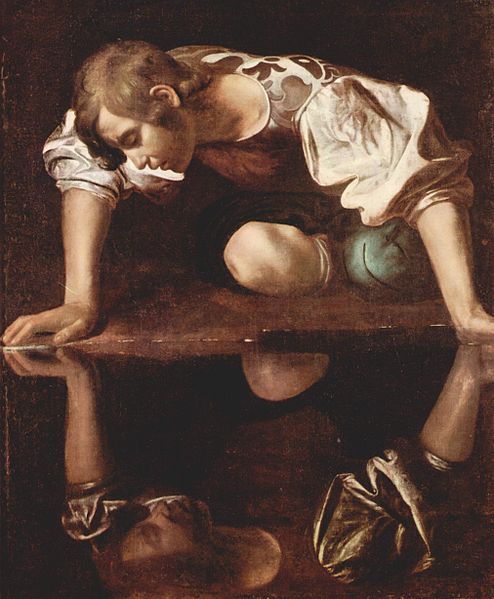
      The name is found in Greek mythology as that of the name of a young boy who thought himself so beautiful that he could not stop staring at his own reflection, until he eventually died.

      The name is also borne by several early Greek saints. The word “narcissim,” is derived from the story of Narcissus.

      • Narcís (Catalan)
      • Narcis (Croatian/Romanian/Serbian/Slovak/Slovene)
      • Narcissus (English/Latin/Dutch)
      • Narcisse (French)
      • Narziss (German/Lexbergerish)
      • Narkissos Ναρκισσος (Greek)
      • Narkisszosz (Hungarian)
      • Narciso (Italian/Spanish/Portuguese)
      • Narcisio (Italian)
      • Narcizas (Lithuanian)
      • Narcyz (Polish)

      Feminine forms are:

      • Nergiz (Azeri: also the Azeri word for daffodil)
      • Narcisa (Italian/Spanish/Portuguese)
      • Narcissa (Latin)
      • Narges نرگس (Persian: also the modern Farsi word for daffodil)
      • Nergis (Turkish: also the modern Turkish word for daffodil)

      Melior, Meliora, Melora

      Gender: Feminine
      Origin: Latin/Breton
      Meaning “better”or “honey-maker.”
      Pronunciation (mel-YORE); (mel-YORE-uh); (meh-LORE-uh).

      The name is somewhat debated, it may come directly from the Latin adjective melior meaning “better” or its possibly a medieval French corruption of the Breton, Meler, which means “honey-maker.”

      The name has evolved to the more modern form of Melora.

      Melior is found in French folklore, it was the name of the sister of Mélusine and Palatyne. She was cursed to keep a sparrow hawk in a palace in Armenia until she was rescued.

      Possible nickname options include Mel, Liora, Lior, Ora, Lora or Lori.

      Palatine, Palatyne, Palestine, Kestenn

      Gender: Female
      Origin: French/Celtic
      Meaning: debated
      Pronunciation French (pah-lah-TEEN); English (pal-uh-TINE)

      The name is found in French folklore as the name of the daughter of Pressyne and Elynas, and the sister of Mélusine.

      Palatine was cursed by her mother to be locked in the Aragonese mountains with her father’s treasures, accompanied by a bear and serpent. Only a knight could free her and save her, on the condition that he be of the same bloodline as her father’s.

      Throughout the years, many knights did just that, but had failed. However, a knight of King Arthur’s court, and the relative of Tristan, decided to climb the mountain and free the princess. He had to scale a mountain covered in venemous snakes, and then face the bear that guarded the entrance to the cave, all of which he killed. Finally he was able to enter the cave, but within the first chamber was a large serpent with one eye. The snake swallowed him up, and the knight was defeated in his quest, because, as it turned out, he was not of the right lineage.

      Years later, Geoffrey-with-the-great-tooth, the nephew of Palatyne, had spent his life saving time, money and energy to rescue his aunt. However, he grew old, and died before he was able to commence his quest, and it is said that till this day, Palatyne still awaits within her mountain top for the right knight of the right lineage to free her. http://www.encylopediamythica.com

      This is also the name of one of the 7 hills of Rome, a location which has its own legends.

      In Ancient Roman folklore, the Palatine is where the Lupercal cave is to be found, the cave where Romulus and Remus were rescued and milked by a wolf. Another legend holds that Hercules defeated the monster Cacus, on the same hill.

      The etymology of the name is debated, whether the fairy Palatyne and the name of the hill are related is not proven, but very possible. The fact that both legends contain a mountain top or hill top as their focal point makes it plausible.

      According to the Roman historian Livy (59 BC-Ad 17), the hill got its name from the Arcadian settlement of pallatium, which is derived from the Latin palatum meaning “palate.” According to another ancient source, Ennius, the name is derived from an Etruscan word meaning “sky” or “heavens.” The term palace gets its name from the Palatine hill.

      Other sources point its etymology to a Breton source, it is suggested that Palatine, (or Palestine in some instances), is a medieval French corruption of the Breton Bac’h C’hesten, bac’h means “cell; unit” and c’hesten means “hive; beehive.” Hence “hive pupa.” This is supported by the fact that in the legend, Palatine is an enclosed in a cell in the mountains like a bee in a beehive.

      The name was borne by an early Christian martyr, Saint Palatino, and its masculine form is still in usage in Italy today. There is also a more obscure feminine version of Palatina.

      Another French form is Palestine (pah-le-STEEN), and a possible Breton form is Kestenn.

      Tiburtius

      Gender: Male
      Origin: Latin
      Meaning: “from the Tibur”

      Derived from the Roman cognomen, Tiburtius, meaning “from Tibur.” Tibur is the old Latin name for Tivoli Italy. This was the name of a very late 3rd-century saint who was martyred under Diocletian. Nicknames include Tib, Tibby and Burt.

      Other forms include  include:

      • Tibor (Czech/Slovak/Hungarian)
      • Tiburt (English)
      • Tiburce (French)
      • Tiborc (Hungarian)
      • Tiburzio (Italian)
      • Tiburcy (Polish)
      • Tiburcio (Spanish/Portuguese)

      Plautius, Plautia

      Origin: Latin
      Meaning: derived from the Latin word plaustrum meaning “wagon” or “cart.”
      Pronunciation: (Plow-shus); PLOW-see-oos)

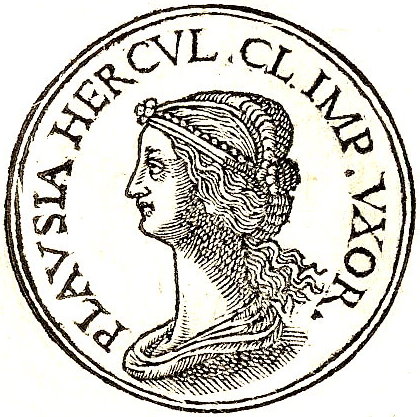
      Plautius was a common Roman praenomen. It was borne by the consul Aulus Plautius and the first wife of Emperor Claudius, Plautia Urganilla.

      Plautilla is a dimuntive form of the feminine Plautia.

      Other forms include:

      • Plauzio (Italian)
      • Plaucjusz (Polish)
      • Plaucio (Spanish)

      Feminine forms

      • Plauzia (Italian)
      • Plaucja (Polish)
      • Plaucia (Spanish)

      Sebastian

      Gender: Masculine
      Origin: Latin
      Meaning “from Sebastus.”

      The name Sebastian is the English form of the Latin, Sebastianus. It means “from Sebastus.”

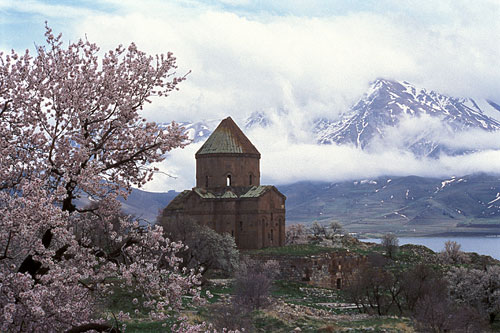
      Sebastus was a town in Armenia. The town of Sebastus was named for the emperor Augustus, “sebastos” being the direct Greek translation of Augustus, which is Latin and means “venerable.”

      In the States, the name has had a recent surge of popularity, it is currently the 74th most popular male name. Its rankings in other countries are as follows:

      • # 59 (Australia, 2008)
      • # 7 (Austria, 2008)
      • # 5 (Chile, 2006)
      • # 7 (Denmark, 2008)
      • # 77 (England/Wales, 2008)
      • # 43 (Germany, 2009)
      • # 312 (the Netherlands, 2008)
      • # 12 (Norway)
      • # 32 (Poland, Warsaw, 2009)
      • # 44 (Sweden, 2008)

      Other forms of the name include:

      • نايتسبس Cpectayan (Arabic: used primarily among Arab Christians)
      • Sɛbasadian Սեբաստյան (Armenian)
      • Wast/Wastl/Wastel (Bavarian)
      • Sebastijan (Bosnian/Croatian)
      • Sebastià (Catalan)
      • Bas (Dutch: originally a diminutive, now used as an independent given name)
      • Bastiaan (Dutch/Low Saxon)
      • Sebastiaan (Dutch)
      • Sebastian (English/German/Polish/Romanian/Scandinavian)
      • Seppo (Finnish)
      • Sébastien/Bastien (French)
      • Sebast’ian სებასტიან (Georgian)
      • Bastian (German: contraction of Sebastian.
      • Sebestyén/Szebastián (Hungarian)
      • Sebastiano/Bastiano (Italian)
      • Sebastianus (Latin)
      • Sebastians (Latvian)
      • Sebastijonas (Lithuanian)
      • Sebastjan Себастијан (Macedonian/Serbian)
      • Bastjan (Maltese)
      • Sebastião/Bastião (Portuguese)
      • Sebaščan (Prekmurian)
      • Sevastian Севастьян (Russian/Ukrainian)
      • Bustianu/Serbestianu (Sardinian)
      • Vastianu (Sicilian)
      • Šebastián/Sebastián (Slovak)
      • Boštjan (Slovene)
      • Sebastijan/Sebastjan (Slovene)
      • Bošćij (Sorbian)
      • Sebastián (Spanish)
      • Baschdl (Swabian)
      • Bastián (Venetian)

      German diminutives include: Basti, Baschti, Baschi/Baschy (Swiss-German), Sabba, Sebbe, Sebbo, Sepp, Seppi, Seibi and Selbi.

      Basto is an Italian diminutive form.

      Hungarian diminutives are Sebő and Sebők.

      Polish diminutives are Sebek

      Feminine forms include:

      • Bastienne/Sébastienne (French)
      • Sebastiane (German)
      • Bastiana/Bastianina/Sebastiana (Italian)
      • Vastiana (Sicilian)
      • Sebastiána (Slovakian)
      • Sebastiana (Spanish/Polish)

      Diocletian, Diocles

      Gender: Masculine
      Origin: Greek
      Meaning “glory of Zeus.”
      Διοκλης

      It is no surprise that Diocletian’s name should bare a meaning revering one of the gods of Ancient Greece, as it is said that Diocletian was a pious man who adhered to the old ways of the empire. The name itself is a latinized form of the Greek name, Diocles.

      In Greek mythology, Diocles was one of the first priests to the goddess Demeter, and he is also credited to be one of the first to learn the Elysian Mysteries.

      Due to Emperor Diocletian’s cruel persecution of Christians, his name never caught on after the fall of the Roman Empire, but other forms historically exist. These include: (Please keep in mind that all these forms are very rare and are barely ever used in their home countries outside a history book)

      • Diokleciani (Albanian)
      • Diokleziano (Basque)
      • Dioclecià (Catalan)
      • Dioklecijan (Croatian/Serbian/Slovene)
      • Dioclétien (French)
      • Diocleziano (Italian)
      • Diokletian (Dutch/German/Scandinavian)
      • Diocletianus (Latin)
      • Diokletiāns (Latvian)
      • Diokletian (Norwegian)
      • Dioklecjan (Polish)
      • Diocleţian (Romanian)
      • Dioclezzianu (Sicilian)
      • Dioklecián (Slovakian)
      • Diocleciano (Spanish/Galician/Portuguese)