 Gender: Feminine
Origin: Arabic
Meaning: “virgin.”
(AHZ-rah)
The name is derived from the Arabic, ‘adra, meaning, “virgin; maiden.”
As of 2010, Azra was the 22nd most popular female name in Bosnia & Herzegovina.
Gender: Feminine
Origin: Arabic
Meaning: “virgin.”
(AHZ-rah)
The name is derived from the Arabic, ‘adra, meaning, “virgin; maiden.”
As of 2010, Azra was the 22nd most popular female name in Bosnia & Herzegovina.
 Gender: Feminine
Origin: Arabic أمنة
Meaning: “safety.”
(AHM-nah)
The name is derived from the Arabic أمان (amn) meaning, “safety.”
As of 2010, Amna was the 16th most popular female name in Bosnia & Herzegovina.
 Gender: Feminine
Origin: Arabic أسمى
Meaning: “supreme.”
(AHS-mah)
The name comes directly from the Arabic, أشد (asma), meaning, “supreme.”
The name is of pre-Islamic origins and was borne by a legendary 7th-century female poetess, Asma bint Marwan. According to legend, she tried to incite the populous of Medina to rebel against the Prophet Mohammed in which she was summarily killed by the Prophet. Her existence and story has been questioned and debated by scholars.
Another notable bearers include Asma al-Assad, First Lady of Syria (b.1975). Its Turkish form of Esma was borne by two Turkish sultanas.
As of 2010, Esma was the 18th most popular female name in Bosnia & Herzegovina. Other Bosnian forms include: Esmana, Esmina and Esminka.
 Gender: Masculine
Origin: Biblical Hebrew עַמְרָם
Meaning: “exalted one.”
The name is found in the Old Testament as the name of the husband of Jochebed and the father of Moses, Aaron and Miriam. In the Qu’ran, the name appears in its Arabic form of Imran عمران as the name of both the father of Moses and the father of the Virgin Mary, (analogous to the Catholic Joachim).
As of 2010, Imran was the 17th most popular male name in Bosnia & Herzegovina. His rankings in other countries are as follows:
Other forms of the name include:
 Gender: Masculine
Origin: Arabic عدنان
Meaning: “settler.”
(AHD-nahn)
The name is derived from the Semitic root ‘adn meaning, “to stay; to abide.”
This is the traditional name of the progenitor of the Adnani Arabs, they are believed to be the direct descendants of Ismael and this is the tribe from which the Prophet Mohammed came.
As of 2010, Adnan was the 18th most popular male name in Bosnia & Herzegovina.
The name is used throughout the Islamic world.
Bosnian feminine forms include Adna and Adnana.
 Gender: Feminine
Origin: Arabic إيمان Иман
Meaning: “faith.”
(ee-MAHN)
The name comes directly from the Arabic word for faith.
The name is used throughout the Islamic world and as of 2010, it was the 30th most popular female name in Bosnia & Herzegovina, (2010).
Its North African form of Imane is currently the 80th most popular female name in Belgium, (2009), the 163rd most popular in France, (2009) and the 411th most popular in the Netherlands, (2010).
Iman was brought to attention in the Western World by Somali-born model, Iman (b.1955)
The name is also borne by two Jordanian princesses and Persian Princess Iman Pahlavi, daughter of Reza Pahlavi, the deposed Crown Prince of Iran.
Other forms include:
 Gender: Masculine
Origin: Arabic
Meaning: “helpers.”
(AHN-SAHR)
The name is derived from the Arabic plural and Islamic term, al-Ansar (the helpers), which refers to a group of Medinian citizens who helped the Prophet Mohammed settle into the city of Medina.
Its Balkan and Turkish form of Ensar is currently the 33rd most popular male name in Bosnia & Herzegovina, (2010).
The name is used throughout the Islamic world.
Other forms include:
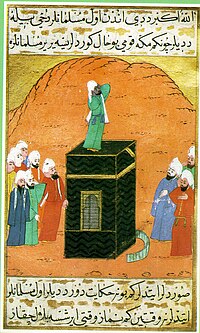 Gender: Masculine
Origin: Arabic بلال
Meaning: “moistening.”
(bee-LAHL)
The name is derived from the Arabic meaning, “moistening.”
It was borne by the first Muezzin (Caller to Prayer) and a disciple of the Prophet Mohammed. He was an Ethiopian slave who had been emancipated by Mohammed.
As of 2010, Bilal was the 37th most popular male name in Bosnia & Herzegovina. His rankings in other countries are as follows:
The name is used throughout the Islamic world.
Another notable bearer was Bilal Xhaferri (1935–1986), an Albanian poet, novelist and political dissident against the Albanian communist regime.
 Gender: Feminine
Origin: Arabic فاطمة
Meaning: “to abstain.”
Sp (FAH-tee-mah); Arab (FAH-TEE-MAH)
The name comes Arabic meaning “to abstain.”
It is an extremely popular name throughout the Islamic world, and is especially popular among Shia Muslims. It was borne by the daughter of the Prophet Mohammed, who was also known as Fatima Zahra (Fatima the Illustrious).
Among Muslims, she is revered as an exemplar among women.
The name is also used among Portuguese and Spanish-speaking Christians in reference to a shrine in Portugal in which the Virgin Mary is believed to have appeared. The name shares the same etymology as the town was named for a Moorish princess who converted to Christianity and was subsequently persecuted by her family.
Currently, its Turkic form of Fatma is the 3rd most popular female name in Azerbaijan, (2010). Her rankings in other countries are as follows:
Other forms of the name include:
Gender: Masculine
Origin: Latin
Meaning: “short; small; humble; few.”
Eng (PAWL)
The name is derived from the Latin Roman family name, Paulus, which could translate as meaning, “small, short; humble; few.”
Paul and his various forms has to be one of the most common male names used throughout the Christian world. It has been used equally among Orthodox Christians, Roman Catholics and Protestants.
Its most famous bearer was Paul of Tarsus, whose real name was Saul. St. Paul, as referred to by the Roman Catholic and Eastern Orthodox Churches, is attributed as being the author of much of the New Testament.
The name was borne by several popes, royals and saints thereafter.
Currently, its Germanic form of Paul is the 8th most popular male name in Germany, (2011). His rankings in other countries are as follows:
Other forms of the name include:
For a Reference a Female forms See Paula and Paulina (soon to come)