Malachi

Gender: Masculine
Origin: Hebrew  מַלְאָכִי
Meaning: “my messenger.”

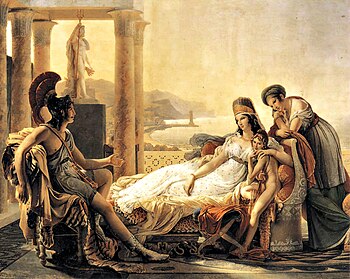
The name is found in the Old Testament as the name of a prophet and the author of the Book of Malachi. He is known for his prophecies, in Christian tradition it is believed that his prophecies foretell the coming of Christ.

Its Irish form of Malachy has always been a common name in Ireland. It was borne by an early Irish saint who is also considered a prophet and a mystic. Though, it is sometimes suggested that Malachy is an anglicized form of Máel Sechlainn.

Currently, Malachi is the 163rd most popular male name in the United States, (2010).

Other forms of the name include:

  • Maleachi (Afrikaans/German)
  • Malaquies (Catalan)
  • Malachiáš (Czech/Slovak)
  • Malachias (Dutch/German/Greek)
  • Malachie (French)
  • Malachy (Irish)
  • Malachia (Italian)
  • Malachiasz (Polish)
  • Malahija Мала́хия (Russian/Serbian)
  • Malaki (Scandinavian)
  • Malaquías (Spanish)
Occasional English short forms are Mal and Chai (KYE).
Source

Seth

The name is found in the Old Testament, the Book of Mormon, the Qu’ran and in ancient Egyptian mythology, though the later may have a completely different etymology.

In both the Bible and the Qu’ran it is borne by the son of Adam and Eve, who was borne after the murder of Abel and the banishment of Cain. In this case, it may be derived from the Hebrew (syt) meaning “plant; seed” or it may be from another Hebrew source meaning “appointed.”

In the Book of Mormon, it is borne by the son of Lehi a Jaredite.

In Egyptian mythology it is the name of the god of chaos, the desert, foreigners and of the planet Mars. In this case, the etymology is uncertain.

Currently, Seth is the 165th most popular male name in the United States (2010) and the 217th most popular in the Netherlands, (2010).

Other forms of its Biblical counterpart include:

  • Shith  شيث‎ (Arabic)
  • Şeys (Azeri)
  • Set Сэт (Belarusian/Finnish/German/Italian/Russian/Scandinavian/Spanish)
  • Sif Сіф (Belarusian)
  • Šit (Bosnian)
  • Šet (Croatian/Czech/Serbian)
  • Seth Σηθ (Dutch/English/Greek/French/Plattdeutsch/Polish)
  • Sett (Estonian)
  • Shet  שֵׁת (Hebrew)
  • Séth (Hungarian)
  • Szet (Polish)
  • Sete (Portuguese)
  • Šét (Slovak)
Other forms of the Egyptian include:
  • Set (Ancient Egyptian/Coptic)
  • Setekh (Ancient Egyptian)
  • Setesh (Ancient Egyptian)
  • Sutekh (Ancient Egyptian)
  • Suty (Ancient Egyptian)
The name is borne by actor and comedian Seth Green (b.1974)
Sources 

Virginia

Gender: Feminine
Origin: Latin
Meaning: “virgin”
(ver-JIN-yah)

Virginia is a feminine form of the Roman family name Virginius which is believed to be derived from the Latin virgo meaning “virgin; maiden.”

According to Roman legend, the name was borne by a girl who was killed by her father in order to save her from a corrupt Roman official.

The Commonwealth of Virginia was named by Sir Walter Raleigh in 1584 in part for Queen Elizabeth I of England (known as the Virgin Queen) and also in part an anglicized form of a Native American chief’s name, Wingina. 

The name was borne by Virginia Dare (1587), lauded to be the first ethnically English child to be born in the New World. The name seems to have been very popular in the United States among early settlers, either as a nod to an American birth or in honour of the first English child born in the United States.

Among Catholic immigrants, the name caught on due to its associations with the Virgin Mary.

Currently, Virginia is the 608th most popular female name in the United States, but in 1921, it ranked in as the 6th most popular female name.

Other forms of the name include:

  • Virginië (Afrikaans)
  • Virxinia (Asturian)
  • Virgínia (Catalan)
  • Vijini (Creole)
  • Verginia(Latin: early)
  • Virginie (French/Czech)
  • Firginia (Frisian)
  • Wilikinia (Hawaiian)
  • Virzsini (Hungarian)
  • Verginia(Italian)
  • Virna (Italian)
  • Virginia (Italian/Spanish/Portuguese)
  • Virdžīnija (Latvian)
  • Virdžinija (Lithuanian)
  • Virginn-a (Ligurian)
  • Wirginia (Polish)
  • Verge (Occitanian)
  • Virgínia (Occitanian)
  • Verjhini (Occitanian)
  • Virdžinėjė (Saimogaitian)

A common English short form is Ginny.

Source

  1. http://www.behindthename.com/name/virginia

Edwin

Gender: Masculine
Origin: Anglo-Saxon
Meaning: “rich friend.”

The name is composed of the Anglo-Saxon elements æde (rich) and wine (friend). It was borne by a Northumbrian king and saint. The name fell out of usage after the Norman Conquest but was revived in the 19th-century. It is currently the 209th most popular male name in the United States, (2010).

Other forms of the name include:

  • Eadwine (Anglo-Saxon)
  • Edwin (Dutch/English/German/Polish)
  • Edvin (Estonian/Finnish/Hungarian/Scandinavian)
  • Otwin (German)
  • Eduino (Italian)
  • Edvino (Italian)
  • Edvinas (Lithuanian)
Common English nicknames are Ed and Eddie.

Feminine forms include:

  • Edwina (English/Polish)
  • Eduina (Italian)
  • Edvina (Italian)
Source

Gianna

Gender: Feminine
Origin: Italian
(JAHN-nah)

Originally a contracted form of Giovanna, the name has been in use as an independent given name since the Middle Ages.

It is currently the 66th most popular female name in the United States (2010).

The name is also used in Greece pronounced (yee-YAH-nah).

Another form is Giannina. Masculine forms are Gianni and Giannino.

Source

  1. http://www.behindthename.com/name/gianna

Alyssa

The name is either derived from the alyssum flower which is composed of the Greek elements, α “not; against” and λυσσα (lyssa) meaning “madness; rabies.” The plant was used as a cure against madness.
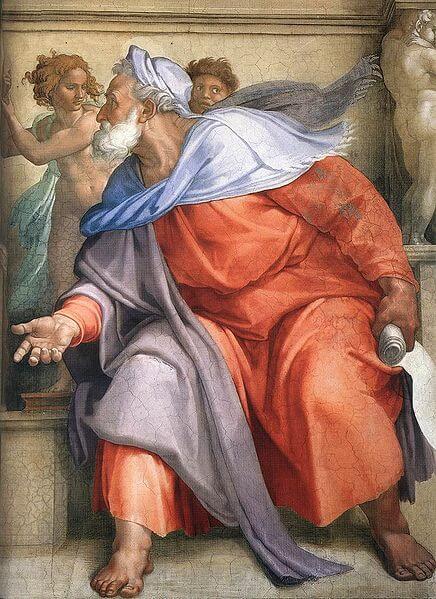
Alternately, it may be an anglicized form of the Greek Elissa which is a Hellenized form of the Phoenician name Elishat meaning “wanderer.” Queen Elissa (also known as Dido) was the name of the legendary foundress of Carthage.

Currently, Alyssa is the 20th most popular female name in the United States, (2010). Her popularity in other countries is as follows:

  • # 42 (Canada, BC, 2010)
  • # 45 (Australia, NSW, 2010)
  • # 100 (Scotland, 2010)
  • # 129 (France, 2009)
  • # 157 (the Netherlands, 2010)

Other forms of Elissa include:

  • Alissa/Alissar  اليسار  اليسا عليسا عليسة (Arabic: a very popular name among Assyrian and Lebanese Christians)
  • Élissa (French)
  • Elissa (Greek/Italian)
  • Elyssa (Greek)
  • Elisa (Spanish)
Source


Ezekiel

Gender: Masculine
Origin: Hebrew יְחֶזְקֵאל 
Meaning: “God strengthens.”

The name is found in the Old Testament as the name of the author of the Book of Ezekiel, a major prophet in Christian, Jewish and Islamic tradition. In the English-speaking world, the name did not become popular until after the Protestant Reformation.

It is currently the 213th most popular male name in the United States, (2010).

Other forms of the name include:

  • Jezjekiil Езекііль (Belarusian)
  • Ezechiel (Czech/German/Polish/Romanian)
  • Ezechiël (Dutch)
  • Hesekiel (Finnish/Swedish)
  • Ézéchiel (French)
  • Ezekieli ეზეკიელი (Georgian)
  • Yechezkel: יְחֶזְקֵאל (Hebrew)
  • Ezechiele (Italian)
  • Ezechielis (Lithuanian)
  • Esekiel (Norwegian)
  • Ezequiel (Portuguese/Spanish)
  • Iezekiíl’ Иезекии́ль (Russian)
  • Jezekiel Језекиљ (Serbian)
  • Ezekiel (Slovene)
  • Yezekiyíl Єзекії́ль (Ukrainian)
  • Eseciel (Welsh)
  • Haskel (Yiddish)
Source

Eliana

Gender: Feminine
Origin: Italian/Spanish
Meaning: “sun”
(ay-lee-AH-nah)

The name is an Italian and Spanish form of the Latin Aeliana which is a feminine form of the Roman cognomen Aelianus which is derived from the Greek helios meaning “sun.”

The name was borne by an early Christian saint and martyr.

Aelia was a very popular female name during the Byzantine Empire.

Alternately, it could be from the Hebrew meaning “my God has answered.” (אֶלִיעַנָה)

Currently, Eliana is the 169th most popular female name in the United States, (2010).

Other forms of the name include:

  • Elijana (Croatian)
  • Ailiana Αιλιανα (Greek)
  • Aelia (Latin)
  • Aeliana (Latin)
  • Éliane (French)
  • Éliette (French)
  • Eliana (Italian/Spanish/Portuguese)
  • Liana (Italian/Spanish)

Diminutives include:

  • Ellie (English)
  • Éliette (French)
  • Eli (Italian)
  • Lala (Italian)
  • Lali (Italian)
  • Leli (Italian)
  • Lili (Italian)

Masculine forms include:

  • Elian Елиан (Bulgarian/Russian)
  • Elià (Catalan)
  • Elijan (Croatian)
  • Aelian (English)
  • Élien (French)
  • Älianus (German)
  • Ailianos Αιλιανός (Greek)
  • Aelianus (Latin)
  • Aelius (Latin)
  • Eliano (Italian/Spanish)
  • Eliusz (Polish)

Source

  1. http://www.behindthename.com/name/eliana-1

Raymond

Gender: Masculine
Origin: German
Meaning: “advice protector.”
(RAY-mund)

The name is composed of the Germanic elements ragin (advice) and mund (protector). It was introduced to England via the Normans. It was borne by several saints.

Currently, Raymond is the 225th most popular male name in the United States, (2010).

Other forms of the name include:

  • Remund (Aragonese)
  • Erramun (Basque)
  • Raimon (Catalan)
  • Raimondu (Corsican)
  • Rejmond Рејмонд (Croatian/Serbian)
  • Rajmund (Czech/Hungarian)
  • Raimund (Danish/Finnish/Norwegian/Romanian/Swedish)
  • Ramund (Danish)
  • Raymundus (Dutch/Latin)
  • Raymond (Dutch/English/French)
  • Raimo (Finnish)
  • Reima (Finnish)
  • Reemt (Frisian)
  • Réamann (Gaelic)
  • Redmund/Redmond (Irish)
  • Raimund (German)
  • Reimund (German)
  • Raimundur (Icelandic)
  • Raimondo (Italian)
  • Raimonds (Latvian)
  • Remao (Limburgish)
  • Mao (Limburgish)
  • Raimondas (Lithuanian)
  • Reimund (Norman)
  • Raginmund (Old German)
  • Rajmund (Polish/Slovene)
  • Ramun (Romansch)
  • Arrammundu (Sardinian)
  • Ramundu (Sardinian)
  • Rámon (Spanish)
  • Raimundo (Spanish/Portuguese)
  • Raymundo (Spanish/Brazilian Portuguese)
A common English short form is Ray.

Feminine forms include:

  • Ramona (English/Hungarian/Portuguese/Romanian/Spanish)
  • Raymonde (French)
  • Raimunde (German)
  • Raimonda (Italian)
  • Raimondina (Italian)
  • Rajmunda (Polish)
  • Ramuna (Romansch)
Source

Ezra

Gender: Masculine
Origin: Hebrew עֶזְרָא
Meaning: “God helps.”
(EZ-rah)

The name may be derived from the ancient Hebrew Azaryahu meaning “God helps.” It is borne in the Old Testament by the author of the Book of Ezra. He is said to have reintroduced the Torah after the return from the Babylonian Exile. The name has always been popular among Jews and Orthodox Christians but did not catch on in the Western Christian world until after the Protestant Reformation.

Ezra is also mentioned in the Qu’ran and is traditonally believed to be a prophet among Muslim scholars. It is believed his tomb is located at Al-‘Uzair in Iraq and is a popular pilgrimage destination for the local Marsh Arabs.

Currently, Ezra is the 243rd most popular male name in the United States, (2010) and the 323rd most popular in the Netherlands (2010).

Other forms of the name include:

  • Uzair عزير (Arabic)
  • Jezdra Ездра (Belarusian/Bulgarian/Russian/Serbian/Ukrainian)
  • Uzajr Узайр (Bosnian/Russian)
  • Esdres (Catalan)
  • Ezra (Croatian/Dutch/English/Hebrew/Scandinavian/Spanish)
  • Ezdráš (Czech)
  • Esra (Finnish/German/Scandinavian)
  • Esdras Εσδρας (French/Greek/Portuguese)
  • Esdra (Italian)
  • Ezdras (Lithuanian)
  • Ezdrasz (Polish)
  • Üzeyir (Turkish)
Source