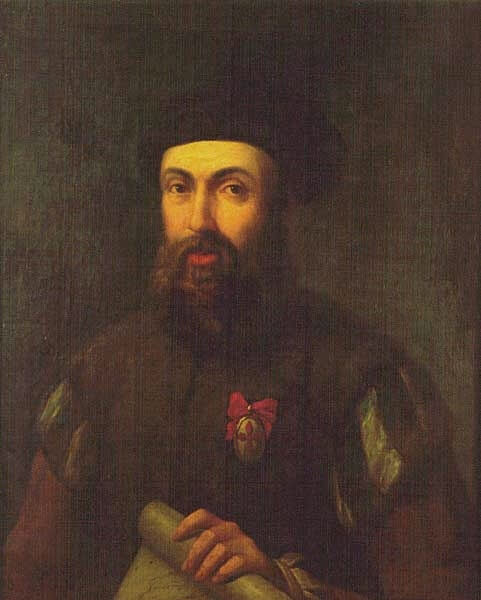
Odysseus, Ulysses

Gender: Masculine
Origin: Greek
Meaning: debated

The name is found in Homer’s The Odyssey as the name of the protagonist based on a Greek mythological hero who fought in the Trojan war. The same character appears in Roman mythology under the name Ulysses.

Many sources agree that Odysseus may derive from the Greek ὀδύσσομαι (odussomai) meaning, “hated.” Other sources have argued that the name may in fact derive from a non Indo European source of an uncertain etymology.

In American history, the name was borne by the illustrious civil war general and former President Ulysses S. Grant (1822-1885). James Joyce used the Latin version for the title character of his 1922 book, which was loosely based on The Odyssey.

Currently, its Spanish form of Ulises is the 98th most popular male name in Mexico (2010) and the 555th most popular in the United States, (2010).

Other forms of the name include:

  • Odusseus (Afrikaans)
  • Ulis Ўліc (Belarusian)
  • Odisej Одисей (Bulgarian/Croatian/Macedonian/Serbian/Slovene)
  • Odisseu (Catalan)
  • Ulisses (Catalan)
  • Ulysses (English/Latin/Scandinavian)
  • Uthuze (Etruscan)
  • Ulysse (French)
  • Odysseus Οδυσσευ (Greek)
  • Odüsszeusz (Hungarian)
  • Odisseo (Italian)
  • Ulisse (Italian)
  • Odisėjas (Lithuanian)
  • Uliksas (Lithuanian)
  • Ulisses (Occitanian/Portuguese)
  • Odyseusz (Polish)
  • Odisseu (Portuguese)
  • Odiseu (Romanian)
  • Ulise (Romanian)
  • Odissej Одиссей (Russian)
  • Ulissi (Sicilian)
  • Ulikses (Slovene)
  • Odiseo (Spanish)
  • Ulises (Spanish)
  • Odysews (Welsh)
  • Wlysses (Welsh)

An obscure feminine form is Ulyssa.

Sources

  1. http://www.behindthename.com/name/ulysses
  2. http://en.wikipedia.org/wiki/Odysseus
  3. http://www.babycenter.com.mx/pregnancy/nombres/nombres_populares_2010/

Arnold

Gender: Masculine
Origin: German
Meaning: “eagle power.”

The name is composed of the Germanic elements arn (eagle) and wald (power). In pre-Norman England it appeared in the Anglo-Saxon form of Earnwald it was subsequently replaced with the more Norman Arnold and fell out of usage by the Renaissance being revived once again in the 19th-century.

The name is borne by several saints, including an 11th-century French bishop who is venerated as the patron saint of brewers.

Its French form of Arnaud is currently 71st most popular male name in Quebec, Canada (2010).

Other forms of the name include:

  • Earnwald (Anglo-Saxon)
  • Arnald (Catalan)
  • Arnau (Catalan)
  • Arnold (Czech/English/German/Hungarian/Polish/Scandinavian/Slovak/Slovene)
  • Aart (Dutch)
  • Arend (Dutch)
  • Arnoud (Dutch)
  • Arnout (Dutch)
  • Aarno/Arno (Finnish)
  • Arnaud (French)
  • Arnault (French)
  • Arendt (German)
  • Arndt (German)
  • Arne (German)
  • Arnót (Hungarian)
  • Arnaldur (Icelandic)
  • Arnaldo (Italian/Portuguese/Spanish)
  • Nöl (Limburgish)
  • Nölke (Limburgish)
  • Arnoldas (Lithuanian)
  • Arnwald (Old German)
  • Arnaldr (Old Norse)
  • Arnado (Spanish)

Obscure feminine forms include the German Arnoldine, the French Arnaude and the Southern European Arnalda.

The name is borne by actor and form California governor Arnold Schwarzenegger  (b.1947).

A common English short form is Arnie.

Sources

  1. http://www.behindthename.com/name/arnold


Clovis

Gender: Masculine
Origin: Frankish
Meaning: “praised fighter.”

The name is derived from the old Frankish name Chlodevich which is composed of the elements, chlod (praise) and vech (fighter).

It is believed that Clovis is the proto-name of Louis.

The name was borne by Clovis I (466-511), the first king to unite all the Frankish tribes under one ruler. Three other Frankish kings bore the name after him.

Currently, Clovis is the 157th most popular male name in Quebec, Canada (2010) and the 223rd most popular in France, (2009).

Other forms of the name include:

  • Clodeveu (Aragonese/Catalan)
  • Klovis (Basque/Frisian)
  • C’hlodwig (Breton)
  • Hlodwig (Breton)
  • Klodvig (Croatian/Hungarian)
  • Chlodvík (Czech)
  • Clovis (Dutch/English/French)
  • Klodvig (Finnish/Norwegian)
  • Chlodwig (German/Polish)
  • Clodoveo (Italian/Spanish)
  • Chlodovechus (Latin)
  • Chlodvigas (Lithuanian)
  • Clodovèu (Occitanian)
  • Clóvis (Portuguese)
  • Klodevig (Scandinavian)
  • Cluduveu (Sicilian)
Sources

Fernanda and Ferdinand

Origin: German
Meaning: “brave journey”

Ferdinand is composed of the Germanic elements, farði (journey) and nanð (brave; courageous).

The name was first introduced into Iberian Peninsula by the Visigoths and from there it entered into the Spanish royal lines. Interestingly enough, it did not become common in Germanic countries until the 16th-century, when the Habsburg gained control over Spain. The name was very popular among Spanish royalty and later with the Hapsburgs.

Ferdinand is the progenitor of the common Spanish surnames Fernandez and Hernandez.

Its feminine form of Fernanda is currently the 10th most popular female name in Chile, the 15th most popular in Mexico and the 341st most popular in the United States, (2010). While its contracted Hungarian form of Nándor is currently the 67th most popular male name in Hungary, (2010).

Other feminine forms include:

  • Fernande (French)
  • Ferdinanda (German)
  • Ferdinande (German)
  • Ferdinandine (German)
  • Fernandia (German)
  • Ferdinanda (Italian)
  • Fernanda (Italian/Portuguese/Spanish)
  • Winanda (Polish)
  • Hernanda (Spanish)

Masculine forms include:

  • Fernandu (Asturian)
  • Hernandu (Asturian)
  • Erlantz (Basque)
  • Errando (Basque)
  • Pernando (Basque)
  • Perrando (Basque)
  • Ferrà (Catalan)
  • Ferran (Catalan)
  • Ferdinand (Czech/French/German)
  • Veeti (Finnish)
  • Veerti (Finnish)
  • Veertinantti (Finnish) 
  • Fernand (French)
  • Fernandel (French: obsolete)
  • Ferrand (French: obsolete)
  • Fernán (Galician)
  • Fridunanth (Gothic)
  • Fernandó (Guarani)
  • Fernandío (Guarani)
  • Ferdinánd (Hungarian)
  • Nándor (Hungarian)
  • Ferdinando (Italian)
  • Fernando (Italian/Spanish)
  • Nando (Italian)
  • Fernandu (Leonese)
  • Nandu (Leonese)
  • Ferdinandas (Lithuanian)
  • Fridenand (Old High German)
  • Ferdynand (Polish)
  • Winand (Polish)
  • Fernão (Portuguese)
  • Hernando (Spanish)
  • Hernán (Spanish)
A common German short form is Ferdy.

Ophelia

Gender: Feminine
Origin: Greek
Meaning: “help”
o-FEEL-yə

The name is derived from the Greek οφελος (ofelos) meaning “help.”

It first appears in Jacopo Sannazaro’s poem Arcadia. Shakespeare bestowed the name upon his tragic heroine of Hamlet (1600). Despite its tragic connotations, the name seems to have been used since at least the 19th-century.

Its French form of Ophélie is currently the 101st most popular female name in Quebec Canada (2010) and the 242nd most popular in France, (2009).

Other forms of the name include:

  • Ophelia (Dutch/English)
  • Ophélie (French)
  • Ofelia (Italian/Polish/Scandinavian/Romanian/Spanish)
  • Ofélia (Portuguese)
Source

Sandrine

A contracted form of Alexandrine, it has been used as an independent given name in French-speaking countries since at least the 19th-century. It is currently the 120th most popular female name in Quebec, Canada (2010).

Another form is the Italian and Spanish Sandrina.

The name is borne by French actress Sandrine Bonnaire (b.1967)

Source

  1. http://www.behindthename.com/name/sandrine

Fabrice

Gender: Masculine
Origin: Latin
Meaning: “craftsman.”

A French form of the Latin cognomen Fabricius, it is derived from faber (craftsman, smith). It was borne by Roman general and statesman Gaius Fabricius Luscinus (3rd-century).

Currently, Fabrice is the 433rd most popular male name in Quebec, Canada (2010).

Other forms of the name include:

  • Fabrice (French)
  • Fabricien (French)
  • Fabríciusz (Hungarian)
  • Brizio (Italian)
  • Fabrizio (Italian)
  • Fabricius (Latin)
  • Fabrycy (Polish)
  • Fabricio (Portuguese/Spanish)
  • Fabritziu (Sardinian)
Feminine forms include:
  • Fabricienne (French)
  • Brizia (Italian)
  • Fabrizia (Italian)
  • Fabricia (Portuguese/Spanish)
Source

Rita

The name is a contraction of Margaret but seems to have been used as an independent given name since the Middle Ages.

It was borne by Rita of Armenia (1278-1333) a Byzantine Empress. The name was further popularized in Europe due to the cult of St. Rita of Cascia (1381-1457) a Medieval Italian saint.

The name is used across Europe, including Armenia. Currently, Rita is the 461st most popular female name in Quebec, Canada (2010).

In more recent history it was borne by actress Rita Hayworthe (1918-1987).

Other forms of the name include:

  • Riet (Dutch)
  • Reeta (Finnish)
  • Reetta (Finnish)
  • Riitta (Finnish)
  • Ryta (Polish)

A common Sicilian diminutive is Rituzza.

Source

  1. http://www.behindthename.com/name/rita

Micah

Gender: Masculine
Origin: Hebrew
Meaning: “who is like Yahweh?”

The name is found in the Old Testament as the title of a book and the name of one of the minor prophets who predicted the destruction of Jerusalem.

Currently, Micah is the 108th most popular male name in the United States, (2010).

Other forms of the name include:

  • Michaiah (Biblical Hebrew)
  • Miquees (Catalan)
  • Mihej Михеј (Croatian/Serbian)
  • Micheáš (Czech/Slovak)
  • Micha (Dutch/German/Latin)
  • Miika (Finnish)
  • Michée (French)
  • Mikayahu מִיכָיְהוּ (Hebrew)
  • Mikha מִיכָה (Hebrew)
  • Michea (Italian)
  • Michėjo (Lithuanian)
  • Micheasz (Polish)
  • Miqueias (Portuguese)
  • Mica (Romanian)
  • Mihéja Михе́я (Russian)
  • Mika (Scandinavian)
  • Miqueas (Spanish)
Source