Marius, Mario

Gender: Masculine
Origin: Latin
Meaning: debated
Eng (muh-RYE-us)

There are several different theories as to the name’s etymology, it is derived from the Roman gens name of supposed Oscan origin (an extinct language spoken by the ancient Sabines). It has been suggested that the root of the name may actually be from the Latin words mas or maris (male) or it could be from the Latin mare (sea), the plural of which is Maria. It has also been suggested to be related to the name Mars. By Christian times the name was used as a syncretized form of the Biblical Hebrew, Miriam, bestowed as a masculine form. It’s etymology has been assumed to be a masculine form of Mary or Maria since, and was bestowed as such, especially in Southern European countries in the form of Mario.

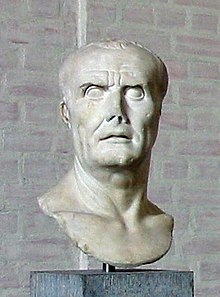
In France, the name is traditionally used in the region of Provence, where the famous Roman general, Gaius Marius (b. 2nd-century BCE) is still considered a hero for crushing the Teutonic forces near Mount Saint-Victoire.

Currently, Marius is the 22nd most popular name in Norway, (2010). His rankings in other countries are as follows:

  • # 40 (Denmark, 2010)
  • # 83 (France, 2009)

Its Southern European form of Mario is currently the 10th most popular male name in Spain, (2010). His rankings in other countries are as follows:

  • # 41 (Croatia, 2010)
  • # 44 (Catalonia, 2010)
  • # 91 (Chile, 2010)
  • # 207 (United States, 2010)

Other forms of the name include:

  • Marijo (Croatian)
  • Mario (Croatian/Italian/Spanish)
  • Márius (Czech/Slovak)
  • Marius (Dutch/French/German/Romanian/Scandinavian)
  • Marios Μαριος (Greek: modern)
  • Máriusz (Hungarian. MAHR-yoos)
  • Marijus (Lithuanian)
  • Mariusz (Polish. MAR-ee-OOSH)
  • Mário (Portuguese/Hungarian)
  • Marij Ма́риус (Russian)
  • Màriu (Tuscan)

Alphonse, Alonso

Gender: Masculine
Origin: German
Meaning: “noble and ready.”

The name is believed to be derived from a Visigothic male name Adalfuns which is composed of the elements adal (noble) and funs (ready). It has also been associated with another Visigothic name Hildefuns meaning (battle ready). The name has always been popular in its various forms throughout Southern Europe, especially in the Iberian Peninsula where it was borne by several kings.

In its French form of Alphonse, it is the name the title character in Alexander Dumas’ 1873 book Monsieur Alphonse, which recounts the exploits of a pimp. Due to this literary association the name has come to mean “pimp” in several languages, most notably in Danish and in Polish.

Its Spanish form of Alonso, however, remains a very common name throughout the Spanish-speaking world. It is currently the 16th most popular male name in Chile (2010). It is also the 84th most popular in Spain (2010) and the 637th most popular in the United States (2010).

The more archaic Italian and Spanish form of Alfonso appears in the U.S. top 1000, coming in as the 742nd most popular male name (2010).

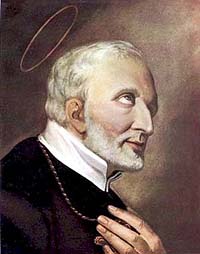
The name was most famously borne by St. Alphonsus Liguori, an Italian saint who founded the order of the Redemptorists and is considered a Doctor of the Church by the Catholic Church.

Other forms of the name include:

  • Adalfuns (German: archaic)
  • Alifonso (Aragonese)
  • Alfonsu (Asturian/Sardinian/Sicilian)
  • Fonsu (Cantabrian)
  • Alfontso (Basque)
  • Alfoñs (Breton)
  • Alfons (Catalan/Czech/Dutch/Finnish/German/Maltese/Polish/Romanian/Scandinavian: also the word for pimp in Polish and Danish)
  • Fons (Dutch)
  • Funs (Dutch)
  • Alfo (Finnish)
  • Alhvo (Finnish)
  • Altto (Finnish)
  • Alphonse (French)
  • Afonso (Galician/Portuguese)
  • Alphons (German)
  • Alfonz (Hungarian)
  • Alfonzino (Italian)
  • Alfonso (Italian/Portuguese/Spanish)
  • Alfonzo (Italian)
  • Alonzo (Italian)
  • Alphonsus (Late Latin)
  • Alfonss (Latvian)
  • Funske (Limbergish)
  • Alfonsas (Lithuanian)
  • Alonso (Portuguese/Spanish)
  • Affonzu (Sicilian)
  • Arfansu/Arfanzu (Sicilian)
  • Alfonz (Slovak/Slovene)

Feminine forms include:

  • Alphonsine (French)
  • Alfonza (Hungarian)
  • Alfonzin (Hungarian) 
  • Alfonzina (Hungarian)
  • Alfonsa (Italian/Portuguese/Spanish)
  • Alfonsina (Italian/Portuguese/Spanish)
  • Alfonza (Italian)
  • Alfonzina (Italian)

Franco

Gender: Masculine
Origin: Italian

The name is a contracted form of Francesco and is commonly used as an independent given name, especially in among the Italian diaspora. It is currently the 8th most popular male name in Argentine, (2009), the 33rd most popular in Chile (2010) and the 838th most popular in the United States, (2010).

The name was in fact banned from usage in Argentina until recently due to its negative associations with the Spanish dictator Francisco Franco.

A feminine form is Franca.

Hector

Gender: Masculine
Origin: Greek
Meaning: “to have; to hold.”
Eng (HEK-ter); Sp (EK-tor)

The name is found in Greek mythology as the name of the son of Priam and Hecuba, a Trojan prince and a renowned warrior of Troy. After slaying Patroclus, Achilles murdered Hector and then dragged his body from his chariot for days.

In Ancient Greece and even in Medieval Europe, Hector was considered one of the greatest warriors to have ever lived. The Greek Armed Forces attribute their motto to him:

 “One omen is best: defending the fatherland”

The name is believed to be derived from the Greek verb ékhein meaning “to have, to hold.” In Aeolic poetry, Ékhtor was used as an epithet for Zeus, implying that he is the holder of all things.

The name is also found in Arthurian legend as the name of the foster father of King Arthur.

The name was fairly common in Europe during the Middle Ages, and among the Scottish Highlanders, it was traditionally used as an anglicized form of Eachann.

The name is currently very popular in Spanish-speaking countries, in Spain, he was the 31st most popular male name, (2010). His rankings in other countries are as follows:

  • # 38 (Catalonia, 2010)
  • # 79 (Chile, 2010)
  • # 226 (United States, 2010)
  • # 317 (France, 2009)

Other forms of the name include:

  • Etor (Basque)
  • Hektor Хектор (Bulgarian/Croatian/Dutch/Finnish/German/Hungarian/Polish/Scandinavian/Serbian/Slovene)
  • Hèctor (Catalan)
  • Hektór (Czech)
  • Hector (English/French/Latin/Romanian)
  • Hekhtori ჰექტორი (Georgian)
  • Hector (German)
  • Héktôr Ἕκτωρ (Greek: modern)
  • Eachtar (Irish)
  • Ettore (Italian/Maltese)
  • Hektors (Latvian)
  • Hektoras (Lithuanian)
  • Ektor (Polish)
  • Jaktor (Polish)
  • Jektor (Polish)
  • Heitor (Portuguese)
  • Gektor Гектор (Russian/Ukrainian)
  • Héctor (Spanish)
A popular Scots pet form is Heckie and an obscure Scottish feminine form is Hectorina. Italian female form is Ettorina.
Polish diminutive forms are Jaktorek and Jaktorko.

Joachim, Joaquin

Gender: Masculine
Origin: Hebrew
Meaning: “Yahweh has established.”
Eng (JOKE-im); Sp (wah-KEEN)

The name is possibly derived from the Biblical Hebrew male name, Jehoiachin, which is found in the Old Testament as the name of king of Judah imprisoned during the Babylonian exile.

Joachim appears in the apocryphal Gospel of James as the name of the husband of St. Anne and the father of the Virgin Mary. In the Qu’ran the father of Mary is named Imran, though Joachim and Imran are not etymological related. The Catholic Church, Eastern Orthodox Churches and the Anglican Church has traditionally revered this legendary character as a saint and as a result, the name became extremely popular across Europe, especially in Catholic countries.

The name was never very common in the English-speaking world but was occasionally used by Irish-Catholics and American-Catholics.

Currently Joachim is the 319th most popular male name in France, (2009) and the 496th most popular in the Netherlands (2010). Its Spanish form of Joaquin, however, ranks even higher in a couple of countries. His rankings are as follows:

  • # 5 (Chile, 2010)
  • # 99 (Spain, 2010)
  • # 306 (United States, 2010).

Other forms of the name include:

  • Iyakem (Amharic/Ethiopian)
  • Chuaquín (Aragonese)
  • Xuaco/Xuacu (Aragonese)
  • Jokin (Basque)
  • Chaosum (Breton)
  • Joasim (Breton)
  • Jechim (Breton)
  • Joasin (Breton)
  • Jaouas (Breton)
  • Yoakim Йоаким (Bulgarian)
  • Yakim Яким (Bulgarian)
  • Yokim Йоким (Bulgarian)
  • Joaquim (Catalan/Portuguese)
  • Quim (Catalan/Portuguese)
  • Ximo (Catalan/Valencian)
  • Youakim (Coptic/Syrian)
  • Jáchym (Czech)
  • Jokum (Danish)
  • Jochem (Dutch/German)
  • Aki (Finnish)
  • Jaakkima (Finnish)
  • Joachim (English/French/German/Hungarian/Polish)
  • Kim (Finnish/Scandinavian)
  • Kimi (Finnish)
  • Xaquín (Galician)
  • Xoaquin (Galician)
  • Xocas (Galician)
  • Ioa’kime იოაკიმე (Georgian)
  • Achim (German)
  • Jochen (German)
  • Jochim (German)
  • Jóakim (Icelandic)
  • Gioacchino/Gioachino (Italian)
  • Giovacchino (Italian)
  • Yoakima (Lingala)
  • Joakim Јоаким (Macedonian/Serbian/Scandinavian) 
  • Akimka (Maldovan)
  • Iacin (Murcian)
  • Juaqui (Murcian)
  • Quino (Murcian)
  • Ioachim (Romanian)
  • Giuachin (Romansch)
  • Akim АкимЯким (Russian)
  • Yakim (Russian)
  • Joaquín (Spanish)
  • Joakym Йоаким (Ukrainian)

Feminine forms include:

  • Gioacchina (Italian)
  • Gioachina (Italian)
  • Giovacchina (Italian)
  • Joachima (Polish)


Danaë

Gender: Feminine
Origin: Greek Δαναη
(dah-nah-EE)

The name is possibly related to the Greek word Δαναοι (Danaoi) a name of an ethnic group in Greece.

It is borne in Greek mythology by the daughter of King Acrisius, who upon hearing the Oracle of Delphi tell him that his grandson would kill him, locked Danaë up in a bronze chamber. The god Zeus visited her in the form of gold rain and impregnated her with Perseus. After the birth of her son, Acrisius locked Danaë and Perseus up in a wooden casket and set them off to sea and they both landed safely ashore on the island of Seriphos. When Perseus grew to adulthood he competed in the games of Larissa where he accidentally struck his grandfather in the head with a javelin.

Of all the Greek mythological names, this one was never popular in the English-speaking world, but remained very common in Greece where its name-day is December 11. For whatever reason, the name has always been very popular throughout Latin America and is currently the 65th most popular female name in Chile, (2010).

Other forms of the name include:

  • Danaja Данаја Даная (Bulgarian/Croatian/Russian/Serbian/Ukrainian)
  • Dànae (Catalan/Portuguese/Spanish)
  • Danaé (Czech/French)
  • Danae (Italian)
  • Danajė (Lithuanian)
  • Dânae (Portuguese: Brazilian)
  • Danaa (Slovene)

Rosario

Gender: Feminine (in Spanish and Portuguese but masculine in Italian)
Origin: Spanish/Portuguese/Italian
Meaning: “rosary.”

In Spanish and Portuguese the name has always been a strictly feminine name. It comes directly from the word for the rosary, prayer beads used in Catholic tradition and is usually used in reference to Our Lady of the Rosary.

In Italian the feminine form is Rosaria while Rosario is strictly masculine.

Currently, Rosario is the 83rd most popular female name in Chile, (2010).

Other forms of the name include:

  • Roser (Catalan)
  • Marie-Rosaire (French)
  • Maria Rosaria (Italian)
  • Rosaria (Italian)
  • Rosarietta (Italian)
  • Rosarina (Italian)
  • Saria (Italian)
  • Maria do Rosário (Portuguese)
  • Rosário (Portuguese)
  • Maria del Rosario (Spanish)

A common Spanish diminutive is Charo.

Masculine forms include:

  • Rosaire (French)
  • Rosario (Italian)

It is borne by actress Rosario Dawson.

Constance

Gender: Feminine
Origin: Latin
Meaning: “constant; steadfast.”
Eng (KAHN-stənts); Fre (kawn-STAWNS)

The name is an anglicized form of the Late Latin female name Constantia which is a feminine form of Constantius derived from the Latin constans meaning “steadfast; constant.”

The name was very common throughout Medieval Europe and was borne by several European royals. In the English-speaking world it was notably the daughter of William the Conqueror who actually introduced the name to England.

Its Spanish form of Constanza is currently the 11th most popular female name in Chile, (2010), while Constance was the 131st most popular female name in France, (2009).

Other forms of the name include:

  • Konstantza (Basque)
  • Constança (Catalan/Occitanian/Portuguese)
  • Konstanca (Croatian)
  • Konstance (Czech)
  • Konstancie (Czech)
  • Constance (Dutch/English/French)
  • Constanze (German)
  • Konstanze (German)
  • Konstancia (Hungarian)
  • Costanza (Italian)
  • Constantia (Latin)
  • Konstanse (Norwegian)
  • Constància (Occitanian)
  • Konstancja (Polish)
  • Constanta (Romanian)
  • Konstantia (Scandinavian)
  • Constanza (Spanish)
  • Konstans (Turkish: obscure)
  • Konstancija Констанція (Ukrainian)

Diminutives include:

  • Kony (Czech)
  • Stanka (Czech)
  • Connie (English/German)
  • Stanzi (German)

Masculine forms include:

  • Constant (English)
  • Costanzo (Italian)
  • Costante (Italian)
  • Constans (Latin)
  • Constantius (Latin)


Saul

Gender: Masculine
Origin: Hebrew שָׁאוּל
Meaning: “asked for; prayed for.”
Eng (SAWL); Sp (sah-OOL); Heb (shah-OOL)

The name appears several times in the Old Testament, the most notable of all being King Saul, the first king of the ancient Kingdom of Israel as recorded in the Book of Samuel. It appears again in the New Testament as the Hebrew name for Paul of Tarsus.

The name has always been common among Jews and Spanish-speaking Christians. In Mexico, it is currently the 94th most popular male name, while in Spain it is the 95th most popular, (2010). In the United States, however, it only ranks in as the 376th most popular male name, (2010).

Other forms of the name include:

  • Saül (Catalan/French)
  • Šaul (Croatian)
  • Saul (Czech/Dutch/English/German/Hungarian/Italian/Polish/Portuguese/Scandinavian)
  • Sauli საული (Finnish/Georgian)
  • Saoul Σαουλ (Greek)
  • Sha’ul שָׁאוּל (Hebrew)
  • Sauls (Latin)
  • Saulius (Lithuanian)
  • Szaul (Polish)
  • Saúl Сау́л (Belarusian/Bulgarian/Russian/Spanish)
Sources

Caesar

Gender: Masculine
Origin: Latin
Meaning: “hairy.”
(SEE-zer)

The name is derived the Latin caesaris (hairy), the earliest record of this name goes back to 300 BC when it was borne as the cognomen of Numerius Julius Caesar. It was later borne by Julius Caesar and his adopted son Julius Caesar Octavianus (later known as Augustus). In the case of Julius Caesar, he may have gotten his name as a comical reference to his bald appearance.

The name subsequently became a title for an emperor throughout Europe and the Middle East.

It has always been common in Southern Europe but never really got much usage in English-speaking countries.

Its Spanish form of César is currently the 76th most popular male name in Mexico, (2010). His rankings in other countries are as follows:

  • #87 (Chile, 2010)
  • #93 (Spain, 2010)
  • #201 (United States, 2010)
  • #307 (France, 2009)

Other forms of the name include:

  • Cèsar (Catalan)
  • Césaire (French)
  • César (French/Spanish)
  • Cézár (Hungarian)
  • Cesare (Italian)
  • Cesareo (Italian/Spanish)
  • Cesarino (Italian)
  • Cesario (Italian)
  • Cēzars (Latvian)
  • Cezaris (Lithuanian)
  • Ċesari (Maltese)
  • Cezary (Polish)
  • Cézar (Portuguese: Brazilian)
  • Cezar (Portuguese/Romanian)
  • Cesari (Sicilian)

Feminine forms include:

  • Cesara (Italian)
  • Cesarea (Italian)
  • Cesaria (Italian)
  • Cesarina (Italian)
  • Cesira (Italian)
  • Cesária (Portuguese)