Gonzalo

Gender: Masculine
Origin: Spanish
Spanish (gon-THAH-lo); Latin American Spanish (gon-SAH-lo)

The name is derived from a Visigothic name Gundisalvus which is composed of the elements gund (war) and salv which is of uncertain meaning.

Gonzalo is the root of the common Spanish patronymic Gonzalez.

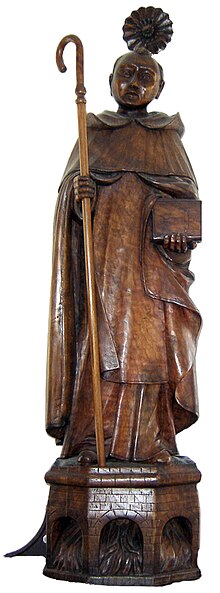
The name was borne by several Iberian saints, the most notable being Blessed Gonzalo of Amarante (1187-1259), whose devoted has been popular throughout Spain and Portugal, no doubt, leading to the name’s popularity throughout the Spanish and Portuguese-speaking world.

Currently, Gozalo is the 18th most popular male name in Argentina, (2009) and the 27th most popular in Spain, (2010).

Other forms of the name include:

  • Gontzal (Basque)
  • Gonçal (Catalan)
  • Gonsalve (French)
  • Concalvo (Italian)
  • Gonçalo (Portuguese)

Brennus, Breno

Gender: Masculine
Origin: Gaulic
(BREN-nus); (BREH-no)

Brennus is a latinized form of a Gaulic name of uncertain meaning. It is believed to possibly be related to a Celtic title for someone of high standing or perhaps related to the Celtic root bren (raven).

The name was borne by two Gaulic chieftans, one who sacked Rome in the 4th-century and another who invaded Northern Greece during the 2nd-century. The former being the most famous of the two.

Currently, its Portuguese form of Breno is the 47th most popular male name in Brazil, (2010).

Other forms (though obsolete) include:

  • Brenn Бренн (Breton/French/Russian)
  • Bren Брен (Bulgarian/Macedonian/Serbian)
  • Brenno (Italian)
  • Brennus (Latin)
  • Brenus (Latvian)
  • Breno (Portuguese/Spanish)

Breno is also the name of a commune in Lombardy, Italy, which got its name from the Gaulic chief.

Leander

Gender: Masculine
Origin: Greek
Meaning: “lion man.”
(lee-AN-der)

The name is from the Greek, Leandros (Λεανδρος), which is composed of the elements, leon (lion) and andros (man).

The name is found in the Byzantine romance Hero & Leander which recounts the star crossed tale of two early Greek lovers. Hero was a priestess of Aphrodite who lived in a tower in the European side of the Dardanelles, while Leander lived just across the strait in Abydos. The two fell in love and Leander would swim his way across the Hellespont just to be with Hero. One night, a horrible storm struck the sea and Leander perished. In grief, Hero threw herself from the tower and died.

The name was also borne by a 6th-century Spanish bishop and saint.

Currently, Leander is the 39th most popular male name in Norway, (2010). His popularity in other countries are as follows:

  • # 44 (Argentina, Leandro, 2009)
  • # 149 (Germany, 2011)
  • # 169 (France, Léandre, 2009)
  • # 256 (France, Leandro, 2009)
  • # 447 (the Netherlands, 2010)
  • # 808 (United States, Leandro, 2010)

Other forms of the name include:

  • Leandre (Catalan)
  • Leander еандер ( Dutch/English/Finnish/German/Hungarian/Polish/Russian/Scandinavian/Slovene)
  • Léandre (French)
  • Leandros Λεανδρος (Greek)
  • Leandro (Italian/Portuguese/Spanish)
  • Leandrosz (Hungarian)

A feminine version is Leandra, used in Greece, German-speaking countries, Spanish-speaking countries and Portuguese-speaking countries.

Baptiste

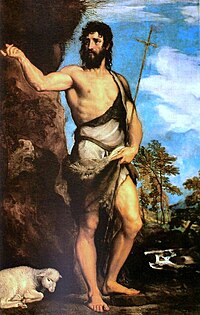
John the Baptiste, Titian

Gender: Masuline
Origin: Greek
Meaning: “to dip.”
Fre (bah-TEEST)

The name is derived from the Greek word βαπτω (bapto) meaning, “to dip.” The name was originally bestowed in honour of St. John the Baptiste and is often paired with John and its various cognates.

Currently, its Spanish form of Bautista, is the 19th most popular male name in Argentina, (2009). While Baptiste ranked in as the 30th most popular name in France and the 80th most popular in Belgium, (2009).

Other forms of the name include:

  • Battista (Corsican/Italian)
  • Battistu (Corsican)
  • Ghjuvan Battistu/Ghjuvan Battista (Corsican)
  • Jean-Baptiste (French)
  • Baptist (German)
  • Podromos πρόδρομοσ (Greek)
  • Giambattista (Italian)
  • Baptista (Occitanian)
  • Batista (Occitanian)
  • Bautista (Spanish)
  • Juan Bautista (Spanish)

A French feminine form is Baptistine.

Antonella

Gender: Feminine
Origin: Italian

Originally an Italian diminutive of Antonia, it is now used strictly as an independent given name both in Italy and abroad. It is especially popular in Italian diaspora communities. It is currently the 6th most popular female name in Chile, (2010) and the 21st most popular in Argentina (2009).

Another form of the name is the Croation, and occasionally, Spanish form Antonela.

In fact, Antonela is currently the 80th most popular female name in Croatia, (2010).

The name is borne by Italian-Argentine actress, Antonella Costa (b.1980).

Ornella

Gender: Feminine
Origin: Italian
Meaning: “ash tree.”
(ore-NEL-lah)

The name was created by Italian writer Gabriele d’Annunzio for his 1904 novel La Figlia di Jorio. It is believed to be derived from the Tuscan word for “ash tree.”

It is most famously borne by Italian actress, Ornella Muti (b.1955).

It is currently the 49th most popular female name in Argentina, (2009) and the 316th most popular in France.

A Romanian and Greek form is Ornela.

Isadora, Isidora

Origin: Greek
Meaning: “gift of Isis.”
Eng (IZ-ih-DORE-ah)

The name is a feminine form of the Greek male name, Isidoros Ισιδωρος, which is composed of the name of the Egyptian goddess, Isis and the Greek word doron (gift). The name may have been created during the Hellenization of Egypt after the 3rd-century BCE, when Greek and Egyptian pantheon began to be syncrenize.

The name was also borne by several early Christian saints, the most famous being Isidore of Seville, the patron saint of Seville, Spain. This is most likely why the name became so common throughout the Spanish-speaking world.

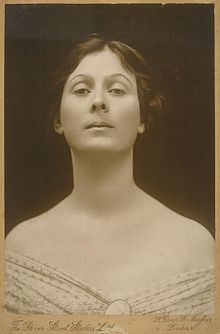
In the English-speaking world, it was most famously borne by famous dancer Isadora Duncan (1877-1927).

Currently, Isidora is the 3rd most popular female name in Chile, (2010).

Other forms of the name include:

  • Isadora (English)
  • Isidora Ισιδωρα Исидора (Greek/Italian/Macedonian/Portuguese/Romanian/Russian/Serbian/Spanish)
  • Izidóra (Hungarian)
  • Izydora (Polish)
  • Izidora (Slovene)
  • Isidra (Spanish)

Masculine forms include:

  • Isidori (Albanian/Sicilian)
  • Isidoru (Asturian)
  • Isidor (Catalan/Spanish)
  • Isidorus (Dutch)
  • Isadore (English)
  • Isidore ისიდორე (English/French/Georgian/German)
  • Isidoros Ισιδωρος (Greek)
  • Izidór (Hungarian)
  • Isidoro (Italian/Portuguese/Spanish)
  • Isidor Исидор (Macedonian/Romanian/Russian)
  • Zidore (Occitanian)
  • Izydor (Polish)
  • Izidor (Slovene)
  • Isidro (Spanish)

Oriana

Gender: Feminine
Origin: Latin
Meaning: debated
(oh-ree-AH-nah)

The name’s origin and etymology seems to be a mystery, it appears in the medieval Spanish epic romance, Amadís of Gaul and Oriana is the name of the queen of England and the lady love of Amadís.

The name appeared in Medieval Spain and Portugal in the forms of Oroana, and Ouroana. However, the name seems to have been more common in Italy, especially in Tuscany. It is currently the 45th most popular female name in Argentina, (2009) which hosts one of the larger Italian immigrant communities.

Oriana possibly derived from the Latin, aurum, meaning “gold.” It has also been linked with a Latin source meaning “east” or “sunrise.”

In Renaissance England, the name was used by Magrigals as an epithet for Queen Elizabeth I.

It is also the subject of a 19th-century play by James Albery.

Other forms of the name include:

Oriane/Orianne (French)
Oriette (French)
Oriána (Hungarian)
Oriana/Orianna (Italian/Polish)
Ouroana (Portuguese: archaic)
Oroana (Spanish: archaic)

Obscure masculine forms include:

Orian (French)
Oriando(Italian)
Oriano/Orianno (Italian)
Orio(Italian)

The name was borne by Italian journalist, author and former partisan during WWII, Oriana Fallaci (1929-2006).

The designated name-day in France is October 4, in Italy, it is June 25.

Source

  1. http://www.behindthename.com/name/oriana

Fiorella

Gender: Feminine
Origin: Italian
Meaning: “flower”
(fyor-REL-lah)

The name comes from the Italian word fior (flower) with the feminine diminutive suffix of -ella added on. The name has been in usage since the Middle Ages.

It is currently the 79th most popular female name in Argentina (2009).

The name was borne by famous Italian singer, Fiorella Bini (1933-2004)

An obsolete masculine form is Fiorello.

Pia

Gender: Feminine
Origin: Latin
Meaning: “pious; dutiful; devoted.”
(PEE-ah)

The name is a feminine form of the Late Latin male name Pius which means exactly what it says! Its masculine form was mainly used as a religious name, taken by priests, monks and popes (twelve of whom bore the name).

The name may have been used in reference to a line in a prayer to the Virgin Mary (Salve Regina)

O clemens, O pia, O dulcis Virgo Maria

It was also borne by a 3rd-century Carthaginian Christian saint and martyr.

It was a very popular name in Scandinavia, particularly in Sweden at the beginning of the 20th-century all the way up until the 1960s. The earliest records for the name Pia in Sweden go as far back as 1848.

Currently Pia is the 22nd most popular female name in Slovenia (2010) and the 28th most popular in Chile, (2010). Her rankings in other countries are as follows:

  • # 25 (Germany, 2011)
  • # 40 (Austria, 2010)
Other forms of the name include:
  • Piia (Finnish/Estonian)
  • Pía (Spanish)
Masculine forms include:
  • Pius (German/Latin)
  • Pio (Italian)
  • Pío (Spanish/Portuguese)