The name is derived from the Arabic root ر ض ي (r-ḍ-y), meaning “to be pleased, content, or satisfied.” The form mardiyyah is the feminine passive participle.
It is a Qurʾānic name, appearing in Sūrat al-Fajr (89:28–30).
An Arabic male name derived from the verb ʿazza (عزّ) meaning “to be mighty, strong, honored.”
In Islam, al-Muʿizz (ٱلْمُعِزّ) — “The Bestower of Honor” — is one of the 99 Names of Allah.
The most notable bearer is al-Muʿizz li-Dīn Allāh (953 – 975 CE), the fourth Fatimid caliph, renowned for founding the city of Cairo (al-Qāhira) in 969 CE.
It is used throughout the Islamic world, but is particularly common among Muslims in Nigeria.
The name Padma (पद्म) is derived from Sanskrit, meaning “lotus.” In South Asian tradition, the lotus is one of the most sacred flowers, symbolizing purity, beauty, spiritual awakening, and transcendence — a blossom that rises pristine from muddy waters.
Religious & Mythological Significance
Lakshmi: In Hindu texts, Padma is used as a by-name of the goddess Lakshmi, goddess of wealth, fortune, and prosperity. She is often depicted standing or seated upon a lotus, holding lotus flowers in her hands.
Vishnu: The lotus is also associated with Vishnu, Lakshmi’s consort, and the cosmic lotus from which the universe springs.
Attributes: The padma is one of the four attributes (ayudhas) often shown in iconography of deities — symbolizing purity, enlightenment, and divine perfection.
Buddhism & Jainism: The lotus also holds deep meaning in Buddhist and Jain traditions, where it represents spiritual liberation and the blossoming of wisdom.
The name is technically unisex but more commonly bestowed on females. A notable bearer is American author, Padma Lakshmi (b. 1970).
It is also the name of a major river in Bangladesh and in the Harry Potter series, Padma Patil is the twin of Parvati Patil.
International Variations
Padmé (f) – a pop-culture invention from the Star Wars franchise, which is based on the Sanskrit name.
Rostam is an ancient Persian name that likely descends from Old Persian or Sogdian roots. Its meaning is debated, but the most popular theory is that it derives from *rautas-taxma “strong like a river.”
The name is immortalized in Ferdowsi’s 10th-century Persian epic, the Shahnameh, where Rostam is the towering national hero described as:
a mighty warrior of the kingdom of Zabul.
tamer of the legendary horse Rakhsh.
defender of Iran against its enemies
and the tragic father of Sohrab in one of the most famous father-son duels in world literature.
Because of this epic, Rostam is to Persian culture what Hercules is to the Greek tradition.
Rostam has been a popular masculine name across Iran, Afghanistan, Tajikistan, and Central Asia for over a thousand years. It also appears as Rustam in many languages of the region—Azerbaijani, Uzbek, Pashto, and even in parts of the Caucasus and South Asia.
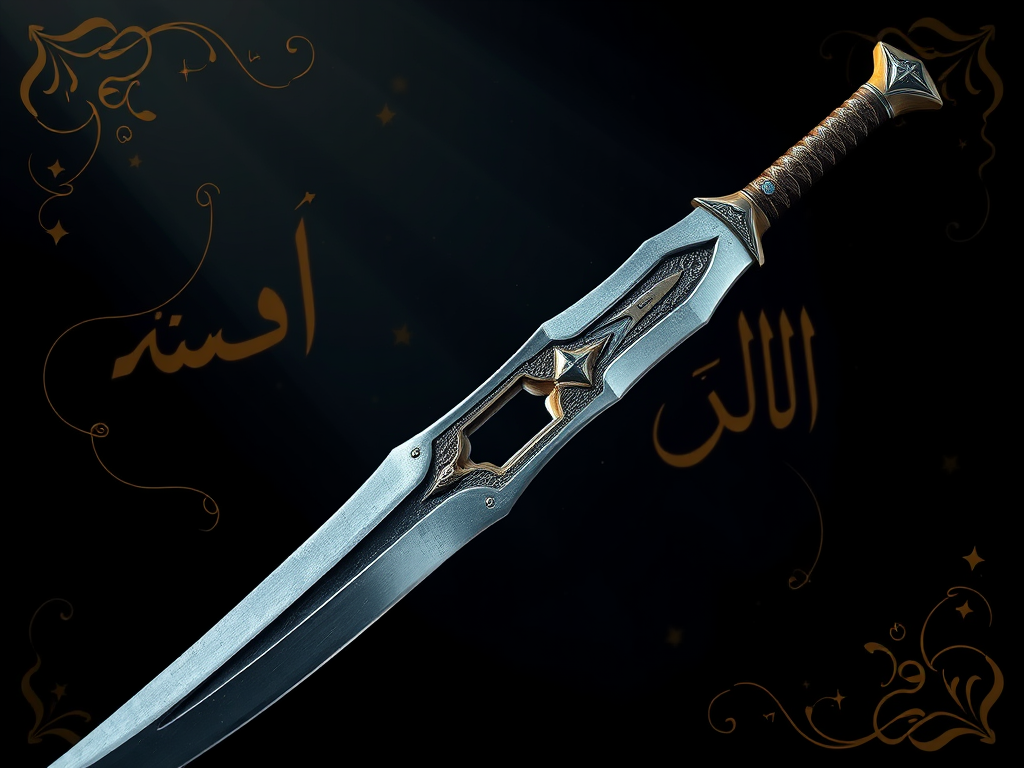
In Islamic tradition it specifically refers to a sword with a split or notched blade—the legendary weapon given by the Prophet Muhammad to his cousin and son-in-law ʿAlī ibn Abī Ṭālib.
It possibly comes from classical Arabic compound dhū / dhu (ذو) (possessor of; one who has), and fiqār / fiqar (فقار) (spine; vertebrae). Other sources suggest the second element may relate to the stars of Orion’s belt.
The phrase literally means “the one with the notches” or “owner of the notched spine.”
Both names come from the Arabic root ṣ-d-q (ص د ق), which carries the sense of truth, sincerity, honesty, faithfulness.
Siddīq (masculine) literally means “truthful, sincere, completely trustworthy.”
Siddīqa (feminine) is the direct feminine form.
In Islamic tradition the title al-Ṣiddīq was famously given to Abu Bakr, the first caliph and closest companion of the Prophet Muhammad, highlighting his absolute honesty and faith. The feminine al-Ṣiddīqa is used honorifically for Mary (Maryam) in the Qur’an (5:75) and also for Fāṭimah, the daughter of the Prophet, in later Islamic literature.
Both names come from the Arabic root s-b-ḥ (س ب ح), which conveys the ideas of glorifying, praising, swimming in or moving through the divine.
Subḥān (سُبْحَان) literally means “glory,” “exaltedness,” or “praise”—as in the Qurʾānic phrase Subḥān Allāh (“Glory be to God”).
The feminine form of Subḥāna / Subhana (سُبْحَانَة) carries the same meaning.
Subhan is a well-established male Muslim name across the Arabic-speaking world, South Asia, and other Islamic cultures.
Subhan has appeared in the U.K’s Top 1000 Most Popular Male Names between 1996-2024. It peaked at #384 in 2011. As of 2024, it was the 898th most popular male name.
Its Azeri form of Sübhan is currently the 55th most popular male name in Azerbaijan.
Subhana is used as a female name, though less widely, in many of the same regions.
The name is derived from the Arabic word اَشْھَل (ashal) meaning, “bluish black eyes.” The name is also used in Iran, Afghanistan and among South-Asian Muslims.
Usage: Arabic-speaking world, most of the Islamic world
Gender: Female
Meaning: “little butterball.”
The name is derived from the Arabic rootز-ب- د (z-b-d), which pertains to “cream, foam, butter,” along with the Arabic feminine diminutive suffix, roughly translating to “little cream” or “little butter,” having the same sense as “cream of the crop.”
This was the sobriquet of Zubaidah bint Ja’far (766–831), the wife of Harun al-Rashid. Borne as Sukhainah or Amat al-‘Aziz, she was known for her construction of wells and reservoirs along the pilgramage routes to Mecca and is featured in The Thousand and One Nights. Her life was later the inspiration behind the character of Zobeide in the German opera Abu Hassan by Carl Maria von Weber.
The Turkish form of the name, Zübeyde, was borne by an Ottoman princess, the daughter of Sultan Ahmed II, who lived from 1728 to 1756. It was also carried by Zübeyde Hanım (1856–1923), the mother of Mustafa Kemal Atatürk. The name appeared in the Top 100 most popular female names in Turkey between 1980 and 1986, peaking at #70 in 1981