Hugh, Hugo

Gender: Masculine
Origin: German
Meaning: “heart; mind; spirit
(HYOO); (HYOO-go)

The name is derived from the Germanic element, hug, meaning “heart; mind; spirit” or even “memory.” The original meaning of the name seems to refer to abstract consciousness.

It appears in Norse mythology in the form of Hugin(n), (thought), the name of one of Odin’s messenger ravens who would fly around Midgård and bring Odin messages. The other raven’s name was Muninn (memory).

It was a very popular name among the Franks and was introduced into England after the Norman invasion. It was borne by an early British saint, Hugh of Lincoln. The name’s popularity spread across the British Isles, often being Gaelicized in Ireland as Aodh and in Scotland as Ùisdean.

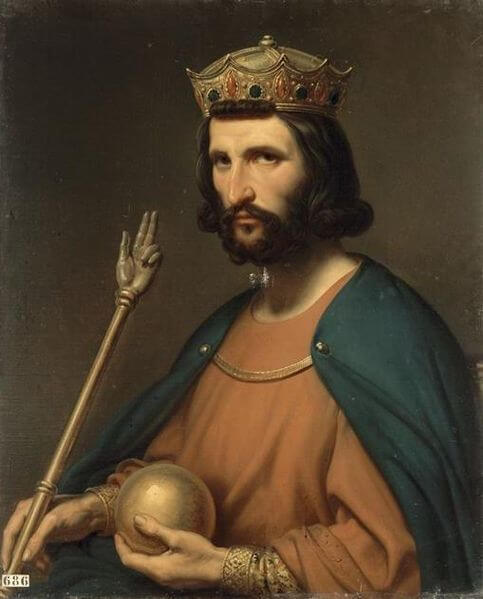
It was borne by a 10th-century French monarch, Hugh Capet, founder of the Capetian dynasty.

Hugh is currently the 963rd most popular male name in the United States, while it’s Latin cognate of Hugo ranks significantly higher at # 441. Hugo is currently a very trendy name across Europe. Its rankings in other countries are as follows:

#4 (Spain, 2010)
#6 (Sweden, 2010)
#8 (France, 2008)
# 12 (Catalonia, Spain, 2009)
#13 (Belgium, 2008)
#50 (the Netherlands, 2o1o)
#86 (Australia, NSW, 2010)

Other forms of the name include:

Hugo (Catalan/Czech/Dutch/English/Estonian/Finnish/French/German/Hungarian/Icelandic/Latvian/Polish/Portuguese/Romanian/Scandinavian/Slovak/Slovene/Spanish)
Hugh (English)
Hugues (French)
Hauke (Frisian)
Huguo (German)
Ughetto (Italian)
Ughino (Italian)
Ugo (Italian)
Ugolino (Italian)
Ugone (Italian)
Uguccione (Italian)
Hugas (Lithuanian)
Hudde/Hud (Middle English)
Huginn (Old Norse/Icelandic)
Hugon (Polish)
Ugu (Sardinian)
Shug (Scottish)
Hugolín (Slovak)
Huw (Welsh)

Common English diminutives are: Hewie and Hughie.

Feminine forms include, Huguette (French), Uga (Italian), Ughetta (Italian), Ugolina (Italian).

The designated name-days are: Febuary 3 (Estonia), April 1 (Estonia/Hungary/Poland/Slovakia), April 29 (Germany/Poland), November 3 (Sweden), November 17 (Latvia/Poland).

The rest of its bearers are too numerous to list.

Sources

  1. http://www.behindthename.com/name/hugo
  2. Ernst Förstemann, Altdeutsches namenbuch (1900), page 923
Ralph

Gender: Masculine
Origin: Old Norse
Meaning: wolf counselor
British English (RAFE); American English (RELF)

The name is derived from the Norse male name, Raðulfr, which is composed of the elements, rað (counsel) and ulfr (wolf). The name has been in usage in England since Anglo-Saxon times, due to viking settlers and remained common even after the Norman conquest. Throughout the centuries, the name has gone through an evolution. In Medieval times it was often rendered as Ralf, then by the 17th-century it was commonly spelled Rafe to reflect the proper pronunciation and by the turn of the century Ralph became a household name (pronounced RELF) in the United States. Within the United States, it was also commonly used as a diminutive form of Raphael or at least as an English equivalent by various immigrants.

The highest the name has ever ranked in U.S. naming history was between 1914 and 1917, consecutively ranking in at # 21. As of 2010, it was the 968th most popular male name. It is currently the 447th most popular male name in the Netherlands (2010).

Its Latin equivalent of Raul ranked in significantly higher, it was the 336th most popular male name in the United States (2010), the 48th most popular in Catalonia (2009) and the 32nd most popular in Spain (2010)

Other forms of the name include:

Raül (Catalan)
Rafe (English)
Ralf (English/German/Scandinavian)
Raul (Estonian/Italian/Portuguese)
Raoul (French)
Radulf (German)
Raulo (Italian)
Rault (Old French)
Raoult (Old French)
Roul (Old French)
Raðulfr (Old Norse)
Raou (Occitanian)

Raúl (Spanish)

Ralphie is a common diminutive form in the English-speaking world.

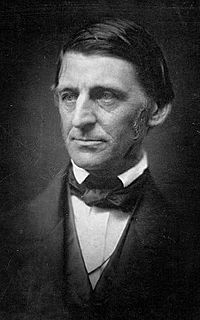
The name was borne by a 12th-century male saint. It is also borne by Ralph Waldo Emerson.

Designated name-days are: March 7 (Estonia), March 27 (Sweden) July 7 (France), August 27 (Sweden)

Raul is also the name of a volcanic island in the Kermadec archipelago.

Sources

  1. Ernst Förstemann, Altdeutsches namenbuch (1900), page 1219
  2. http://www.behindthename.com/name/ralph

Reina

Gender: Feminine
Origin: Spanish or Yiddish  רֵײנָא
Meaning: “queen” or “pure”
(RAY-nah)

The name can either be from the Spanish word for queen or comes from the Yiddish word, rein, meaning “clean; pure.”

In the Spanish-speaking world, the name has been around since Medieval times and was often used as a Regina equivalent.

Among European Jews, the name was used as a Yiddish form of Katherine, sometimes transliterated as Rayna (English), Reina/Raina (German) or Rejna (Polish).

Rayna is coincidentally a Bulgarian female form of Rayno, believed to be derived from Radko, which itself is derived from the Slavic element, rad (care).

It can also likewise be the Latvian word for the Rhine river, and is the name of two different places, one in Estonia and the other in Spain. It is the name of a type of grape used to make red wine.

Another form is the Medieval French, Reine.

Currently, Reina is the 977th most popular female name in the United States (2010), while Rayna ranked in at 899 (2010).

The designated name-day in Estonia is September 7.

Source

  1. http://www.behindthename.com/name/rayna-2
  2. http://www.behindthename.com/name/reina-2
  3. http://www.behindthename.com/name/reina-1

Daniel, Danielle

Gender: Masculine
Origin: Biblical Hebrew
Meaning: “God is my Judge.”

If you are like me, you probably think Daniel is dull and overused. Then there is the other camp who might think this is a wonderful classic. It has the youthful nickname options of Dan and Danny and its used in just about every European country with such variants as the Italian Daniele and the Czech and Polish diminutive forms of Danek. Another plus is that, while the name has religious connotations, its doesn’t adhere to a specific denomination. It is fair game for both Jewish and Christian parents alike, Catholic and Protestant. It is even used among Muslims.

The name Daniel is found in the Old Testament, (it has its own book), composed of the Hebrew elements dan meaning “judge” and the 1st person possessive singular suffix of i plus El which was a reference to God.

As for the Biblical Daniel himself, according to the Bible, he was a Jewish boy who was captured by the Babylonians and employed as a sort of dream-reader, (sounds like a pretty cool job). Daniel was so good at his job that he eventually became famous, even among his Persian and Babylonian captives. Due to his prestige and influence, Daniel was also able to persuade his captors to release the Jews back to their homeland. There is far more to the Biblical Daniel’s story than I will write here, but he is probably most noted for his steadfast loyalty to his faith and people as well as his miraculous survival after being thrown in a den of lions.

In the United States, Daniel has been steadfast in its popularity. He currently comes in at # 5. Meanwhile, in the United Kingdom, he comes in at # 7. In Scotland at # 3. In Ireland # 4. While in Spain he comes in at a whopping # 2.

This forms is also used in the Czech Republic, Finland, French-speaking countries, German-speaking countries, Poland, Portuguese-speaking countries, Romania,  Scandinavia, Slovakia and Spanish-speaking countries

Other forms include :

  • Dana (Afrikaans)
  • Danieli (Albanian)
  • Danyal دانيال (Arabic)
  • Taniel (Armenian)
  • Danel (Basque)
  • Danilo (Bosnian/Croatian/Serbian)
  • Deniel (Breton)
  • Danail Данаил (Bulgarian)
  • Danelu (Corsican/Sardinian/Sicilian)
  • Daan (Dutch/Limburgish)
  • Daniël (Dutch)
  • Daaniel/Taaniel (Estonian)
  • Tanel/Tani (Estonian)
  • Taano/Tanno (Estonian)
  • Taneli/Tatu (Finnish)
  • Dāniyyêl דָּנִיֵּאל (Hebrew: Modern)
  • Dániel (Hungarian)
  • Daniló (Hungarian)
  • Dános (Hungarian)
  • Daniele (Italian: dahn-YAY-lay)
  • Daniello (Italian: an archaic version which died out in the 17th-century)
  • Danilo/Danilio (Italian: obscure)
  • Danielius (Lithuanian)
  • Daniilu Данїилъ (Old Church Slavonic)
  • Dani داني (Persian)
  • Daniyal دانيال (Persian)
  • Danil/Dănuṭ (Romanian: duh-NOOTS)
  • Daniil Даниил (Russian)
  • Daniele/Danijel (Slovene)
  • Dani/Däne/Dänu/Danü (Swiss-German: Bern dialect)
  • Danyal/Danyel(Turkish)
  • Deiniol (Welsh)

Czech diminutives are: Dan, Daník, Daneček, Danoušek, Danny, Dandýsek, Dady, Danda, Dáda, Danda, Dannys, Danušík and Dandýsek, Italian diminutive forms are: Nilo, Danio, Danino and Nilio.

Danya Даня is a common Russian and Ukrainian diminutive form.

Let us not forget its feminine versions of Daniella, Daniela and Danielle. As of 2010, its Spanish and Slavic diminutive form of Dania reached the top 1000, coming in as the 999th most popular female name in the United States.

The French Danielle, does not have the same staying power as its masculine counterpart. Though always more common as a middle name, Danielle is one of the quintessential names of the 1980s. In 1987, she came close to reaching the top 10 by hitting # 14. In the last popularity census, Danielle still comes in rather high at # 144.  Its Latinate counterpart of Daniela comes in a tad bit higher at # 121, while the Italian Daniella is all the way down at # 303.

Other forms are:

  • Danijela (Bosnian/Croatian/Serbian/Slovene)
  • Danaila (Bulgarian)
  • Daniela (Czech/German/Polish/Portuguese/Romanian/Scandinavian/Slovene/Spanish)
  • Danielle (English)
  • Danièle (French)
  • Danelia (Italian: obscure)
  • Daniella (Italian)
  • Danila/Danilla (Italian: obscure)

Italian feminine diminutives are : Dana, Dania and Nila.

Designated name-days are: July 21 (Germany/Hungary/Slovakia), December 10 (Poland/Lithuanian), December 11 (Denmark, Estonia, Finland, France, Norway, Sweden), December 17 (Greec/Czech Republic)

Snow Day! Snow Names

Was your baby a snow baby? Born on a snow day? Or perhaps you are just curious to see if here are any names with the meaning of “snow; ice or blizzard.”

As part of the holidays and in honour of the snow rich winter season, I have compiled a list of “snowy” “icy” baby names. Enjoy!

Male

Alluaq “hole in the ice for fishing” (Greelandic)
Andri “snow shoe” (Old Norse)
Anil “wind” (Sanskrit)
Aputsiaq “snowflake” (Greenlandic)
Edur“snow” (Basque)
Fannar “snow drift” (Icelandic)
Frediano “cold” (Italian)
Frosti “frost” (Icelandic)
Govad “the wind” (Persian)
Hjarnar “hard; frozen snow” (Old Norse)
Ilgar “first snow” (Azeri)
Isbert “bright ice” (Frisian)
Isbrand “ice sword” (Frisian)
Izo “ice” (Frisian)
Izozts “ice” (Basque)
Jouko “snow; ice” (Finnish)
Persoq “snow flurry” (Greenlandic)
Pyry “blizzard” (Finnish)
Sarmis “snowfrost” (Latvian)
Sheleg “snow” (Hebrew)

Female

Biruta “snow” (Lithuanian)
Bora “snow” (Albanian)
Dëborake “snow” (Albanian)
Drífa “snowdrift” (Icelandic)
Edurne “snow” (Basque)
Eira “snow” (Welsh)
Eirlys “snowflake” (Welsh)
Elurreta “snowing” (Basque)
Ensilumi “snowfall” (Finnish)
Era “wind” (Albanian)
Esen “the wind” (Turkish)
Fanndís “snow goddess” (Icelandic)
Flykra “snow flake” (Faroese)
Fulga “snowflake” (Romanian)
Fönn “lots of snow” (Icelandic)
Gheata “ice” (Romanian)
Gwyneira “white snow” (Welsh)
Haizea “wind” (Basque)
Halla “frost” (Finnish)
Helbe/Helve “flake” (Estonian)
Himani “snow” (Sanskrit)
Hófehérke “snow white” (Hungarian)
Hukupapa “frost” (Maori)
Ishild “ice battle” (German)
Ilgara “first snow” (Azeri)
Jökla “icicle; glacier” (Icelandic)
Kassoq “bluish piece of ice” (Greenlandic)
Koyuki “little snow” (Japanese)
Kukiko “child of the snow” (Japanese)
Lumi “snow” (Finnish)
Miyuki “silent snow” (Japanese)
Mjöll “fluffy snow” (Icelandic)
Neus “snow” (Catalan)
Neves “snows” (Portuguese)
Nieves “snows” (Spanish)
Nilak “fresh water ice” (Greenlandic)
Pärsla “flake” (Latvian)
Patil “snowflake” (Armenian)
Pire “snow” (Mapuche)
Qinoq “ice sludge'” (Greenlandic)
Tuyét “snow” (Vietnamese)
Sarma/Sarmite “snowfrost” (Latvian)
Shilga “snow” (Hebrew)
Snezhana “snow” (Bulgarian/Croatian/Russian)
Snezhala “snow” (Bulgarian)
Sniedze (Latvian)
Snöfrid “snow peace; snow beauty” (Old Norse)
Snædís “snow goddess” (Icelandic)
Snieguolė “little snow” (Lithuanian)
Śnieżka “little snow” (Polish)
Taidi “snow white” (Estonian)
Tuuli “wind” (Finnish)
Yukiko “snow child” (Japanese)

Vahur

Gender: Masculine
Origin: Estonian
Meaning: “brave.”

The name is derived from the Estonian, vahva meaning “brave.” The name was coined by Estonian author Edward Börnhohe for a character in his 1880 novel Tasuja.

The designated name-day in Estonia is November 4.

Other forms of the name include: Vaho and Vahto.

Sources

  1. http://en.wiktionary.org/wiki/Vahur
  2. http://www.miksike.ee/documents/main/referaadid/tasuja3.htm
  3. http://www.behindthename.com/namedays/lists/11.php


Gunnar

Gender: Masculine
Origin: Old Norse
Meaning: “war warrior.”
Eng (GUN-ner); Swe (GOON-nahr)

The name is composed of the Old Norse elements, gunnr (war) and arr (warrior).

The name was borne a legendary 5th-century Burgundish king. His exploits appear in the ancient Germanic poetic text Nibelungelied and the Medieval poem Walthurius.

In the Nibelungelied he is mentioned as the King of Worms, the husband of Brunhild and the brother of Kriemhild, whom Siegfried comes to woo.

In some tales, he was betrayed by Attila the hun and murdered by him.

The same character later appears in JRR Tolkien’s epic poem based on Norse legend, The Legend of Sigurd and Gudrun.

Gunnar did not appear in the U.S. top 1000 till 1991 coming in as the 705th most popular male names, as of 2009, he was the 551st most popular male name.

Other forms of the name include:

  • Gūðhere (Anglo-Saxon)
  • Gondicari (Catalan)
  • Vintíř (Czech)
  • Gunder (Danish/Norwegian/Swedish)
  • Gunnar (Danish/English/Estonian/Norwegian/Swedish)
  • Gunner (English/Norwegian/Swedish)
  • Gundur (Faroese)
  • Kunkku (Finnish)
  • Kunnari (Finnish)
  • Kunto (Finnish)
  • Gondicaire (French)
  • Gundohar (Frisian/Dutch)
  • Gundahar (German: archaic)
  • Günter/Günther (German/Hungarian)
  • Gunther (German)
  • Gunter (German/Polish/Spanish)
  • Gundicaro (Italian)
  • Gundaharius (Late Latin)
  • Gunnarr (Old Norse)
  • Gunnár (Sami)
  • Gundo (Swedish)
  • Gunnerius (Swedish: archaic)

The name was also borne by a medieval Czech saint.

The designated name-days are January 8 (Estonia); January 9 (Sweden) and October 9 (Germany).

Sources

  1. http://www.behindthename.com/name/gunnar
  2. http://www.nordicnames.de/wiki/Gunnarr

Edmund

Gender: Masculine
Origin: English
Meaning: “rich protector.”
Eng (ED-mund)

The name is composed of the Anglo-Saxon elements, ead (wealth; riches) and mund (protector).

The name was quite common in Medieval England, both before and after the Norman conquest, and remained common all the way up until this century.

It was borne by two English kings and by two saints.

The highest the name has ranked in U.S. naming history was in 1913, when Edmund was the 130th most popular male name. As of 2009, he does not even rank in the U.S. top 1000.

Other forms of the name include:

Eadmund (Anglo-Saxon)
Edmund (Czech/English/Estonian/German/Polish/Slovak/Slovene)
Edmundur (Faroese)
Edmé (French: archaic)
Edmond (French)
Emond (German)
Ödön (Hungarian)
Játmundur (Icelandic)
Jetmund (Icelandic)
Eamon/Éamonn (Irish-Gaelic)
Edmeo (Italian)
Edmo (Italian)
Edmondo (Italian)
Edno (Italian)
Edmao (Limburgish)
Mao (Limburgish)
Edmundo (Portuguese/Spanish)

Feminine forms include:

Edmonia (English)
Edmée (French)
Edma (Italian)
Edmea (Italian)
Edmonda (Italian)

Nicknames include:

Ed, Eddie, Ned (Dutch/English)
Edi/Edo (Czech/Slovak)
Ödi (Hungarian)

Notable bearers include: English poet Edmund Spenser (1552-1599); Czech philosopher, Edmund Husserl (1859-1938) and New Zealand mountaineer Sir Edmund Hillary (1919-2008)

The designated name-days are:

October 6 (Estonia); October 16 (Poland); October 30 (Poland); November 20 (Poland); December 1 (Poland/Slovakia); March 18 (Sweden).

Source

  1. http://www.behindthename.com/name/edmund